STATE DEPARTMENT —
U.S. Secretary of State John Kerry makes his first trip to Asia later this week, where he will be talking about North Korea and a more active U.S. military and diplomatic presence in the region.
On Asia, President Obama's second term starts where his first left off --boosting military, diplomatic, and commercial assets in the region as part of a so-called "Asia Pivot."
Ahead of his first trip to Asia as secretary of state, John Kerry compared U.S. goals for the region to those of North Korea.
"We want to see a peaceful community of nations trading with each other, working to improve the lives of their citizens; and that is in direct contrast to the North, which maintains gulags, has thousands of political prisoners, treats people in the most inhumane way, and now starves their people in order to build nuclear weapons," Kerry stated.
US Secretary of State Travels to Middle East, London and Asia
1/9U.S. Secretary of State John Kerry introduces South Korean President Park Geun-hye to his senior staff members as they meet at the presidential Blue House in Seoul, April 12, 2013.
Show moreShow less
2/9South Korean protesters stage a rally, denouncing U.S.-South Korean joint military exercises as U.S. Secretary of State John Kerry visits Seoul, April 12, 2013.
Show moreShow less
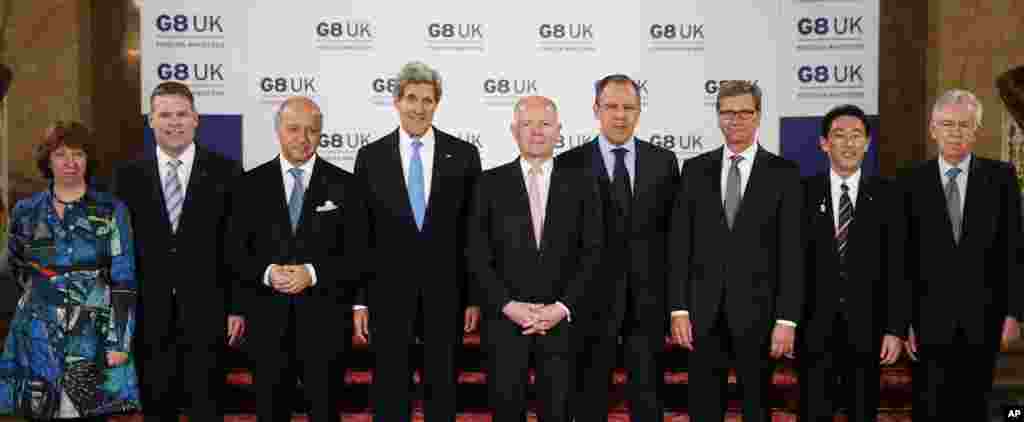
3/9G8 foreign ministers taking part in the meeting at Lancaster House, London, April 11, 2013.
Show moreShow less
4/9Backdropped by Buckingham Place, U.S. Secretary of State John Kerry, surrounded by aides and security detail takes a walk at the Green Park in central London.
Show moreShow less
5/9Protesters hold banners and placards during a demonstration near the G8 foreign ministers’ meeting in London, April 11, 2013.
Show moreShow less
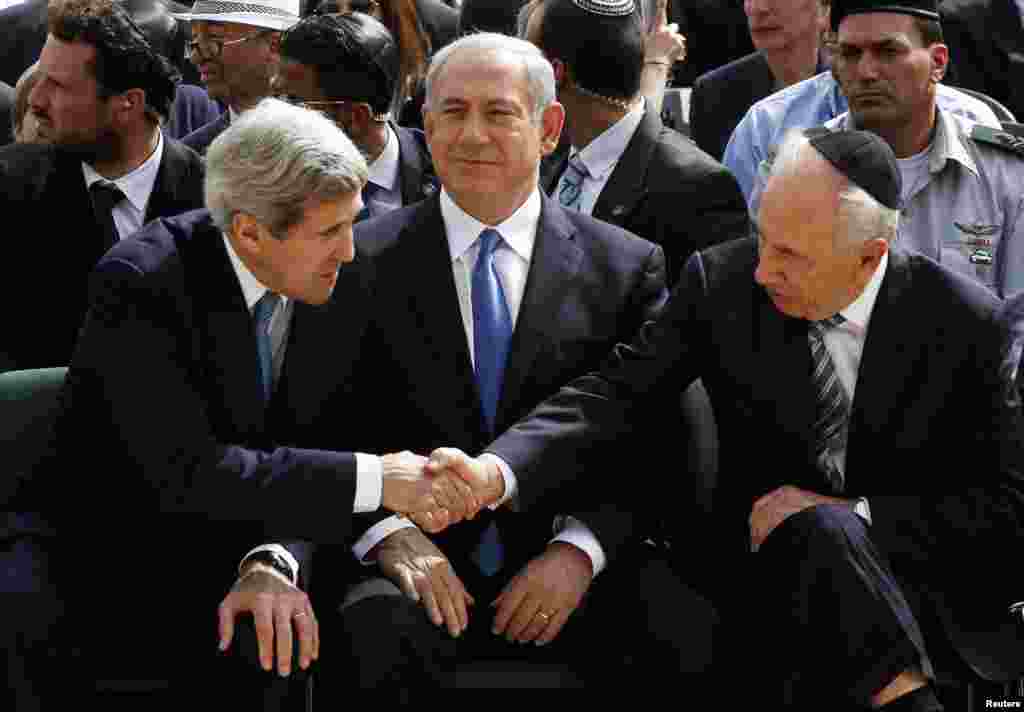
6/9Israeli President Shimon Peres shakes hands with U.S. Secretary of State John Kerry as Prime Minister Benjamin Netanyahu sits between them during a ceremony marking Israel's annual day of Holocaust remembrance, at Yad Vashem, Jerusalem, April 8, 2013.
Show moreShow less
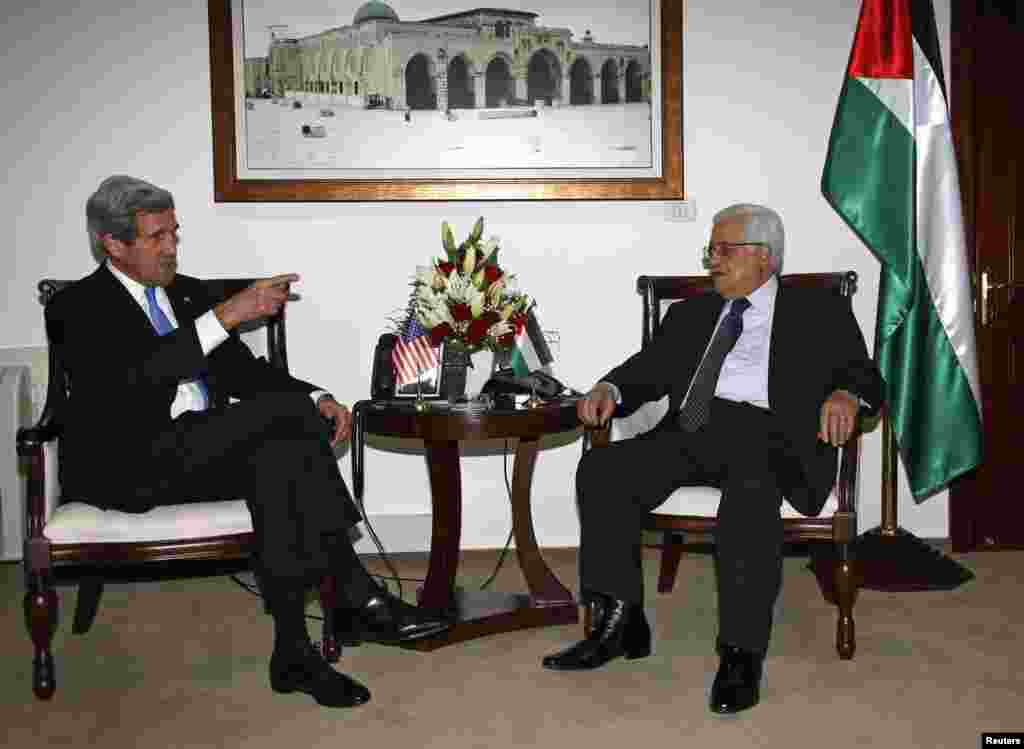
7/9Palestinian President Mahmoud Abbas meets with U.S. Secretary of State John Kerry in the West Bank city of Ramallah, April 7, 2013.
Show moreShow less
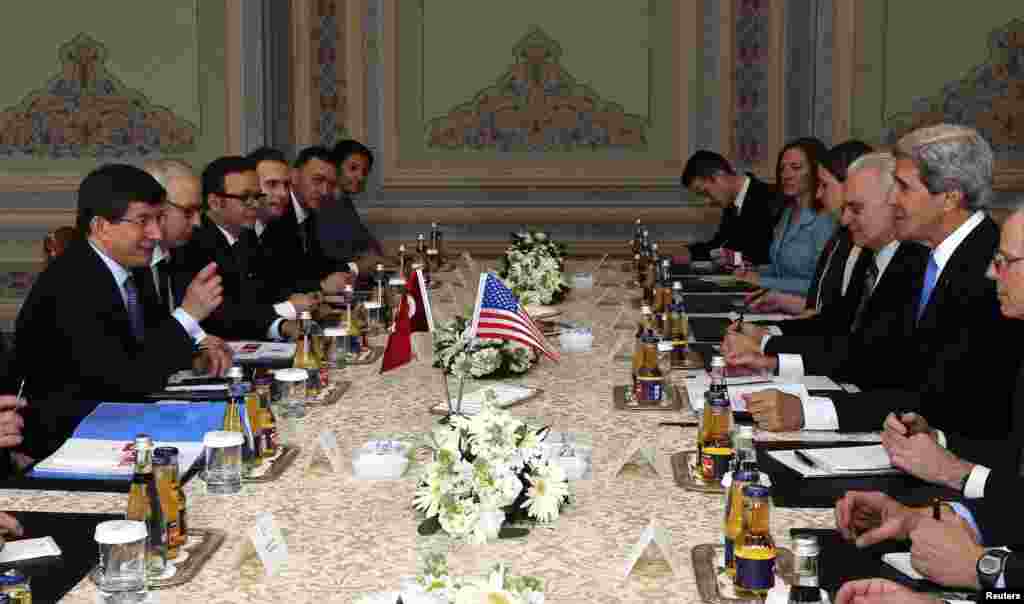
8/9U.S. Secretary of State John Kerry meets with Turkey's Foreign Minister Ahmet Davutoglu at Ciragan Palace in Istanbul, April 7, 2013.
Show moreShow less
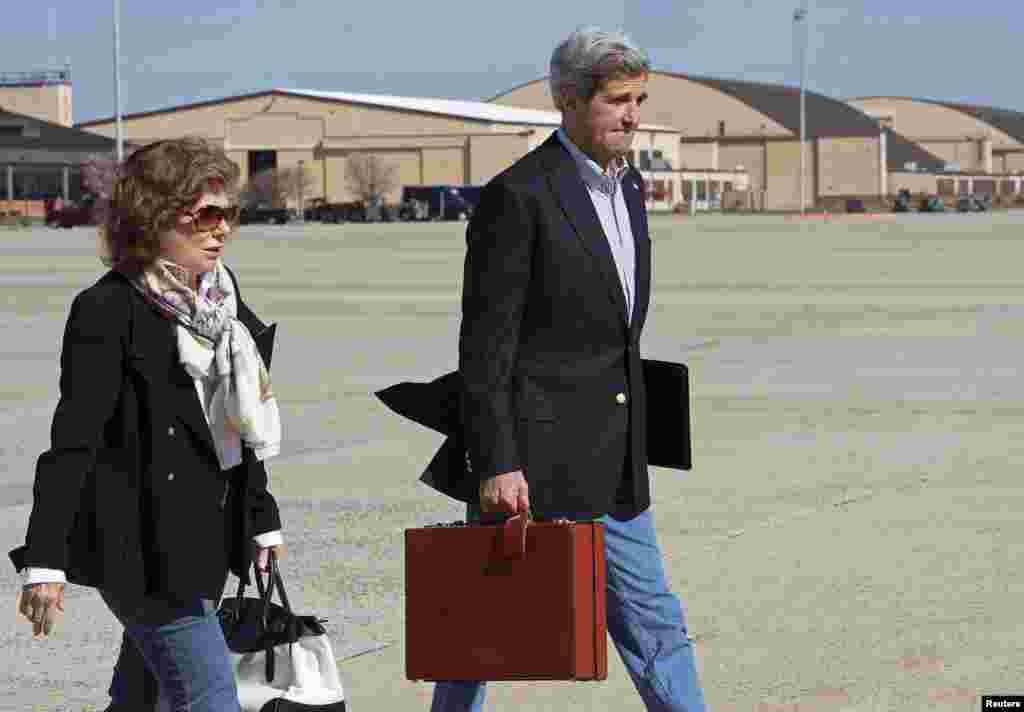
9/9U.S. Secretary of State John Kerry and his wife Teresa Heinz Kerry board a second plane after their original aircraft had mechanical problems at Andrews Air Force Base in Maryland April 6, 2013.
Show moreShow less
Previous slide
Next slide
With so much at stake - and needing China's help with North Korea - American University professor Pek Koon Heng sees no change in Washington's Asia engagement.
"The whole bundle of issues about trade and defense and security and political cooperation and global issues, China more than any other country is who the U.S. has to work with. So I don't see the Americans taking their eyes off the ball in the second Obama administration," she said.
Stepped up Chinese military maneuvers are seen as a sign of Beijing's concern over U.S. forces shifting focus from Afghanistan and Iraq to Asia.
"China has this as its own ambition. It's not flexing because of the sense that we're preoccupied in the Middle East," said Ruth Wedgwood, a professor at Johns Hopkins University. "Frankly, I don't think the U.S. yet has pushed back quite hard enough," she added. "You want to be delicate in how you do it with two superpowers."
Wedgwood says it would be a mistake for the United States to allow Chinese forces to do as they please, especially in the ongoing maritime disputes in the South China Sea.
But Christian LeMiere, of the International Institute for Strategic Studies, says China is leaving little room for dialogue.
"China's attitude towards the South China Sea is one of slowly continuing to develop its diplomatic, physical, and military might so that they can continue to dominate the South China Sea to a greater extent, avoiding conflict where possible, but certainly seeing this from a very emotional, national sovereignty issue which doesn't brook any possible discussion on negotiations," noted LeMiere.
Former secretary of state Hillary Clinton pushed hard on the Asia pivot, assuring China it had nothing to fear.
But Cato Institute analyst Justin Logan says Beijing is not convinced.
"There has been all this rhetoric that the pivot or re-balancing is not about China," he said. "Will the administration continue to be able to sell that line as it flies in the face of everything that we see unfolding?"
So far, Chinese concern about a more muscular U.S. presence in the Asia-Pacific has not detracted from efforts to contain North Korea as Beijing has joined Washington in tougher U.N. sanctions against Pyongyang.