Kerry Ends Mideast Trip With Pledge to Restart Peace Talks
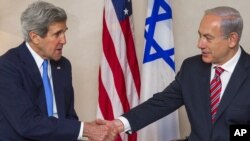
US Secretary of State John Kerry (L) and Israeli Prime Minister Benjamin Netanyahu shake hands before holding talks in Jerusalem, Apr. 9, 2013.
JERUSALEM —
U.S. Secretary of State John Kerry has wrapped up a three-day visit to Israel and the Palestinian territories during which he expressed hope for an eventual Middle East peace agreement and underscored U.S. opposition to a nuclear-armed Iran.
Kerry ended his trip with a two-hour meeting with Israeli Prime Minister Benjamin Netanyahu and said he is intent on reviving the stalled Middle East peace talks. Netanyahu said he was committed to the same goal.
"I'm determined to, not only to resume the peace process with the Palestinians, but to make a serious effort to end this conflict once and for all," he said.
Netanyahu said security and Palestinian recognition of the Israeli state were the foremost issues for Israel, but that any peace effort also should have economic components that would improve living conditions in the Palestinian territories. Kerry agreed.
“Whatever steps we take with respect to economics are in no way a substitute, but they are in addition to the political track," he said. "The political track is first and foremost. Other things may happen to supplement it."
U.S. Secretary of State Visits the Middle East
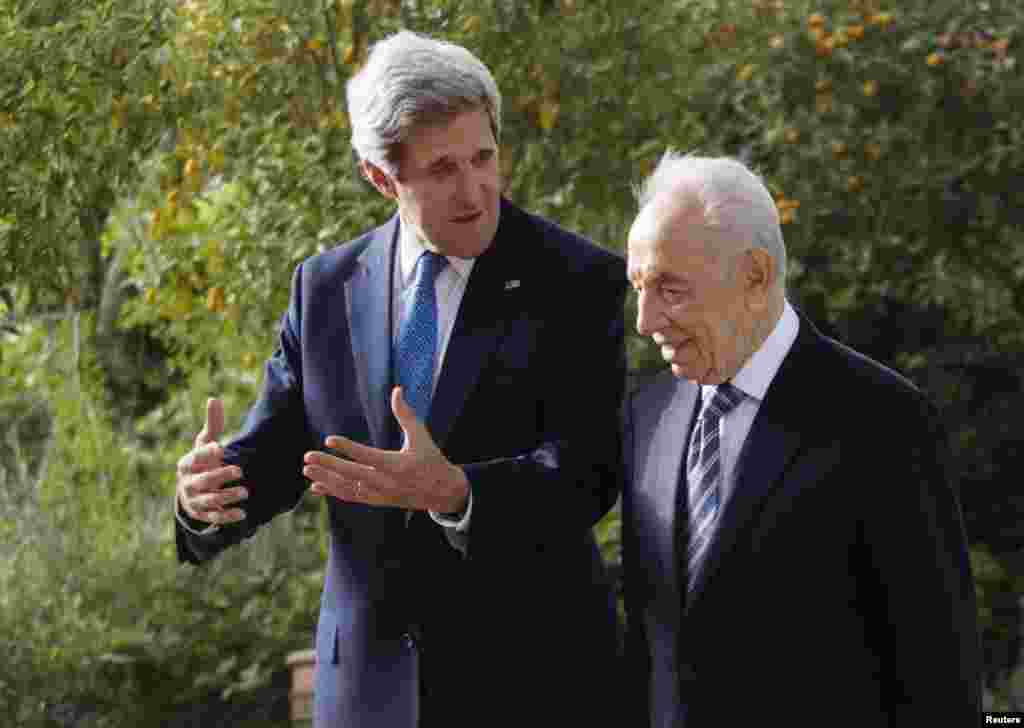
1/7Israel's President Shimon Peres and U.S. Secretary of State John Kerry speak during their meeting in Jerusalem, April 8, 2013.
U.S. Secretary of State John Kerry has wrapped up a three-day visit to Israel and the Palestinian territories.
Show moreShow less
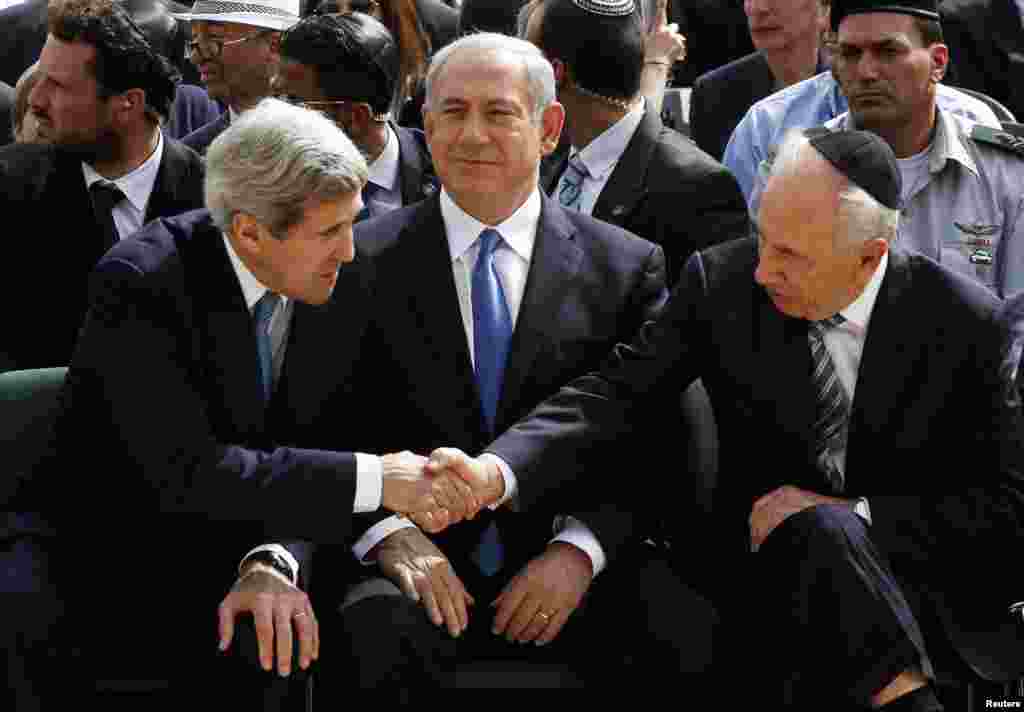
2/7U.S. Secretary of State John Kerry shakes hands with Israeli President Shimon Peres as Prime Minister Benjamin Netanyahu sits between at Yad Vashem, Jerusalem, April 8, 2013.
U.S. Secretary of State John Kerry has wrapped up a three-day visit to Israel and the Palestinian territories.
Show moreShow less
3/7U.S. Secretary of State John Kerry observes a moment of silence after laying a wreath during a ceremony marking Israel's annual day of Holocaust remembrance, at Yad Vashem in Jerusalem, April 8, 2013.
U.S. Secretary of State John Kerry has wrapped up a three-day visit to Israel and the Palestinian territories.
Show moreShow less
4/7U.S. Secretary of State John Kerry greets members of the U.S. Marine Corps Detachment before speaking to U.S. foreign service workers during his visit to the U.S. Consulate General in Jerusalem, April 8, 2013.
U.S. Secretary of State John Kerry has wrapped up a three-day visit to Israel and the Palestinian territories.
Show moreShow less
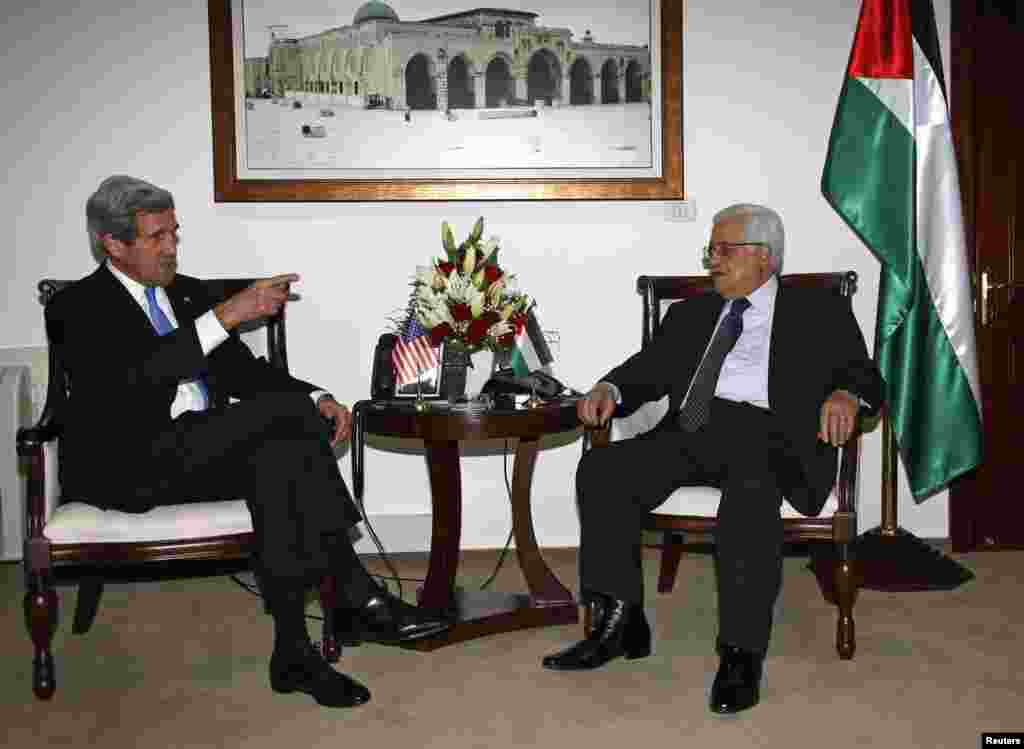
5/7Palestinian President Mahmoud Abbas meets with U.S. Secretary of State John Kerry in the West Bank city of Ramallah, April 7, 2013.
U.S. Secretary of State John Kerry has wrapped up a three-day visit to Israel and the Palestinian territories.
Show moreShow less
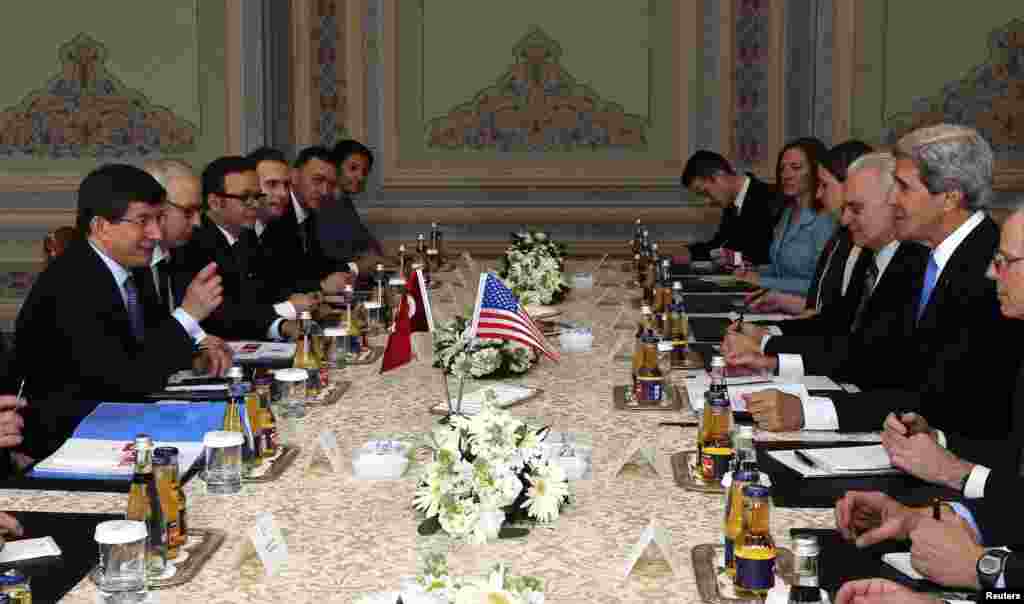
6/7U.S. Secretary of State John Kerry meets with Turkey's Foreign Minister Ahmet Davutoglu at Ciragan Palace in Istanbul, April 7, 2013.
U.S. Secretary of State John Kerry has wrapped up a three-day visit to Israel and the Palestinian territories.
Show moreShow less
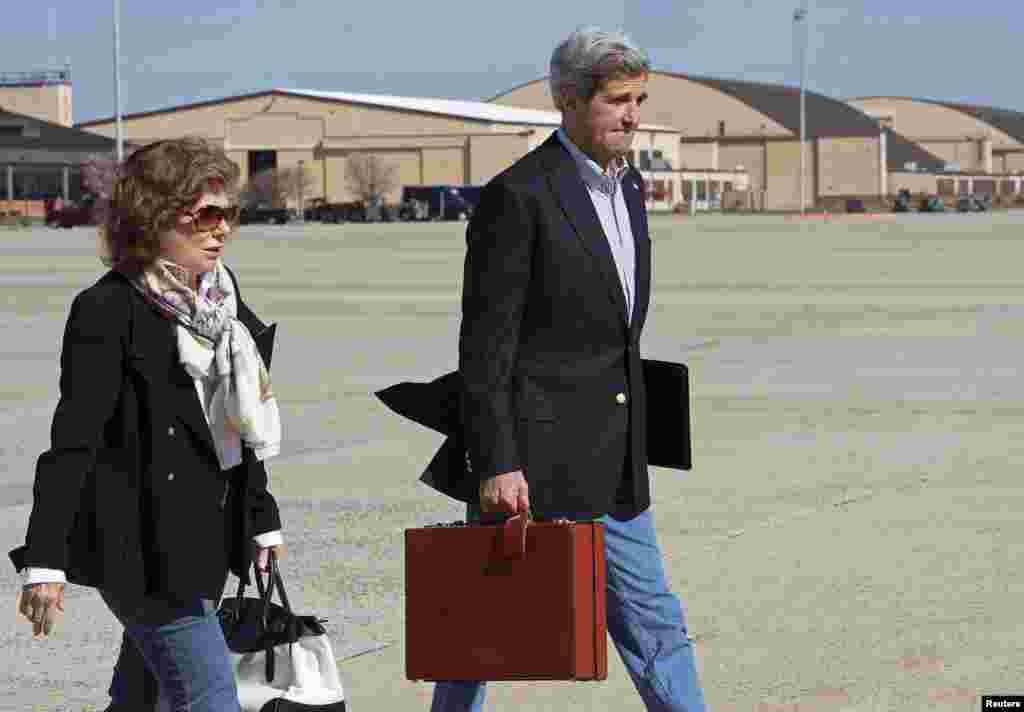
7/7U.S. Secretary of State John Kerry and his wife Teresa Heinz Kerry board a second plane after their original aircraft had mechanical problems at Andrews Air Force Base in Maryland April 6, 2013.
U.S. Secretary of State John Kerry has wrapped up a three-day visit to Israel and the Palestinian territories.
Show moreShow less
Previous slide
Next slide
Impasse
The peace talks have been stalled for nearly three years. The Palestinians say before they will return to the negotiating table Israel must halt construction of Jewish settlements in the West Bank and release political prisoners.
The Israelis say they are prepared to return to the talks, without preconditions.
Upon his arrival Sunday Kerry met with the head of the Palestinian Authority Mahmoud Abbas who reportedly reiterated the Palestinian demands.
U.S. officials said Kerry was proposing what were termed confidence building measures to try to bring the two sides back to the talks.
A senior member of the Palestine Liberation Organization, Hanna Amira, said he is not optimistic. This time U.S. officials are trying to replace Palestinian conditions on settlement construction, he said, adding that he does not think Kerry's overtures will succeed.
Iran
Concern about Iran's alleged nuclear weapons program was also high on the agenda for the U.S. and Israeli officials. Netanyahu said Iran cannot be allowed to acquire nuclear weapons.
Kerry, in his remarks, said the U.S. government is still open to negotiations but they cannot go on endlessly. And the military option to strike alleged Iranian nuclear weapons installations remains on the table.
Iran says its nuclear program is for peaceful purposes only and has vowed to retaliate if attacked.
Kerry is next scheduled to be in London for a meeting of the G8 foreign ministers to discuss a range of regional and transnational issues.
Kerry then is slated to begin a three-nation tour of Asia that is expected to be dominated by the tensions on the Korean Peninsula.