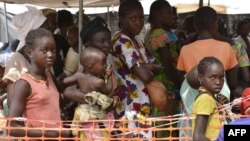
FILE - Internally-displaced people wait in line for medical attention at the 'Medecins sans Frontieres' (MSF) hospital based in the IDP camp near the international airport in Bangui, Dec. 23, 2013.
GENEVA —
The World Health Organization reports the Central African Republic’s shattered health system is in desperate need of repair. A senior WHO official who just visited the CAR reports medical care throughout much of this devastated country is practically non-existent.
WHO blames years of underdevelopment and neglect from the international community for the dire situation in CAR, noting that even before the current conflict, the CAR had the third-highest maternal mortality rate and the sixth-highest child mortality rate in the world.
WHO says the situation now is worse than before - 2.5 million people are in need of emergency assistance, 800,000 people are internally displaced and since early December, more than 1,100 people have died violent deaths in the capital, Bangui.
WHO Emergency Director Rick Brennan, who visited the C.A.R. between February 7 and 12, says the devastation he saw throughout the country is unimaginable. He says the vast majority of clinics and hospitals have been extensively looted and damaged, and most medical staffers have abandoned their posts.
Homeless people are being forced into overcrowded, unsanitary camps, which only aggravates their health situation," he adds.
“In one of the camps, there is one latrine… per 100 people. The basic standard is one per 20. Six liters of water available per person per day. The standard is 15. Another camp we visited, one hand pump for 4,000 people. So, enormous needs and the capacity to respond is extremely limited,” he told reporters.
According to Dr. Brennan, WHO and its partners are setting up a surveillance system to detect and respond to disease outbreaks when they occur. He says they, along with the government, are working on a plan to reactivate the health facilities, particularly those outside Bangui.
“We need a systematic plan together with partners to ensure they are adequately staffed, have the drugs, supplies, equipment, supervision and so on. So that is…one of our main priorities over the coming weeks," the doctor said.
"We also are working to address major gaps in health services, ensuring that blood transfusion services are re-established, ensuring that women who are having babies have access to clean delivery facilities and access to emergency care when they have complications, restarting the HIV services,” he explained.
Dr. Brennan says WHO and partners need money to make the plans a reality, after only receiving $3.5 million of the $55 million needed to re-establish a functioning health system in the CAR.
The U.N. Children’s Fund says its humanitarian operation also is seriously underfunded. It only has received 15 percent of its $62 million appeal.
Over the past two months, UNICEF says 37 children have been killed and 96 maimed throughout the country. The agency says some of these children had limbs amputated because the fighting prevented them from getting medical help in time.
CAR: A Country Plunged Into Sectarian, Humanitarian Crisis
CAR: A Country Plunged Into Sectarian, Humanitarian Crisis
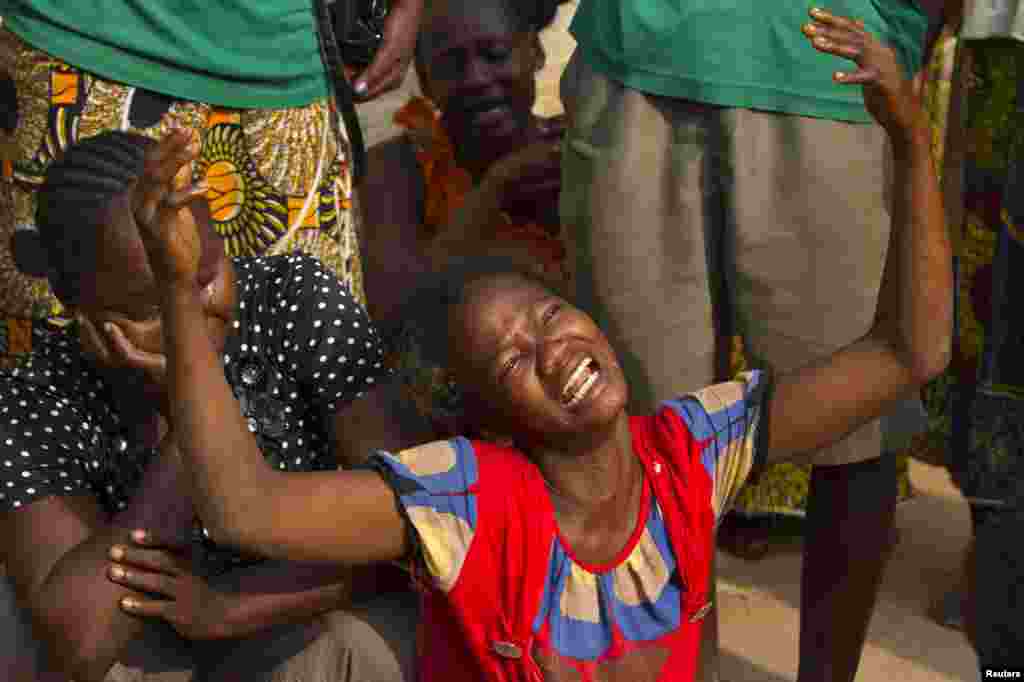
1/13A woman reacts near the dead body of her sister who was killed during one of the latest incidents of sectarian violence in the 5th Arrondissement of the capital Bangui February 9, 2014. REUTERS/Siegfried Modola
Some analysts have cast the conflict as a religious war, part of a greater struggle for Islamist domination of the continent, especially in light of reprisals by Christians against the Muslim population of the CAR. But most analysts believe that it began when political rivals appealed to religious identity to boost political ambitions. In the end, it has pitted religious groups against one another in a brutal conflict that some fear could lead to partitioning the country.
Show moreShow less
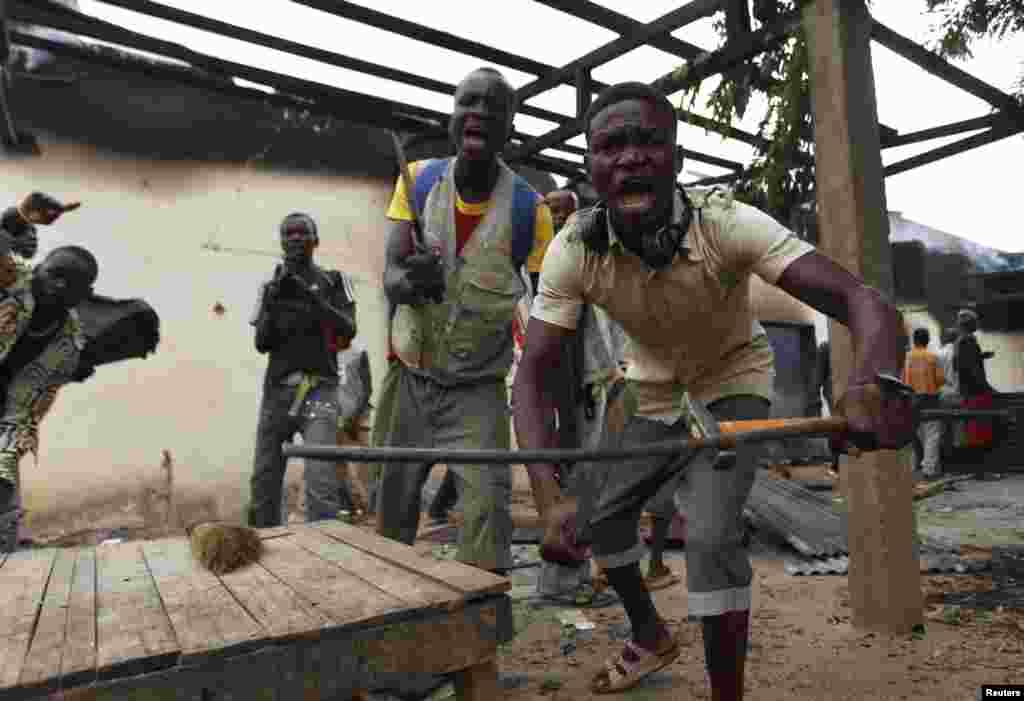
2/13Christians loot a mosque in Bangui December 10, 2013. REUTERS/Emmanuel Braun
Some analysts have cast the conflict as a religious war, part of a greater struggle for Islamist domination of the continent, especially in light of reprisals by Christians against the Muslim population of the CAR. But most analysts believe that it began when political rivals appealed to religious identity to boost political ambitions. In the end, it has pitted religious groups against one another in a brutal conflict that some fear could lead to partitioning the country.
Show moreShow less
3/13A mother holds her child while attempting to take cover as repeated gun shots are heard close to Miskine district during continuing sectarian violence in the capital Bangui, Central African Republic, Jan. 28, 2014.
Some analysts have cast the conflict as a religious war, part of a greater struggle for Islamist domination of the continent, especially in light of reprisals by Christians against the Muslim population of the CAR. But most analysts believe that it began when political rivals appealed to religious identity to boost political ambitions. In the end, it has pitted religious groups against one another in a brutal conflict that some fear could lead to partitioning the country.
Show moreShow less
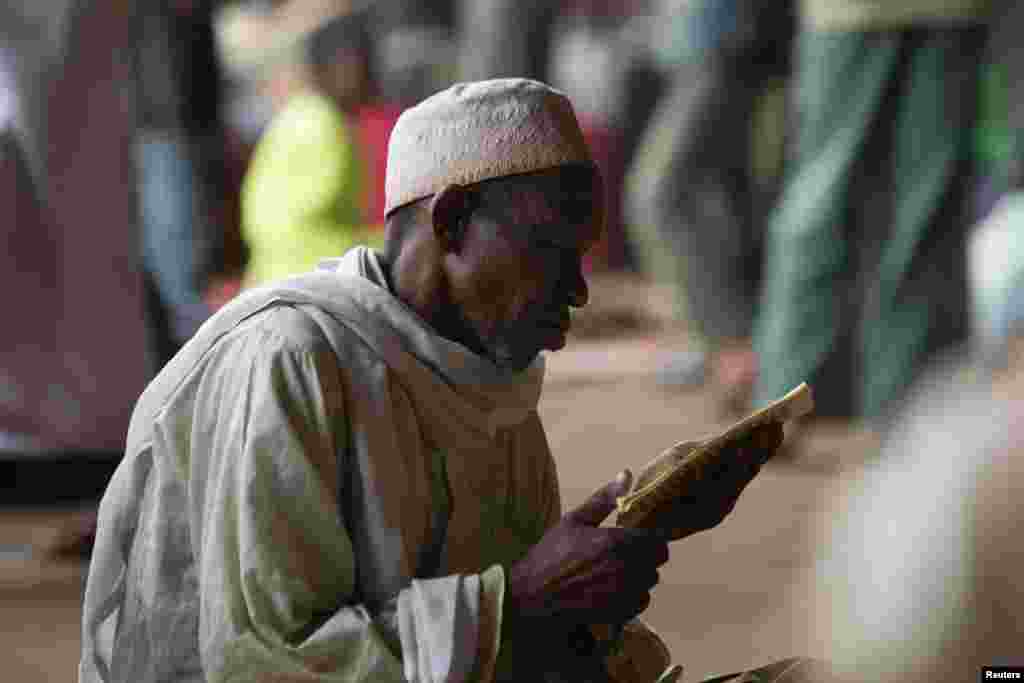
4/13A man prays while reading verses from the Koran in a hangar at the airport of the capital Bangui January 30, 2014. The hangar is used to shelter internally displaced Muslims fleeing the continuing sectarian violence and those waiting to be evacuated by ai
Some analysts have cast the conflict as a religious war, part of a greater struggle for Islamist domination of the continent, especially in light of reprisals by Christians against the Muslim population of the CAR. But most analysts believe that it began when political rivals appealed to religious identity to boost political ambitions. In the end, it has pitted religious groups against one another in a brutal conflict that some fear could lead to partitioning the country.
Show moreShow less
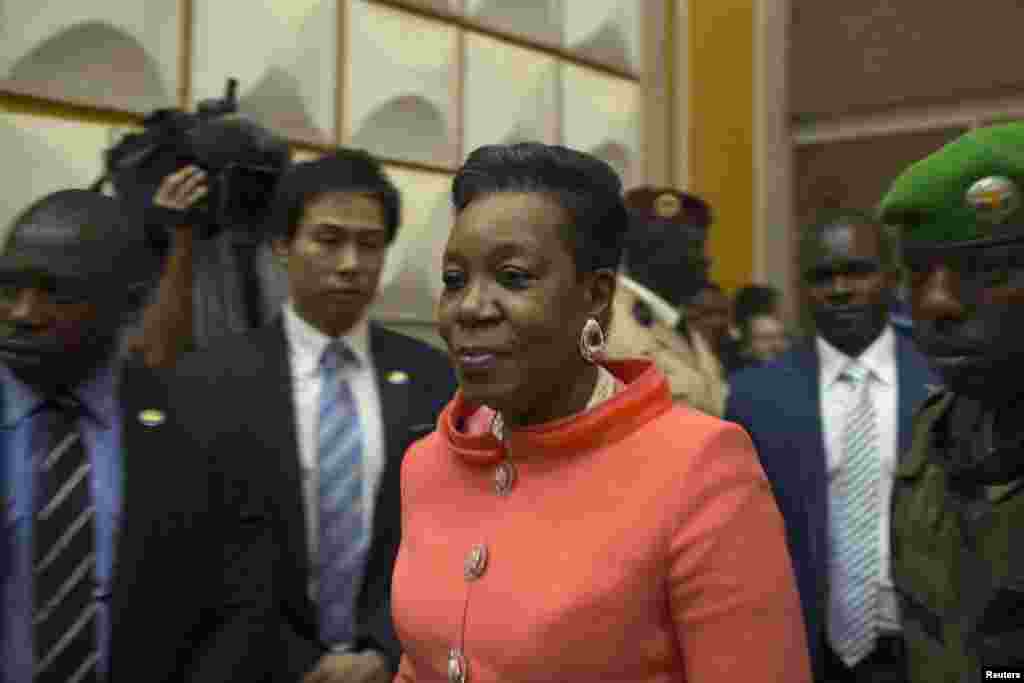
5/13Newly parliamentary-elected interim President of the Central African Republic Catherine Samba-Panza walks into the National Assembly prior to her swearing-in ceremony in the capital Bangui January 23, 2014. REUTERS/Siegfried Modola
Some analysts have cast the conflict as a religious war, part of a greater struggle for Islamist domination of the continent, especially in light of reprisals by Christians against the Muslim population of the CAR. But most analysts believe that it began when political rivals appealed to religious identity to boost political ambitions. In the end, it has pitted religious groups against one another in a brutal conflict that some fear could lead to partitioning the country.
Show moreShow less
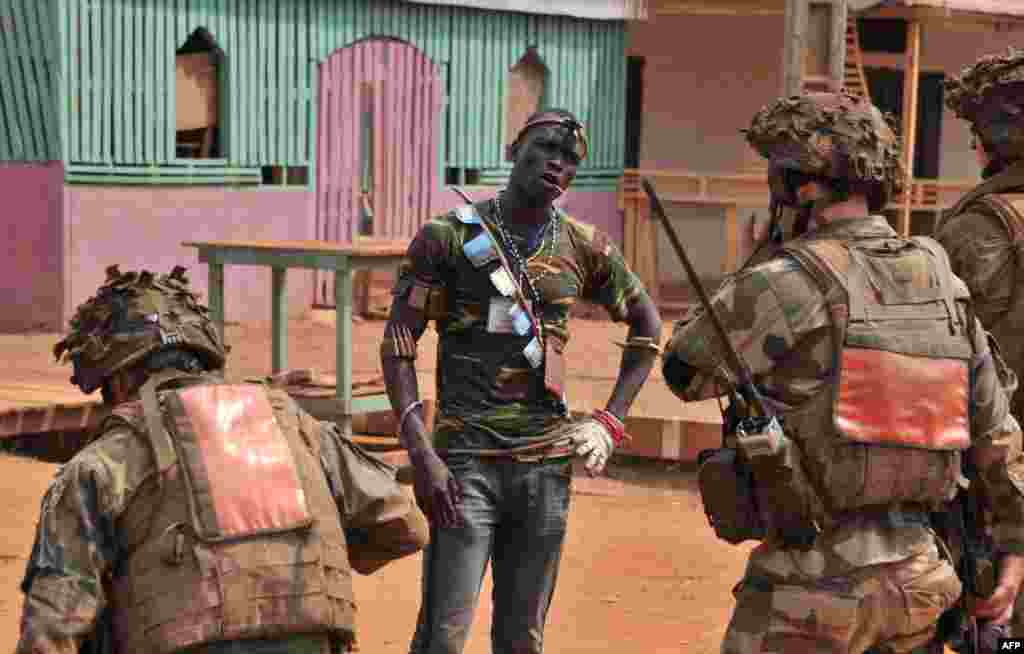
6/13French troops of the Sangaris Operation speak to a member of the Anti-Balaka Christian militia who handed over his arms in Bangui on January 25, 2014. The new president of the Central African Republic Catherine Samba Panza set to work to choose members of
Some analysts have cast the conflict as a religious war, part of a greater struggle for Islamist domination of the continent, especially in light of reprisals by Christians against the Muslim population of the CAR. But most analysts believe that it began when political rivals appealed to religious identity to boost political ambitions. In the end, it has pitted religious groups against one another in a brutal conflict that some fear could lead to partitioning the country.
Show moreShow less
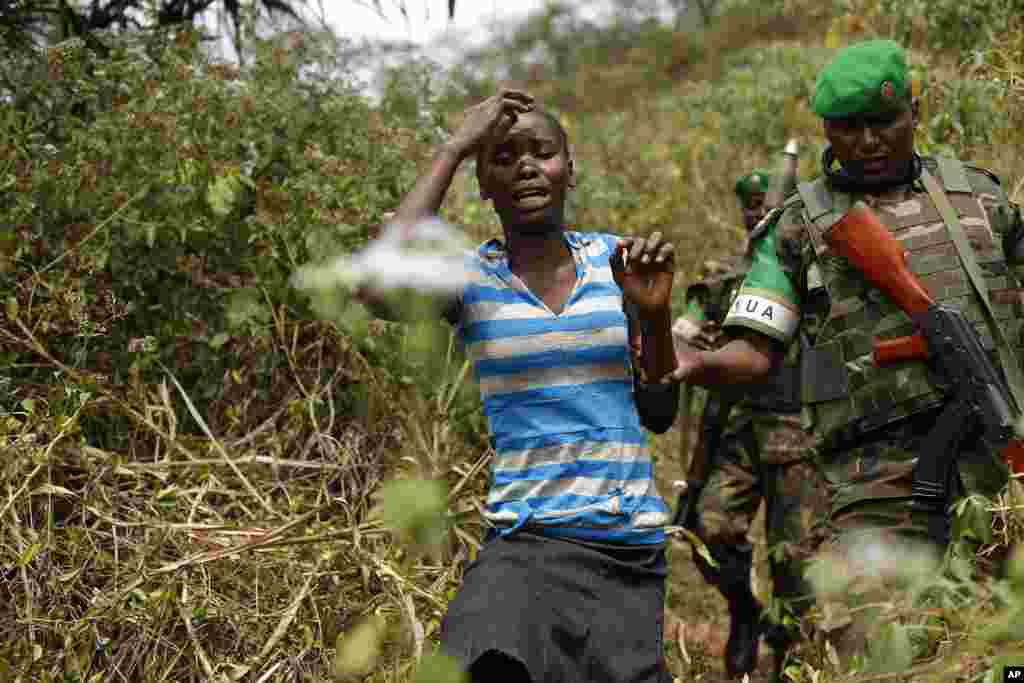
7/13A terrified woman walks down from the bush in the hills 15 Kms (10 miles) outside Bangui, Central African Republic, Friday Jan. 24, 2014, as Rwandan troops tell her to calm down during a weapons search operation. No weapons were found. Christian militiam
Some analysts have cast the conflict as a religious war, part of a greater struggle for Islamist domination of the continent, especially in light of reprisals by Christians against the Muslim population of the CAR. But most analysts believe that it began when political rivals appealed to religious identity to boost political ambitions. In the end, it has pitted religious groups against one another in a brutal conflict that some fear could lead to partitioning the country.
Show moreShow less
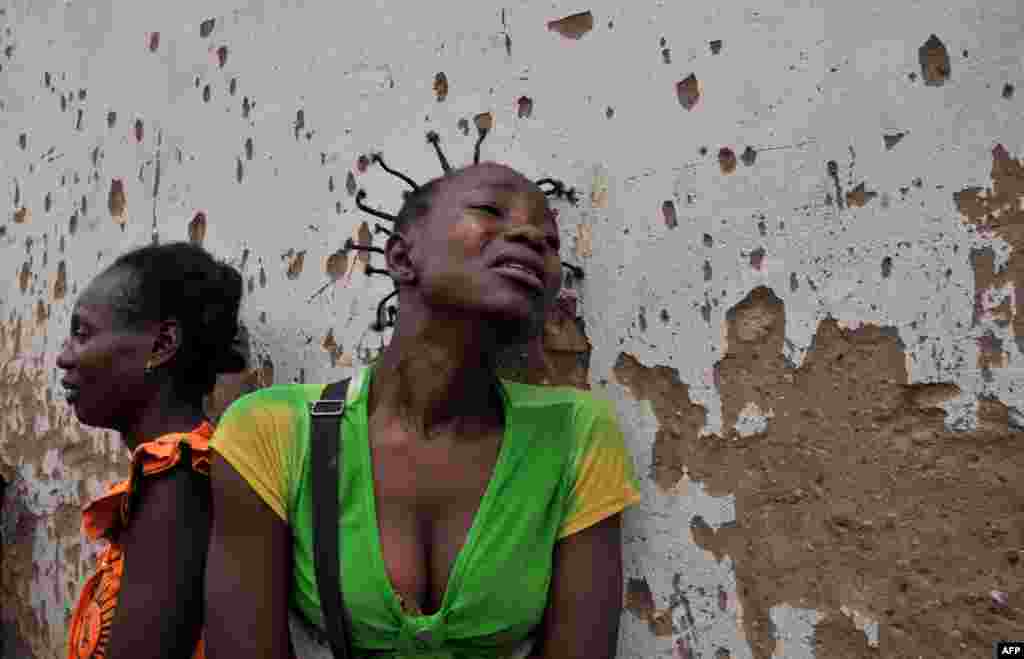
8/13Two women mourn, Feb. 9, 2014, in Bangui the death of two relatives killed in the 5th district, one the of the city's central neighborhoods.
Some analysts have cast the conflict as a religious war, part of a greater struggle for Islamist domination of the continent, especially in light of reprisals by Christians against the Muslim population of the CAR. But most analysts believe that it began when political rivals appealed to religious identity to boost political ambitions. In the end, it has pitted religious groups against one another in a brutal conflict that some fear could lead to partitioning the country.
Show moreShow less
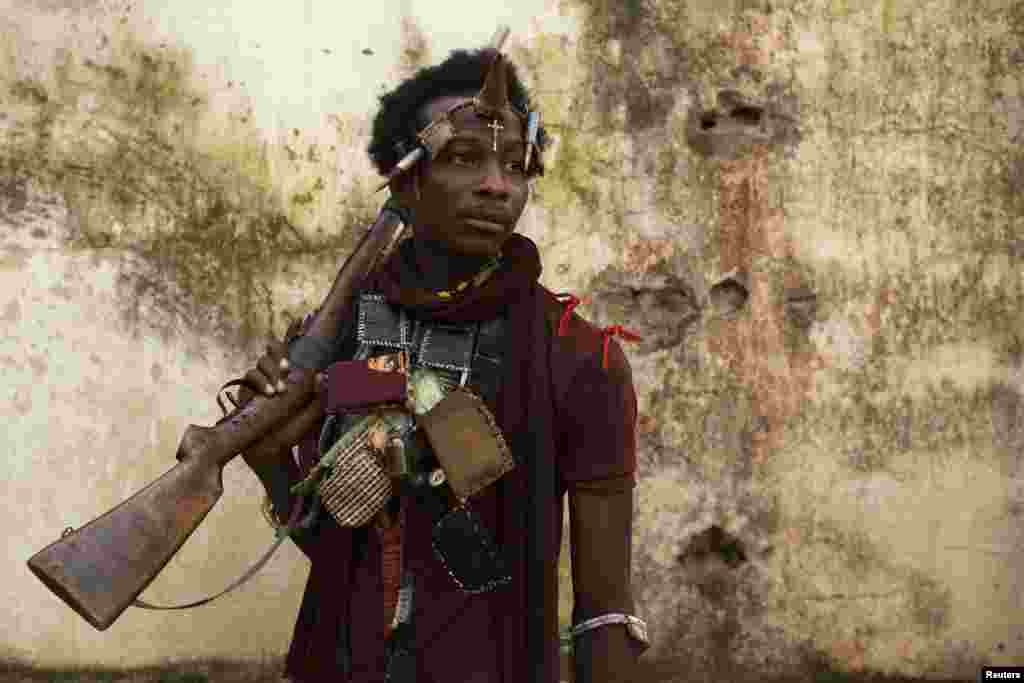
9/13An Anti-balaka militiaman poses for a photograph in the capital of the Central African Republic Bangui January 14, 2014. REUTERS/Siegfried Modola
Some analysts have cast the conflict as a religious war, part of a greater struggle for Islamist domination of the continent, especially in light of reprisals by Christians against the Muslim population of the CAR. But most analysts believe that it began when political rivals appealed to religious identity to boost political ambitions. In the end, it has pitted religious groups against one another in a brutal conflict that some fear could lead to partitioning the country.
Show moreShow less
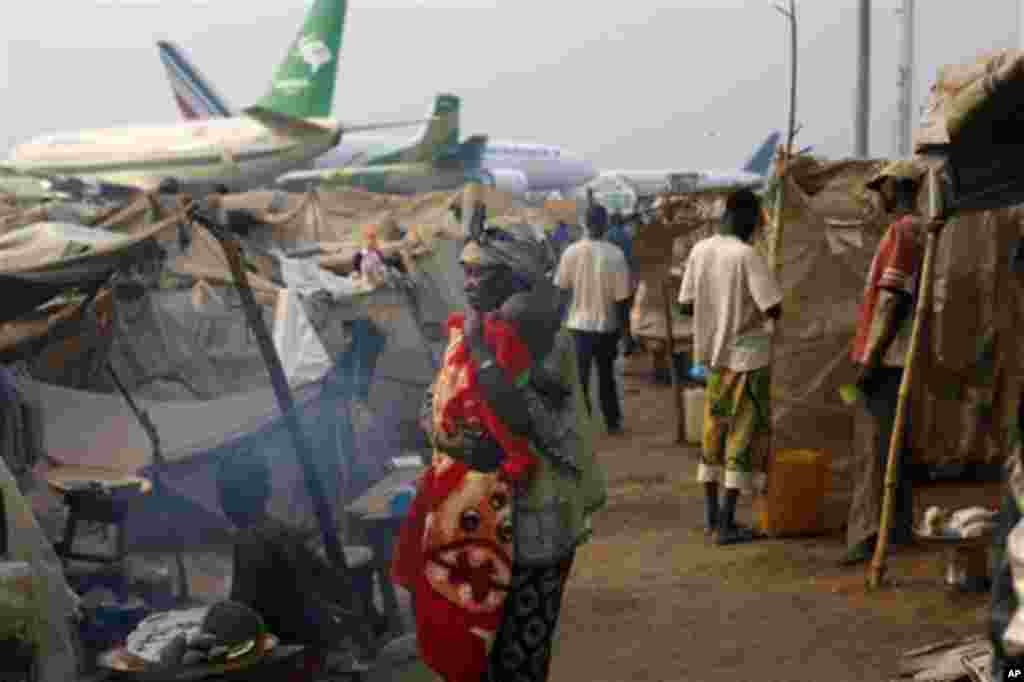
10/13Christian refugees living in makeshift shelters near the airport in Bangui, Central African Republic, Tuesday Jan. 28, 2014, as they try to escape from the deepening divisions between the country's Muslim minority and Christian majority. Christian refug
Some analysts have cast the conflict as a religious war, part of a greater struggle for Islamist domination of the continent, especially in light of reprisals by Christians against the Muslim population of the CAR. But most analysts believe that it began when political rivals appealed to religious identity to boost political ambitions. In the end, it has pitted religious groups against one another in a brutal conflict that some fear could lead to partitioning the country.
Show moreShow less
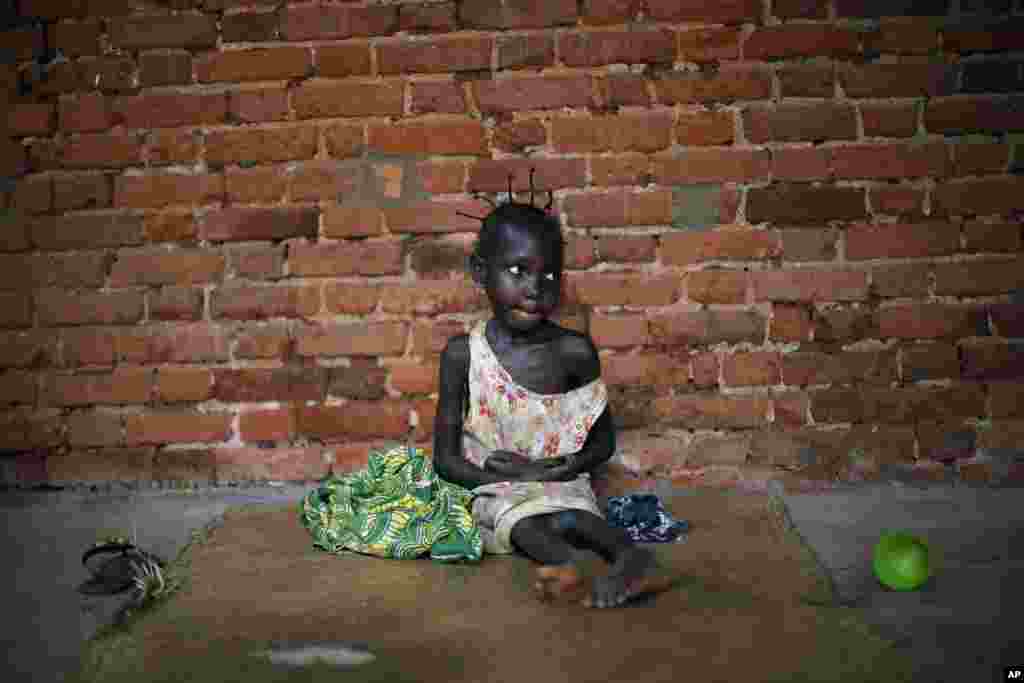
11/13Amandine, 7, who found refuge in the Mbaiki cathedral, in Mbaiki, some 120kms (75 miles) south west of bangui, Central African Republic, sits on the ground, Sunday, Jan. 26, 2014. Amandine, who lost both parents five years ago, cannot speak nor walk. She
Some analysts have cast the conflict as a religious war, part of a greater struggle for Islamist domination of the continent, especially in light of reprisals by Christians against the Muslim population of the CAR. But most analysts believe that it began when political rivals appealed to religious identity to boost political ambitions. In the end, it has pitted religious groups against one another in a brutal conflict that some fear could lead to partitioning the country.
Show moreShow less
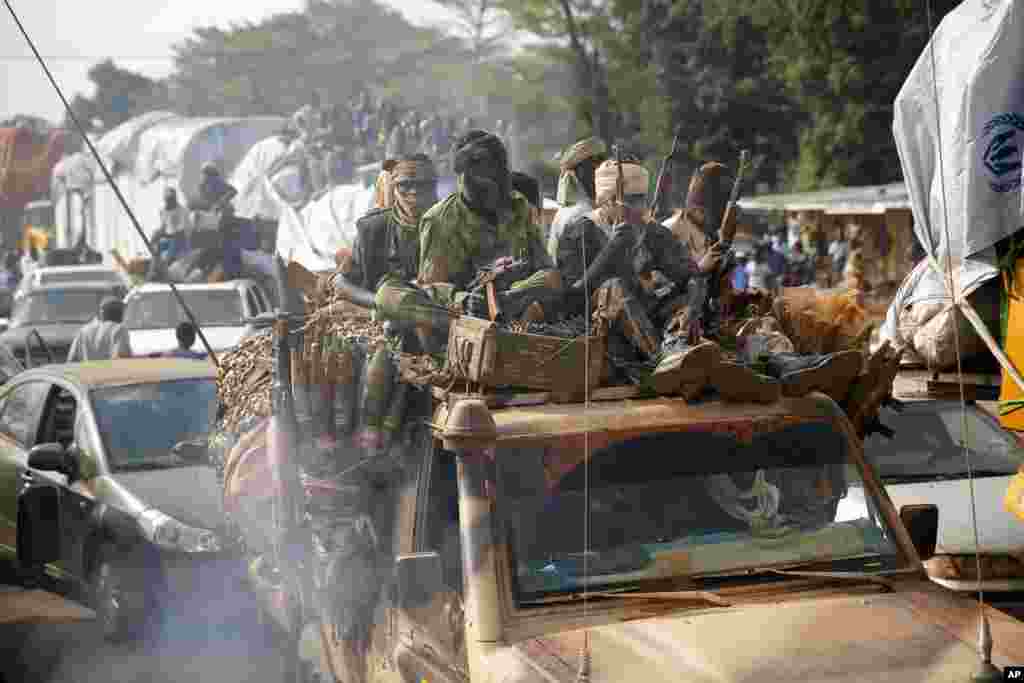
12/13At PK12 Chadian troops escort thousands of Muslim residents from Bangui and Mbaiki, fleeing the Central African Republic capital Bangui in a mass exodus using cars, pickups, trucks, lorries and motorcycles on Friday Feb. 7, 2014.
Some analysts have cast the conflict as a religious war, part of a greater struggle for Islamist domination of the continent, especially in light of reprisals by Christians against the Muslim population of the CAR. But most analysts believe that it began when political rivals appealed to religious identity to boost political ambitions. In the end, it has pitted religious groups against one another in a brutal conflict that some fear could lead to partitioning the country.
Show moreShow less
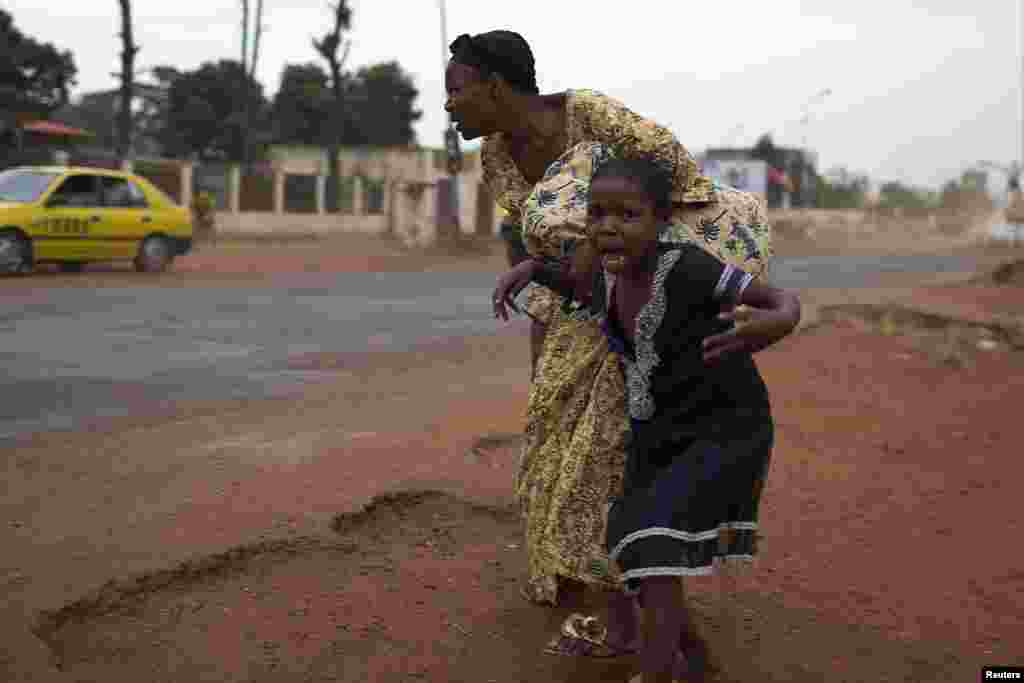
13/13A woman runs for cover as heavy gunfire erupts in the Miskin district of Bangui, Central African Republic, Feb. 3, 2014.
Some analysts have cast the conflict as a religious war, part of a greater struggle for Islamist domination of the continent, especially in light of reprisals by Christians against the Muslim population of the CAR. But most analysts believe that it began when political rivals appealed to religious identity to boost political ambitions. In the end, it has pitted religious groups against one another in a brutal conflict that some fear could lead to partitioning the country.