Analysts Discuss Impact on Assad From Syria Strike
STATE DEPARTMENT —
As U.S. officials took to the U.S. airwaves, insisting that the Assad government was responsible for last week's chemical attack in Syria, a U.S. military response seemed increasingly likely. The White House and the State Department have insisted that any U.S. response will be aimed only at preventing President Basahr al-Assad from using weapons of mass destruction again. But the question many are asking is where will that U.S. response leave the embattled Syrian president.
On Friday, President Barack Obama was clear about a possible US strike against Syria. He said it would not be about bringing down the government in Damascus.
"We're not considering any boots-on-the-ground approach. What we will do is consider options that meet the narrow concern around chemical weapons, understanding that there's not going to be a solely military solution to the underlying conflict and tragedy that's taking place in Syria," said Obama.
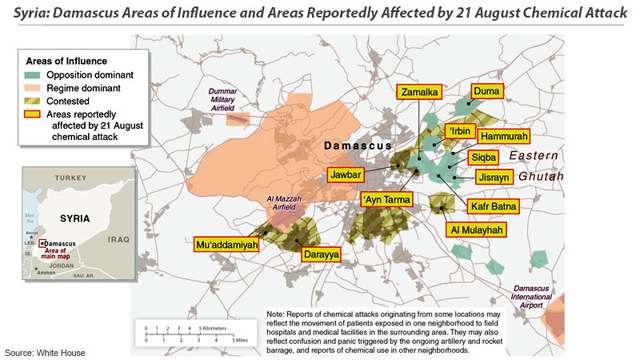
Last week's chemical weapons attack east of Damascus has the international community in a quandary in terms of how to react. The president's decision matters in real ways to U.S. security, said Secretary of State John Kerry.
"It matters because if we choose to live in a world where a thug and a murderer like Bashar al-Assad can gas thousands of his own people with impunity, even after the United States and our allies said no, and then the world does nothing about it, there will be no end to the test of our resolve and the dangers that will flow from those others who believe that they can do as they will," said Kerry.
If Assad remains in power following a narrow U.S. strike, however, the Syrian leader will have even less incentive to negotiate an end to the country's civil war, said Brookings Institution analyst Michael O'Hanlon.
"Right now President Assad believes he’s winning. And there’s no reason that I can imagine that he would change his mind about giving up power or meaningfully sharing power when he thinks he’s winning," said O'Hanlon.
More than two years into the conflict, Assad forces have reversed some of the earlier gains by rebels with help from Iran and Hezbollah. A limited U.S. attack could even bolster Assad, said Cato Institute analyst Doug Bandow.
"He might gain some credibility being the nationalist who stood up to the Americans. Who knows? To the extent that people think he used chemical weapons, it kind of hurts him. But to the extent that they think he is willing to be tough and stand up, that may help him," said Bandow.
Bandow said Assad is holding on to power not only for himself. "One can imagine Bashar al-Assad getting on an airplane and flying somewhere - Moscow maybe - and enjoying his ill-gotten riches. But there's a whole regime around him. There's a whole lot of people who have really invested in this."
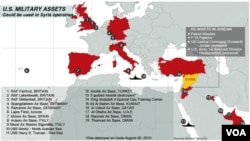
U.S. Military Assets - August 30, 2013
The Assads belong to Syria's Alawite minority and his government is fighting a largely sectarian war against Sunni Muslims, the majority. It's a battle for control of the country.
Adam Ereli, a former U.S. ambassador, said, "That guy is a hunted, caged lion with sharp teeth and claws, but he's not going anywhere."
While some experts believe Assad ultimately will yield power, for the moment he said he will not be intimidated by any outside aggression.
The Latest Images from Syria
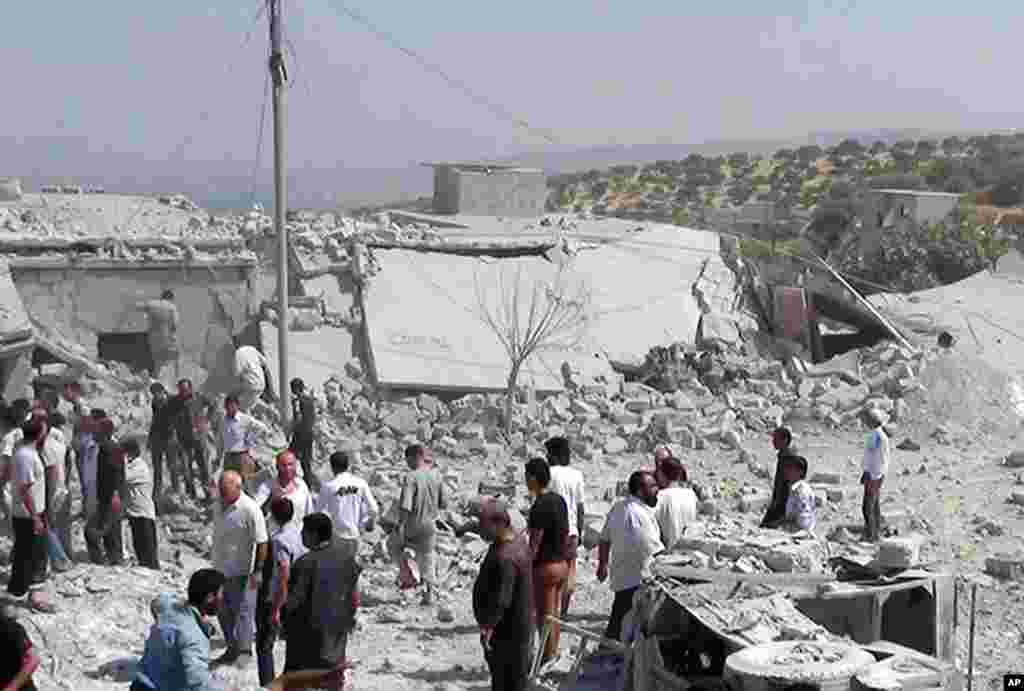
1/11In this citizen journalism image provided by Edlib News Network, ENN, Syrians search under rubble to rescue people from houses that were destroyed by a Syrian government warplane in Idlib province, August 30, 2013.
Show moreShow less
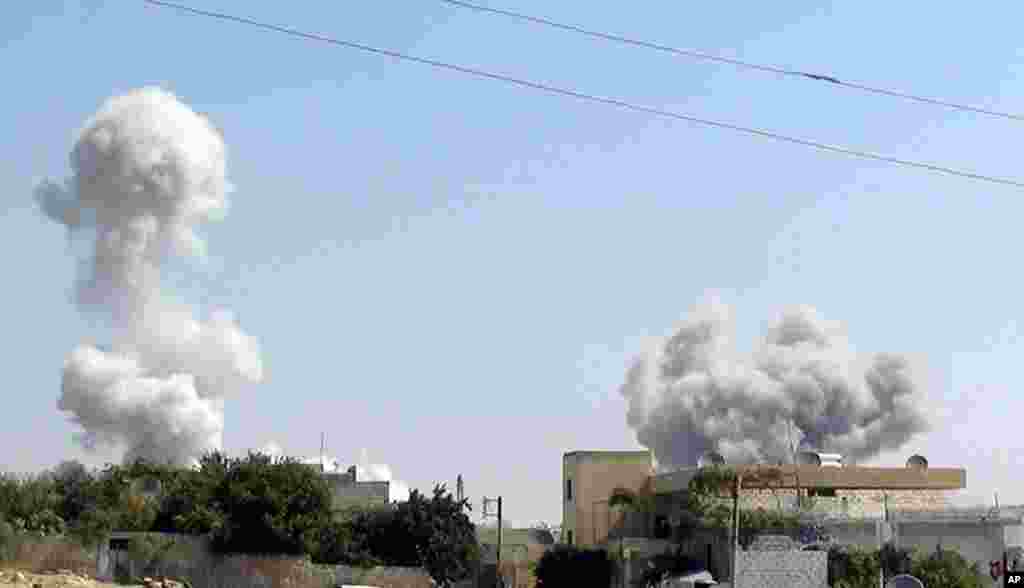
2/11In this citizen journalism image provided by Edlib News Network, ENN, smoke rises after explosives were dropped by a Syrian government warplane in Idlib province, August 30, 2013.
Show moreShow less
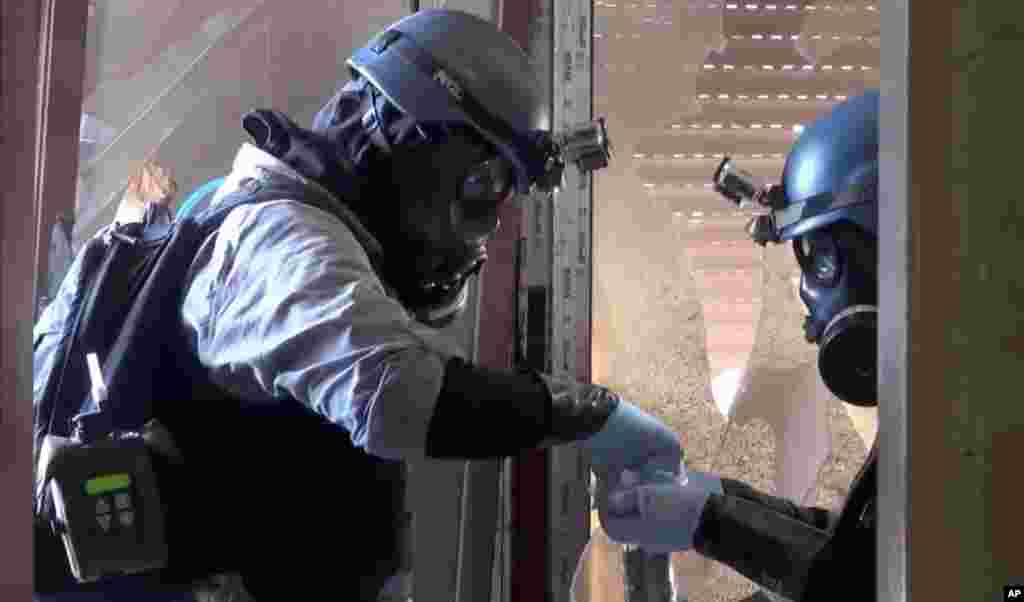
3/11In this image taken from video obtained from the Shaam News Network, U.N. investigators gather potential evidence in a Damascus suburb, August 28, 2013.
Show moreShow less
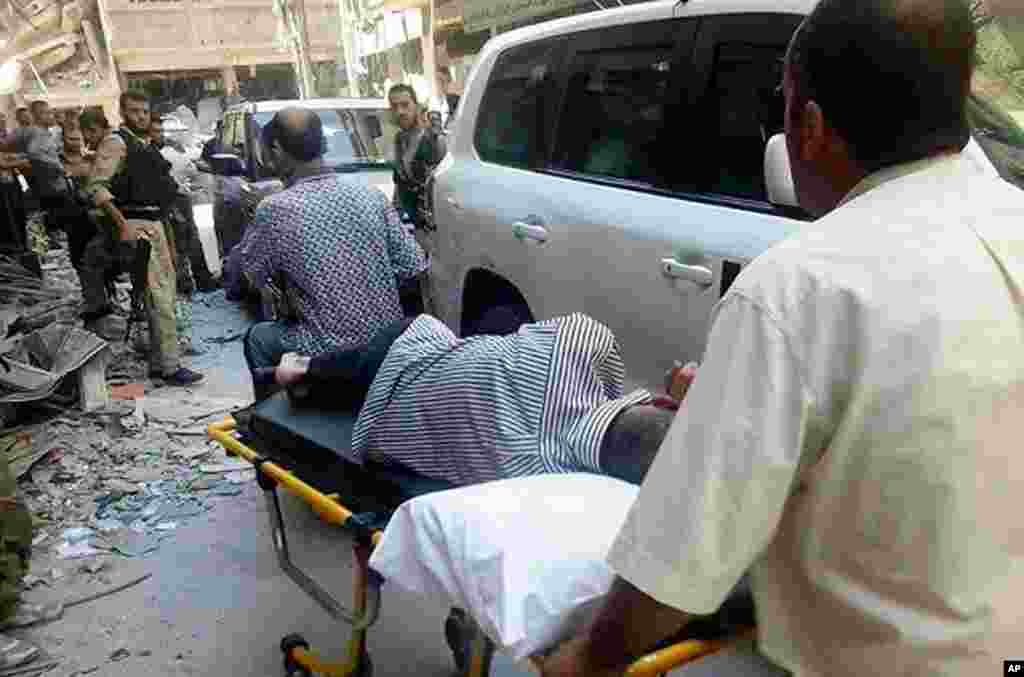
4/11This citizen journalism image provided by the United media office of Arbeen shows Syrians moving a man who was allegedly exposed to chemical weapons to show him to U.N. investigators in a Damascus suburb, August 28, 2013.
Show moreShow less
5/11This citizen journalism image provided by the United media office of Arbeen shows U.N. investigators in a suburb of Damascus, August 28, 2013.
Show moreShow less
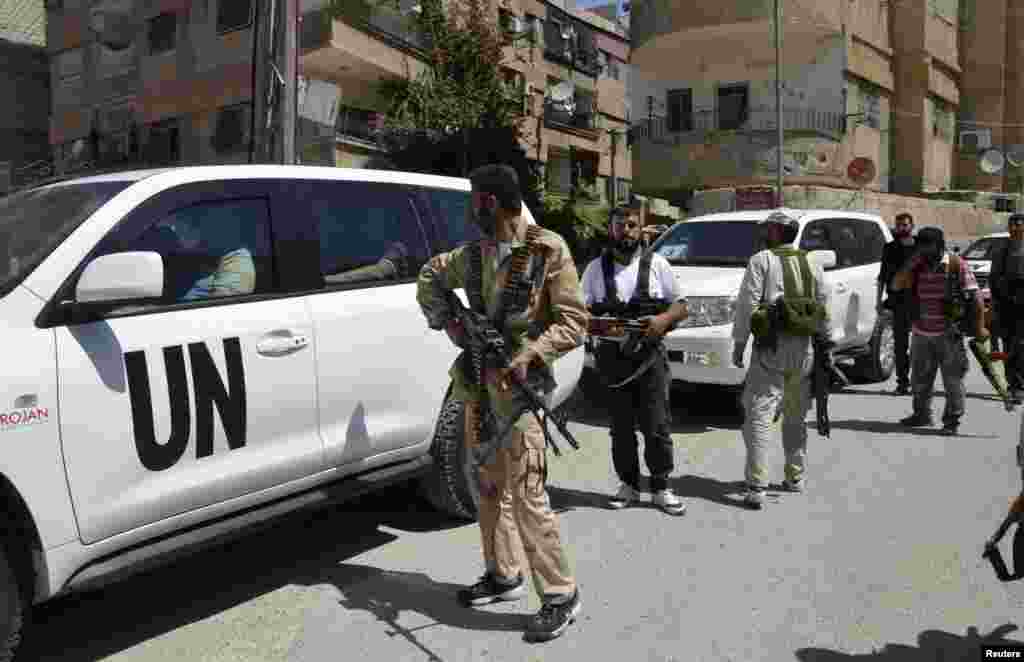
6/11Free Syrian Army fighters carry their weapons as they escort U.N. vehicles carrying chemical weapons experts at the site of an alleged chemical weapons attack in a Damascus suburb, August 28, 2013.
Show moreShow less
7/11Free Syrian Army fighters deploy in Aleppo's town of Khanasir after seizing it, August 26, 2013.
Show moreShow less
8/11Free Syrian Army fighters inspect munitions and a tank that belonged to forces loyal to Syria's President Bashar al-Assad after they seized Khanasir, August 26, 2013.
Show moreShow less
9/11A U.N. chemical weapons expert gathers evidence at site of an alleged poison gas attack in a southwestern Damascus suburb, August 26, 2013.
Show moreShow less
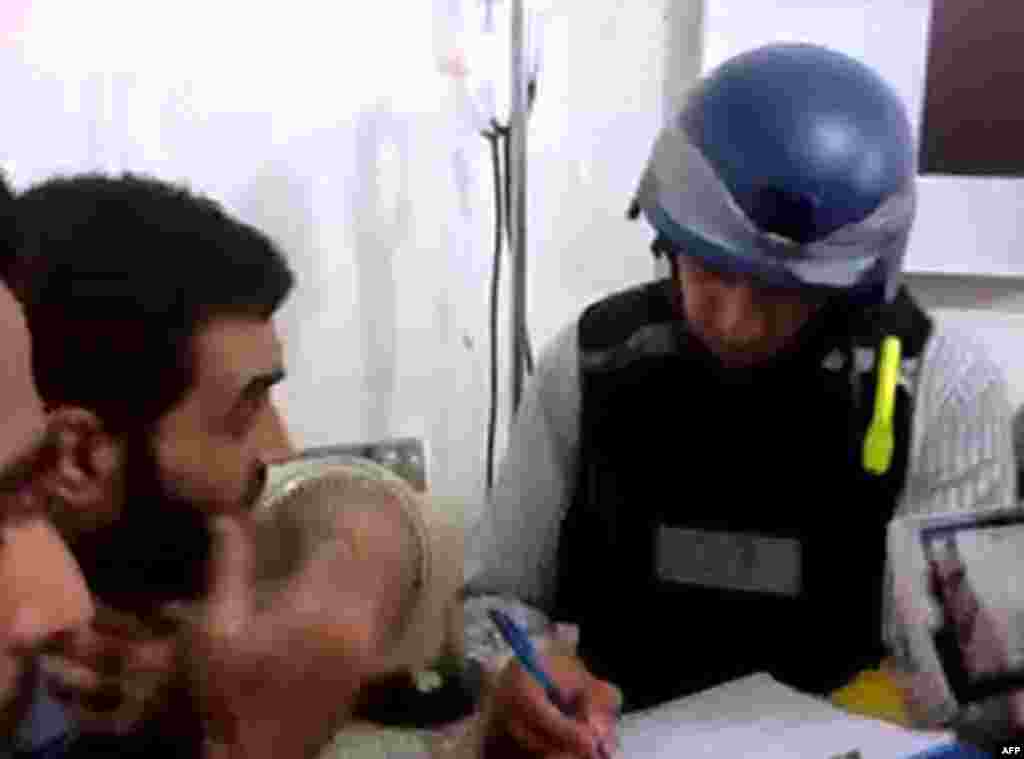
10/11An image grab taken from a video posted by Syrian activists purportedly shows a U.N. inspector speaking to a man in a Damascus suburb, August 26, 2013.
Show moreShow less
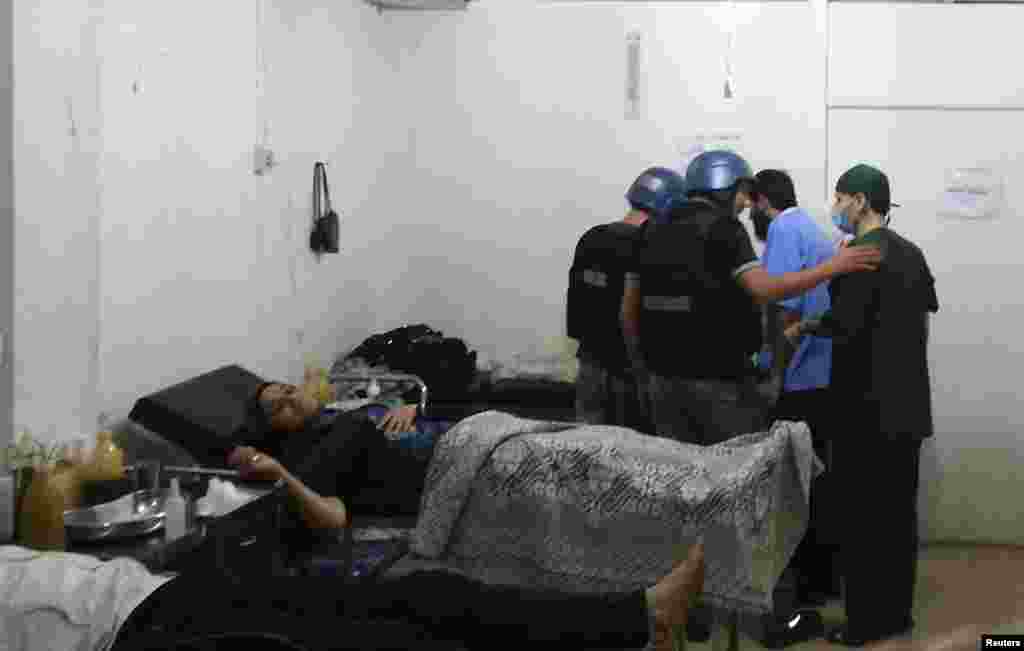
11/11U.N. chemical weapons experts visit a hospital where wounded people affected by a suspected gas attack are being treated, in a southwestern Damascus suburb, August 26, 2013.