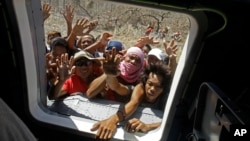
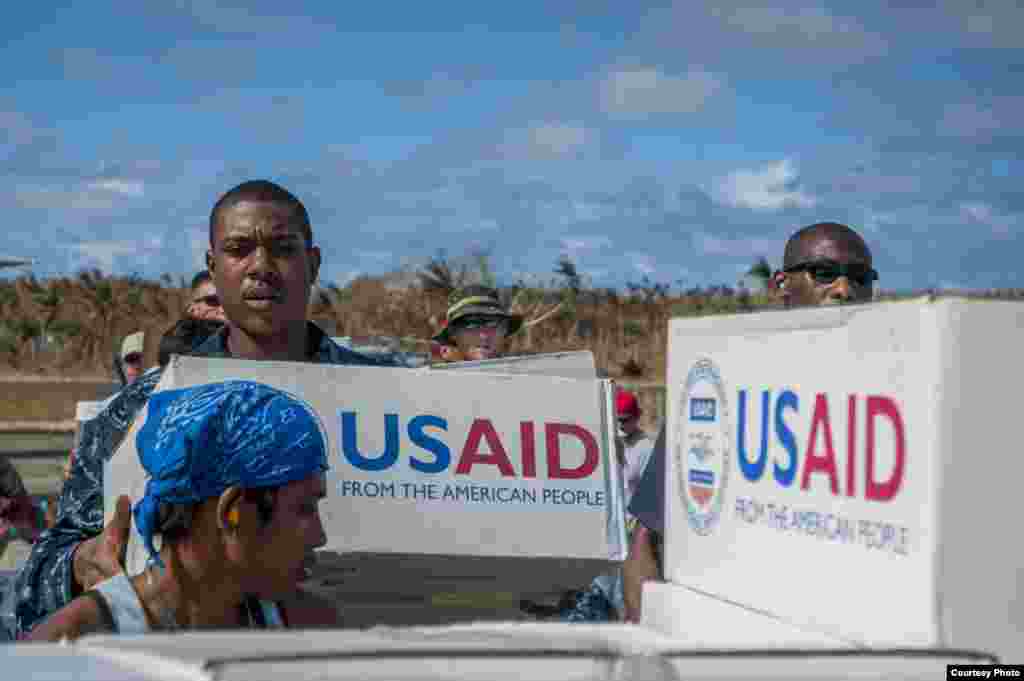
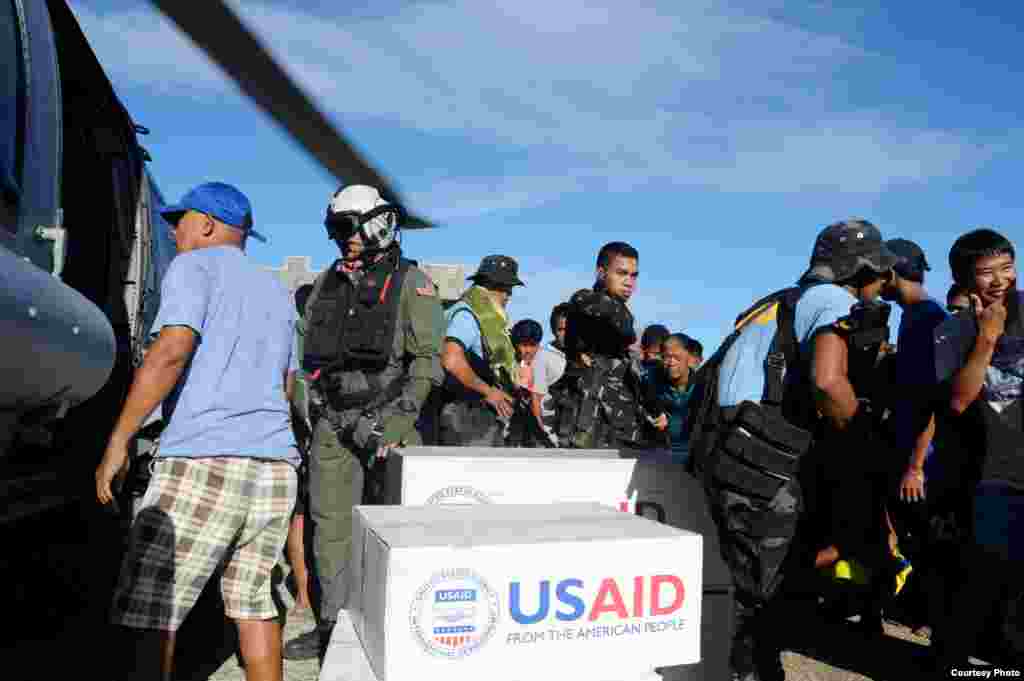
Desperate villagers rush to a window of a U.S. Navy Seahawk helicopter as crewmen deliver aid in an emergency drop in San Jose, Philippines, Nov. 18, 2013.
MANILA —
In the Philippines, authorities are getting a better handle on the extent of the damage from Typhoon Haiyan, as more disaster responders penetrate remote areas. They have determined that more than one million homes and 3,200 public schools have been destroyed. While aid is reaching some remote areas, authorities are having difficulty sustaining regular deliveries.
The United Nations humanitarian affairs office says close to 13 million people have been affected by the super typhoon that blasted its way across the central Philippines. The official death toll stands at 3,974.
At a briefing in Manila, Orla Fagan, spokeswoman of the U.N. Office for the Coordination of Humanitarian Affairs, said with each passing day since the typhoon struck 11 days ago, aid is reaching more people.
“This is massive," she said, admitting that it has been a mammoth task. "Between 10 and 12 million people have to be assisted to recover from this. It’s like taking the whole of Belgium and trying to assist. It really is a colossal effort and everybody is working flat out.”
Road blocks
The U.N. cites three major infrastructure concerns that have hampered relief and recovery operations: the lack of power, poor communication and impassable roads compounded by little access to fuel.
According to the latest figures from the Civil Defense office, more than a dozen provinces are still experiencing some form of power outage, with Leyte and Samar in the east remaining completely dark. The government has to repair - or in some cases replace - some 570 toppled electricity transmission towers and seven substations.
Cellular service is mostly restored in 13 provinces, but the three eastern-most provinces of Samar, Leyte and Biliran only have about 50 percent or less of service.
A number of roads have been cleared of debris and national highways are mostly passable for heavy duty trucks.
Food aid
The government’s primary mode of getting food aid to the worst-hit cities and towns of Leyte and Samar has been by land. But as production of food packages in Manila ramped up at the end of last week, the lack of transportation to deliver them became apparent.
Transportation Secretary Joseph Emilio Abaya said there are not enough trucks to make the four rotations needed to keep up with the government’s mandate to deliver food packages to 150,000 families daily. He said the government is switching to shipping containers that will be put on vessels at Manila’s piers.
“I think the real concern would be the distribution on the other side. So we have some trucks there now," he explained. "The military is also building up their inventory… so we’ll see. We’ll see how things go.”
To further complicate things, the trucks that could make the drive southeast toward the island province of Leyte were stuck for hours waiting to catch one of five ferries that operate the route. Abaya says more ferries have been added and that the trucks will have another port nearby to use starting Monday.
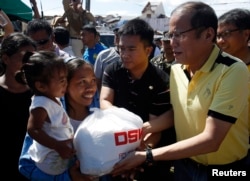
Philippine President Benigno Aquino (R) distributes disaster relief items to survivors of Typhoon Haiyan during his visit to Palo, Leyte province, central Philippines Nov. 18, 2013.
President Benigno Aquino, whose administration has been criticized for a slow response to the disaster, continues to tour the hardest-hit towns and provinces. At Palo in Leyte, he handed out relief goods to residents.
"One is tempted to despair, but the minute I despair, then everybody - it cascades down and everybody gets hampered in their efforts," the president said.
The country head of the U.N.’s refugee agency in the Philippines said in Manila Monday the issues with aid distribution have still not been resolved. Bernard Kerblat says agencies are still facing coordination problems with international aid that he says is slow to move out of Cebu province in the center of the country - which was made the clearing house for international assistance.
Operation Damayan
1/9U.S. Marines help load relief supplies onto an MH-60R Seahawk to be airlifted to remote areas of the Philippines in support of Operation Damayan. (U.S. Navy)
ផ្សេងទៀតបិទ
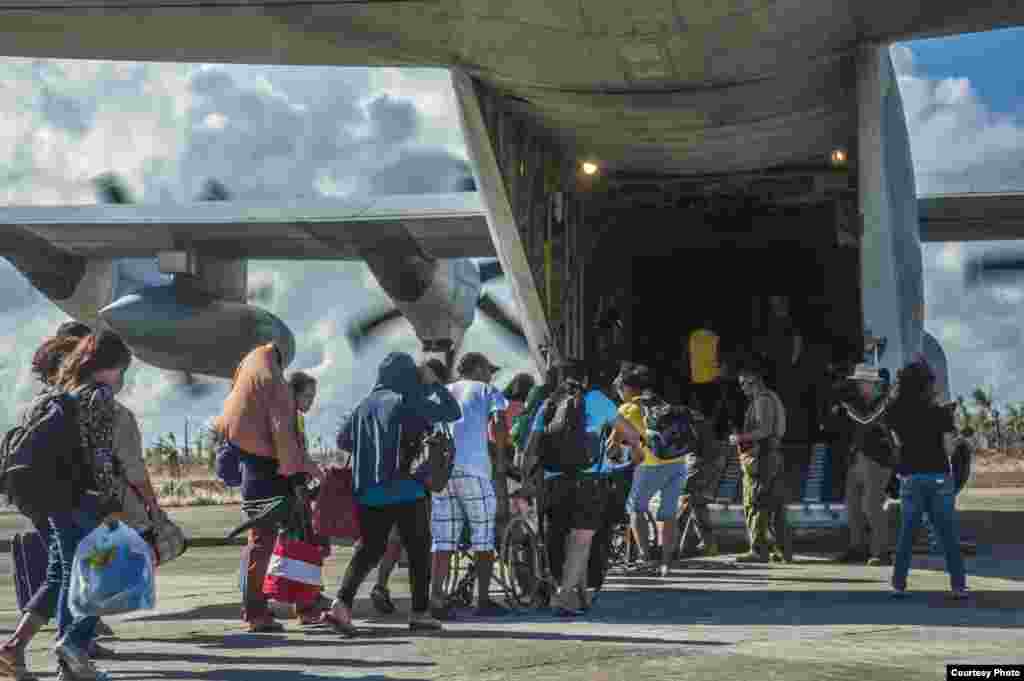
2/9Philippine citizens board an HC-130 Hercules to be airlifted to safety. (U.S. Navy)
ផ្សេងទៀតបិទ
3/9Philippine citizens board an HC-130 Hercules as U.S. sailors transport relief supplies in support of Operation Damayan. (U.S. Navy)
ផ្សេងទៀតបិទ
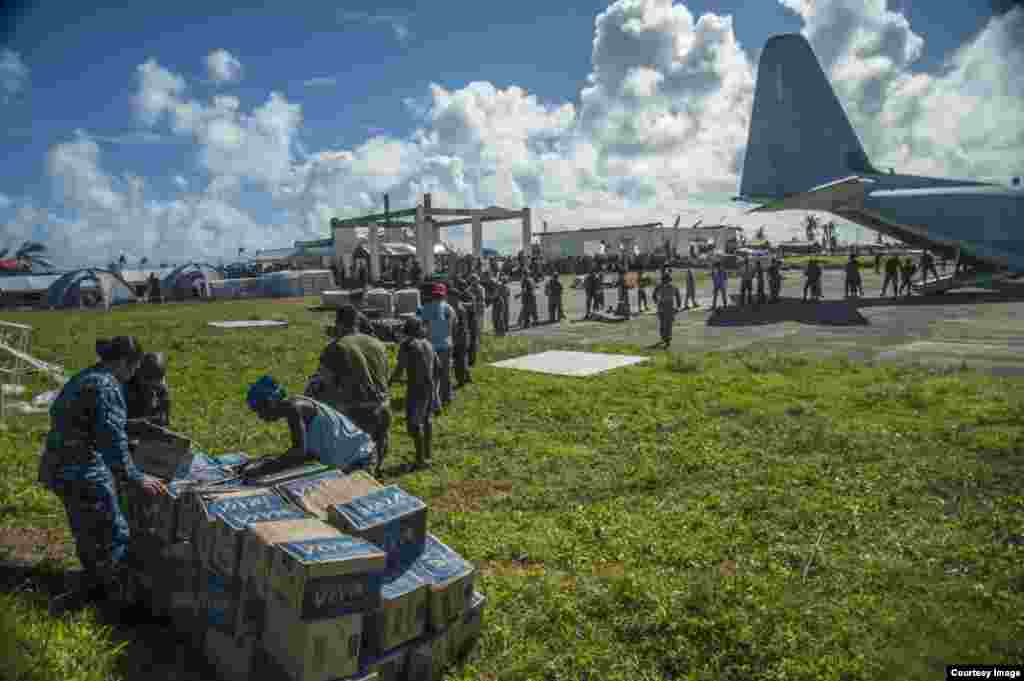
4/9U.S. military personnel and and Philippine civilians unload relief supplies. (U.S. Navy)
ផ្សេងទៀតបិទ
5/9U.S. military personnel and Philippine citizens unload relief supplies. (U.S. Navy)
ផ្សេងទៀតបិទ
6/9A U.S. Hospital Corpsman assists Philippine nurses in treating a patient's head wound at the Immaculate Conception School refugee camp. (U.S. Navy)
ផ្សេងទៀតបិទ
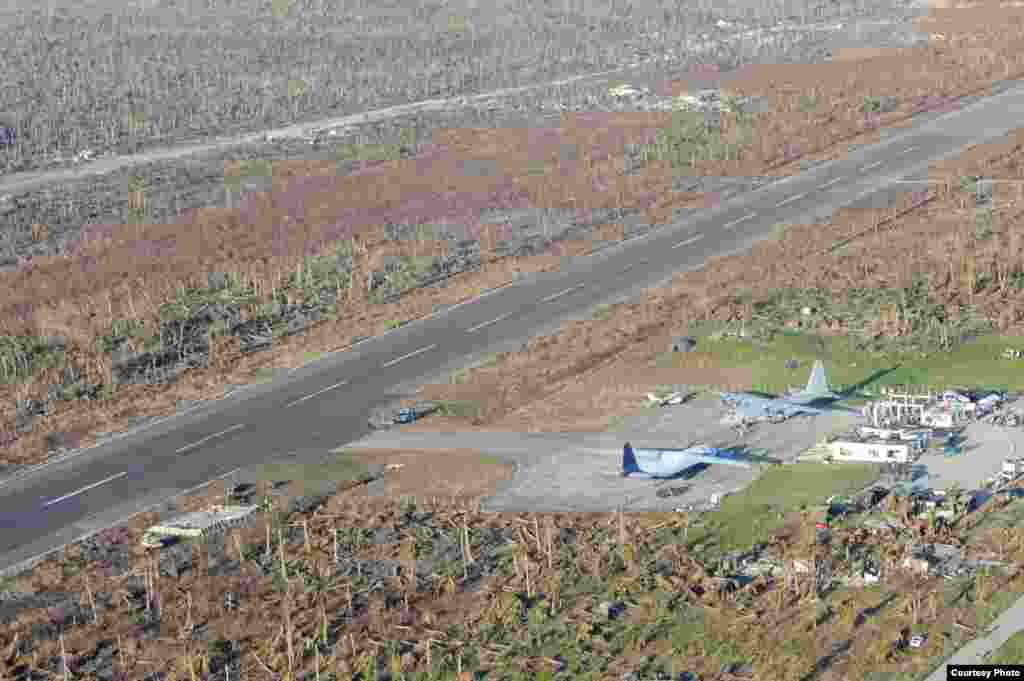
7/9An HC-130 Hercules and other military aircraft sit on the tarmac at Guiuan airport waiting to airlift Philippine citizens in support of Operation Damayan. (U.S. Navy)
ផ្សេងទៀតបិទ
8/9A U.S. Naval Air Crewman assists Philippine citizens in distributing relief supplies in support of Operation Damayan. (U.S. Navy)
ផ្សេងទៀតបិទ
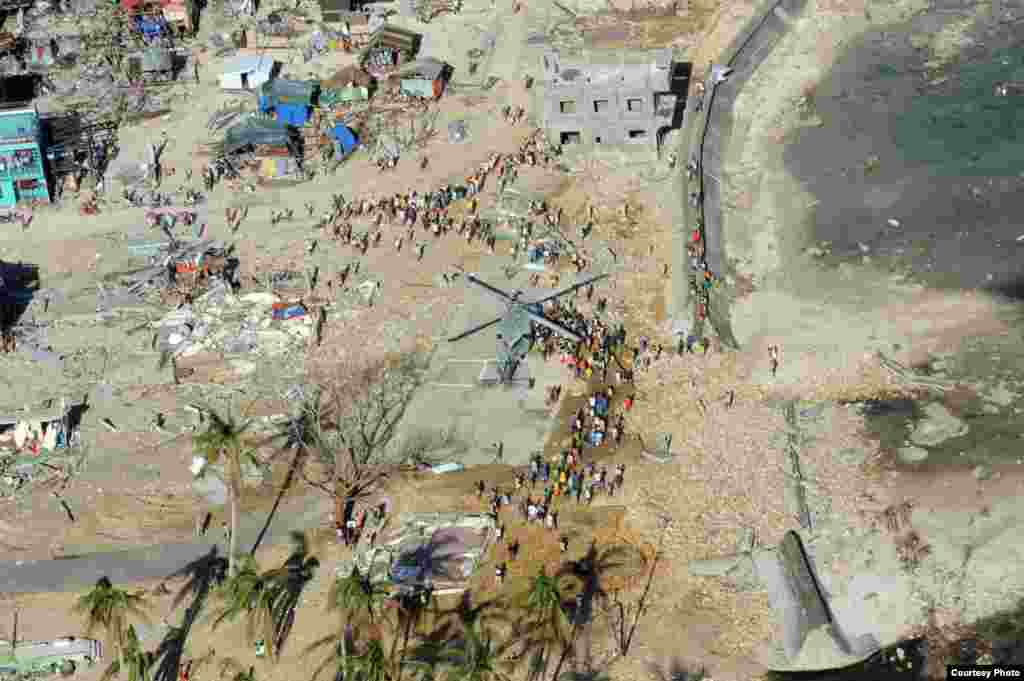
9/9Philippine citizens gather around a MH-60S Seahawk as it delivers relief supplies. (U.S. Navy)