





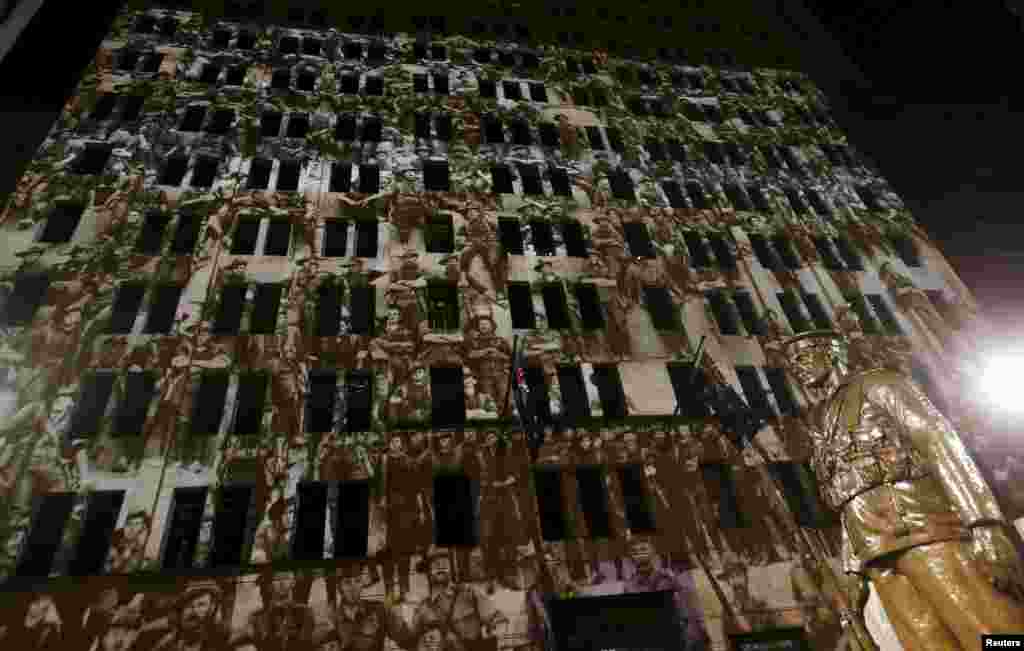
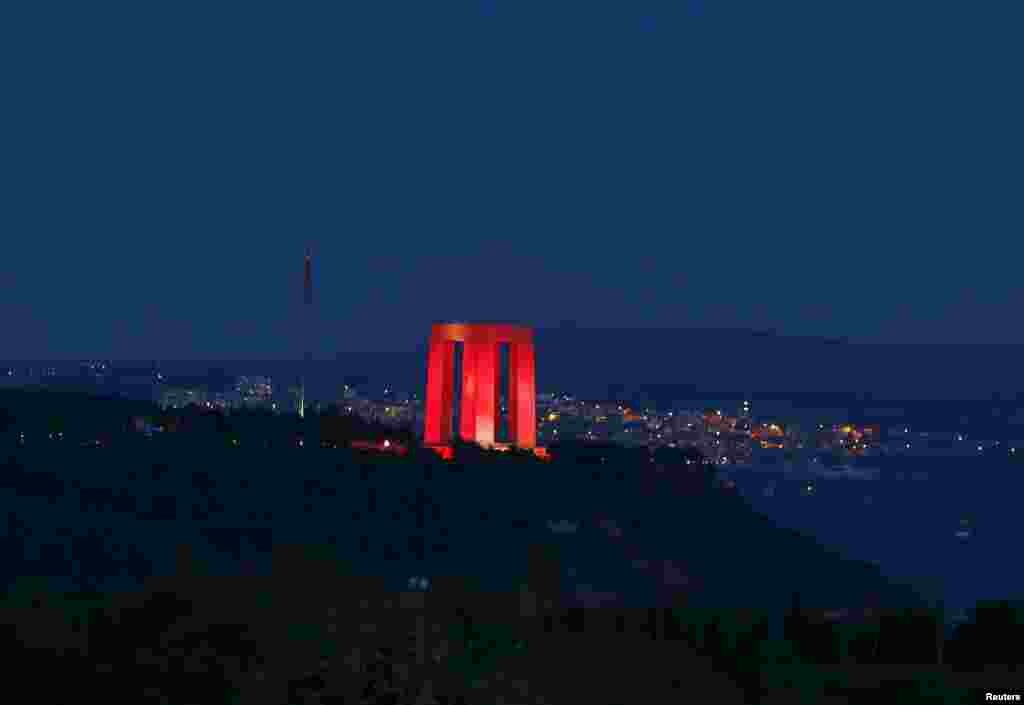
Families of soldiers who served in the Gallipoli campaign of World War I, along with world leaders, streamed onto the battle sites on Friday for ceremonies marking 100 years since the British-led invasion.
Representatives of countries that faced off in one of the most iconic events of the war were honoring the dead in a joint ceremony, on the eve of the centenary since troops landed on beaches here.
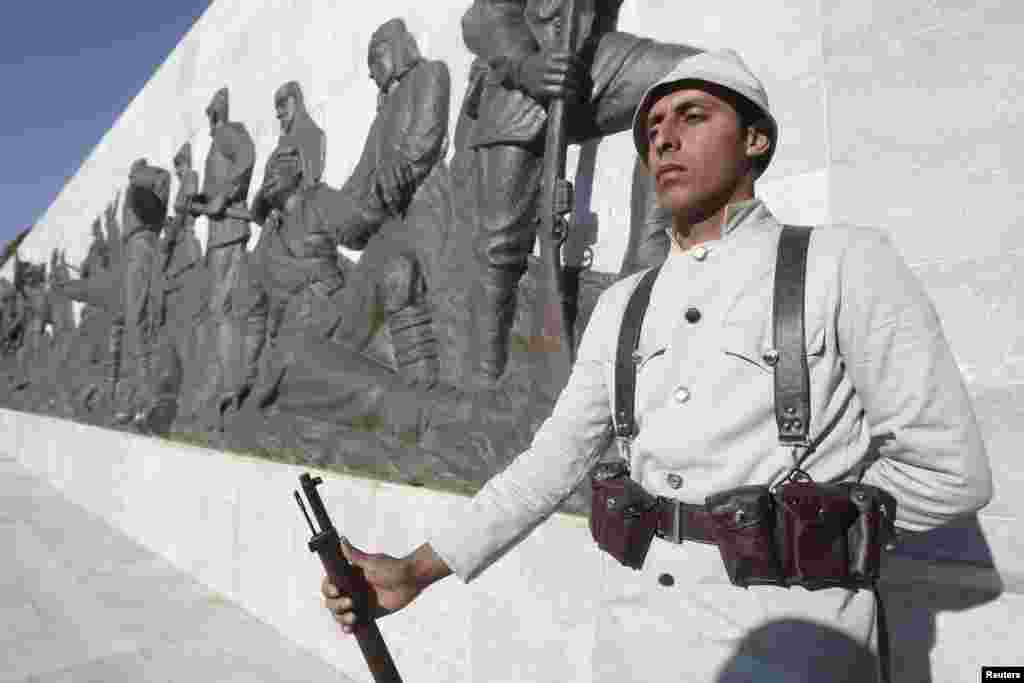
Turkish President Recep Tayyip Erdogan and Britain's Prince Charles each laid wreaths at a memorial for the fallen Turkish soldiers at Gallipoli before listening to a recitation from the Muslim holy book as well as prayers for peace. A band in Ottoman Janissary costume performed old Turkish military marches.
"Despite the appalling sacrifices made by so many in two world wars, intolerance combined with the willingness to use the most barbaric violence remain a persistent and prevailing source of division and conflict,'' Charles said at the Turkish memorial.
"We all have a shared duty ... to find ways to overcome intolerance to fight against hatred and prejudice so that we can truly say we have honored the sacrifice of all those who have fought and died here in Gallipoli and elsewhere,'' Charles added.
Ceremonies were to later move to the British memorial site, where Prince Harry, Charles' son, was scheduled to deliver a speech.
Major commemorations Saturday
The main events are scheduled for Saturday, the anniversary of the dawn landings by troops – mostly from Australia and New Zealand – who were rowed in to narrow beaches with scant cover only to encounter rugged hills and fire from well-concealed Turkish defenders.
The doomed Allied offensive aimed to secure a naval route from the Mediterranean to Istanbul through the Dardanelles, and take the Ottomans out of the war. It resulted in over 130,000 deaths and came to be seen as a folly of British war planning. Around 44,000 Allied troops died in the campaign; about 86,000 were killed on the Ottoman side.
The campaign, however, helped forge national identities for countries on both sides.
Mustafa Kemal Ataturk used his prominence as a commander at Gallipoli, known as Canakkale to the Turks, to vault into prominence, lead Turkey's War of Independence and ultimately found the Turkish Republic.
Event distinguished identities
Similarly, the tragic fate of troops from Australia and New Zealand is said to have inspired an identity distinct from Britain. The anniversary of the start of the land campaign on April 25, known as ANZAC Day, after the Australia and New Zealand Army Corps, is marked as a coming of age for both nations.
"The Battle of Gallipoli is a striking reminder that the Great War was truly a world war,'' Charles said. "Not only were its combatants drawn from so many different nations, but also … its effects were truly global.''
"It destroyed old empires and created new fissures just as it brought some countries together in shared endeavors and strengthened national identities,'' Charles said.
Erdogan, in his address, said all fallen soldiers were now considered the children of Turkey, echoing the words of Ataturk, who paid tribute to the dead soldiers from Australia and New Zealand after the war.
"You are now lying in the soil of a friendly country. Therefore, rest in peace. There is no difference between the Johnnies and the Mehmets to us,'' Ataturk's eulogy reads. "They have become our sons as well.''
Last month, Turkey marked the centenary of a naval victory against the Allies, when the Ottoman army held off British and French ships in the Dardanelles on March 18, 1915.