US to Continue Philippines Typhoon Relief Operations
By Simone Orendain
US to Continue Philippines Typhoon Relief Operations
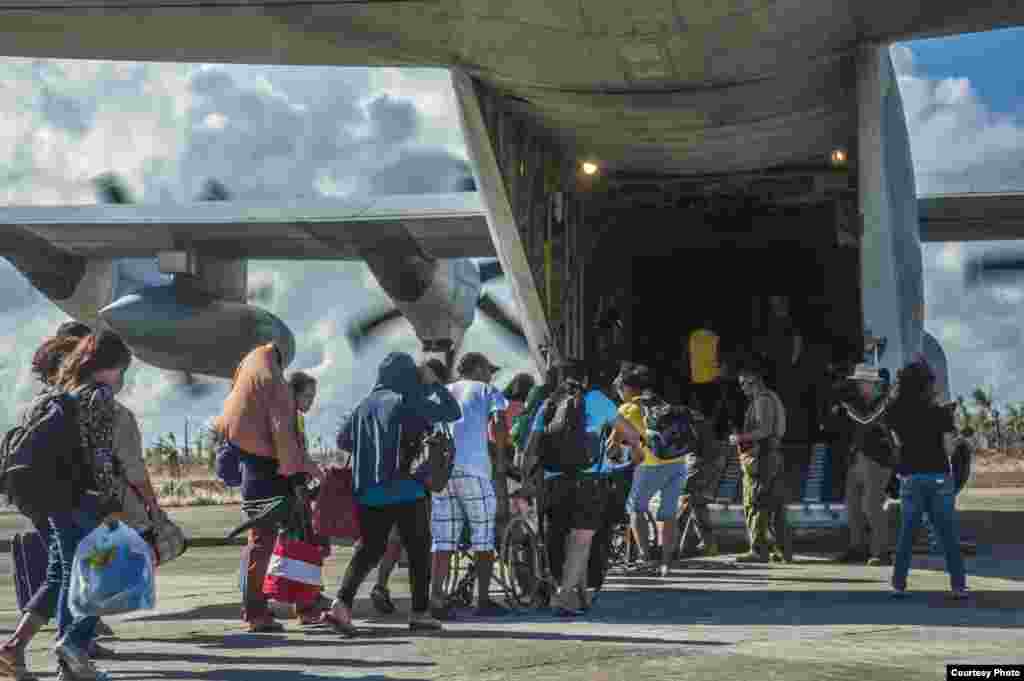
1/12Typhoon survivors board a Philippine Air Force transport plane in Tacloban, Nov. 21, 2013.
Show moreShow less
2/12A Philippine man carries aid from a U.S. Navy Seahawk helicopter in Palo, Philippines, Nov. 20, 2013.
Show moreShow less
3/12U.S. sailors and Marines load supplies onto a helicopter to be delivered in Eastern Sumar Province, Philippines, Nov. 20, 2013. (U.S. Navy)
Show moreShow less
4/12U.S. military personnel carry supplies to be distributed in Eastern Sumar Province, Philippines, Nov. 20, 2013. (U.S. Navy)
Show moreShow less
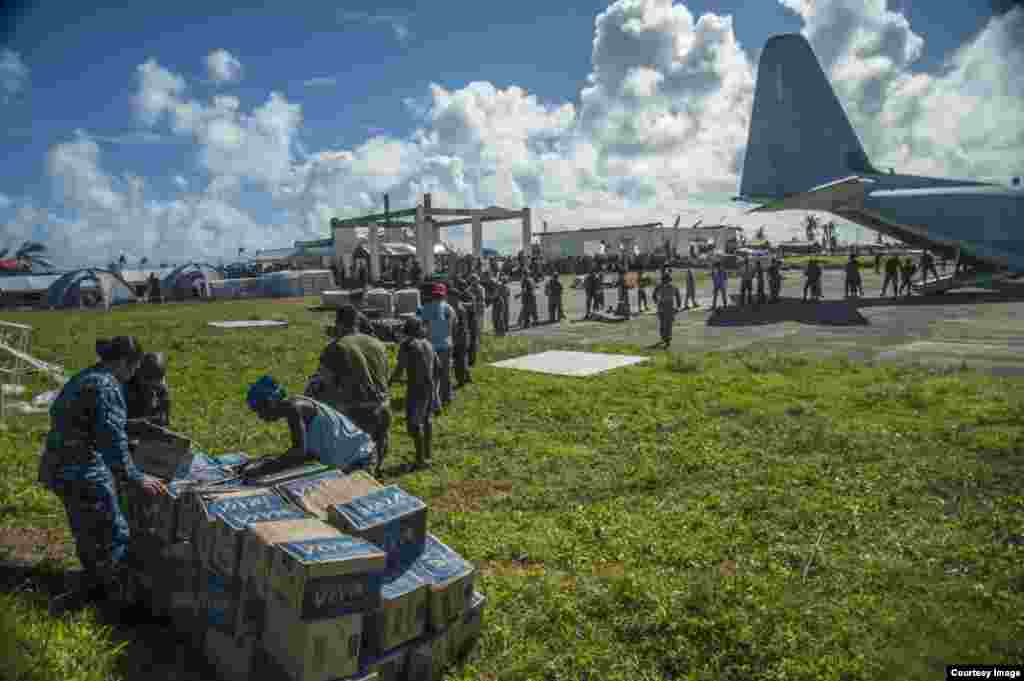
5/12U.S. sailors work with Philippine armed forces members to transport relief supplies in Ormoc City, Philippines, Nov. 18, 2013. (U.S. Navy)
Show moreShow less
6/12A member of the U.S. Navy hugs a child during a visit to Philippine Army base Camp Downes in support of Operation Damayan, Nov. 18, 2013. (U.S. Navy)
Show moreShow less
7/12A Seahawk helicopter transports international relief supplies in support of Operation Damayan, Ormoc City, Philippines, Nov. 17, 2013. (U.S. Navy)
Show moreShow less
8/12U.S. sailors and Marines work with Philippine civilians to unload relief supplies in Guiuan, Philippines, Nov. 17, 2013. (U.S. Navy)
Show moreShow less
9/12Villagers scramble for aid from a U.S. Navy helicopter in the coastal town of Tanawan, Philippines, Nov. 17. 2013.
Show moreShow less
10/12A soldier carries a baby to board a U.S. military transport plane at the damaged Tacloban airport, Tacloban city, Philippines, Nov. 17, 2013.
Show moreShow less
11/12A U.S. hospital corpsman assists Philippine nurses in treating a patient's head wound at the Immaculate Conception School refugee camp, Guiuan, Philippines, Nov. 17, 2013. (U.S. Navy)
Show moreShow less
12/12Philippine citizens board an U.S. HC-130 Hercules to be airlifted to safety in support of Operation Damayan, Guiuan, Nov. 17, 2013. (U.S. Navy)
Show moreShow less
Previous slide
Next slide
MANILA —
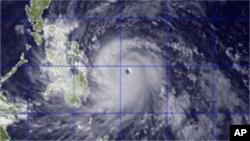
The United States says it will carry out aid work in the typhoon-devastated central Philippines until relief operations end. About 5,600 people have died or are missing after Super Typhoon Haiyan tore a path of destruction across the country.
The U.S. has been shuttling relief goods to hard to reach parts of the central island provinces since last Friday. Its strike force aboard the aircraft carrier, the USS George Washington, is using MV-22B Ospreys, which are able to land vertically like a helicopter. Early on, U.S. forces also lent logistical support to prop up badly damaged infrastructure.
U.S. Marine Lieutenant General John Wissler told reporters in Manila American forces are focused on completing relief operations.
“We will be here as long as it takes to continue to provide those unique capabilities that will in fact relieve the immediate suffering and allow for that transition,” Wissler said, referring to the period when the Philippine government starts to shift its focus to recovery and rebuilding.
Philippine Aid Donors Factbox
Philippine Aid Donors Factbox
Many countries and organizations are providing humanitarian aid to the Philippines in the wake of Friday's typhoon. The most prominent donors include:
UNITED NATIONS: $25 million released from U.N. emergency relief fund, appealing for more
UNITED STATES: $20 million in aid, plus military assistance
EU: $17 million
BRITAIN: $16 million, plus military assistance
JAPAN: $10 million, and an emergency medical relief team
UNITED ARAB EMIRATES: $10 million
AUSTRALIA: $9.3 million, including medical personnel
SOUTH KOREA: $5 million, plus a disaster relief team
CANADA: up to $5 million
U.N. WORLD FOOD PROGRAM: $2 million
NEW ZEALAND: $1.7 million
U.N. CHILDREN'S FUND (UNICEF): $1.3 million worth of supplies
HSBC (global banking group): $1 million
SAMSUNG (South Korean technology company): $1 million
TAIWAN: $200,000
VATICAN: $150,000 in initial assistance
CHINA: $100,000
CHINA RED CROSS: $100,000
At least 16 countries including Australia, Vietnam and Singapore are lending military assets toward the relief operation. Japan’s self-defense force has been carrying out medical missions in the hardest hit provinces. The Philippine military says these governments have lent 61 air assets and 14 naval vessels.
China announced Wednesday it would be sending its 14,000 ton floating naval hospital, upping its support significantly a week and a half after the storm hit.
The foreign militaries formed a coalition headed jointly by the Philippines and the United States. Officials say they are holding daily briefings.
Philippine National Defense Undersecretary Pio Lorenzo Batino expressed gratitude for the international military help.
“We think we have been very successful in coordinating and integrating the efforts of all foreign militaries operating within the affected communities,” Batino said.
The Philippine government had been criticized for what many called a slow response in the early days after Typhoon Haiyan struck.
Wissler says with any major calamity, the response appears slow-going. But in the case of Haiyan, he says the long strategic partnership between the United States and the Philippines allowed for a “very, very rapid response.”
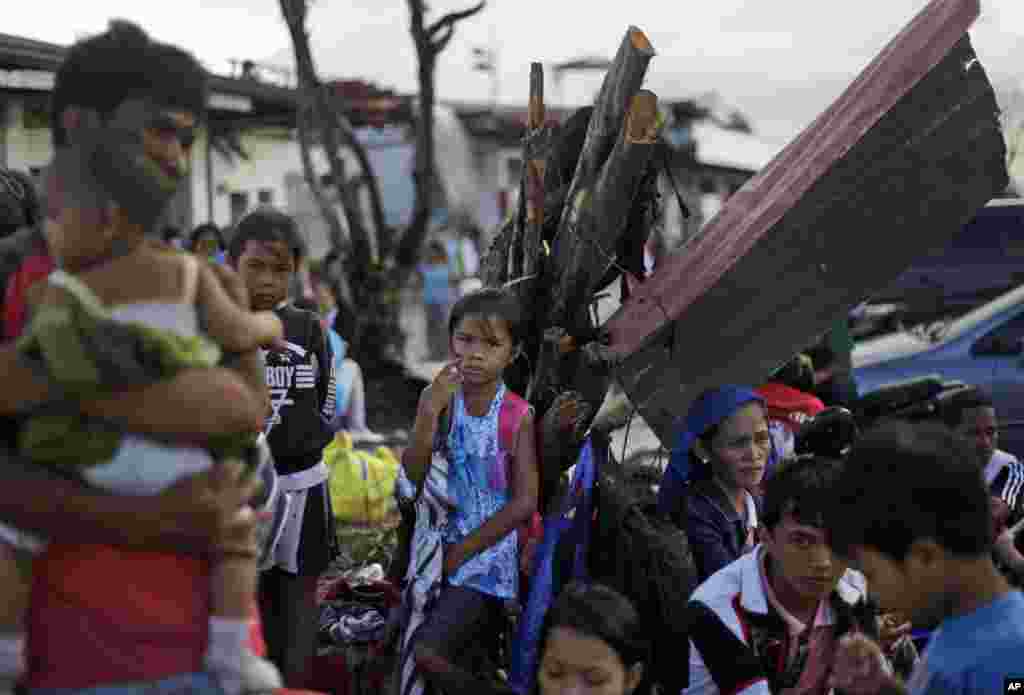
While there are signs of recovery in some of the hardest hit areas, with small businesses selling limited goods, the government continues to see to the basic needs of hundreds of thousands of people who were displaced by the storm.
Images from the Philippines
1/11Typhoon Haiyan survivors wait for their evacuation flights at the airport in Tacloban, Philippines, Nov. 21, 2013.
Show moreShow less
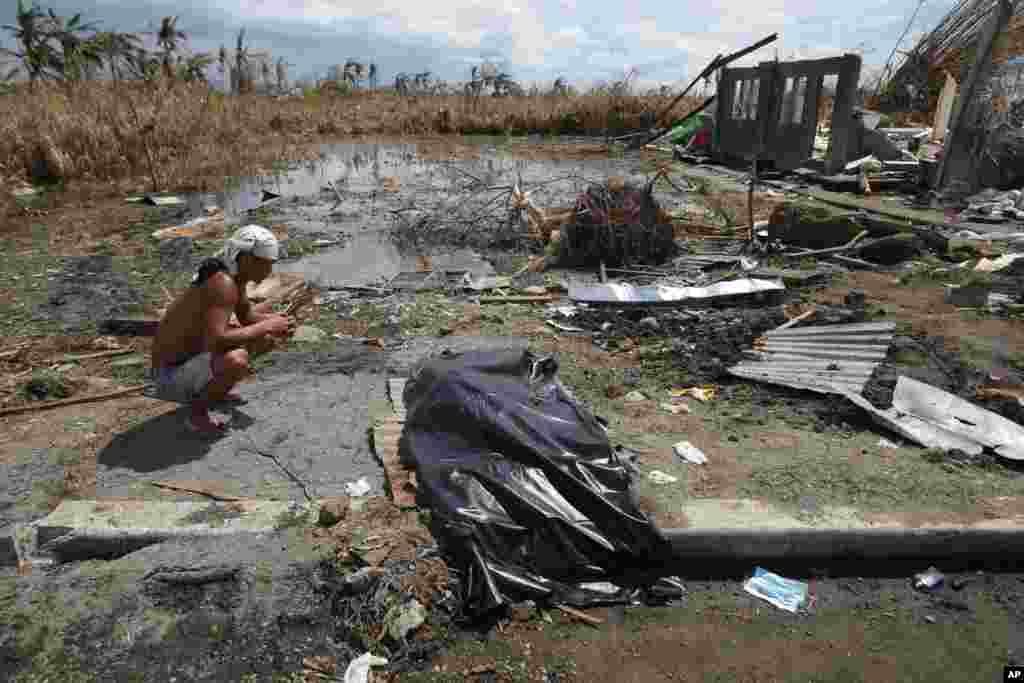
2/11A typhoon survivor sits beside the body bag containing his child in Tacloban, central Philippines, Nov. 20, 2013.
Show moreShow less
3/11A Philippine Air Force crew looks out from his helicopter as Typhoon Haiyan-ravaged city of Tacloban is seen in the background, during a flight to deliver relief goods, Nov. 19, 2013.
Show moreShow less
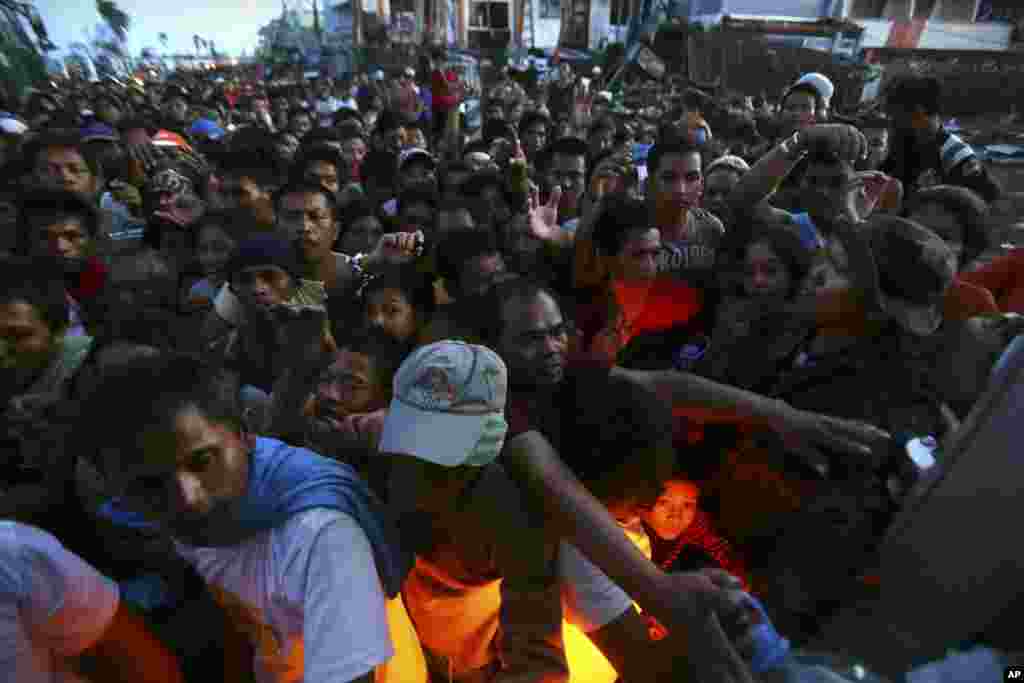
4/11The brakelight of a delivery truck lights up a boy's face as survivors struggle to be the first in line during the distribution of relief goods in typhoon-hit Tacloban, Philippines, Nov. 18, 2013.
Show moreShow less
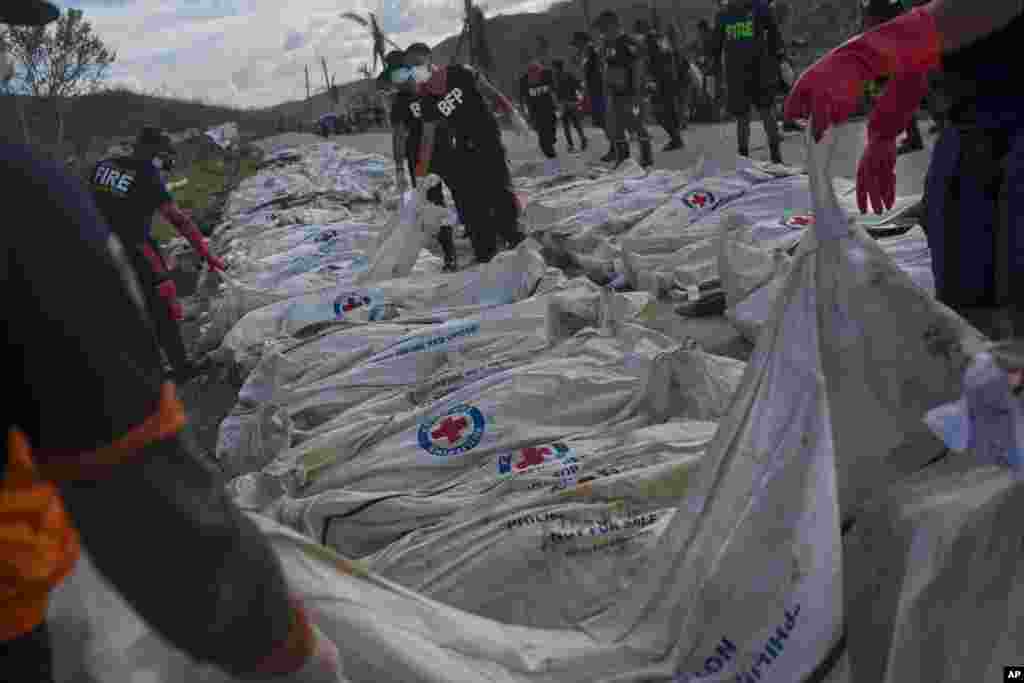
5/11Firemen unload Typhoon Haiyan victims in body bags from a truck on the roadside until forensic experts can register and bury them in a mass grave outside of Tacloban, Philippines, Nov. 19, 2013.
Show moreShow less
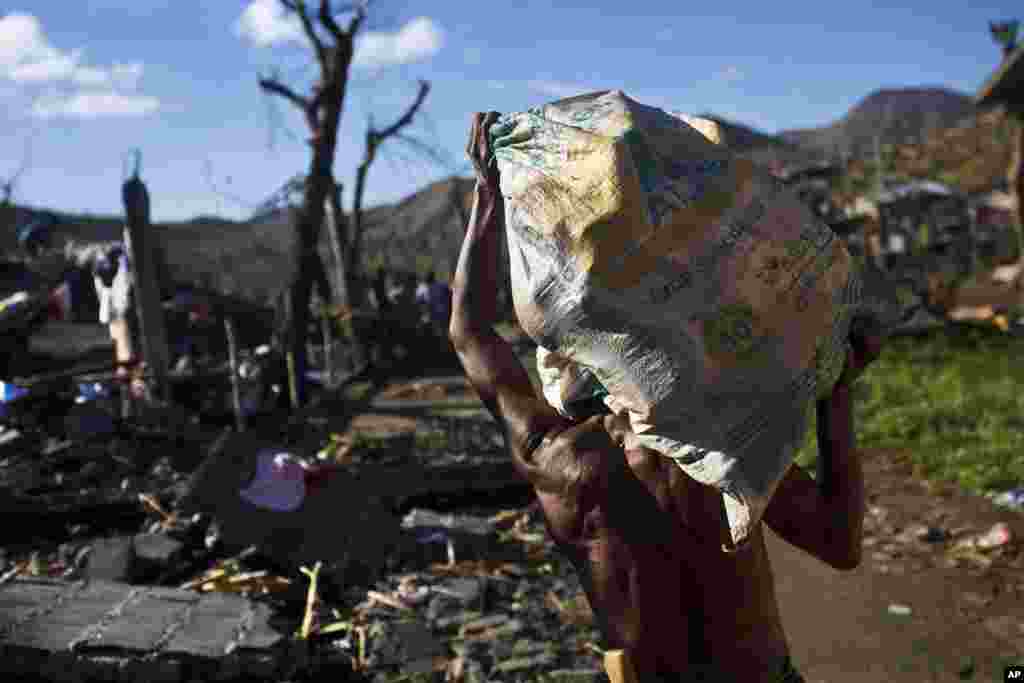
6/11A Typhoon Haiyan survivor carries a bag of his recovered belongings in the ruins of his rural neighborhood on the outskirts of Tacloban, Philippines, Nov. 18, 2013.
Show moreShow less
7/11A man uses a shovel to clean up mud inside St. Joseph Parish church, which was badly damaged by Typhoon Haiyan in Tacloban, Philippines, Nov. 18, 2013.
Show moreShow less
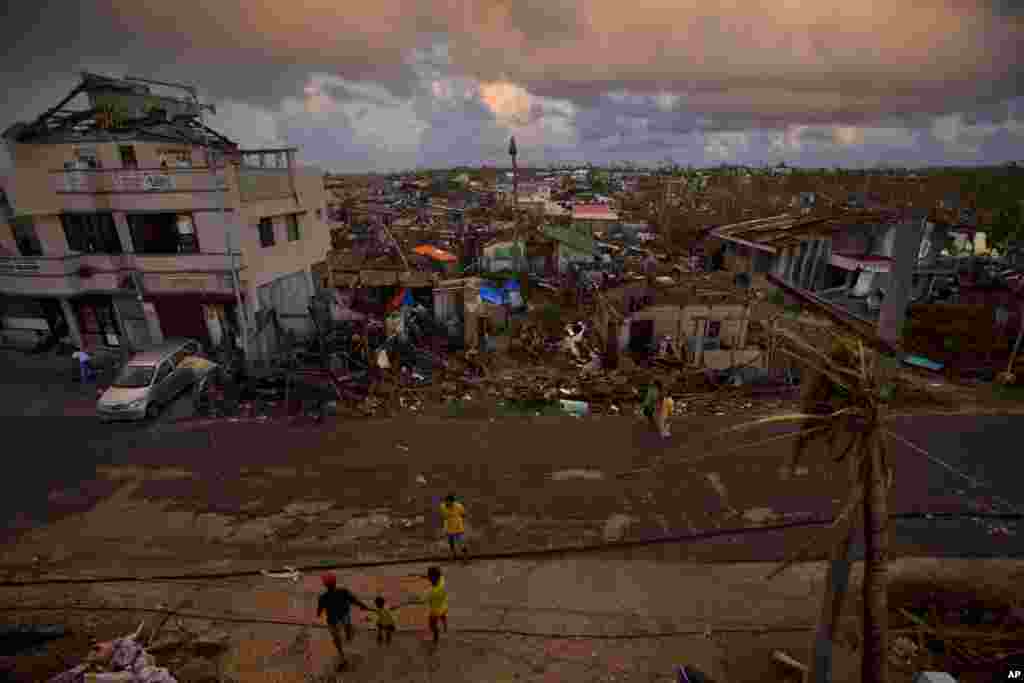
8/11Typhoon Haiyan survivors walk along a road in the destroyed port in the town of Guiuan, Philippines, Nov. 15, 2013.
Show moreShow less
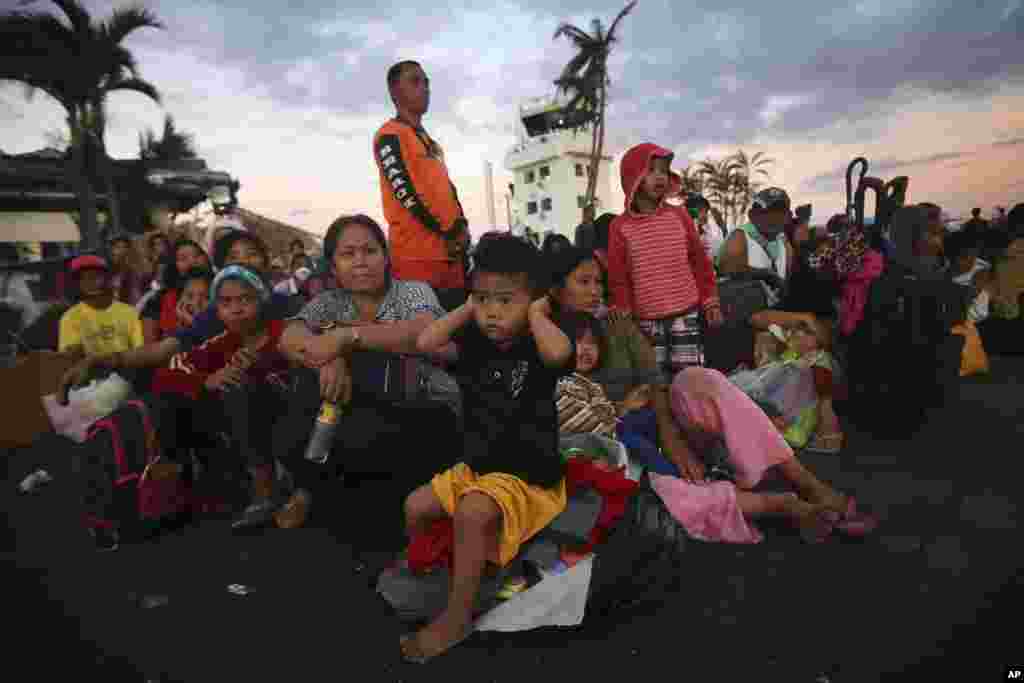
9/11A young boy, a survivor of Typhoon Haiyan covers his ears as military C-130 aircraft land at the airport in Tacloban, central Philippines, Nov. 15, 2013.
Show moreShow less
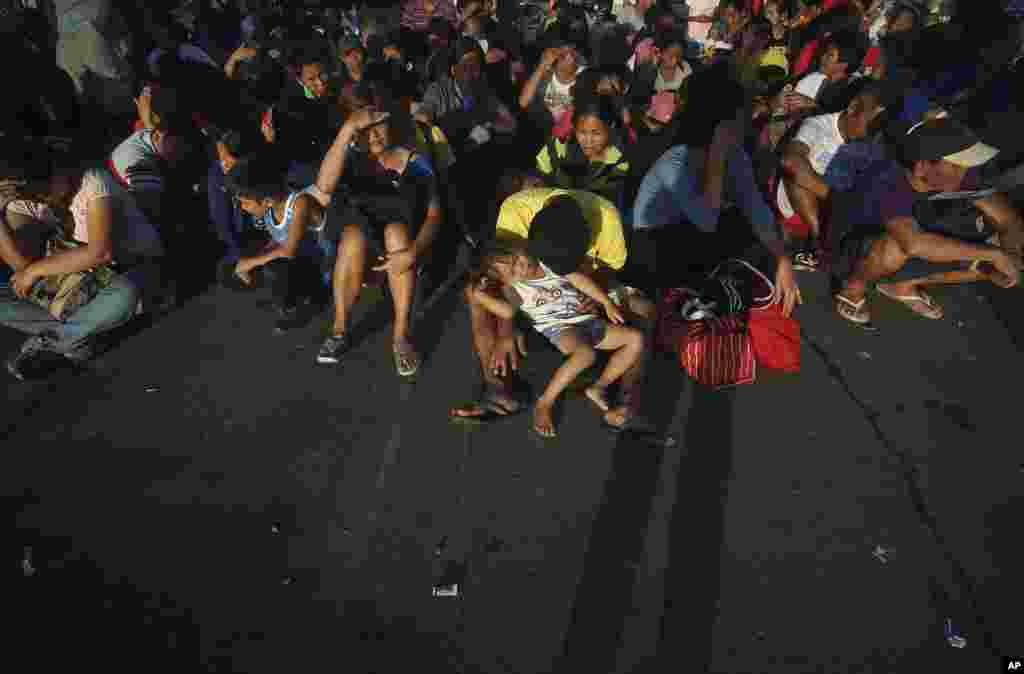
10/11Survivors of Typhoon Haiyan shade themselves from the rising sun after spending the night on the tarmac in the airport in Tacloban, where they wait to be evacuated, Nov. 15, 2013.
Show moreShow less
11/11Toppled coconut trees dot a mountain in an area devastated by typhoon Haiyan in Leyte province, central Philippines, Nov. 15, 2013.