US, Russia Split Over Including Iran in Syria Peace Talks
PARIS —
U.S. Secretary of State John Kerry and Russian Foreign Minister Sergei Lavrov met Monday in Paris to plan for Syrian peace talks later this month. The men could not agree on inviting Iran to join those talks.
Syrian President Bashar al-Assad has no bigger ally than Iran. So his government says it expects Iran will be invited to planned peace talks in Geneva "just like any other state."
The international mediator to the conflict, Lakhdar Brahimi, agrees.
"Iran is a very important country in the region and they have to be present in a conference like this," he said.
But while the United Nations is responsible for sending the invitations, Brahimi says he is working in consensus with the main organizing partners: Russia and the United States.
But the U.S. says Iran must first agree to the establishment of a transitional Syrian government by "mutual consent" which presumes that President Assad's opponents would never agree to his joining an interim government and would thus end his rule.
Images from Syria
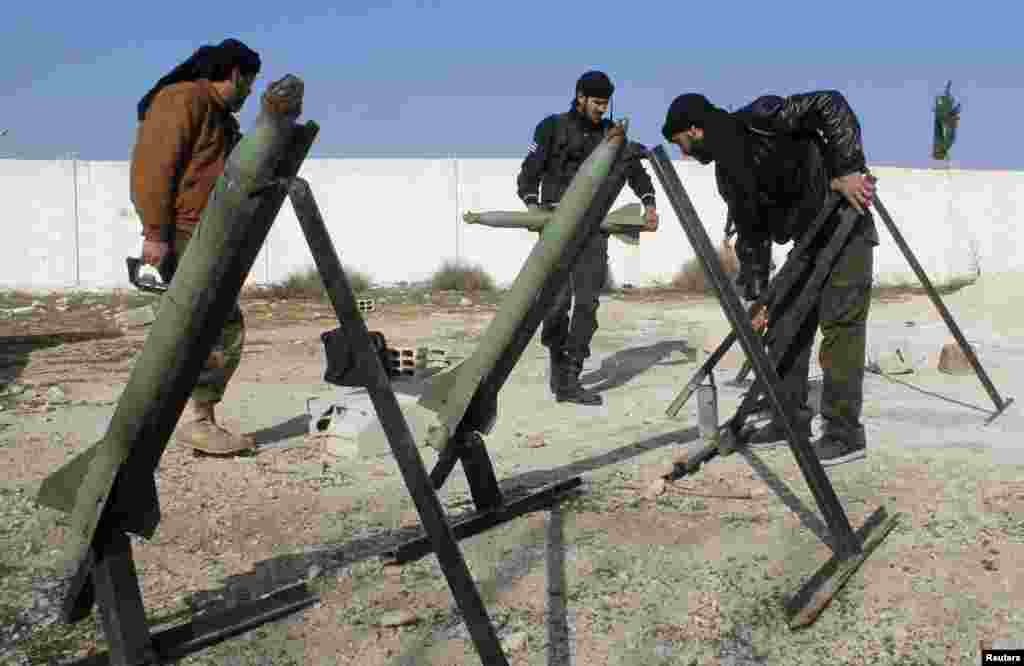
1/10Fighters from the Free Syrian Army's Saif al-Umayyad brigade prepare rockets to be launched towards forces loyal to Syria's President Bashar al-Assad in the eastern Damascus suburb of Ghouta, Jan. 16, 2014.
Show moreShow less
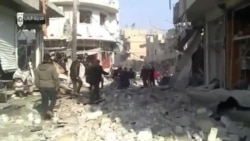
2/10Men ride a motorbike past buildings damaged by what activists said was shelling by forces loyal to Syria's President Bashar al-Assad in Daraya, Jan. 15, 2014.
Show moreShow less
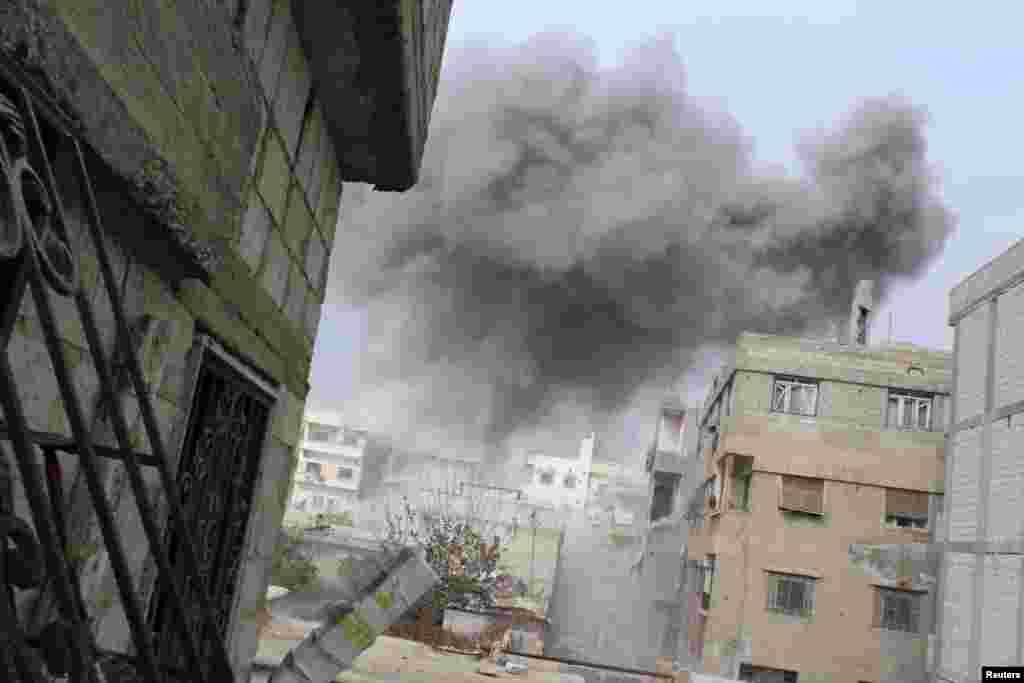
3/10Smoke rises from buildings after what activists said was shelling from forces loyal to Syria's President Bashar al-Assad in the besieged area of Homs, Jan. 15, 2014.
Show moreShow less
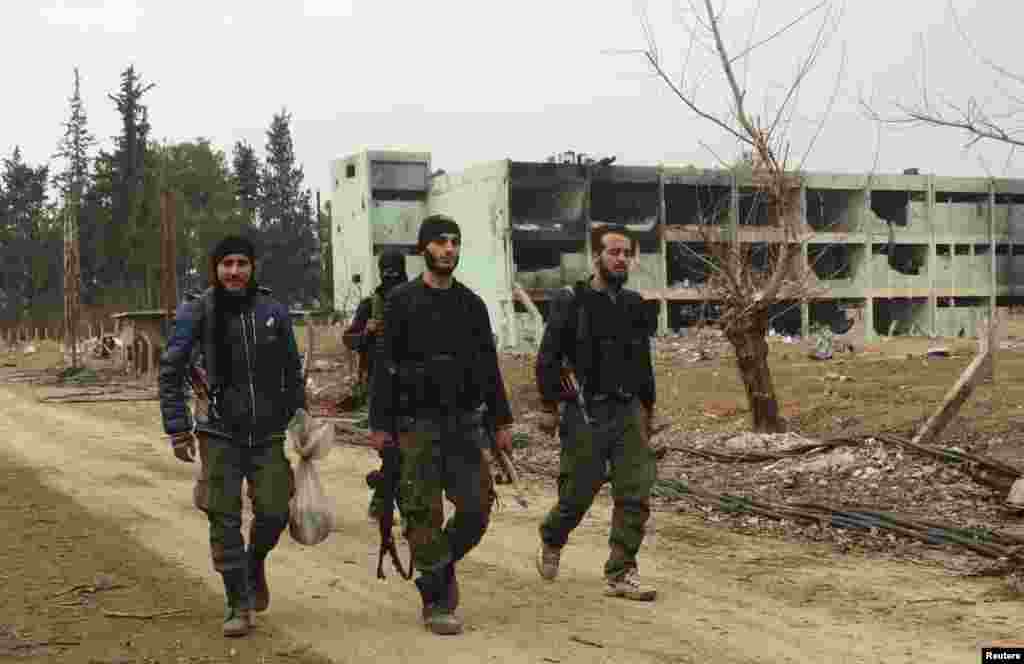
4/10Free Syrian Army fighters walk at the Tameko pharmaceutical factory after the FSA claimed to have taken control of the factory, in eastern al-Ghouta, near Damascus, Jan. 14, 2014.
Show moreShow less
5/10A girl carries her belongings as she walks on rubble at a site hit by what activists said was an airstrike by forces loyal to Syria's President Bashar al-Assad in Arbeen, Jan. 14, 2014.
Show moreShow less
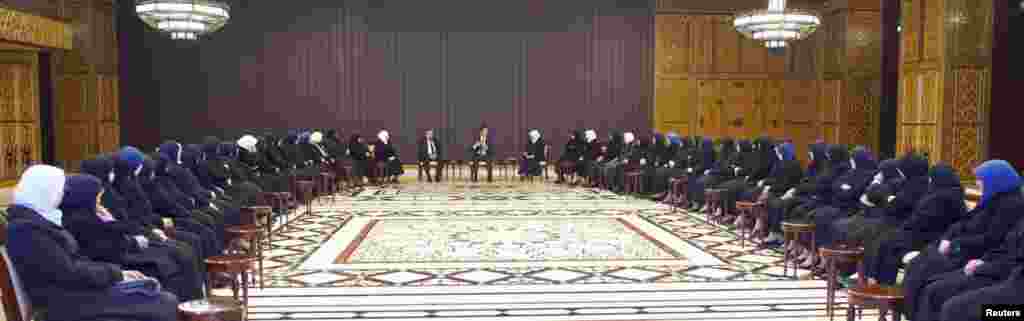
6/10This SANA photo shows Syrian President Bashar al-Assad speaking to female preachers from mosques in Damascus and its countryside and educators of religious high schools and institutes in Damascus, Jan. 14, 2014.
Show moreShow less
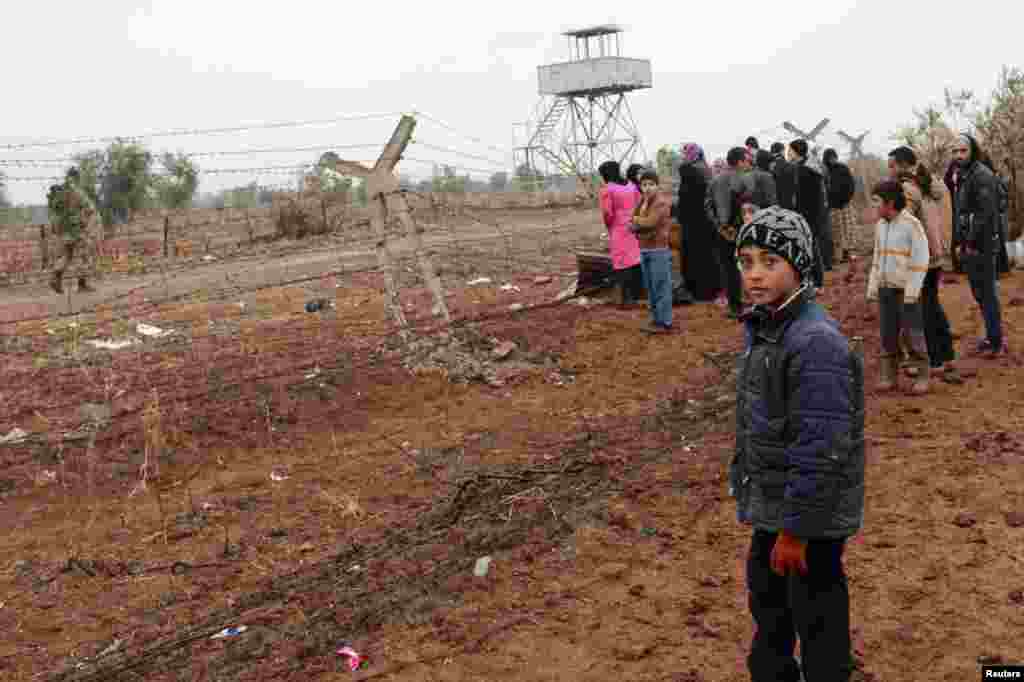
7/10Syrian refugees wait to enter Turkey on the Syrian-Turkish border in Shamm Alqrain village, Jan. 13, 2014.
Show moreShow less
8/10Smoke rises from what activists said were explosive barrels thrown from helicopters on Daria outside Damascus, Jan. 12, 2014.
Show moreShow less
9/10Damaged buildings are pictured in the besieged area of Homs, Jan. 12, 2014.
Show moreShow less
10/10Residents inspect the damage caused by Islamic State in Iraq and the Levant suicide bombers at the Tawhid Brigade and Al-Fateh brigade headquarters in Aleppo, Jan. 12, 2014.
Show moreShow less
Previous slide
Next slide
Following talks with Ambassador Brahimi and Foreign Minister Lavrov, Secretary Kerry said he hopes Iran comes forward to support that "mutual consent" as outlined in an earlier communique.
"A country that has had a long-term relationship with Assad and with Syria has a huge ability to be able to have an impact if they want to have the right impact. And the right impact, as has been decided by many nations, is to implement the Geneva One communique," Kerry said.
Lavrov said the talks should not be jeopardized by outstanding differences between the United States and Iran.
"One can not be influenced by ideological sentiments so much that it harms the interest of the cause," he said.
Kerry responded that the cause of a transitional Syrian government is not served by those who do not support its formation.
"Iran's participation or non-participation is not a question of ideology. It is a question of practicality and common sense, he said.
"I believe that practicality means not isolation, but engagement," Lavrov replied, noting that if it is a question of practicality, then Iran's invitation should be assured.
The Russian foreign minister compared the situation to the United States agreeing to meet with Iran over its nuclear program and over the wars in Afghanistan and Iraq.
American University professor Hillary Mann Leverett, who worked as a U.S. negotiator with Iran during the war in Afghanistan, says Tehran was vital to power sharing and reconciliation - just the sort of things mediators are looking for in Syria.
"We really are wasting an opportunity and setting ourselves up for failure by trying to either keep them out or condition their place at the table," Leverett said. "That just will not work."
U.S. Institute of Peace analyst Steve Heydemann believes there is room for compromise.
"I think the U.S. and others are struggling to find a formula that would acknowledge Iran's influence over an outcome, that would acknowledge Iran's interests without giving Iran the kind of veto role that might permit it to exert an unwelcome degree of influence over how Geneva unfolds," he said.
With the Geneva talks now just more than one week away, Iranian Foreign Minister Mohammad Javad Zarif says Iran will come if it is given an unconditional invitation. But he says that is not something Tehran is actively seeking.