



Accessibility links

Breaking News

Syrian Rebels: US-Led Strikes Bolster Assad

update
Smoke rises from the Syrian town of Kobani, seen from near the Mursitpinar border crossing on the Turkish-Syrian border in the southeastern town of Suruc, Sanliurfa province, Oct. 3, 2014.
1/11 Smoke rises from the Syrian town of Kobani, seen from near the Mursitpinar border crossing on the Turkish-Syrian border in the southeastern town of Suruc, Sanliurfa province, Oct. 3, 2014.
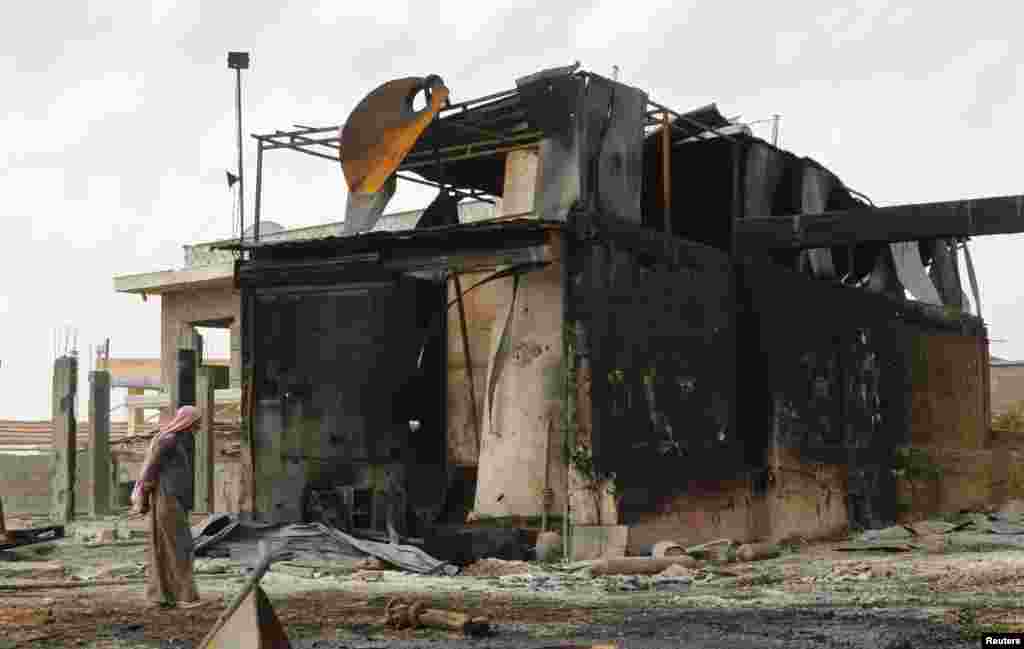
A man inspects damage at an oil refinery and a gas station that were targeted by what activists said were U.S.-led air strikes, in the town of Tel Abyad of Raqqa governorate, near the border with Turkey, Oct. 2, 2014.
2/11 A man inspects damage at an oil refinery and a gas station that were targeted by what activists said were U.S.-led air strikes, in the town of Tel Abyad of Raqqa governorate, near the border with Turkey, Oct. 2, 2014.
Syrian Kurdish refugees cover themselves from rain after crossing into Turkey from the Syrian border town Kobani, Oct. 2, 2014.
3/11 Syrian Kurdish refugees cover themselves from rain after crossing into Turkey from the Syrian border town Kobani, Oct. 2, 2014.
A Syrian Kurdish refugee woman waits for transportation after crossing into Turkey from the Syrian border town Kobani, Oct. 2, 2014.
4/11 A Syrian Kurdish refugee woman waits for transportation after crossing into Turkey from the Syrian border town Kobani, Oct. 2, 2014.
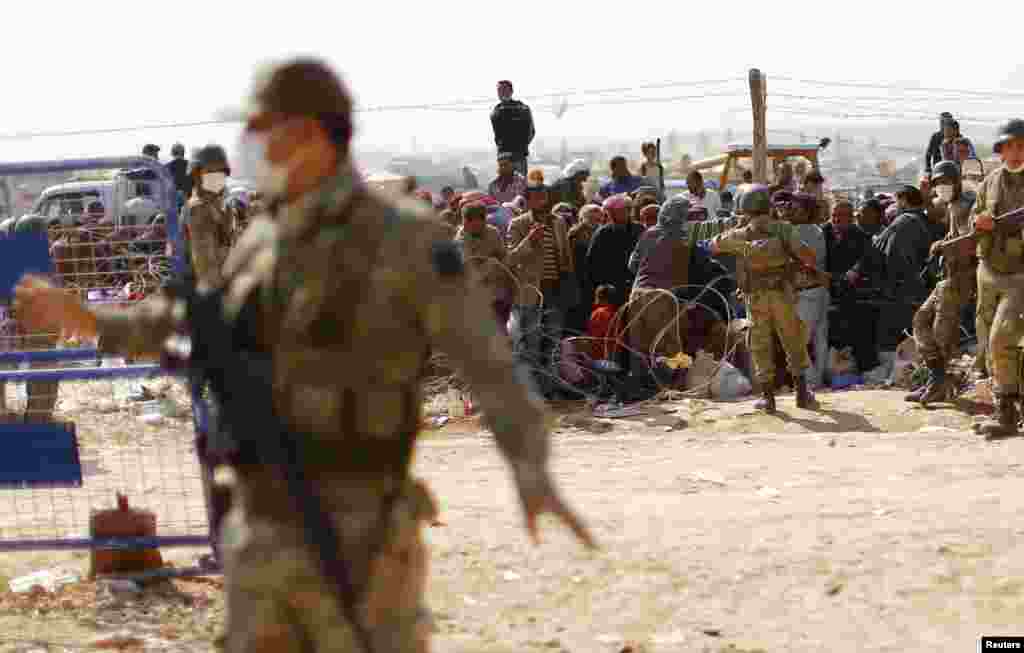
Syrian Kurdish refugees wait to cross into Turkey from the Syrian border town Kobani, near the southeastern Turkish town of Suruc in Sanliurfa province, Oct. 2, 2014.
5/11 Syrian Kurdish refugees wait to cross into Turkey from the Syrian border town Kobani, near the southeastern Turkish town of Suruc in Sanliurfa province, Oct. 2, 2014.
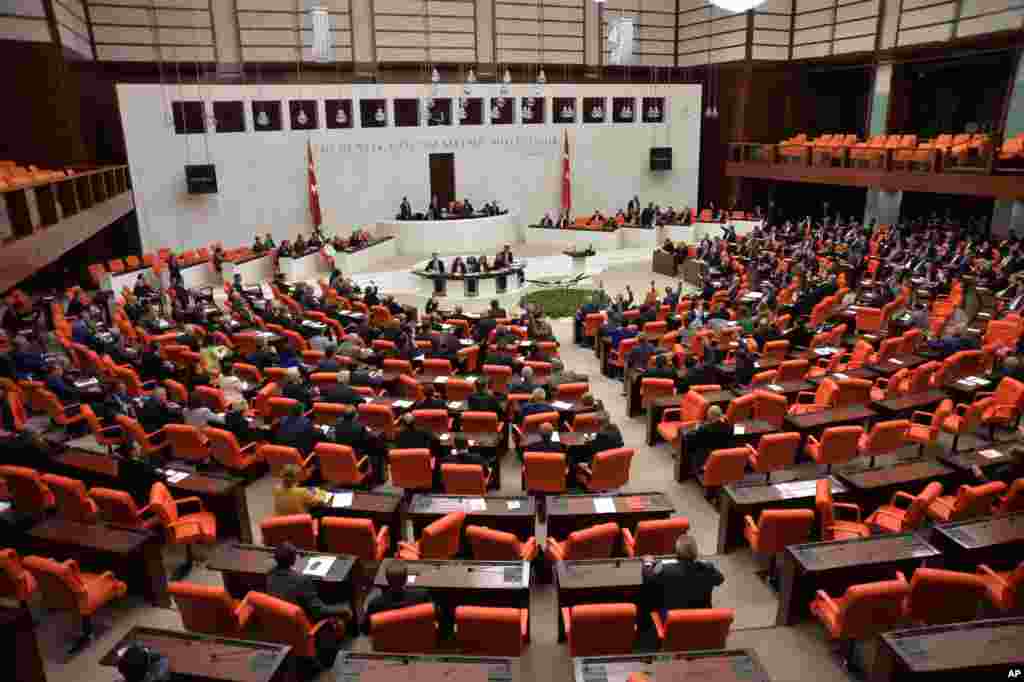
Lawmakers debate before Turkey's parliament to approve a motion that gives the government new powers to launch military incursions into Syria and Iraq and to allow foreign forces to use its territory for possible operations against the Islamic State group
6/11 Lawmakers debate before Turkey's parliament to approve a motion that gives the government new powers to launch military incursions into Syria and Iraq and to allow foreign forces to use its territory for possible operations against the Islamic State group
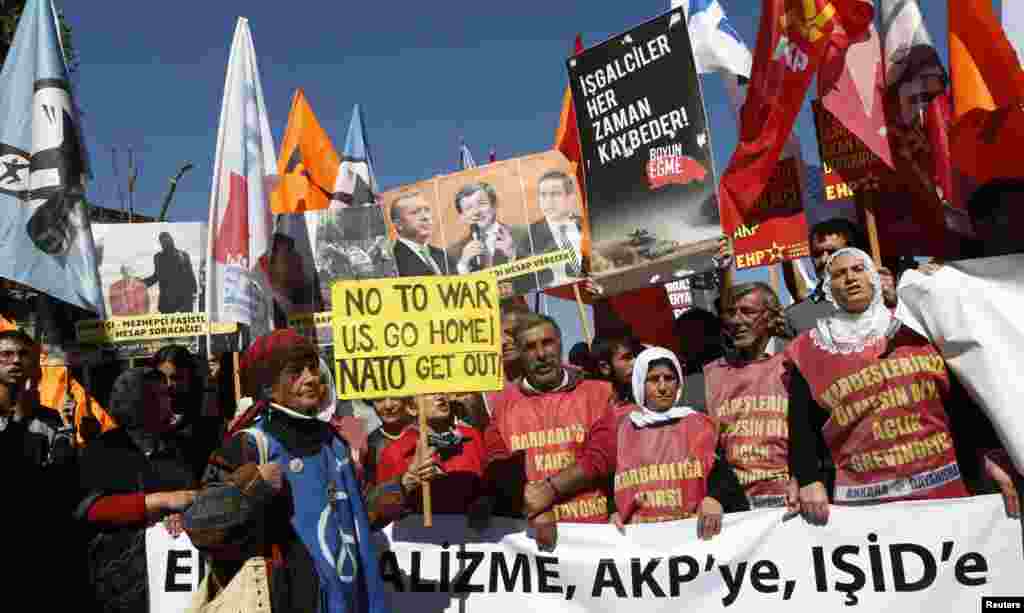
Antiwar protesters demonstrate in front of the Turkish Parliament in Ankara, Oct. 2, 2014.
7/11 Antiwar protesters demonstrate in front of the Turkish Parliament in Ankara, Oct. 2, 2014.
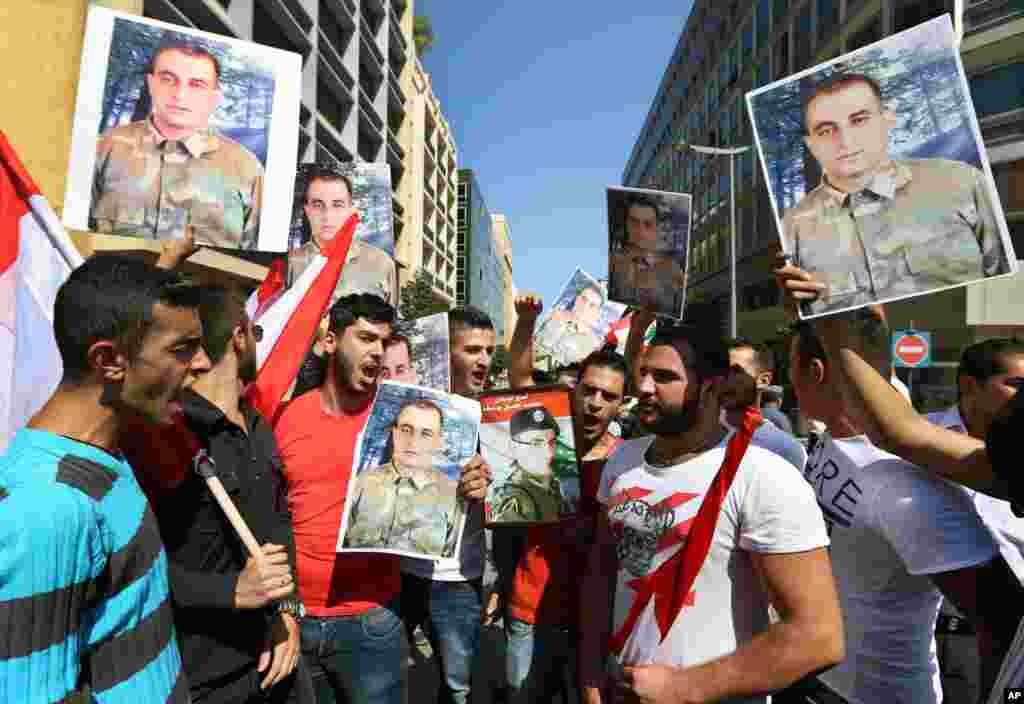
Families of Saif Thebian and Mohammed Hussein Yousuf, who were kidnapped by Islamic State militants and the Al-Nusra front, hold their portraits of during a demonstration in Beirut, Lebanon, Oct. 2, 2014.
8/11 Families of Saif Thebian and Mohammed Hussein Yousuf, who were kidnapped by Islamic State militants and the Al-Nusra front, hold their portraits of during a demonstration in Beirut, Lebanon, Oct. 2, 2014.
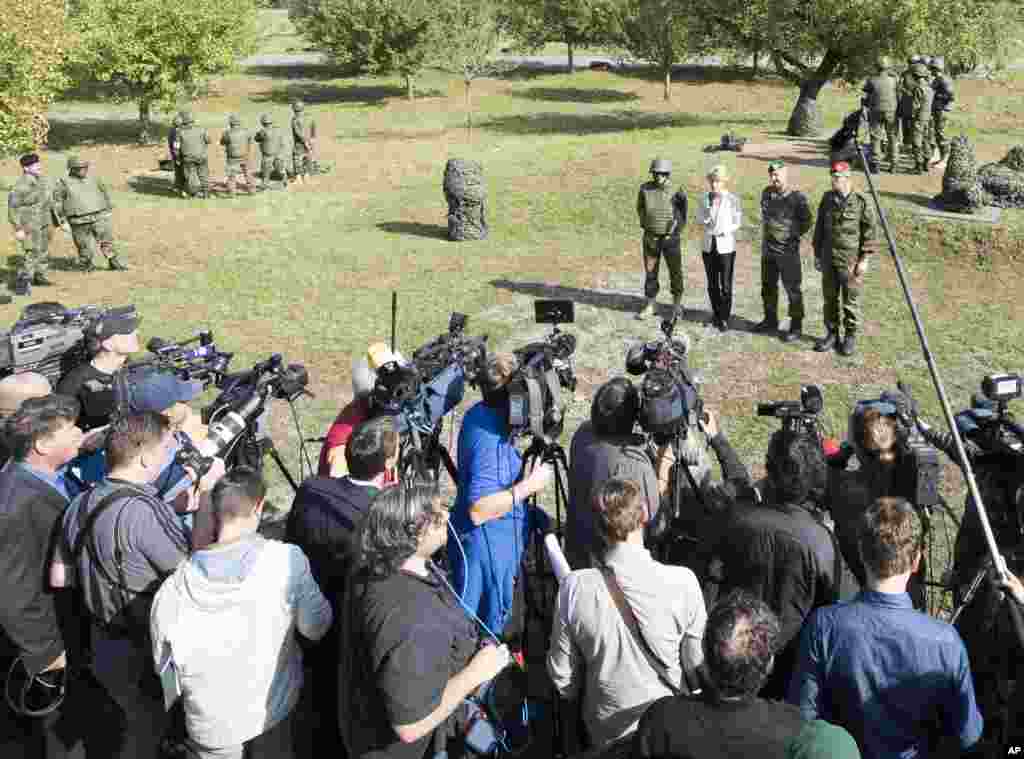
German Defense Minister Ursula von der Leyen talks with journalists during the training of Kurdish peshmerga fighters with anti-tank guns at the Infantry School of the German Federal Armed Forces Bundeswehr in Hammelburg, Germany, Oct. 2, 2014.
9/11 German Defense Minister Ursula von der Leyen talks with journalists during the training of Kurdish peshmerga fighters with anti-tank guns at the Infantry School of the German Federal Armed Forces Bundeswehr in Hammelburg, Germany, Oct. 2, 2014.
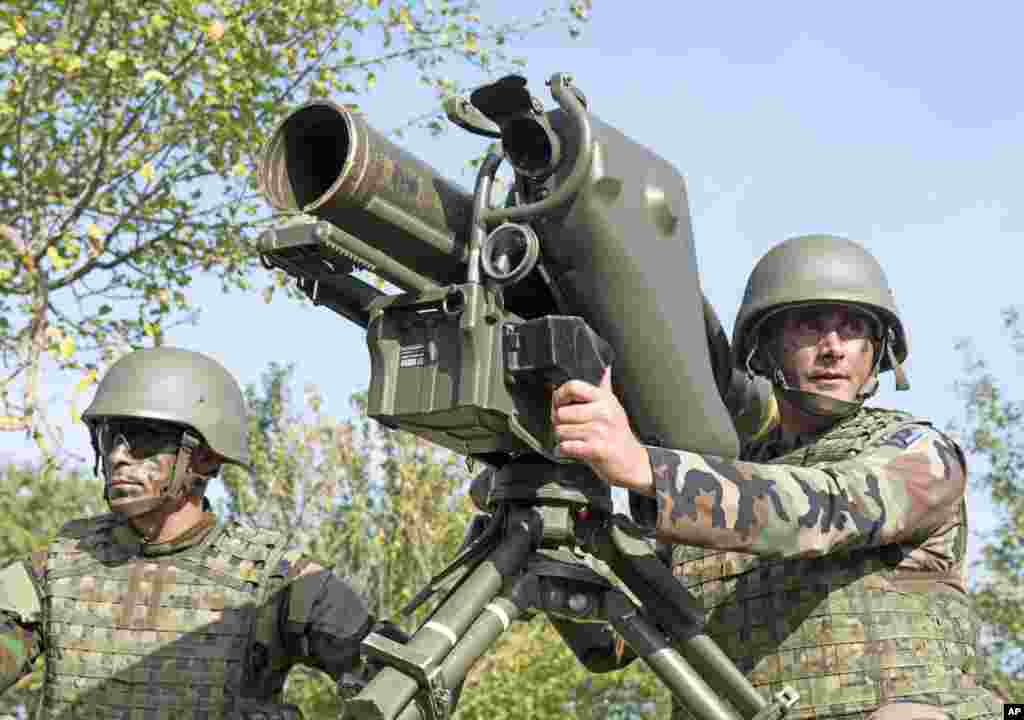
Kurdish peshmerga fighters practice with the anti-tank gun MILAN at the Infantry School of the German Federal Armed Forces Bundeswehr in Hammelburg, Germany, Oct. 2, 2014.
10/11 Kurdish peshmerga fighters practice with the anti-tank gun MILAN at the Infantry School of the German Federal Armed Forces Bundeswehr in Hammelburg, Germany, Oct. 2, 2014.
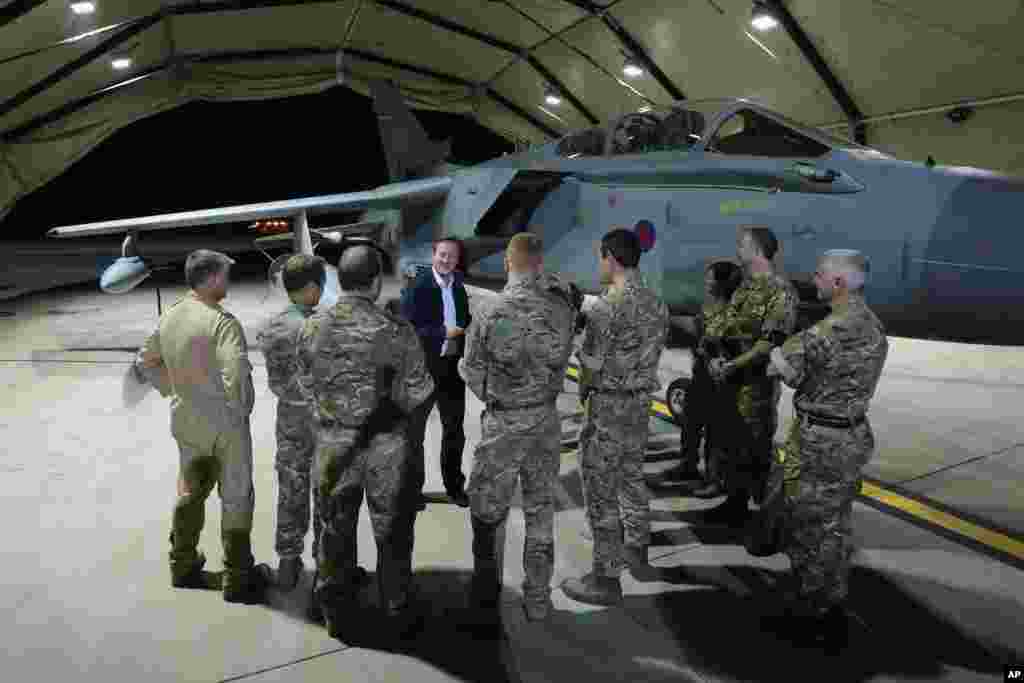
British Prime Minister David Cameron meets pilots, engineers and logistic support staff in front of a Tornado GR4 at RAF Akrotiri base, Cyprus, Oct. 2, 2014.
11/11 British Prime Minister David Cameron meets pilots, engineers and logistic support staff in front of a Tornado GR4 at RAF Akrotiri base, Cyprus, Oct. 2, 2014.
Previous slide
Next slide

Moderate Syrian rebel field commanders said the U.S.-led air offensive in Syria is helping President Bashar al-Assad.

Abu Muhammad said he disapproves of the U.S. strategy in Syria.

He warned that the U.S.-led coalition against the jihadists of the Islamic State group is bolstering Assad.

Muhammad said the Syrian president has taken the opportunity of the coalition airstrikes to refocus his forces, shifting some of them from eastern Syria where they were fighting the jihadists, and reinforcing his own offensive against moderate and Islamist rebels in the key city of Aleppo.

He said Syrian government airstrikes on Aleppo the past two days have increased in tempo and are terrifying.

Had defected

Muhammad, a former colonel in the Syrian army who said he defected after his superiors ordered him to shoot civilians, is now a top commander in the Syrian Revolutionaries Front.

The SRF is an Islamist brigade that has fought alongside the al-Nusra Front - the al-Qaida affiliate also targeted by American warplanes.

Muhammad said the rebels are at a disadvantage now in Aleppo.

Once Syria’s prosperous commercial capital, Aleppo has been the scene of some of the most vicious fighting of the nearly four-year-long civil war, and about half of it is under rebel control.

But since recapturing Homs, Syria’s third largest city, several months ago, Assad has redoubled his efforts to regain total control of Aleppo, the loss of which would be devastating for the rebels.

Muhammad said both Islamic State fighters and Assad are taking positions from the rebels.

Abu Abdullah, another commander with the SRF, said the weapons the Islamic State group has make it difficult to fight the militants.

When the jihadists launced an offensive in Iraq several months ago, Islamic State militants captured tanks and other equipment from fleeing Iraqi units around Mosul. Those weapons are now being used against the rebels in Syria.

Chechens, Gulf Arabs among jihadists

Abdullah said people joining as fighters for the Islamic State group are coming from all over the world, but the field commanders for the jihadist group tend to be Chechens or Gulf Arabs.

Another rebel fighter from a brigade called the Lions of Tawhid also said he is disappointed that the American-led coalition is not targeting Assad forces.

Assad is the head of the snake - and should be cut off, the rebel fighter said.

U.S. officials said their first priority is to degrade and defeat the Islamic State group in both Iraq and Syria as it represents a global threat.

The Obama administration is planning to screen 5,000 Syrian rebels and train them in Saudi Arabia.

However, some rebels said they are not interested in joining such a force as it would take them away from the battlefield.

This item is part of
XS
SM
MD
LG