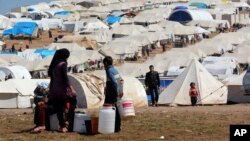
Syrian refugees filling their buckets at Atmeh refugee camp, in the northern Syrian province of Idlib, Syria, Apr. 5, 2013
GENEVA —
The U.N. refugee agency reports more than 1.3 million Syrian refugees have now fled to neighboring countries. The UNHCR warns this number could triple by the end of the year if a political solution to the conflict in Syria is not found.
The U.N. refugee agency says the deteriorating situation inside Syria is causing an average of 8,000 people a day to flee into neighboring countries in fear of their lives.
The agency's Syria Regional Refugee Coordinator, Panos Moumtzis, says this massive outflow of people has boosted the number of refugees registered in Jordan, Lebanon, Turkey and Iraq to 1.3 million. He notes this figure does not take into account those people who have not registered, so the actual number of refugees in these countries is much higher.
“This is a significant increase if you think that today one year ago, 12 months ago, the actual figure was 30,000. So, in 12 months, we have gone from 30,000 Syrian refugees to 1 million, 300,000. The 1 million, 300,000 represents 120 percent of the planning assumption figure we had taken and hoped, thought would reach by June 2013. We had planned to help 1 million, 100,000 by June and we already are at 1 million, 300,000," Moumtzis explained. "Three quarters of the refugees who have fled continue to be women and children.”
The Latest Images from Syria
1/9Buildings destroyed in a government airstrike and shelling, in Marjeh in Aleppo, Syria, April, 11, 2013. (AMC)
Show moreShow less
2/9A Syrian Army officer briefs his men to prepare for an offensive in Aleppo's Liramoun area, April 11, 2013.
Show moreShow less
3/9Damaged mosques and properties activists said were hit by shelling by forces loyal to Syria's President Bashar al-Assad, in Daraa, April 10, 2013.
Show moreShow less
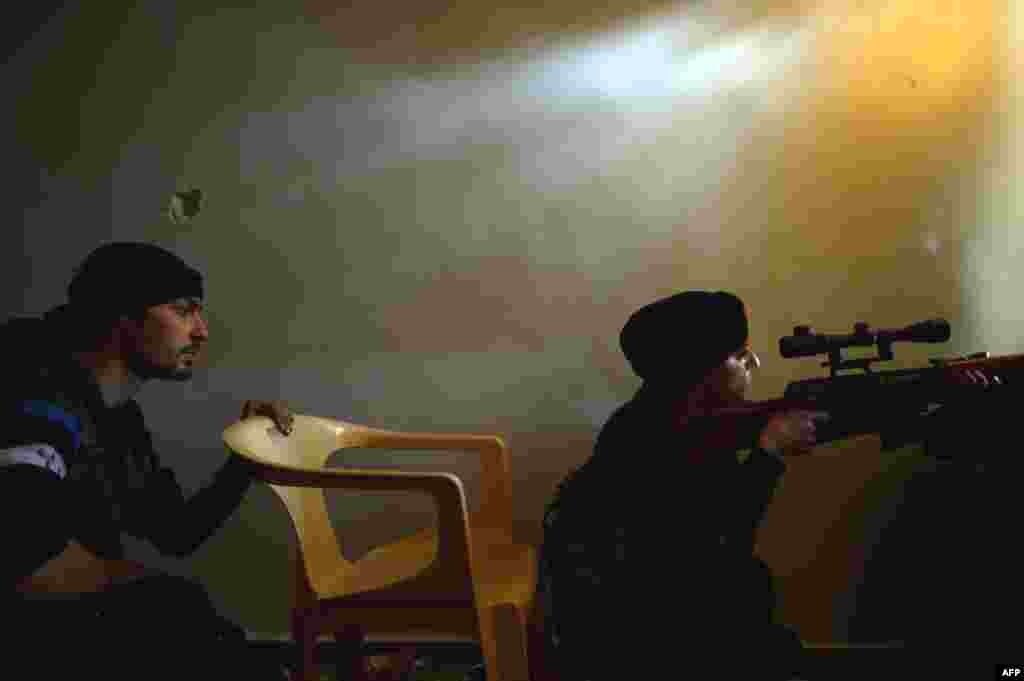
4/9A Syrian rebel monitors the movement of Syrian government forces in the Sheikh Maqsud district of the northern Syrian city of Aleppo, on April 11, 2013.
Show moreShow less
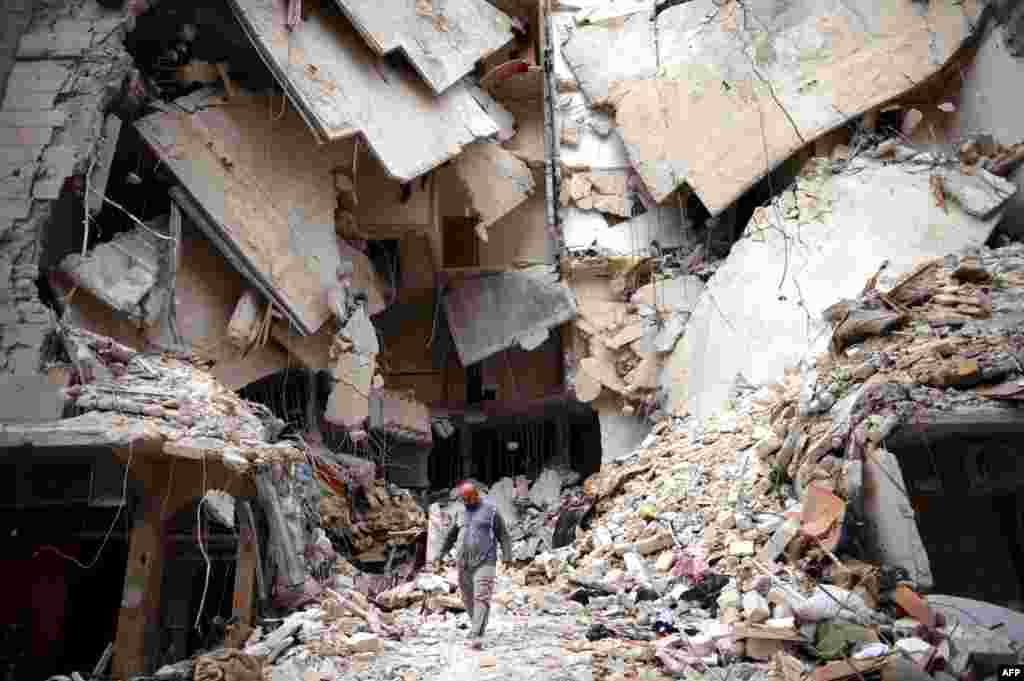
5/9A man walks amid destruction in Aleppo, April 10, 2013.
Show moreShow less
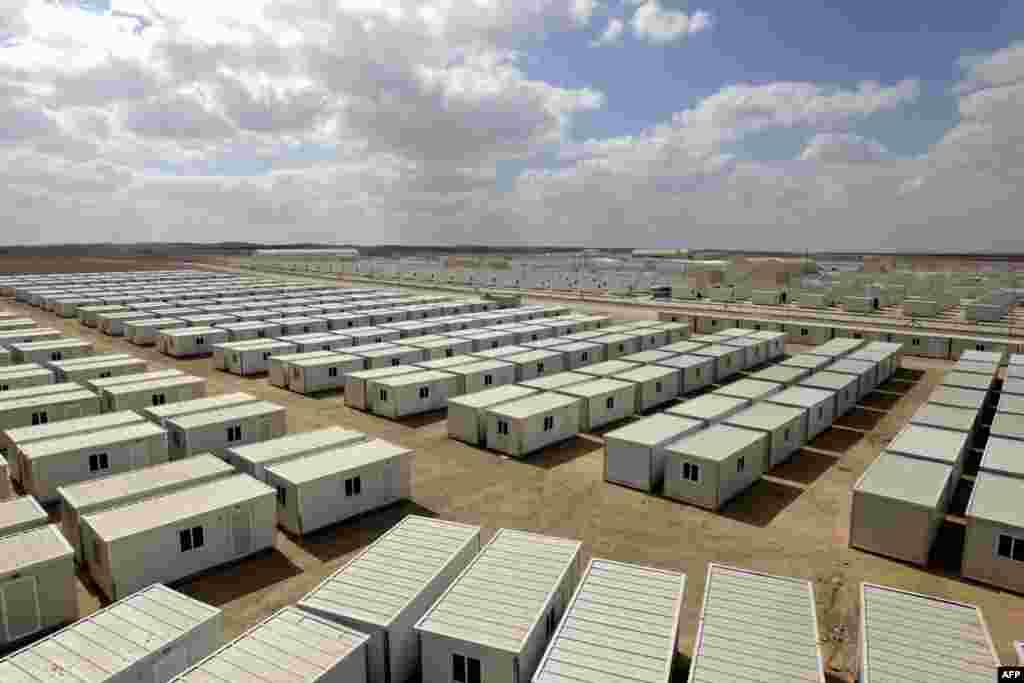
6/9A view of the new Mrigeb al-Fuhud refugee camp near Zarqa, Jordan.
Show moreShow less
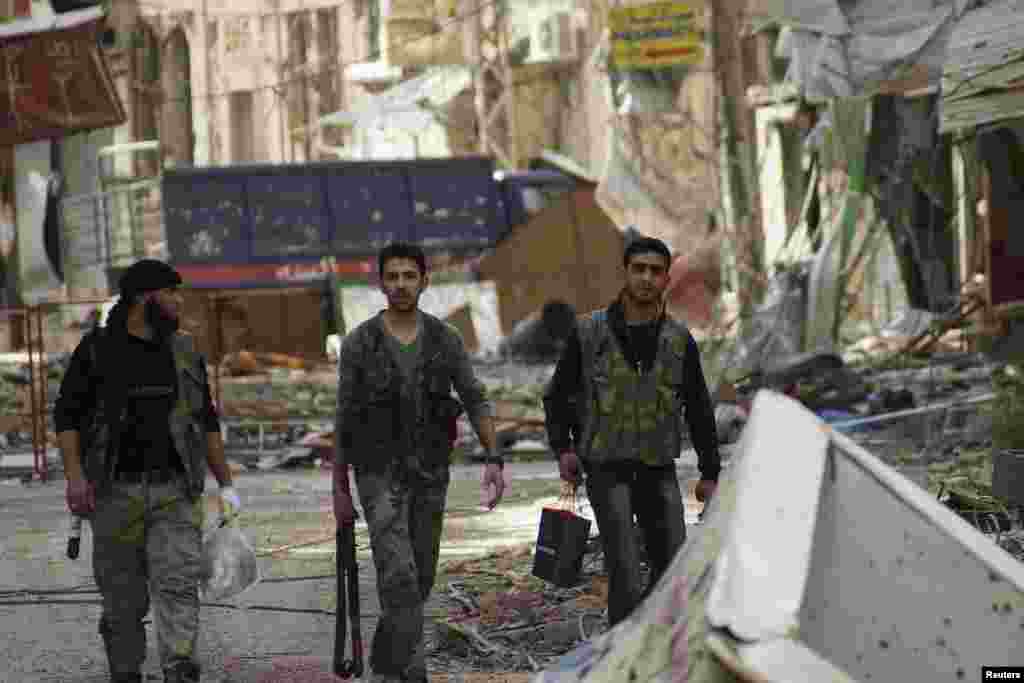
7/9Free Syrian Army fighters walk along a street lined with damaged shops and buildings in Deir al-Zor, April 8, 2013.
Show moreShow less
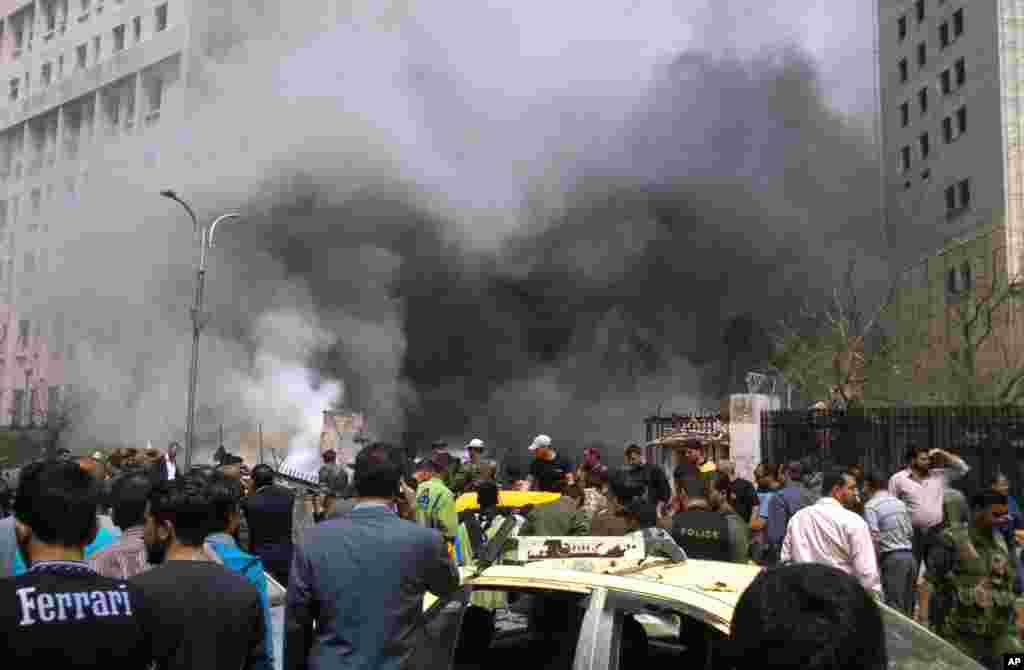
8/9Smoke rises after a huge explosion shook the Sabaa Bahrat Square in Damascus, April 8, 2013.
Show moreShow less
9/9Rescue teams recover bodies from the scene of a car bomb explosion which rocked central Damascus on April 8, 2013.
Show moreShow less
Previous slide
Next slide
While the number of refugees continues to increase, the money available to assist them is not. The UNHCR says it only has received one third of the $1 billion it needs to care for the Syrian refugees until June.
Despite the lack of cash, Moumtzis says U.N. aid agencies have been scaling up assistance since January. He says they have expanded staff, health services, food, water, sanitation, shelter and educational programs. “While we have put in place relief services and relief operations on a 24/7 basis - we have relief workers going to work at night as well as the day because the refugees cross borders every day - we fear that we may not be able to continue the operations unless funding comes urgently," he said. "We are at a breaking point.”
Moumtzis says U.N. aid agencies already have cut life-saving services to the bone and he does not know how much is left to cut. He notes that the refugee camps are overcrowded and new camps have to be built.
Of the $1.5 billion pledged at a conference in Kuwait earlier this year, he says only $400 million has been received. He says the traditional Western donors have honored their pledges but the United Nations is still waiting for the $1 billion pledged by the Gulf Arab states.