


Accessibility links

Breaking News
USA

Trump Again Threatens Use of Military to Stop Migrants' Entry into US

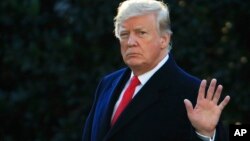
President Donald Trump waves as he leaves the White House in Washington, Oct. 24, 2018, to attend a campaign rally in Mosinee, Wisconsin.

As a caravan of Central American migrants continues its arduous trek toward the U.S., President Donald Trump reiterated Thursday the military would be used to prevent its entry into the U.S. from the southern border.

"I am bringing out the military for this National Emergency. They will be stopped!," Trump wrote in a post on Twitter. Trump also agreed with a border patrol labor union official that Democrats are to blame for migrants seeking refuge in the U.S.

Trump has blasted Honduras, El Salvador and Guatemala for not stopping their citizens from departing for the U.S. He said Monday he would begin cutting off or reducing foreign aid to those countries and threatened last week to use military troops to close the border.

After camping overnight in the southeastern Mexican town of Mapastepec, which is more than 1,000 miles from the closest U.S. border, the caravan was set to resume its journey Thursday.
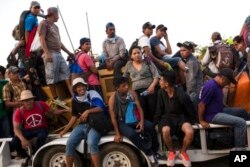
Central American migrants traveling with a caravan to the U.S. crowd onto a tractor as they make their way to Mapastepec, Mexico, Oct. 24, 2018.

Illness, police harassment and fear are taking their toll on the migrants, which now number between 4,000 and 5,000, a sharp decrease from the estimated 7,000 from just days earlier.

Officials say nearly 1,700 migrants already have dropped out and applied for asylum in Mexico. A few hundred weary migrants have accepted Mexican government offers to transport them back to their home countries.

The Mexican government has declined to give the migrants food, water, or even access to bathroom facilities, leaving it to private citizens, church groups or sympathetic local officials to provide essential goods, according to Associated Press.

The Mexican government has, instead, reserved these basic items only for migrants who turn themselves in at immigration centers to apply for visas or to be deported.

Sometimes Mexico's federal police have interfered with the caravan of migrants, who are mostly from Honduras, according to Associated Press.

Parents who have remained in the caravan say they are doing so for their children's futures, and out of fear of the potential dangers that would await them upon return to gang-dominated Honduras.
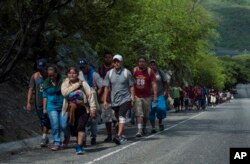
Honduras migrants walk to the U.S as they approach Zacapa, about 70 miles northeast of Guatemala City, Oct. 24, 2018.

Honduras' homicide rate is about 43 per 100,000 inhabitants, among the world's highest for a country not at war.

Such caravans have been routine over the years without much attention, but President Trump has used the caravan to rally his Republican base before the Nov. 6 midterm elections.

Trump fueled the controversy in a series of tweets Monday, saying without evidence that "criminals and unknown Middle Easterners" were among the caravan of Central American migrants bound for the U.S.

In Photos: Caravan of Central American Migrants
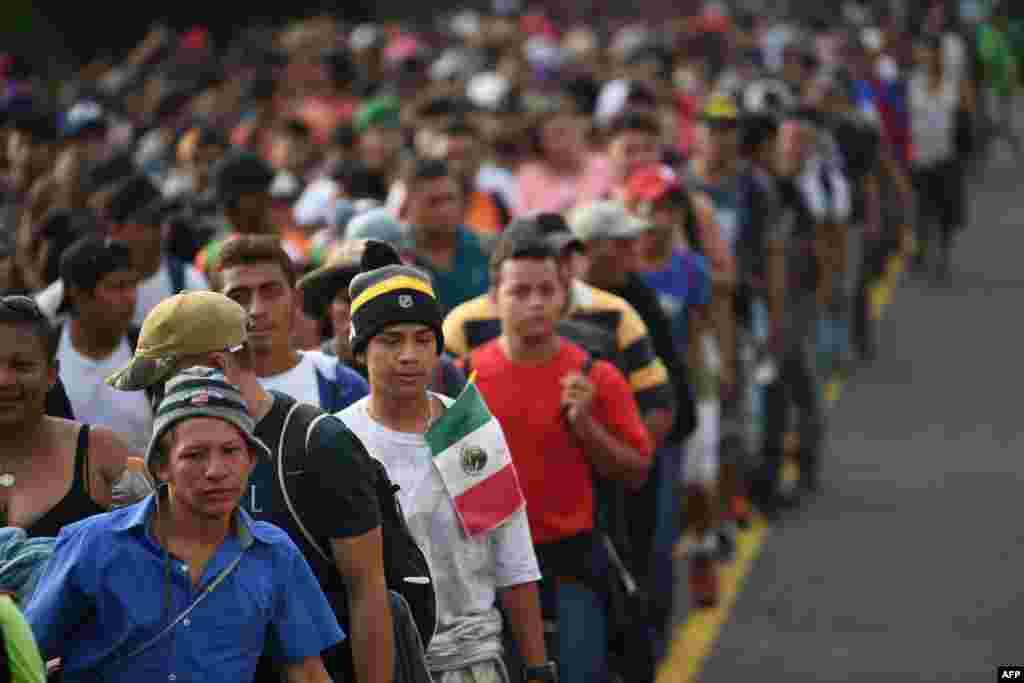
Honduran migrants are seen on the road linking Ciudad Hidalgo and Tapachula, Chiapas state, Mexico, Oct. 21, 2018. Thousands of Honduran migrants resumed their march toward the United States from the southern Mexican city of Ciudad Hidalgo, AFP journalists at the scene said.
1/12 Honduran migrants are seen on the road linking Ciudad Hidalgo and Tapachula, Chiapas state, Mexico, Oct. 21, 2018. Thousands of Honduran migrants resumed their march toward the United States from the southern Mexican city of Ciudad Hidalgo, AFP journalists at the scene said.
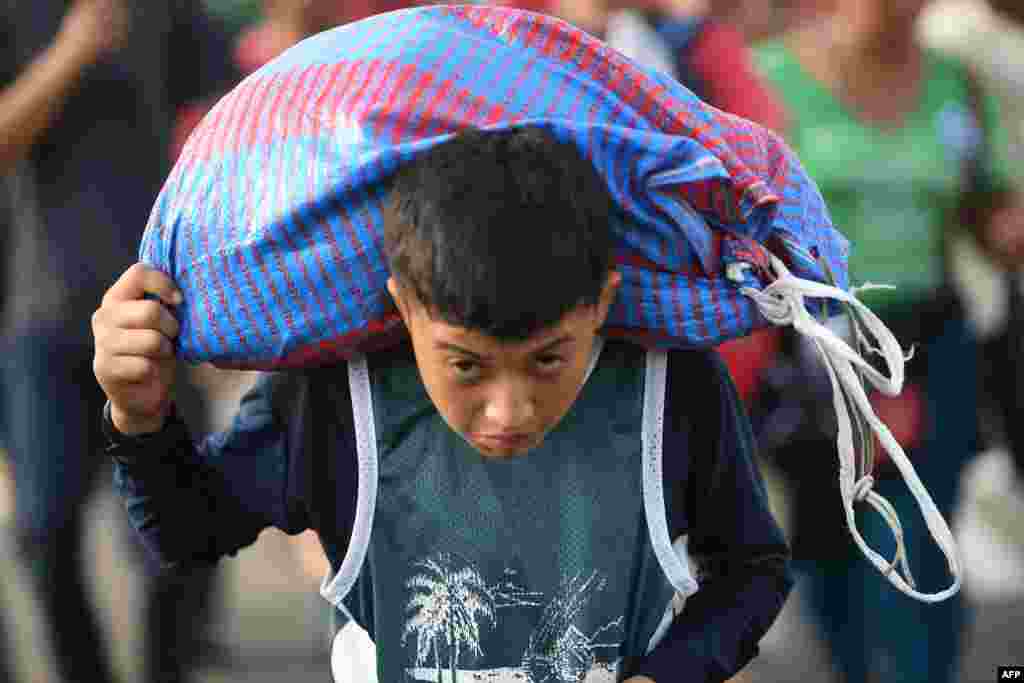
A Honduran migrant boy carries a bag as he takes part in a caravan heading to the U.S. on the road linking Ciudad Hidalgo and Tapachula, Chiapas state, Mexico, Oct. 21, 2018.
2/12 A Honduran migrant boy carries a bag as he takes part in a caravan heading to the U.S. on the road linking Ciudad Hidalgo and Tapachula, Chiapas state, Mexico, Oct. 21, 2018.
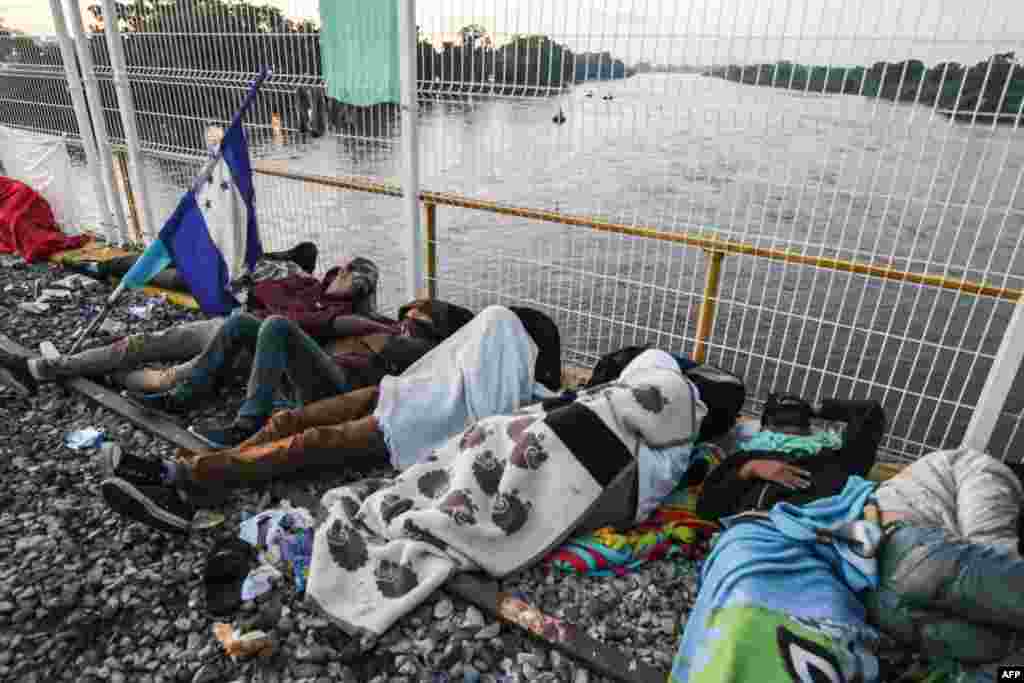
Migrants rest in the border of Guatemala and Mexico, in Ciudad Tecun Uman, Guatemala, Oct. 21, 2018.
3/12 Migrants rest in the border of Guatemala and Mexico, in Ciudad Tecun Uman, Guatemala, Oct. 21, 2018.
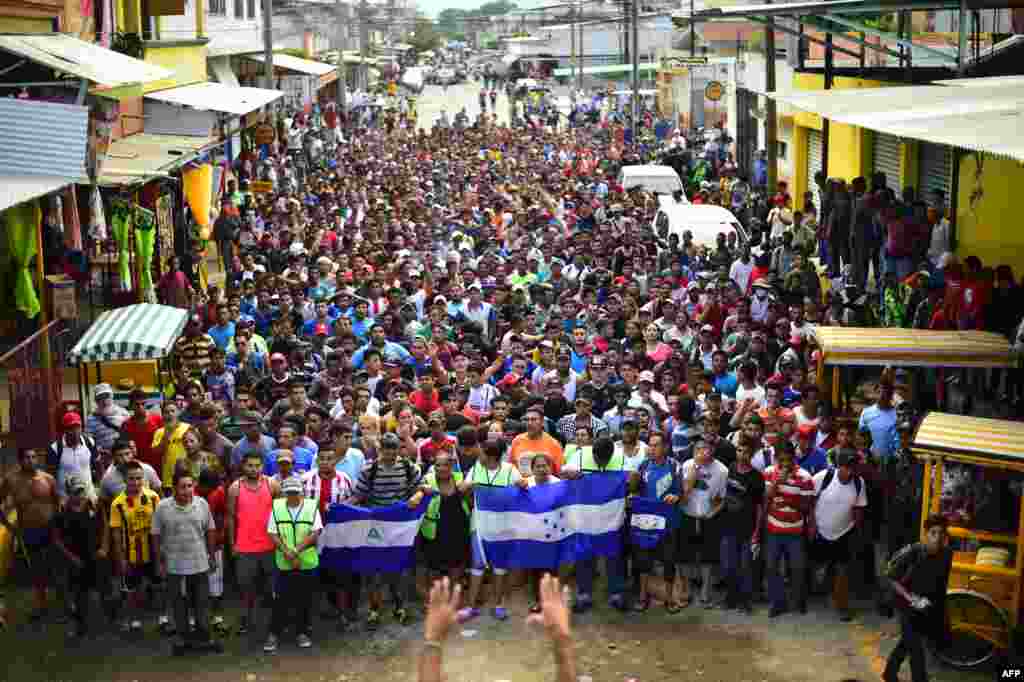
Migrants hold a demonstration demanding authorities to allow the rest of the group to cross, in Ciudad Hidalgo, Chiapas state, Mexico after crossing from Guatemala, Oct. 20, 2018. Thousands of migrants who forced their way through Guatemala's northwestern border and flooded onto a bridge leading to Mexico, where riot police battled them back, waited at the border in the hope of continuing their journey to the United States.
4/12 Migrants hold a demonstration demanding authorities to allow the rest of the group to cross, in Ciudad Hidalgo, Chiapas state, Mexico after crossing from Guatemala, Oct. 20, 2018. Thousands of migrants who forced their way through Guatemala's northwestern border and flooded onto a bridge leading to Mexico, where riot police battled them back, waited at the border in the hope of continuing their journey to the United States.
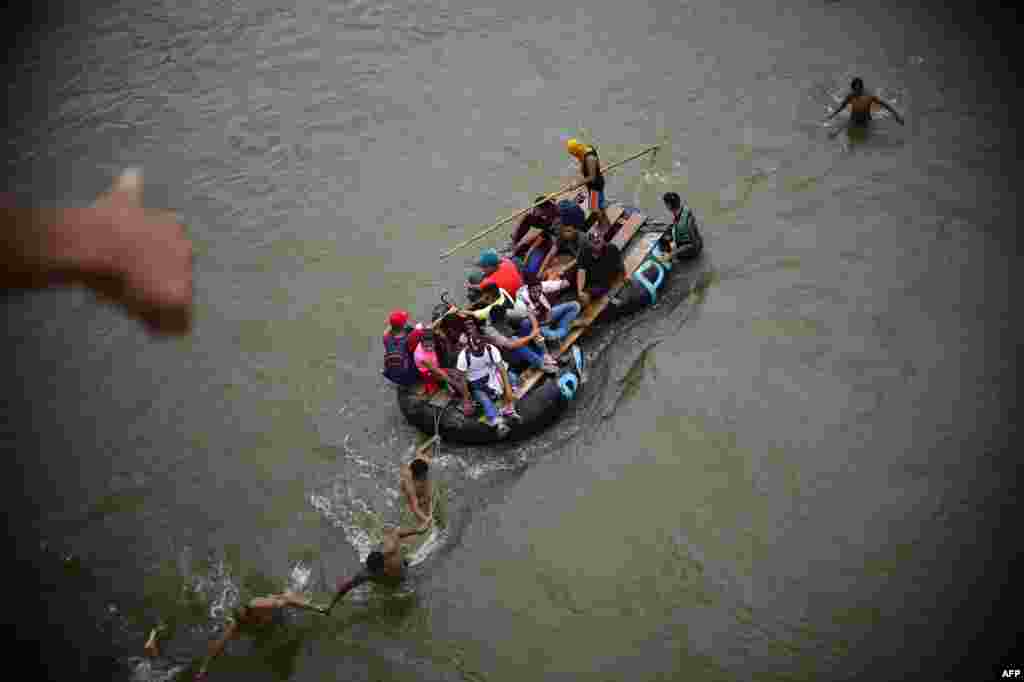
Honduran migrants are seen on a makeshift raft in the Suchiate River from the Guatemala-Mexico international border bridge, in Ciudad Hidalgo, Chiapas state, Mexico, Oct. 20, 2018.
5/12 Honduran migrants are seen on a makeshift raft in the Suchiate River from the Guatemala-Mexico international border bridge, in Ciudad Hidalgo, Chiapas state, Mexico, Oct. 20, 2018.
A Honduras migrant mother and her son walk through the bridge after crossing the border between Guatemala and Mexico, in Ciudad Hidalgo, Mexico, Oct. 20, 2018. Mexican officials are refusing to yield to demands from the caravan of Central American migrants that they be allowed to enter the country en masse but announced they would hand out numbers to those waiting to cross and allow them to enter in small groups.
6/12 A Honduras migrant mother and her son walk through the bridge after crossing the border between Guatemala and Mexico, in Ciudad Hidalgo, Mexico, Oct. 20, 2018. Mexican officials are refusing to yield to demands from the caravan of Central American migrants that they be allowed to enter the country en masse but announced they would hand out numbers to those waiting to cross and allow them to enter in small groups.
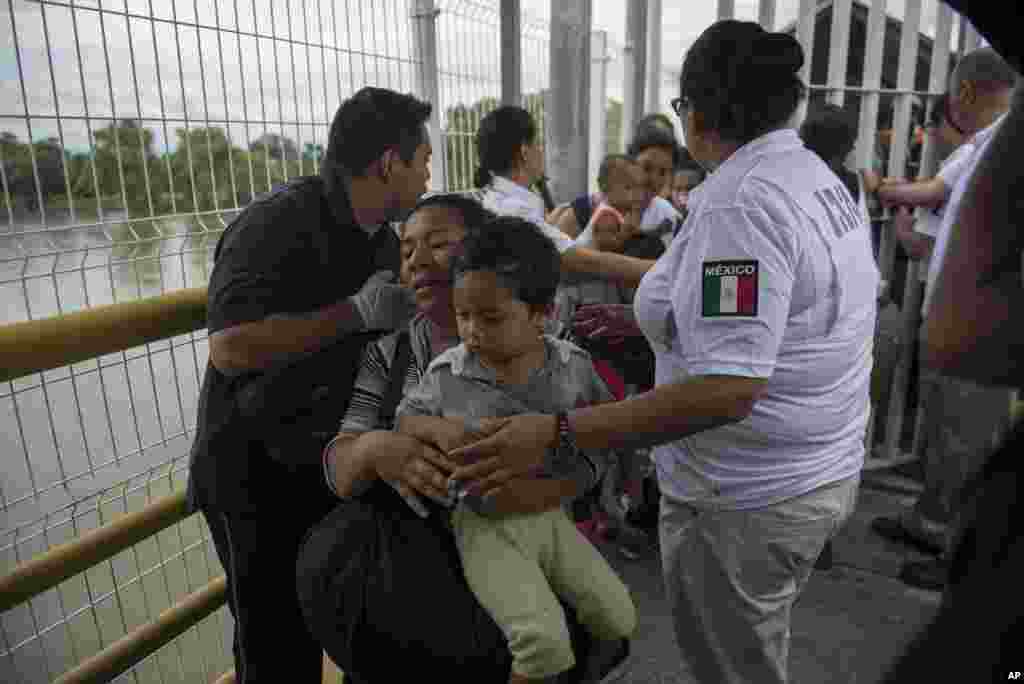
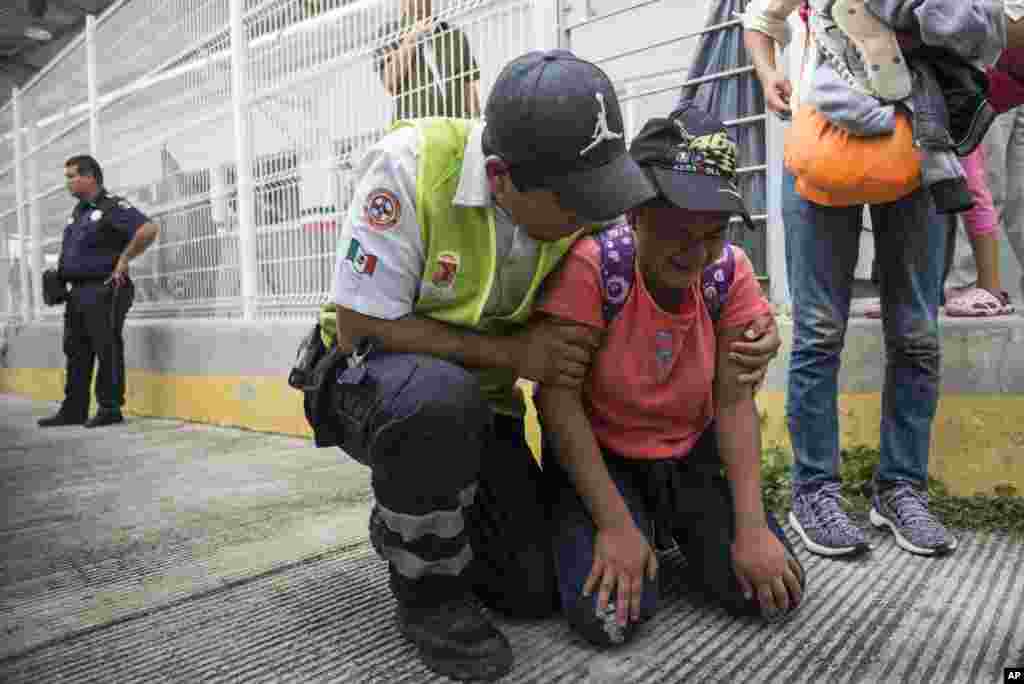
A Honduras migrant is comforted by a Mexican paramedic after her mother fainted while crossing the border between Guatemala and Mexico, in Ciudad Hidalgo, Mexico, Oct. 20, 2018.
7/12 A Honduras migrant is comforted by a Mexican paramedic after her mother fainted while crossing the border between Guatemala and Mexico, in Ciudad Hidalgo, Mexico, Oct. 20, 2018.
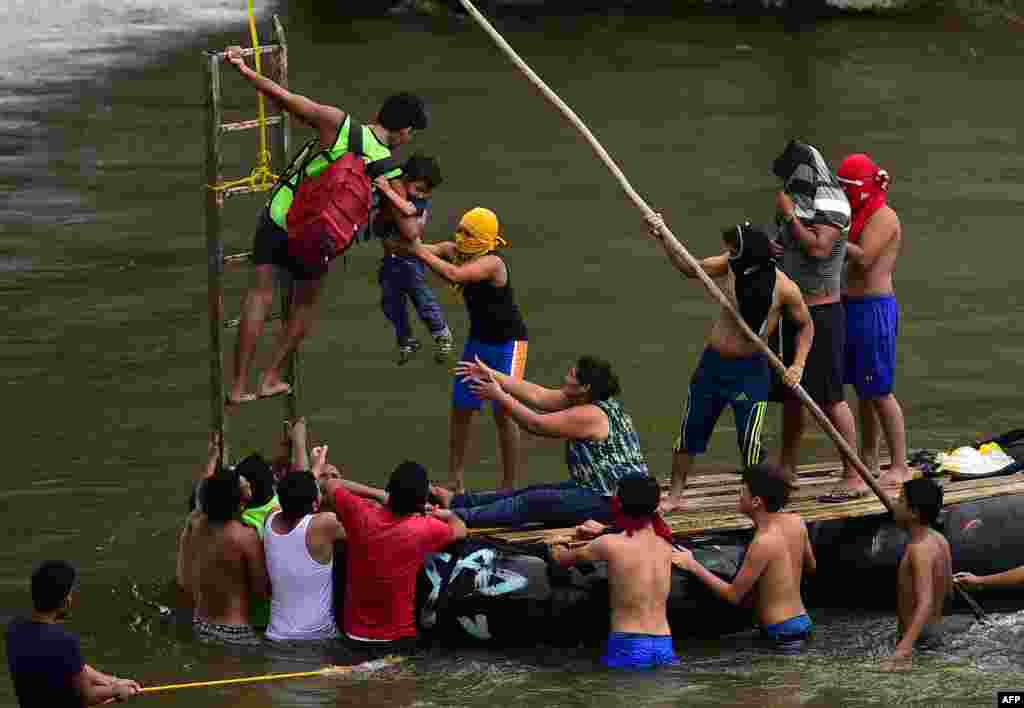
Honduran migrants heading in a caravan to the U.S., help a man holding a child get down to the Suchiate River from the Guatemala-Mexico international border bridge, in Ciudad Hidalgo, Chiapas state, Mexico, Oct. 20, 2018.
8/12 Honduran migrants heading in a caravan to the U.S., help a man holding a child get down to the Suchiate River from the Guatemala-Mexico international border bridge, in Ciudad Hidalgo, Chiapas state, Mexico, Oct. 20, 2018.
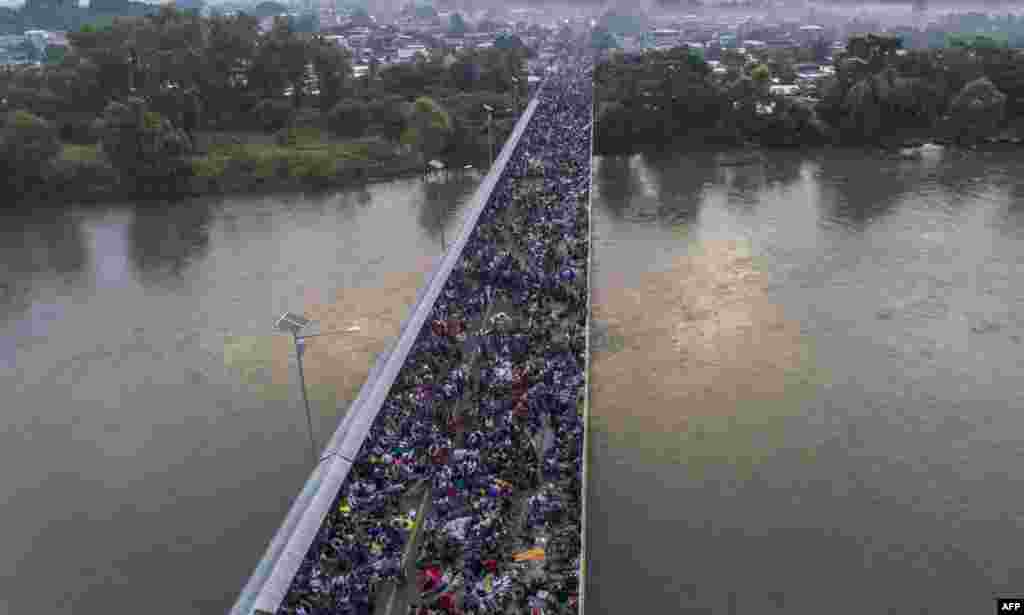
Aerial view of a Honduran migrant caravan on the Guatemala-Mexico international border bridge in Ciudad Hidalgo, Chiapas state, Mexico, Oct. 20, 2018.
9/12 Aerial view of a Honduran migrant caravan on the Guatemala-Mexico international border bridge in Ciudad Hidalgo, Chiapas state, Mexico, Oct. 20, 2018.
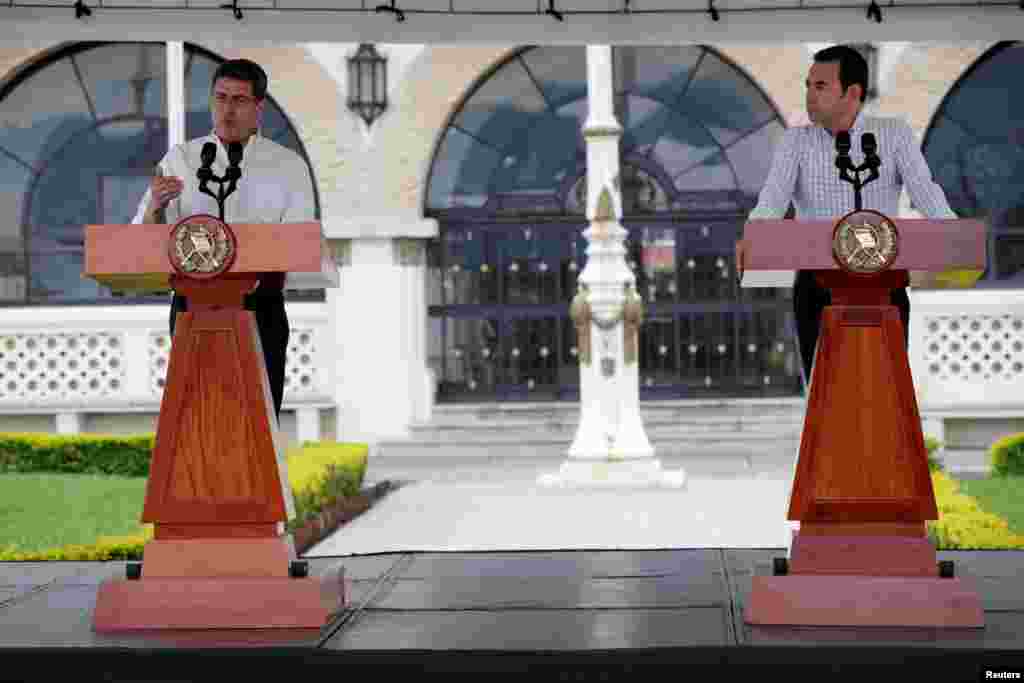
Honduras' President Juan Orlando Hernandez speaks next to his counterpart, Guatemala's President Jimmy Morales, during a news conference in Guatemala City, Guatemala, Oct. 20, 2018. to talk about the situation of the large caravan of Central American migrants who are trying to reach the United State.
10/12 Honduras' President Juan Orlando Hernandez speaks next to his counterpart, Guatemala's President Jimmy Morales, during a news conference in Guatemala City, Guatemala, Oct. 20, 2018. to talk about the situation of the large caravan of Central American migrants who are trying to reach the United State.
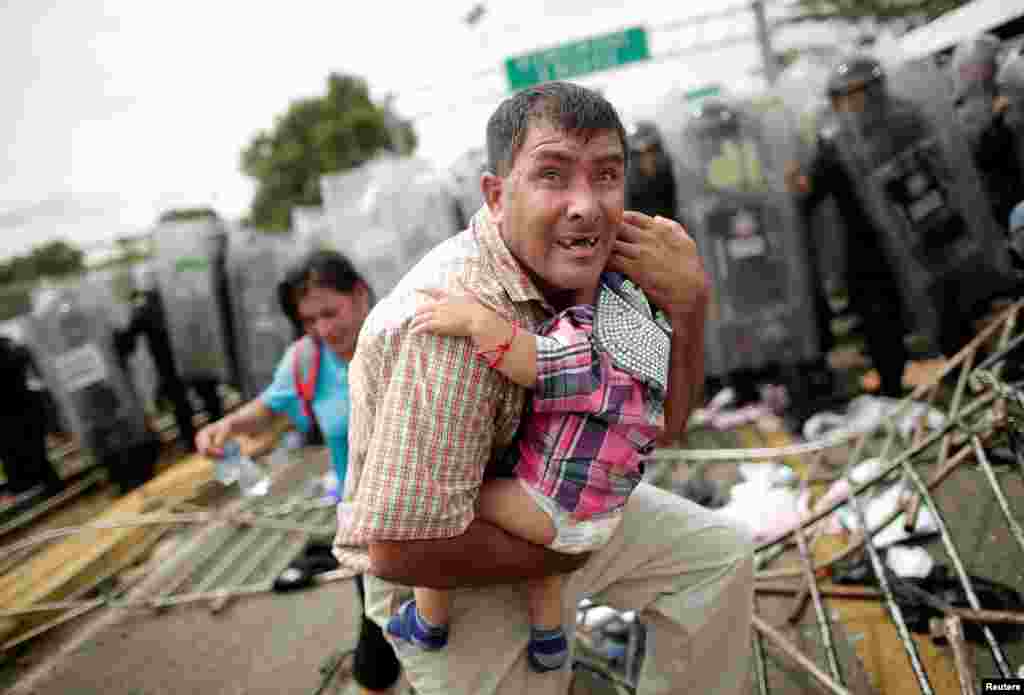
A Honduran migrant protects his child after fellow migrants stormed a border checkpoint in Guatemala, in Ciudad Hidalgo, Mexico, Oct. 19, 2018.
11/12 A Honduran migrant protects his child after fellow migrants stormed a border checkpoint in Guatemala, in Ciudad Hidalgo, Mexico, Oct. 19, 2018.
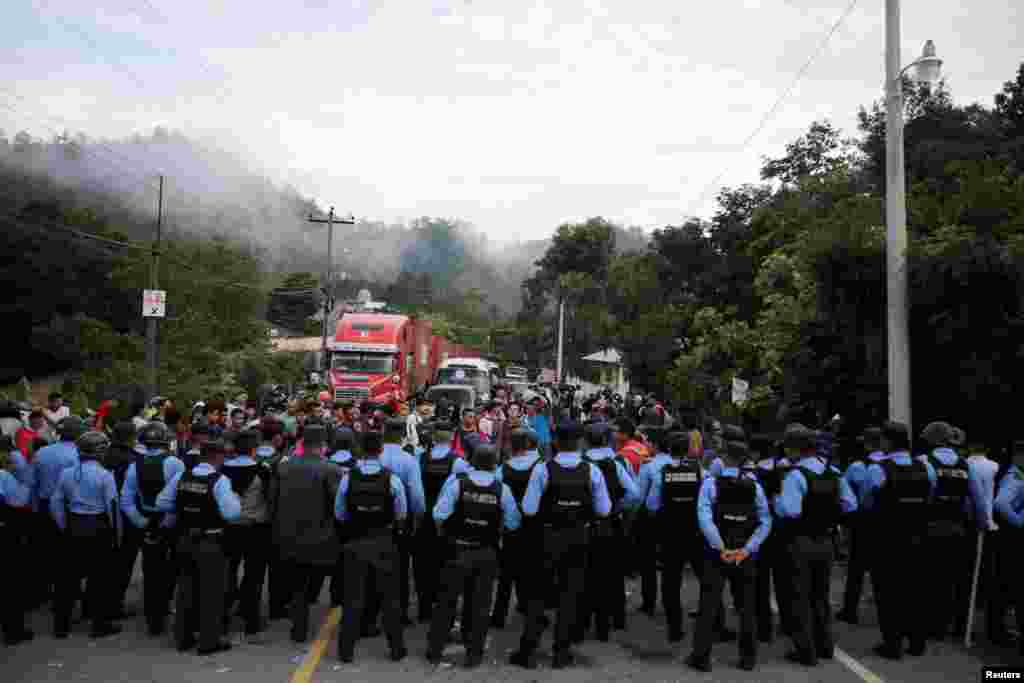
Honduran police officers block the access to the Agua Caliente border with Guatemala as Honduras' migrants try to join a migrant caravan heading to the U.S., in the municipality of Ocotepeque, Honduras, Oct. 19, 2018.
12/12 Honduran police officers block the access to the Agua Caliente border with Guatemala as Honduras' migrants try to join a migrant caravan heading to the U.S., in the municipality of Ocotepeque, Honduras, Oct. 19, 2018.
Previous slide
Next slide

Many in the caravan may not qualify for asylum even if they reach the border, as the U.S. does not consider escapes from poverty and certain types of violence as qualifying factors.

International law requires that individuals fleeing violence and persecution must be allowed access to the country where they are seeking asylum and the right to apply for it.

Staff from the United Nations High Commissioner for Refugees arrived earlier this week in the Mexican town of Tapachulas, which is near the Guatemalan border, to help stabilize the migrant caravan's chaotic situation and to register asylum seekers.

UNHCR spokesman Adrian Edwards told VOA that its staffers also are safeguarding migrants' rights.

“All countries have a right to be able to manage their own immigration and manage their own borders,” Edwards said. “What is important for us is that those borders are managed in an asylum-sensitive way, which means giving people access, assessing their claims and then dealing with them accordingly in line with international law.”

Trump has vowed to prevent the caravan of migrants from entering the U.S., but beyond threats to cut or reduce foreign aid, administration officials have not indicated how the U.S. will respond to what he has called a "national emergency."

  • 16x9 Image

    VOA News

    The Voice of America provides news and information in more than 40 languages to an estimated weekly audience of over 326 million people. Stories with the VOA News byline are the work of multiple VOA journalists and may contain information from wire service reports.

This item is part of
XS
SM
MD
LG