




ABUJA —
Tensions are high in Nigeria four weeks after hundreds of school girls were kidnapped by Islamist militants, as security forces break up protests demanding the rescue of the girls. Authorities say they fear protests in the more volatile parts of Nigeria will spark sectarian violence.
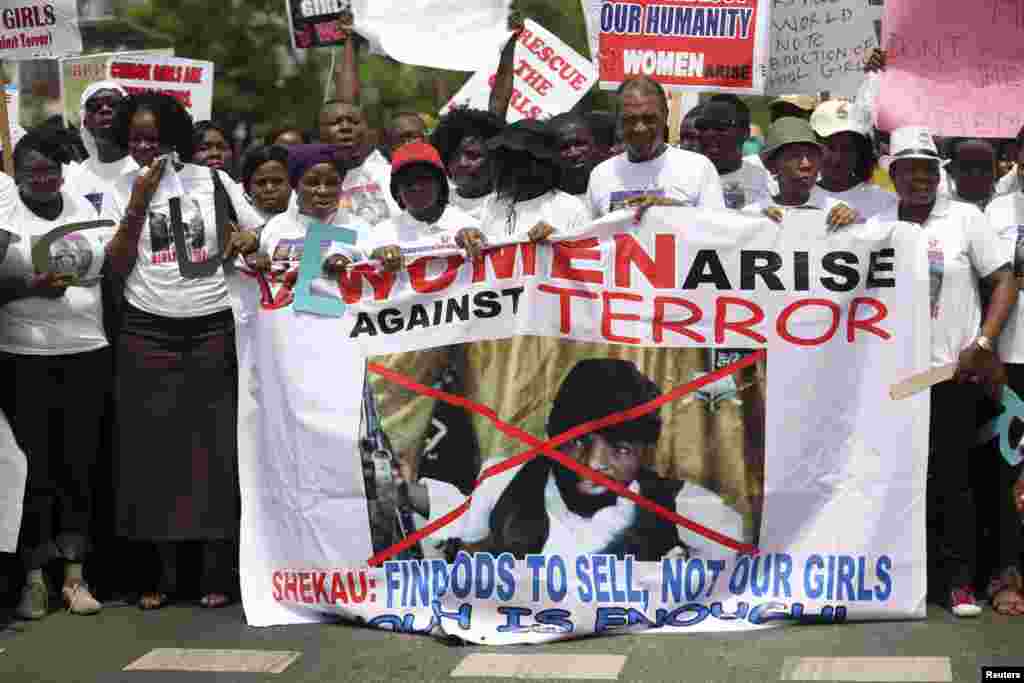
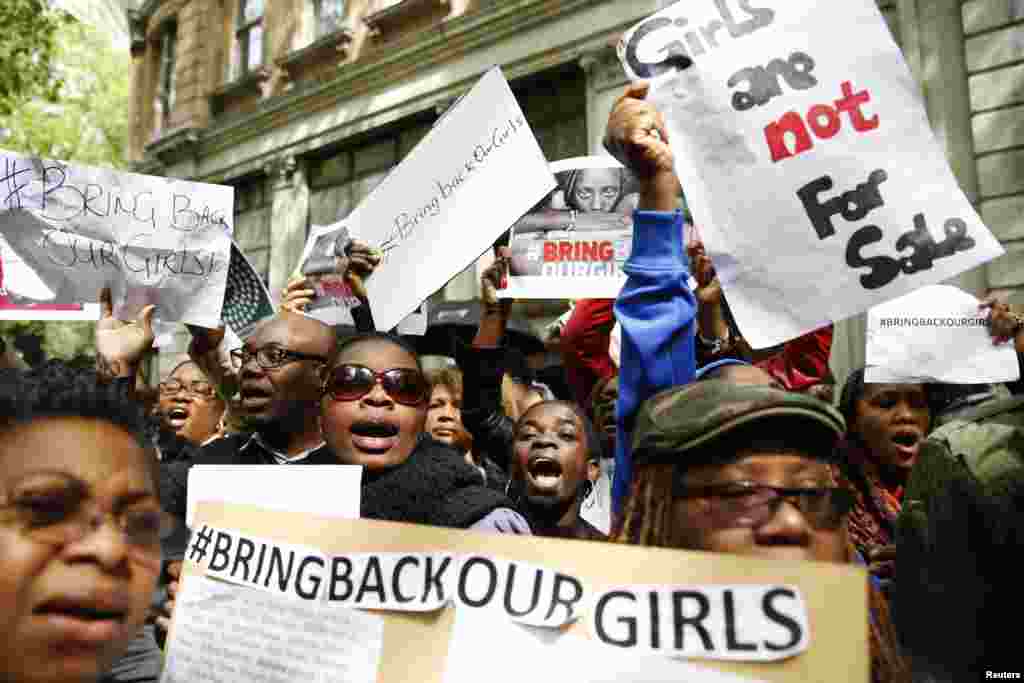
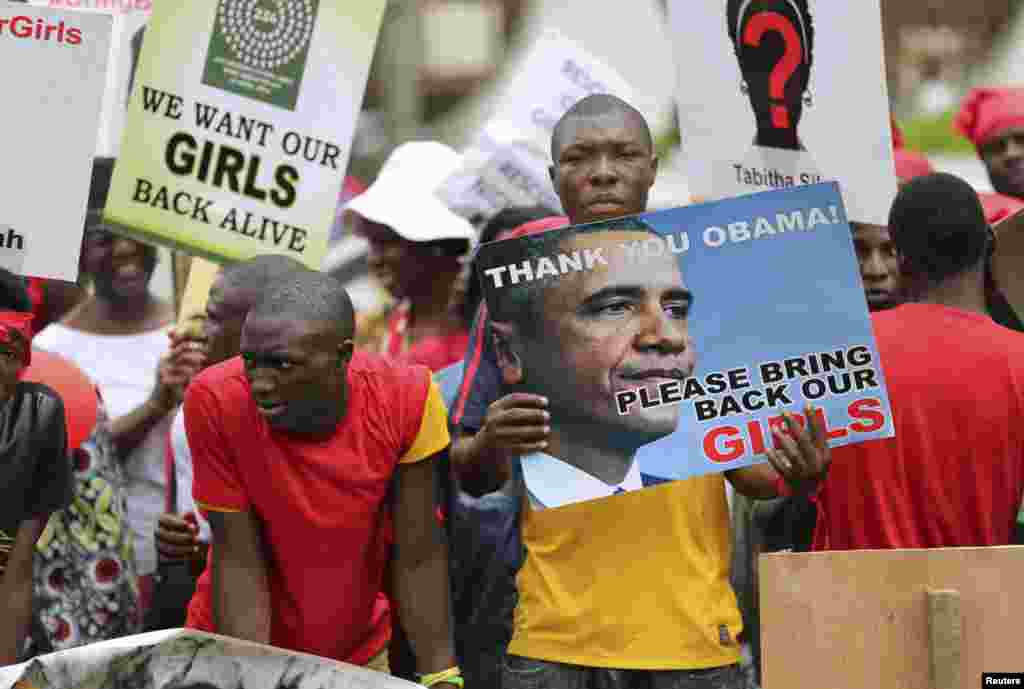
In the Nigerian capital of Abuja Sunday, protesters were calling for the rescue of the girls Sunday, shouting: "Bring back out girls now and alive! What are we saying? Bring back our girls now and alive!”
But the police intervened to disperse the crowd and the rally ended.
Kaduna rally fails to materialize
Another weekend protest scheduled in Kaduna, a city known for sectarian violence, never happened. After both mosques and churches were attacked, parts of the city are under 24-hour curfew and all protests are banned. During the weekend, police occupied locations around the city where rallies were planned.
Protest organizer Ibrahim Garba Wala held a news conference after the rally failed to materialize.
“We were shocked even last night, the venue, which is Mutula Square, where we agreed that we are going to hold the protest was already dominated by security personnel with their tankers and their heavy machineries,” he said.
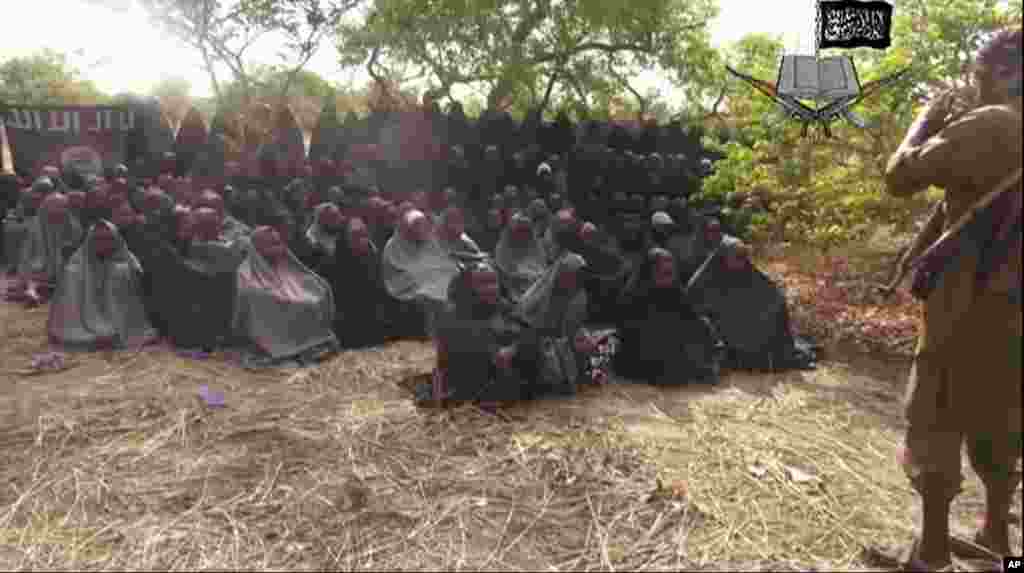
Wala says the weaponry on the streets of Kaduna this weekend would be better deployed in the northeast where security forces are searching for nearly 300 teenage girls, believed to be held hostage in the forest by Islamist militants known as Boko Haram.
Kaduna city has long been a hotspot for political and community violence, and nearly a thousand people were killed there in post-election violence in 2011. As presidential elections approach in 2015 Kaduna residents fear more bloodshed.
In the Nigerian capital of Abuja Sunday, protesters were calling for the rescue of the girls Sunday, shouting: "Bring back out girls now and alive! What are we saying? Bring back our girls now and alive!”
But the police intervened to disperse the crowd and the rally ended.
Kaduna rally fails to materialize
Another weekend protest scheduled in Kaduna, a city known for sectarian violence, never happened. After both mosques and churches were attacked, parts of the city are under 24-hour curfew and all protests are banned. During the weekend, police occupied locations around the city where rallies were planned.
Protest organizer Ibrahim Garba Wala held a news conference after the rally failed to materialize.
“We were shocked even last night, the venue, which is Mutula Square, where we agreed that we are going to hold the protest was already dominated by security personnel with their tankers and their heavy machineries,” he said.
Wala says the weaponry on the streets of Kaduna this weekend would be better deployed in the northeast where security forces are searching for nearly 300 teenage girls, believed to be held hostage in the forest by Islamist militants known as Boko Haram.
Kaduna city has long been a hotspot for political and community violence, and nearly a thousand people were killed there in post-election violence in 2011. As presidential elections approach in 2015 Kaduna residents fear more bloodshed.
Security crisis
In Kaduna, anger over general insecurity has intensified since the girls were kidnapped, says Wala.
“We are telling people to understand that the crisis in the northeast is not being perpetrated by the poor man. It is being perpetrated by the politicians,” said Wala.
Boko Haram
Boko Haram
- Based in the northeastern city of Maiduguri
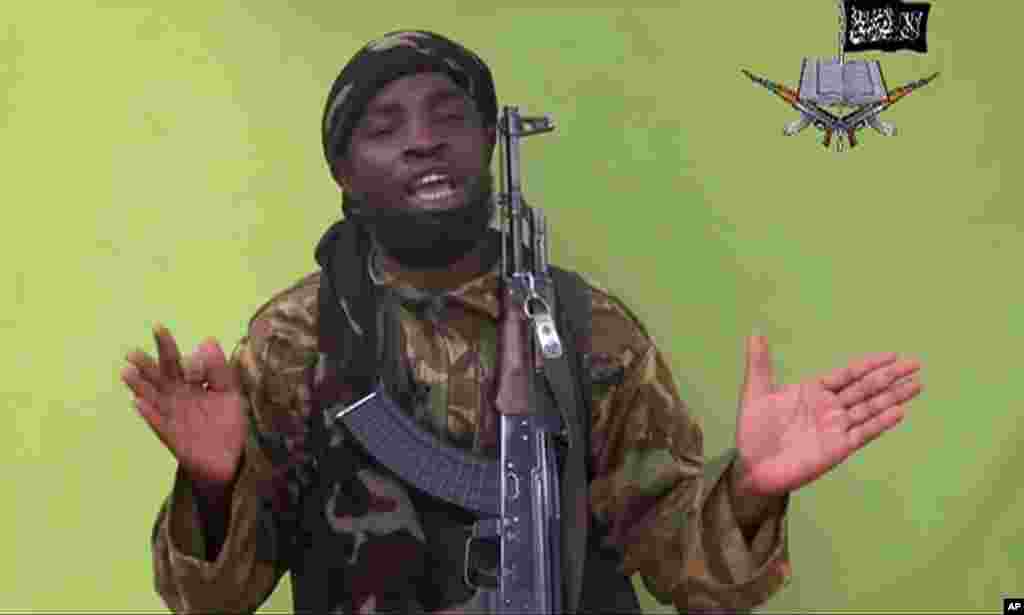
- Self-proclaimed leader is Abubakar Shekau
- Began in 2002 as a nonviolent Islamist splinter group
- Launched uprising in 2009
- Has killed tens of thousands since 2010
- Boko Haram translates to "Western education is sinful"
- Wants Nigeria to adopt strict Islamic law
The mid-April kidnapping sparked protests, in Nigeria and around the world, demanding the girls’ safe return. Officially, the Nigerian government supports the protest movement.
Nigerian Police spokesperson Frank Mbah appeared Monday in Abuja.
“The position of the Nigerian police force is clear," said Nigerian Police spokesperson Frank Mbah Monday in Abuja. "Nigerians have got the right to peaceful assembly, to peaceful association, to peaceful protest as long they do so with the confines and boundaries of the law.”
In the past week, the United States, the United Kingdom, France, Canada, China and Israel have agreed to provide material support for the rescue effort, a task U.S. Defense Secretary Chuck Hagel says will be a "huge challenge."
In a video distributed to journalists last week, the man who claims to lead Boko Haram, Abubakar Shekau, says his group is holding the girls as slaves to be sold as wives.
Ibrahima Yakubu contributed to this report from Kaduna
Abducted Nigerian Schoolgirls

Show more
Show less

Show more
Show less

Show more
Show less

Show more
Show less
Show more
Show less
Show more
Show less
Show more
Show less
Show more
Show less

Show more
Show less
Show more
Show less