The mention of Saudi Arabia often leads people to envision an oil-rich, nearly-empty desert where Islam originated.
An exhibit in Washington, D.C., offers insight into the real history of the Arabian Peninsula, focusing on its pre-Islamic role as a trade route, the influence of nearby cultures, and the evolution of language.
"Roads of Arabia” opened at the Smithsonian’s Arthur Sackler Gallery.
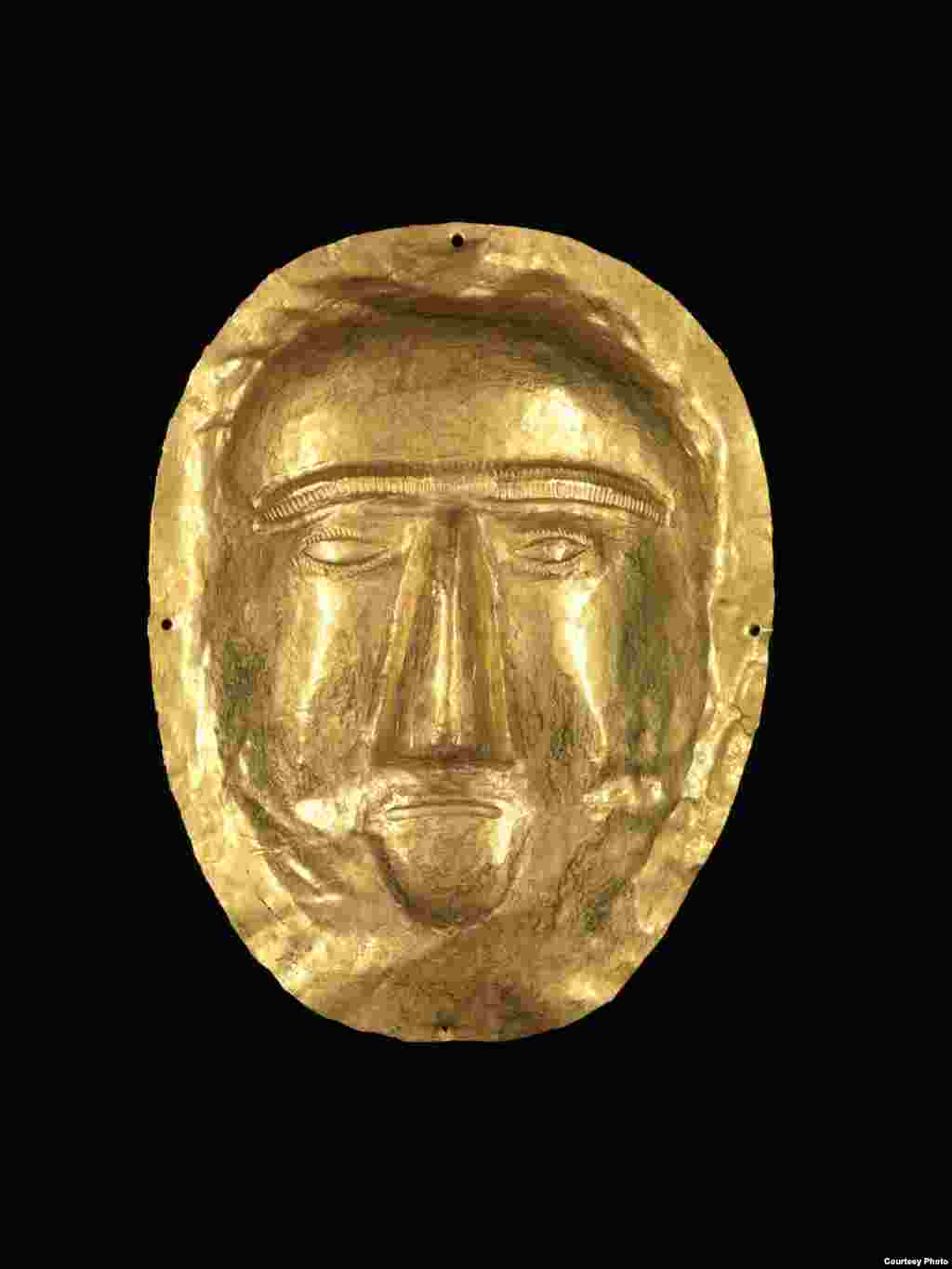
The exhibit, the first about Saudi culture in the U.S., showcases more than 300 objects ranging from ornate pottery and monumental statues, to the jewelry that adorned the remains of a young girl buried nearly years ago.
Many of the objects have never been seen in Arabia, where they came from.
Roads of Arabia
1/8Discovered in a magnificent royal tomb in 1998, this funerary mask from the First Century CE, belonged to a young girl, whose body was covered with gold, rubies, and pearls. (Freer Sackler Galleries/Smithsonian Museum)
Mysterious stone steles, monumental human statues, haunting gold masks and finely forged bronze figures testify to Arabia’s largely unknown history before the rise of Islam in the 7th Century CE.
Show moreShow less
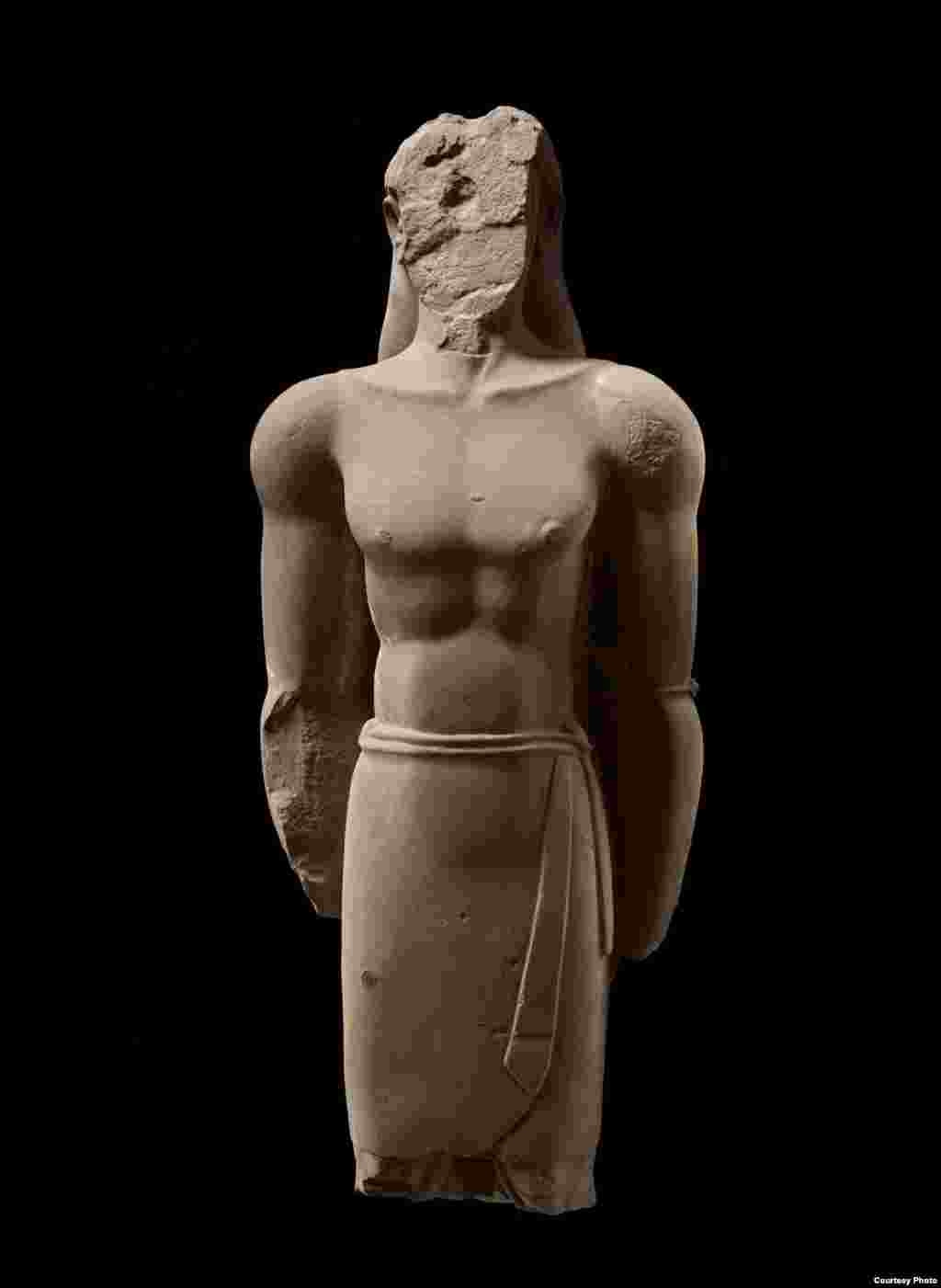
2/8This statue, with its formal pose and well-defined musculature, is from 4th-3rd century BCE. An inscription on another statue helps identify them as kings of the Lihyanite dynasty. (Freer Sackler Galleries/Smithsonian Museum)
Mysterious stone steles, monumental human statues, haunting gold masks and finely forged bronze figures testify to Arabia’s largely unknown history before the rise of Islam in the 7th Century CE.
Show moreShow less
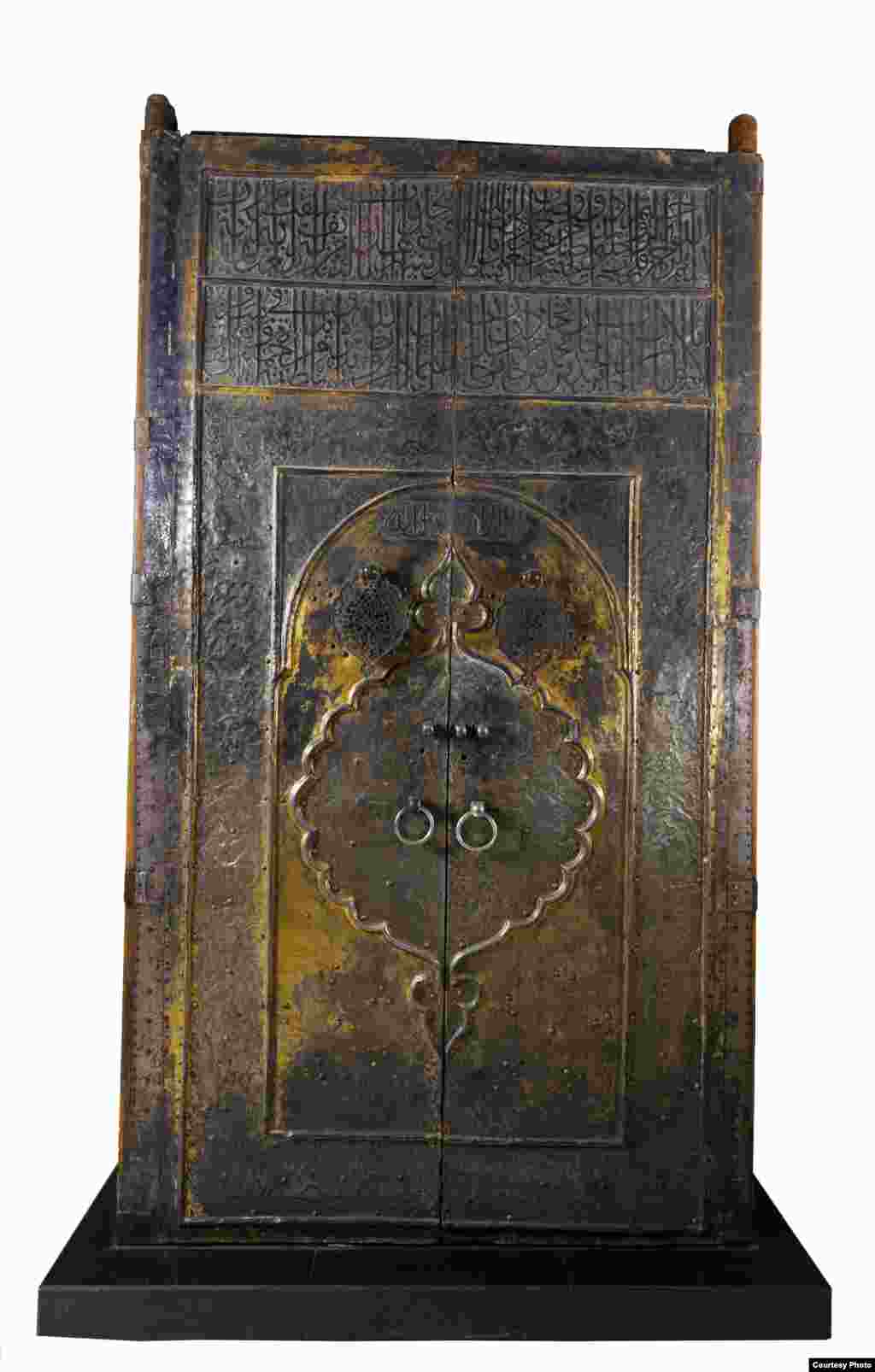
3/8This massive wooden door, covered with silver leaf, was donated to Mecca by the Ottoman sultan Murad IV (reigned 1623-40). The design of such doors changed little over the centuries. The Ottoman door was used until around 1947. (Freer Sackler Galleries/Sm
Mysterious stone steles, monumental human statues, haunting gold masks and finely forged bronze figures testify to Arabia’s largely unknown history before the rise of Islam in the 7th Century CE.
Show moreShow less
4/8This incense burner uses architectural motifs and has a serpent running up one side. The many incense burners found at Qaryat al-Faw, a major trading center in the southwest, indicate that the population both traded and actively used incense in their own
Mysterious stone steles, monumental human statues, haunting gold masks and finely forged bronze figures testify to Arabia’s largely unknown history before the rise of Islam in the 7th Century CE.
Show moreShow less
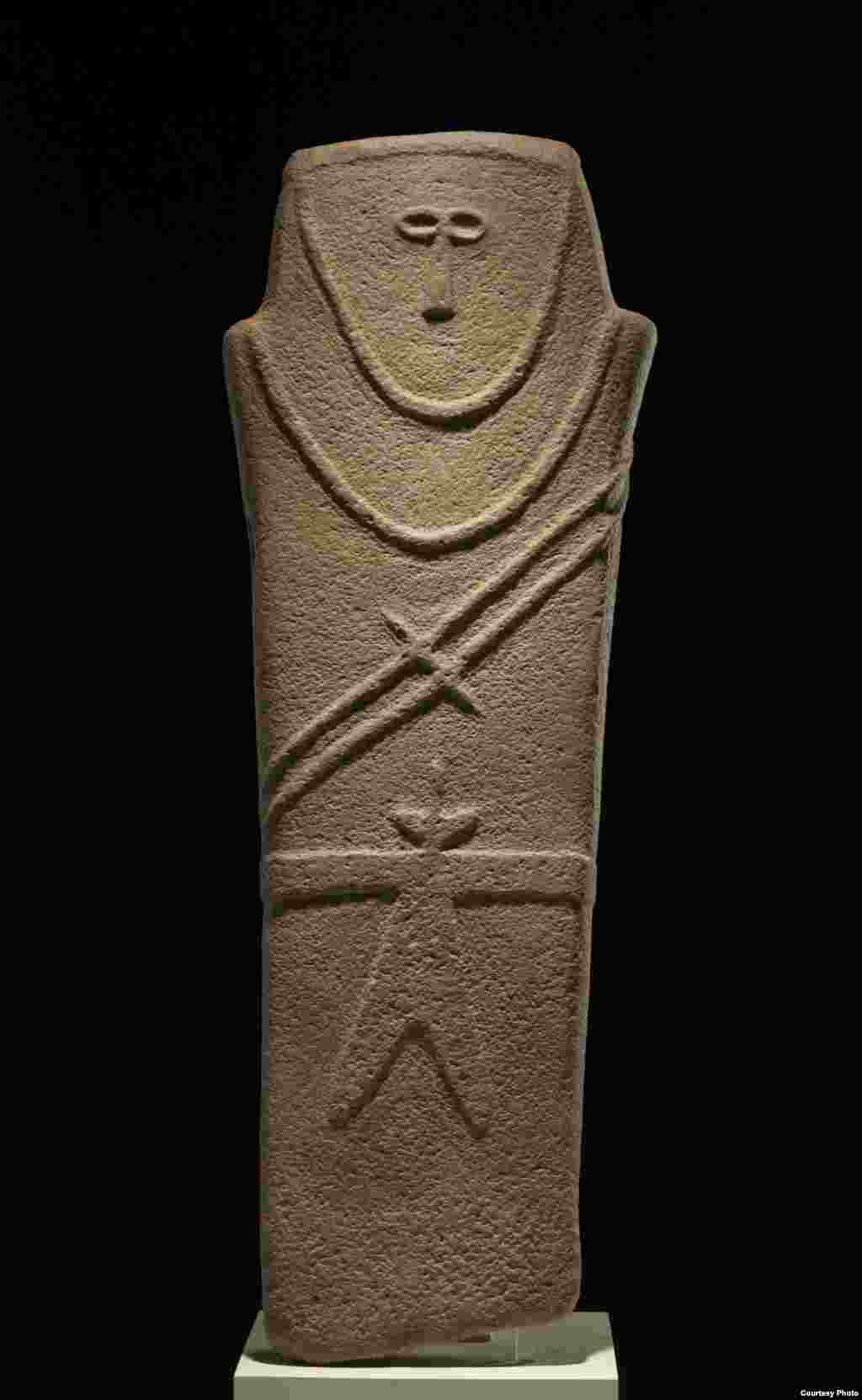
5/8This anthropomorphic stele dates back to some 6,000 years ago and was probably associated with religious or burial practices.(Freer Sackler Galleries/Smithsonian Museum)
Mysterious stone steles, monumental human statues, haunting gold masks and finely forged bronze figures testify to Arabia’s largely unknown history before the rise of Islam in the 7th Century CE.
Show moreShow less
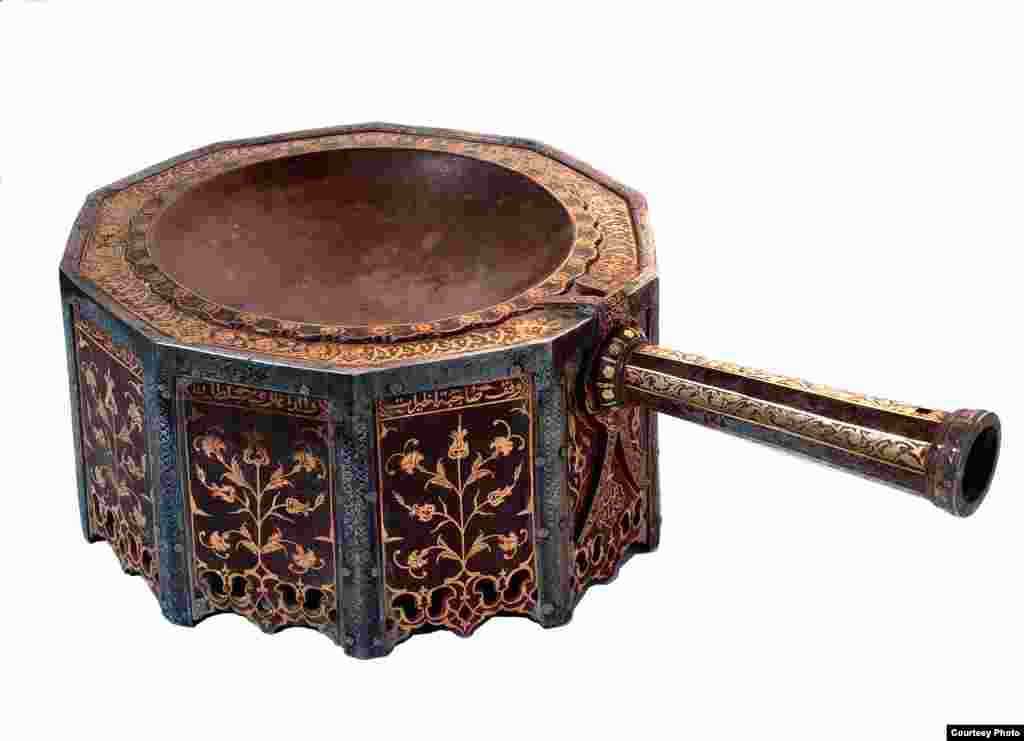
6/8Commissioned by the mother of the Ottoman sultan Murad IV (reigned 1623-40), this exquisite incense burner is one of the many gifts presented to the shrine at Mecca, the spiritual center of Islam. (Freer Sackler Galleries/Smithsonian Museum)
Mysterious stone steles, monumental human statues, haunting gold masks and finely forged bronze figures testify to Arabia’s largely unknown history before the rise of Islam in the 7th Century CE.
Show moreShow less
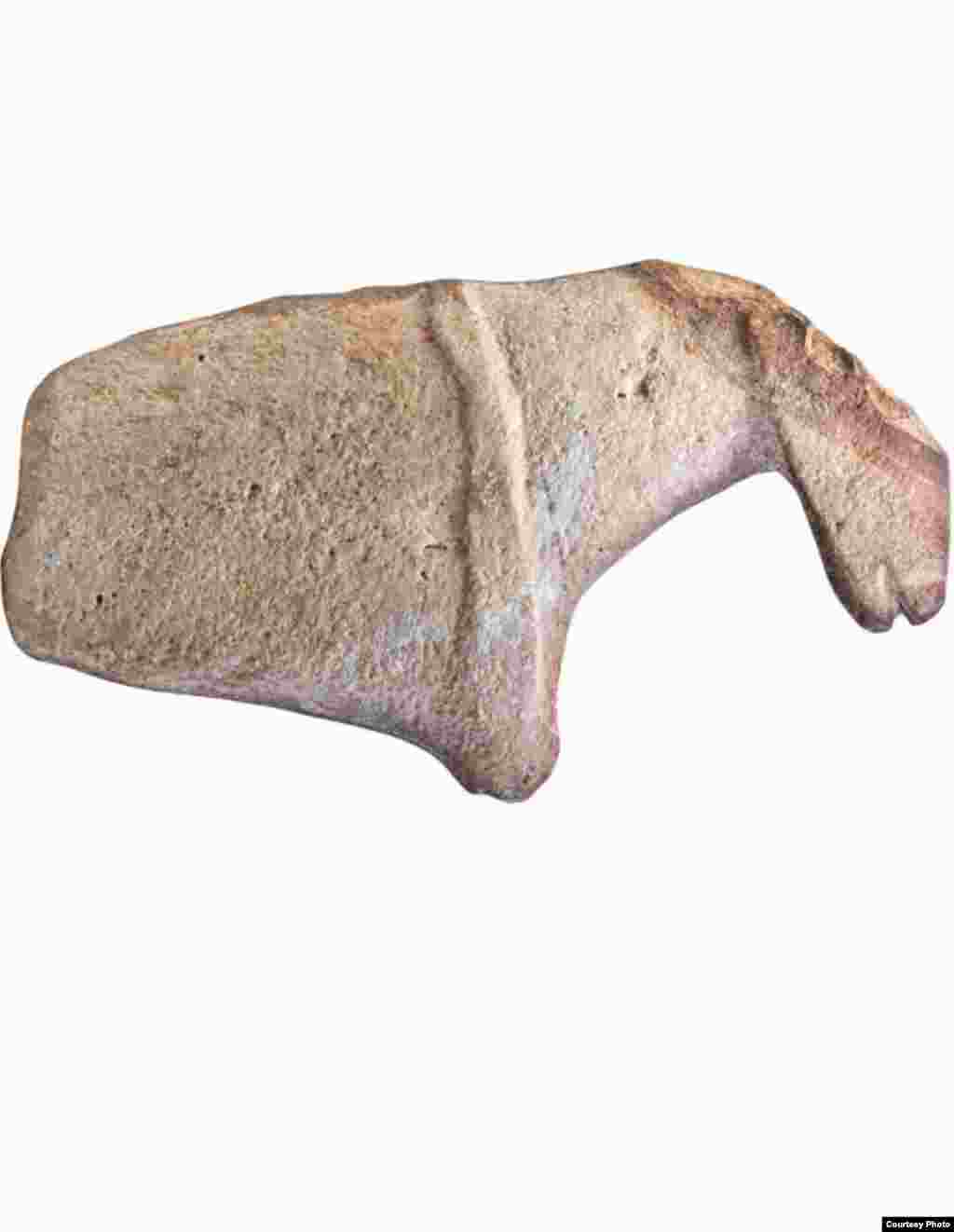
7/8This is a fragment of a member of the horse family. Fine markings around the muzzle and shoulder hint at an early bridle. Dated from about 7000 BCE, it suggests the domestication of the horse may have occurred far earlier than 3500 BCE in Central Asia. (F
Mysterious stone steles, monumental human statues, haunting gold masks and finely forged bronze figures testify to Arabia’s largely unknown history before the rise of Islam in the 7th Century CE.
Show moreShow less
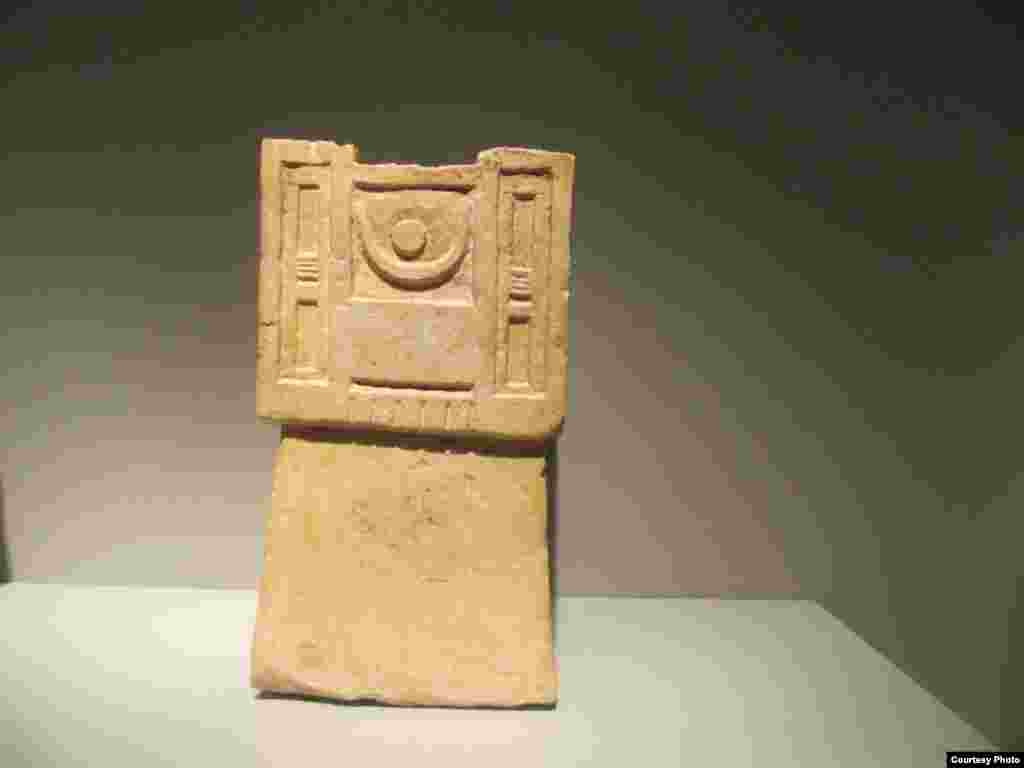
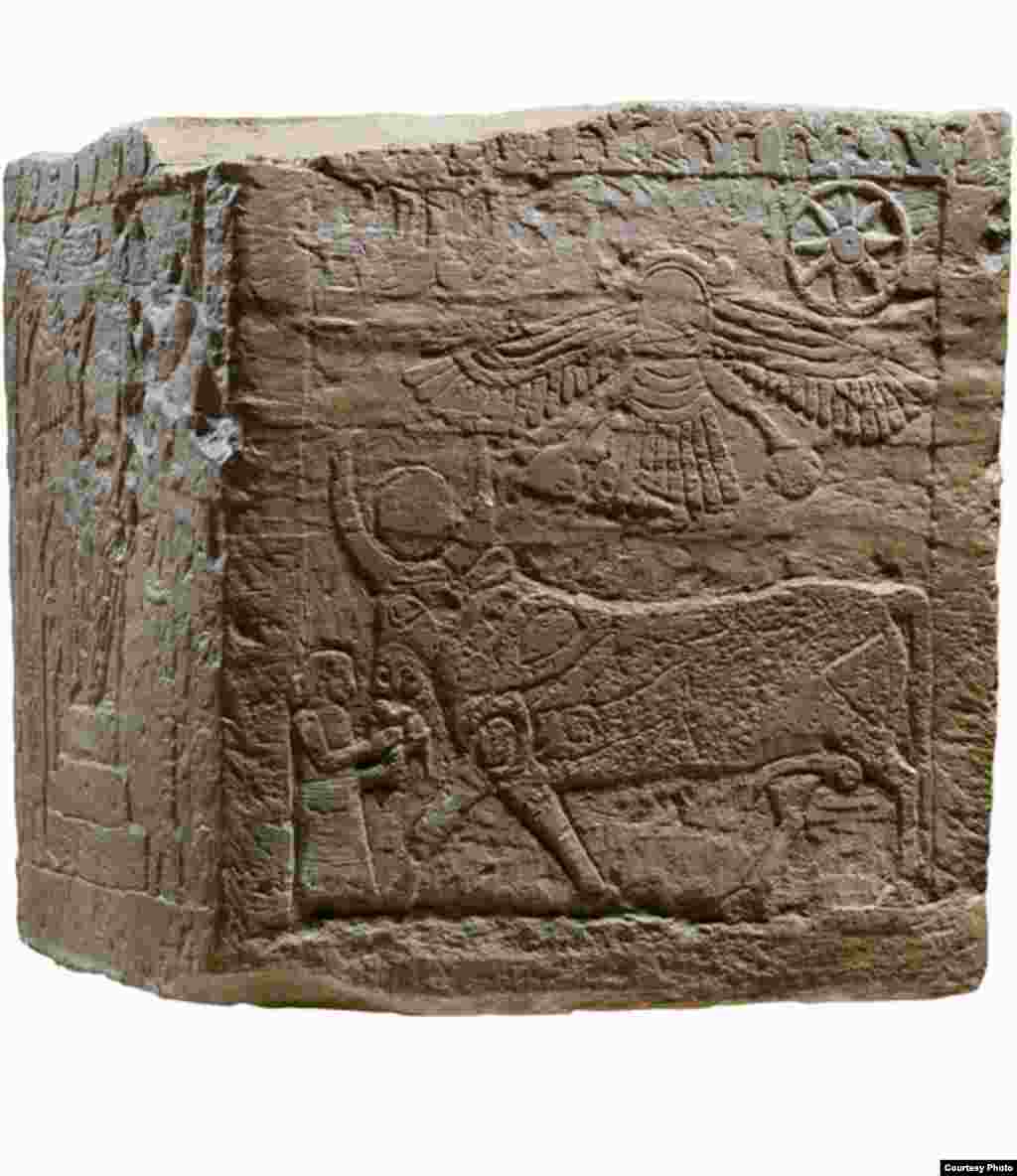
8/8The so-called al-Hamra cube was discovered in the al-Hamra Temple at Tayma, an important trading city in northwestern Arabia. Its fine decoration confirms the integration of Egyptian and Mesopotamian motifs into local religious practices. (Freer Sackler G
Mysterious stone steles, monumental human statues, haunting gold masks and finely forged bronze figures testify to Arabia’s largely unknown history before the rise of Islam in the 7th Century CE.
Show moreShow less
Previous slide
Next slide
“Some of the earliest objects go back to the Neolithic period, like the 6th, 7th millennium BC," curator Massumeh Farhad says. "And I think the most recent ones date to the early 20th century.”
The exhibit explores the Arabian Peninsula’s past as a trade route for one of the most valuable commodities of the ancient world, incense. A collection of incense burners shows how the great temple civilizations, including Greece and Rome, relied on incense brought from Arabia.
“Incense was what oil is today," Farhad says. "In order to get the incense from the southern part, it had to move up the Red Sea coast. There were these various stopping stations and every station would levy a tax on the caravans. That is how many of these places became very wealthy.”
Many items provide examples of how Arabia was influenced by ancient civilizations further north. A bronze statue of a man’s head is an example.
“If one were to see this object without any idea where it came from, they would immediately say it’s Roman," Farhad says. "But then when you look at the head, there are certain characteristics that you realize, these are not quite Roman, the thick curls of the figure that are typical of an Arab of that period, you don’t see Romans with the same features."
One of three sandstone steles, or grave markers, from the fourth millennium BC, is a favorite of Farhad’s.
“He’s sort of standing, his head is slightly tilting to one side and he’s sort of crossed his torso," she says. "I find something incredibly moving about that figure because on one hand he’s extremely abstracted, he’s only sort of defined by sort of crisp lines, but at the same time, there is so much sort of emotion and feeling in the figure.”
Arabia's history as a destination for pilgrims after the birth of Islam in the seventh century is also showcased.
"One of the highlights of the exhibition is sort of the sea of tombstones from Mecca that are inscribed with the names of the deceased and a short section from the Quran,” Farhad says.
The Saudi Commission of Tourism and Antiquities co-organized and co-sponsored the exhibit.
“We want to show the world that we had an important role," says Ali al-Ghabban, a commission spokesperson. "We are similar to the other countries in the region; Egypt or Syria or Mesopotamia. Arabia was always present, not only with the petrol discovery."
For some extreme Islamists, pagan antiquities are sinful. Before the Washington exhibit opened, an Egyptian fundamentalist threatened to destroy pre-Islamic monuments, like the ancient Sphinx and the Pyramids, if he's able to.
That's something Al-Ghabban finds unacceptable. “It’s stupidity, I think. The first Muslims did not do the same.”
For Al-Gabban, the exhibit, with its huge pre-Islamic section, is the answer to those destructive calls.
“I think we need to understand deeply our religion, and I can guarantee you there is no contradiction between protecting the human heritage and Islam.”
“Roads of Arabia” comes to Washington after showings in Europe and will travel to more venues in the United States.
Faiza Elmasry writes stories about life in America. She wrote for several newspapers and magazines in the Middle East, covering current affairs, art, family and women issues. Faiza joined VOA after working in broadcasting in Cairo for the Egyptian Radio and Television Corporation and in Tokyo for Radio Japan.