S. Sudan Army Claims Recapture of Oil-producing State
JUBA, SOUTH SUDAN —
South Sudan's army said it regained a rebel-held northern town on Friday, giving the government control of a region where oil production had been halted by fighting that has left the world's youngest nation close to civil war.
Forces loyal to President Salva Kiir recaptured Bentiu, the capital of Unity state, in early afternoon, army spokesman Philip Aguer told Reuters. “When you control Bentiu you control all the oilfields in Unity state,” he said.
More than three weeks of fighting between government forces and rebels loyal to former vice president Riek Machar have killed more than 1,000 people and driven 230,000 from their homes and forced a cut in oil production.
Rebels made a “tactical withdrawal to avoid civilian casualties” in Bentiu, according to Lul Ruai Koang, a military spokesman for the rebel delegation attending stuttering peace talks in Ethiopia.
He said rebels continued to hold the surrounding countryside. He said the government forces had been backed by fighters from the Justice and Equality Movement, a rebel group from Sudan's Darfur province.
Displaced South Sudanese
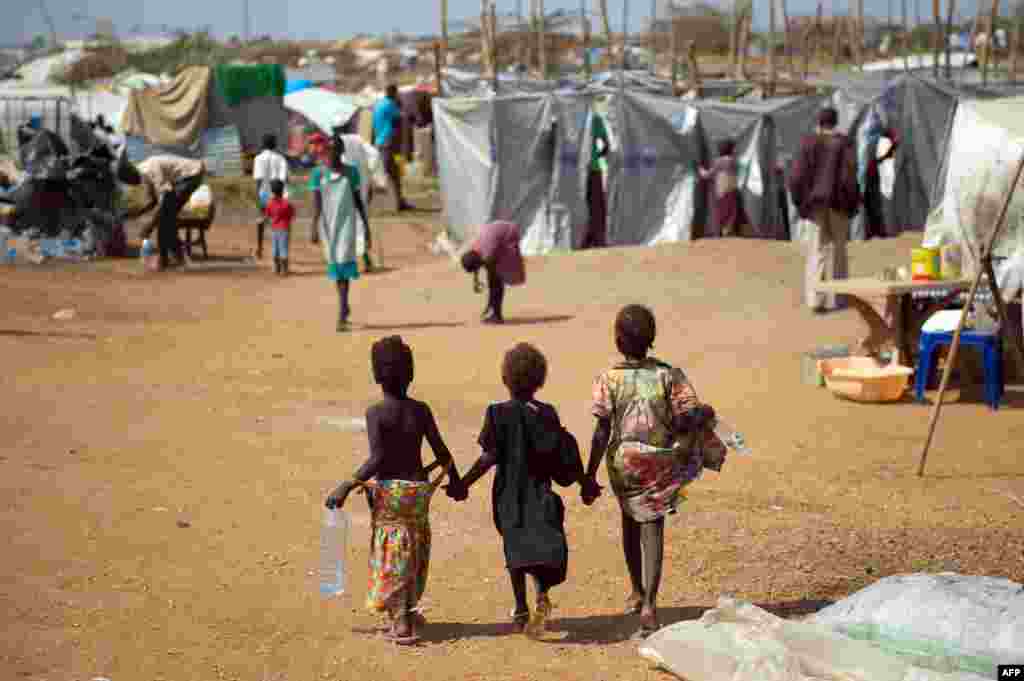
1/10Three children walk through a spontaneous camp for internally displaced persons at the United Nations Mission to South Sudan (UNMISS) base in Juba, Jan. 9, 2014.
Thousands of people in South Sudan are seeking refuge from fighting in camps and neighboring countries.
Show moreShow less
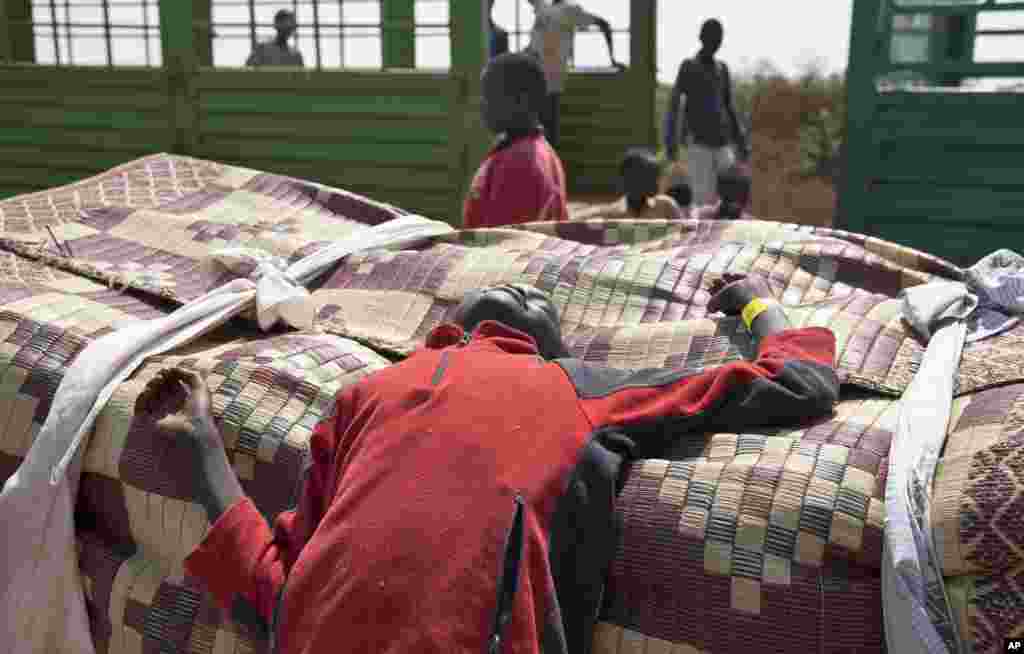
2/10People unload the few belongings on Jan. 9, 2014 at Minkammen, South Sudan, that they were able to bring with them to camps for the displaced.
Thousands of people in South Sudan are seeking refuge from fighting in camps and neighboring countries.
Show moreShow less
3/10Displaced men recuperate from their injuries as they rest on the floor at a United Nations hospital in Tomping camp, near Juba, Jan. 7, 2014.
Thousands of people in South Sudan are seeking refuge from fighting in camps and neighboring countries.
Show moreShow less
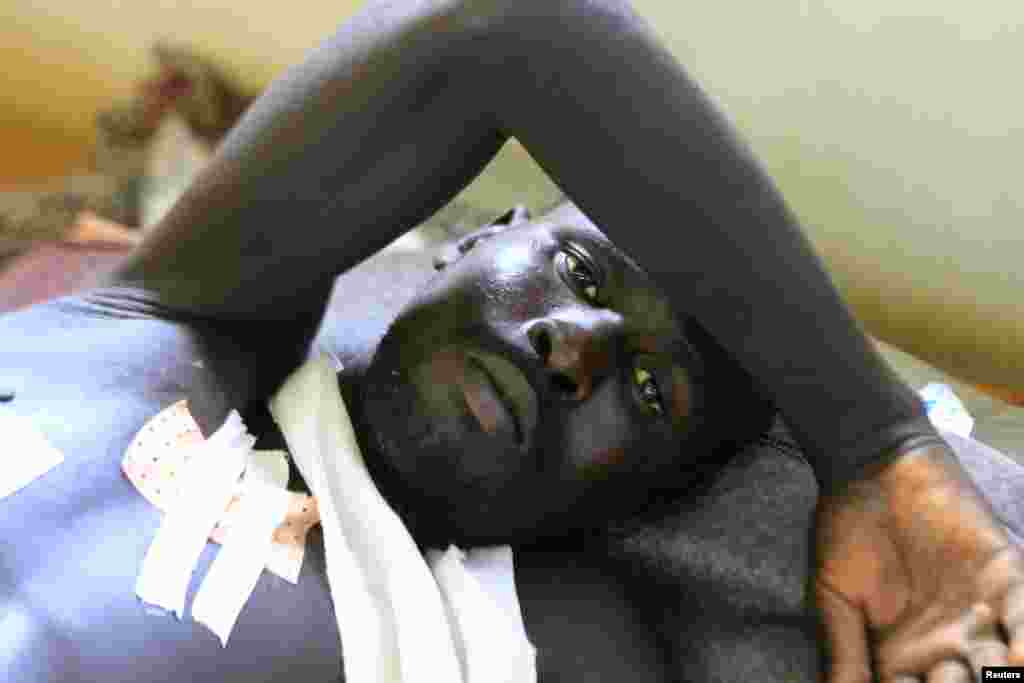
4/10A displaced man, undergoing treatments for his injuries, is seen at a United Nations hospital at Tomping camp, near Juba, Jan. 7, 2014.
Thousands of people in South Sudan are seeking refuge from fighting in camps and neighboring countries.
Show moreShow less
5/10Soldiers from Rwanda serving under United Nations Mission in South Sudan keep watch from an observatory point at Tomping camp, near Juba, Jan. 7, 2014.
Thousands of people in South Sudan are seeking refuge from fighting in camps and neighboring countries.
Show moreShow less
6/10Displaced people wash their clothes in a drainage canal at Tomping camp, near Juba, Jan. 7, 2014.
Thousands of people in South Sudan are seeking refuge from fighting in camps and neighboring countries.
Show moreShow less
7/10Displaced people prepare their meals at Tomping camp near Juba, Jan. 7, 2014.
Thousands of people in South Sudan are seeking refuge from fighting in camps and neighboring countries.
Show moreShow less
8/10Refugees who fled the recent violence in South Sudan and crossed the border into Uganda, settle in the village of Ochaya, Jan. 7, 2013.
Thousands of people in South Sudan are seeking refuge from fighting in camps and neighboring countries.
Show moreShow less
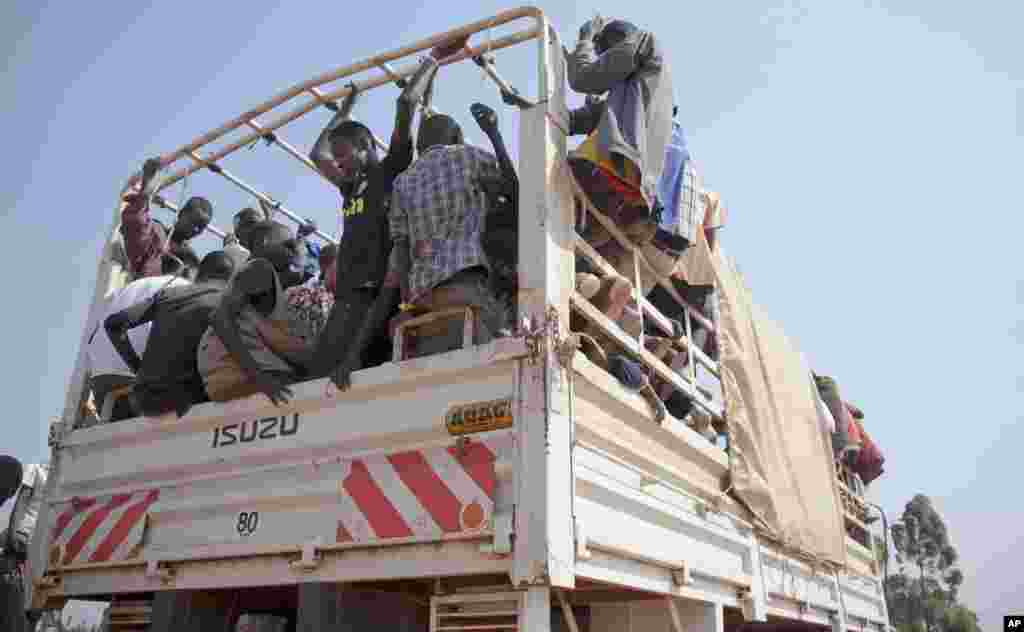
9/10Refugees who fled the recent violence in South Sudan and crossed the border into Uganda rest and await transportation from a transit center in Koboko, Jan. 6, 2014.
Thousands of people in South Sudan are seeking refuge from fighting in camps and neighboring countries.
Show moreShow less
10/10Refugees who fled the recent violence in South Sudan and crossed the border into Uganda are seen in Koboko, Jan. 6, 2014.
Thousands of people in South Sudan are seeking refuge from fighting in camps and neighboring countries.
Show moreShow less
Previous slide
Next slide
South Sudan's rebels also accused neighboring Uganda of aiding Kiir by launching air strikes against their positions, something Kampala denies. Ugandan troops already patrol Juba's airport and guard the presidential palace, at Kiir's request.
South Sudan's oil production fell by 45,000 barrels per day to 200,000 bpd after oilfields in Unity state were shut down due to fighting. Upper Nile state is still pumping about 200,000 bpd, the government says.
U.S. weighs sanctions
Separately, sources briefed on U.S. discussions said Washington was weighing targeted sanctions against South Sudan due to its leaders' failure to end the crisis. Such sanctions focus on individuals, entities or sectors in a country.
“It is a tool that has been discussed,” one source told Reuters, on condition of anonymity.
The possibility of sanctions against a country Washington helped create in 2011 shows how frustrated President Barack Obama's administration has become with Kiir and Machar's rebel faction.
Washington on Thursday also cranked up the pressure for a deal, saying South Sudan risked losing hundreds of millions of dollars in U.S. aid if the two sides did not end the violence.
Earlier on Friday, the United Nations accused both rebels and government forces of obstructing aid efforts.
Rebels had looted warehouses, commandeered aid agency vehicles and ransacked property in both Bentiu and the town of Bor, the U.N. Mission in South Sudan (UNMISS) said.
Meanwhile, government authorities had hampered U.N. flights carrying supplies for peacekeepers and clinics and stopped some peacekeeper patrols, it said.
“These are clear violations of the agreement that regulates the United Nations' presence in South Sudan and is preventing UNMISS from implementing its mandate,” mission chief Hilde Johnson said in a statement.
The fighting, often along ethnic lines, is the worst in South Sudan since it won independence from Sudan in 2011. The unrest threatens to destabilize fragile east Africa.
President Kiir's SPLA government forces have also been fighting to regain control of Bor, capital of the restive Jonglei state.
Air strikes
In meetings in Ethiopia, the two camps are haggling over terms of a ceasefire. They were expected on Friday to submit their recommendations to a ceasefire proposal drafted by mediators.
Banks, markets and bars were open as normal in the capital, Juba, but food prices have jumped, petrol pumps are running dry and the South Sudanese pound is weakening on the black market.
While Uganda has publicly denied air strikes, two Ugandan military sources with knowledge of the operations said they were aware of airborne attacks, adding that 1,500-1,800 Ugandan troops were inside South Sudan.
“In Bor our boys have been backing up the SPLA in the latest push to retake it,” one Ugandan officer told Reuters. “Yesterday (Thursday) our MiGs conducted two bombings there.”
Ugandan President Yoweri Museveni, who has said east African nations would have to “defeat” Machar if he rejected a ceasefire, has come under fire at home for deploying troops across the border without seeking parliament's permission.
Refugees pour into Uganda:
South Sudan Refugees Pour into Uganda
1/3Refugees who fled the recent violence in South Sudan and crossed the border into Uganda, settle in the village of Ochaya, Jan. 7, 2013.
Show moreShow less
2/3Refugees who fled the recent violence in South Sudan and crossed the border into Uganda rest and await transportation from a transit center in Koboko, Jan. 6, 2014.
Show moreShow less
3/3Refugees who fled the recent violence in South Sudan and crossed the border into Uganda await transportation from a transit center in Koboko, Jan. 6, 2014.
Reuters is a news agency founded in 1851 and owned by the Thomson Reuters Corporation based in Toronto, Canada. One of the world's largest wire services, it provides financial news as well as international coverage in over 16 languages to more than 1000 newspapers and 750 broadcasters around the globe.