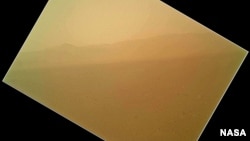
The image shows the north wall and rim of Gale Crater in the distance. The image shown here has been rotated to correct for that tilt, so that the sky is up and the ground is down. (photo: NASA)
The U.S. space rover Curiosity has beamed to Earth its first color photo of the Martian landscape, a reddish-brown scene from the floor of a crater.
The U.S. space agency NASA said Tuesday the photo shows the north wall and rim of Gale Crater in the distance. The photo was shot using a camera packed away in the long robotic arm of the rover.
NASA’s Curiosity Rover Successfully Lands on Mars
1/10This image shows the first color view of the north wall and rim of Gale Crater where Curiosity landed. The picture was taken by the rover's camera at the end of its stowed robotic arm and appears fuzzy because of dust on the camera's cover.
The U.S. space agency NASA says its Mars Science Laboratory has made a successful landing on the red planet.
Show moreShow less
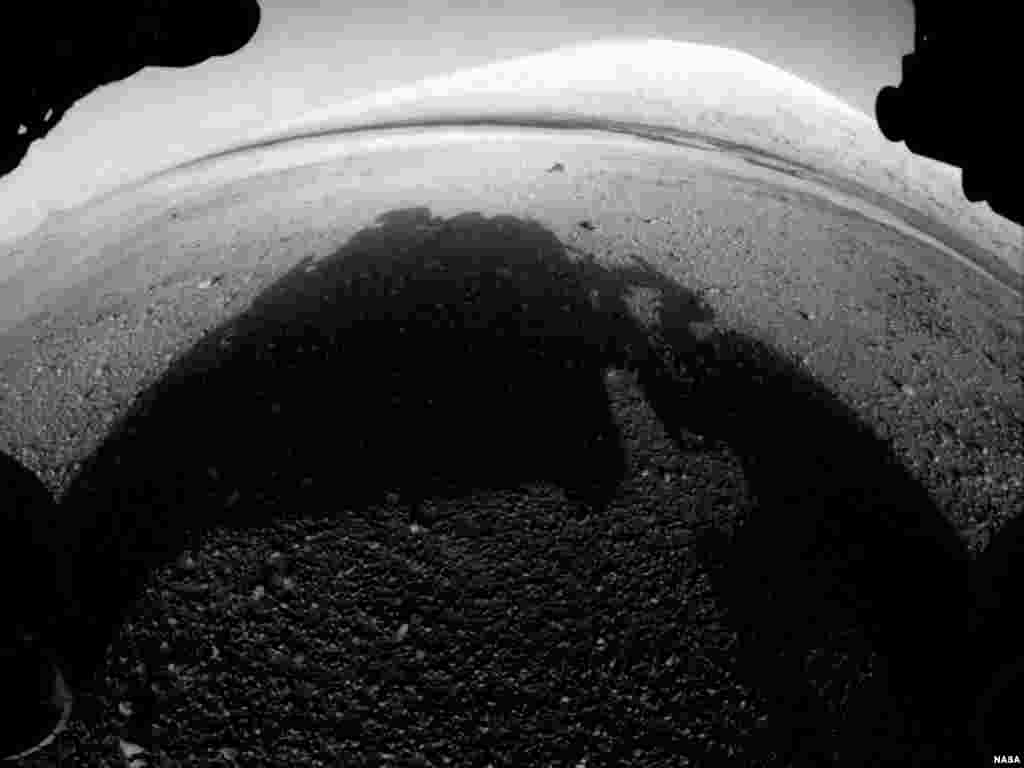
2/10This image shows what lies ahead for the rover -- its main science target, informally called Mount Sharp. The rover's shadow is seen in the foreground, and the dark bands beyond are dunes. In the distance is the highest peak of Mount Sharp.
The U.S. space agency NASA says its Mars Science Laboratory has made a successful landing on the red planet.
Show moreShow less
3/10NASA's Curiosity rover and its parachute, left, descend to the Martian surface on August 5, 2012. The inset image is a cutout of the rover stretched to avoid saturation. The rover is descending toward the etched plains just north of the sand dunes.
The U.S. space agency NASA says its Mars Science Laboratory has made a successful landing on the red planet.
Show moreShow less
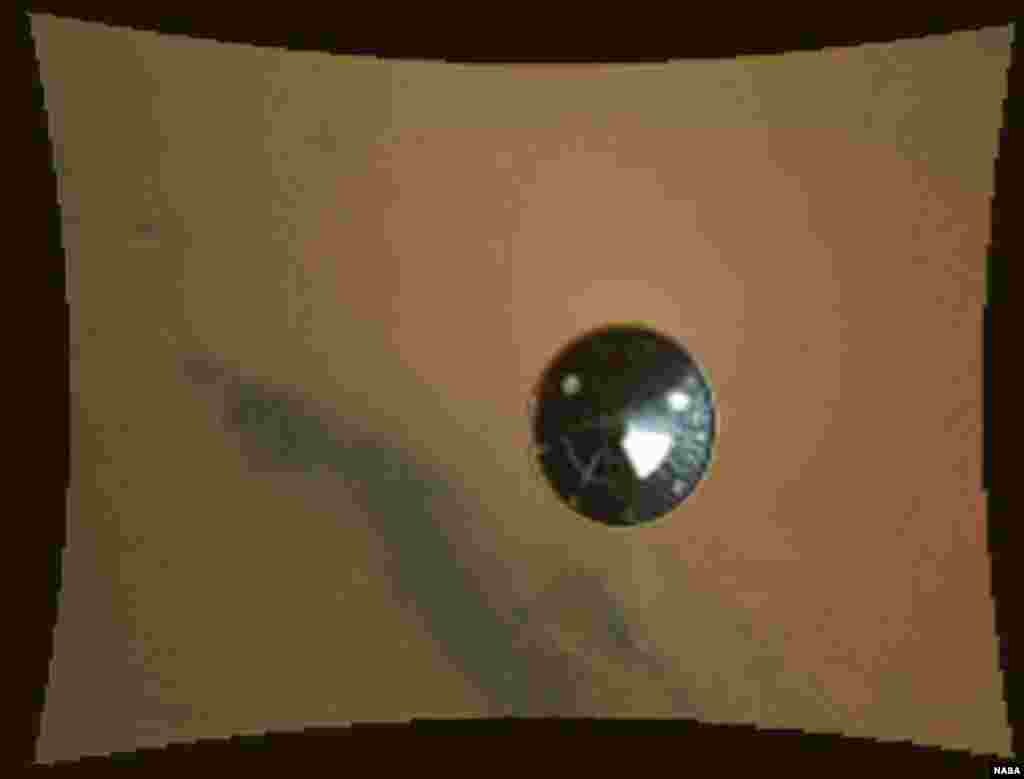
4/10In a stop motion frame taken during the NASA rover Mars landing, the heat shield falls away during Curiosity's descent to the surface of Mars.
The U.S. space agency NASA says its Mars Science Laboratory has made a successful landing on the red planet.
Show moreShow less
5/10One of the first views from NASA's Curiosity rover, which landed on Mars on August 5, 2012. It was taken through a wide-angle lens on one of the rover's Hazard-Avoidance cameras.
The U.S. space agency NASA says its Mars Science Laboratory has made a successful landing on the red planet.
Show moreShow less
6/10The Mars Science Laboratory (MSL) team in the MSL Mission Support Area celebrates after learning the Curiosity rover has landed safely on Mars and images start coming into the Jet Propulsion Laboratory, in Pasadena, California August 5, 2012.
The U.S. space agency NASA says its Mars Science Laboratory has made a successful landing on the red planet.
Show moreShow less
7/10Xavier Cabrera (front, C) of New York, celebrates while watching a live broadcast of the NASA Mission Control center in Time Square, in New York, August 6, 2012.
The U.S. space agency NASA says its Mars Science Laboratory has made a successful landing on the red planet.
Show moreShow less
8/10About two hours after landing on Mars and beaming back its first image, NASA's Curiosity rover transmitted a higher-resolution image of its new Martian home, Gale Crater.
The U.S. space agency NASA says its Mars Science Laboratory has made a successful landing on the red planet.
Show moreShow less
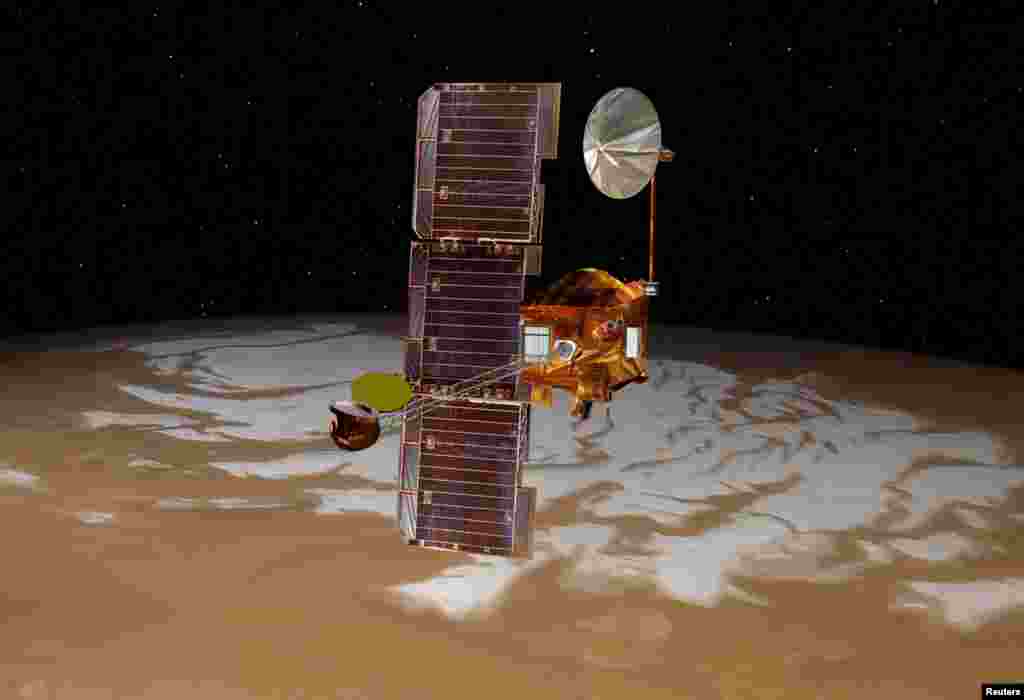
9/10NASA's Mars Odyssey spacecraft passes above Mars' south pole in this artist's concept illustration.
The U.S. space agency NASA says its Mars Science Laboratory has made a successful landing on the red planet.
Show moreShow less
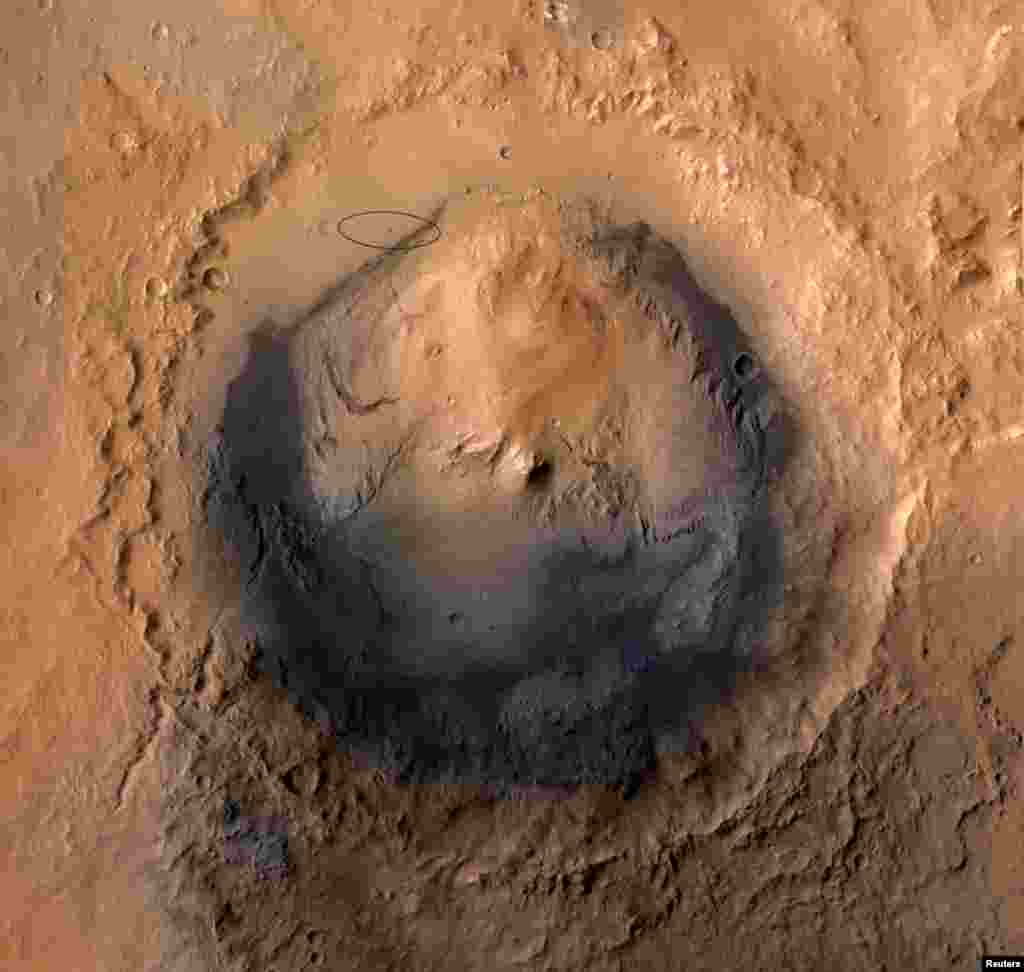
10/10The target landing area for NASA' Mars Science Laboratory mission is the ellipse marked on this image of Gale Crater on Mars (top L).
The U.S. space agency NASA says its Mars Science Laboratory has made a successful landing on the red planet.
Show moreShow less
Previous slide
Next slide
NASA successfully landed Curiosity in the crater on Mars late Sunday after an eight-month journey through space. The rover's underbelly snapped hundreds of photos during its descent, but the new photo was the first from ground level after its landing.
The first photo is somewhat hazy, but NASA said it expects that as Curiosity's two-year mission unfolds, the rover's cameras will capture high-resolution pictures.
An official overseeing the camera that took the color picture, Ken Edgett, explained that the camera's transparent dust cover was still in place when the photo was taken, blurring it a bit. Nonetheless, he said rocks can be seen in the photo's foreground.
“The camera did what it is supposed to do," he said. "It found focus. When you look at the image online, you will see that you can see rocks in the foreground."
Over time, the $2.5 billion, car-sized rover will be used to investigate Martian geology, weather and radiation levels. Scientists hope the information will help them settle an age-old question - whether life ever existed on Mars or whether the red planet can sustain life in the future.
The Voice of America provides news and information in more than 40 languages to an estimated weekly audience of over 326 million people. Stories with the VOA News byline are the work of multiple VOA journalists and may contain information from wire service reports.