Rights Group Criticizes Governments for Failing to Protect Syrians
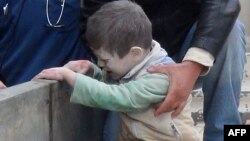
Syrians help an injured child following an alleged airstrike by government forces near a school in the northern Syrian city of Aleppo, Jan. 21, 2014.
PARIS —
On the eve of an international peace conference on Syria, Human Rights Watch has sharply criticized the international community for failing to protect ordinary Syrians from abuses by the regime of President Bashar al-Assad. HRW's latest world report that also criticizes U.S. surveillance tactics, Europe's response to immigrants, and rising authoritarianism in places like Egypt, Turkey and Ukraine.
Human Rights Watch's Executive Director Kenneth Roth said the world community must respond forcefully to mass atrocities committed by the Syrian regime and find ways to unblock humanitarian aid into the country. Especially, he said, since ending the civil war there is unlikely to happen anytime soon.
"Atrocities in Syria are not an unfortunate bi-product of the war, they are the way the Syrian government has chosen to fight this war. This is a war strategy of war crimes, aimed at making life as miserable as possible for civilians in opposition-held areas with the aim of turning civilians against the armed opposition and forcing as many of them as possible to flee," explained Roth.
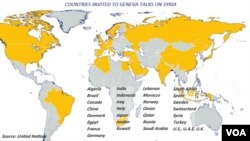
Countries invited to Geneva talks on Syria
Roth spoke at a news conference in Berlin at the release of the HRW 2014 world report. It also described undemocratic tactics used by elected governments in countries like Turkey, Kenya and Ukraine and a rising intolerance toward homosexuals and other minorities. Roth singled out Egypt - faulting the Muslim Brotherhood government of ex-president Mohamed Morsi, but especially the military that toppled it.
"It is killing of over 1,000 demonstrators, its detention of thousands upon thousands of Muslim Brotherhood leaders and activists - the ruthless repression visited upon Egypt is worse than we have seen even in the recent years of [former president Hosni] Mubarak," said Roth.
Images from Syria
1/10Civilians gather after what they said was shelling by forces loyal to Syrian President Bashar al-Assad, Jazmati, Aleppo, Jan. 23, 2014.
Show moreShow less
2/10Civilians carry belongings from rubble after what activists said was shelling by forces loyal to Syrian President Bashar al-Assad, Jazmati, Aleppo, Jan. 23, 2014.
Show moreShow less
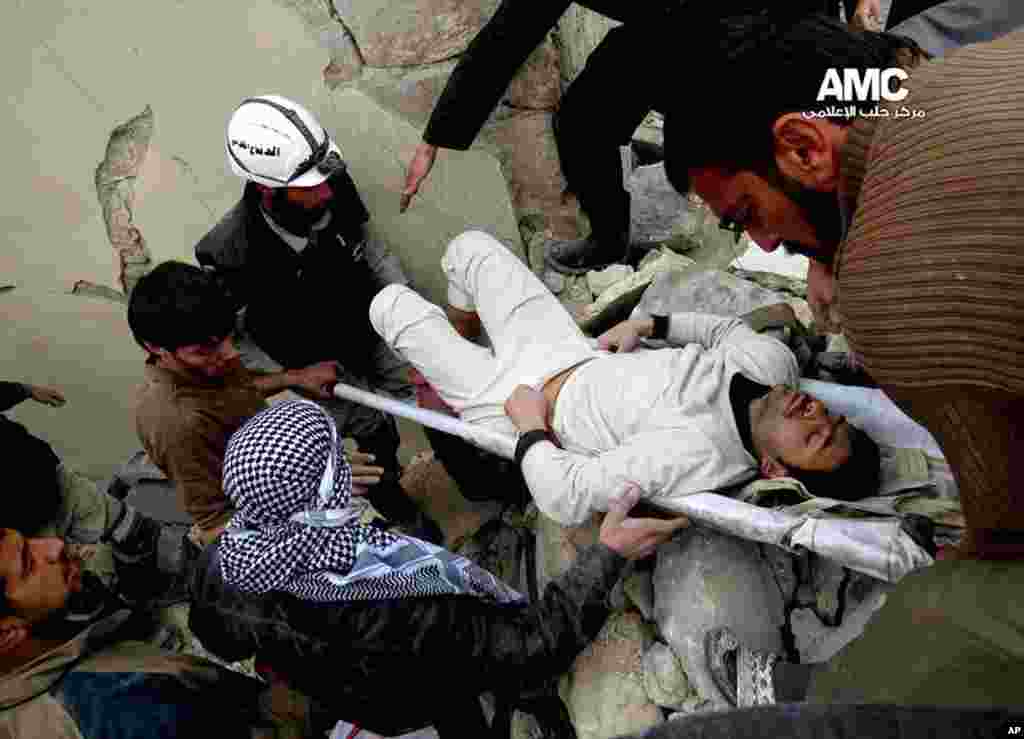
3/10This citizen journalism image provided by Aleppo Media Center shows Syrian residents and rescue workers carrying an injured man after an airstrike in Aleppo, Jan. 23, 2014.
Show moreShow less
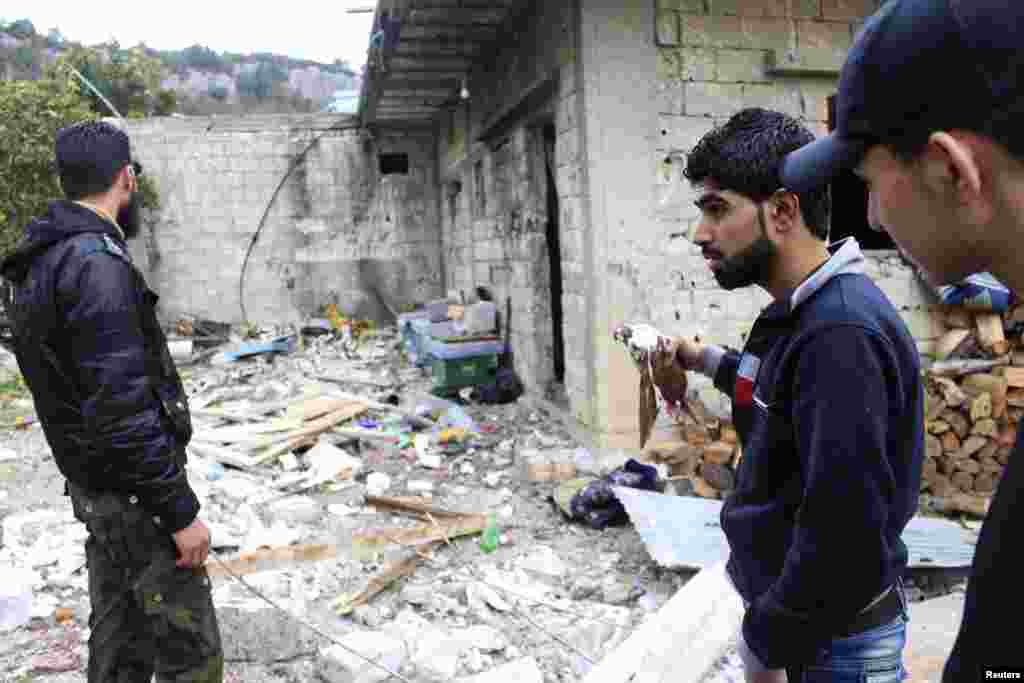
4/10A Free Syrian Army fighter holds a dead bird as his comrades inspect the damage caused by what activists said were barrel bombs dropped by government forces in Jabal al-Akrad, Latakia, Jan. 23, 2014.
Show moreShow less
5/10Free Syrian Army fighters rest in front of a graffiti that reads 'Surely your Lord's assault is strict indeed' in the old city of Aleppo, Jan. 22, 2014.
Show moreShow less
6/10Free Syrian Army fighters stand along a deserted street filled with garbage and rubble in the old city of Aleppo, Jan. 22, 2014.
Show moreShow less
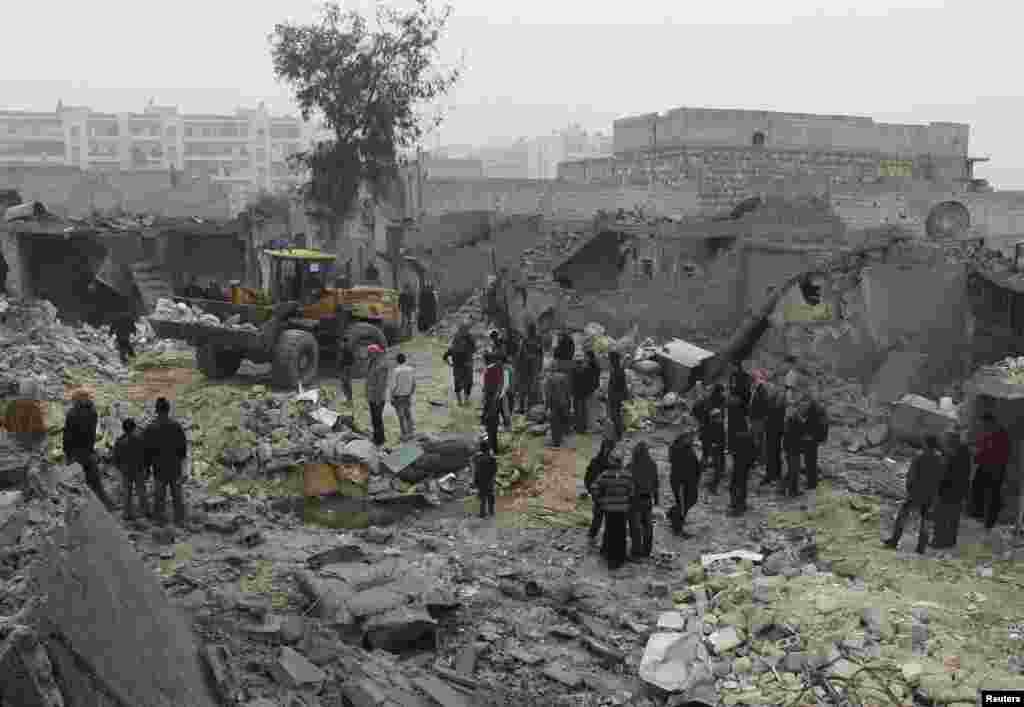
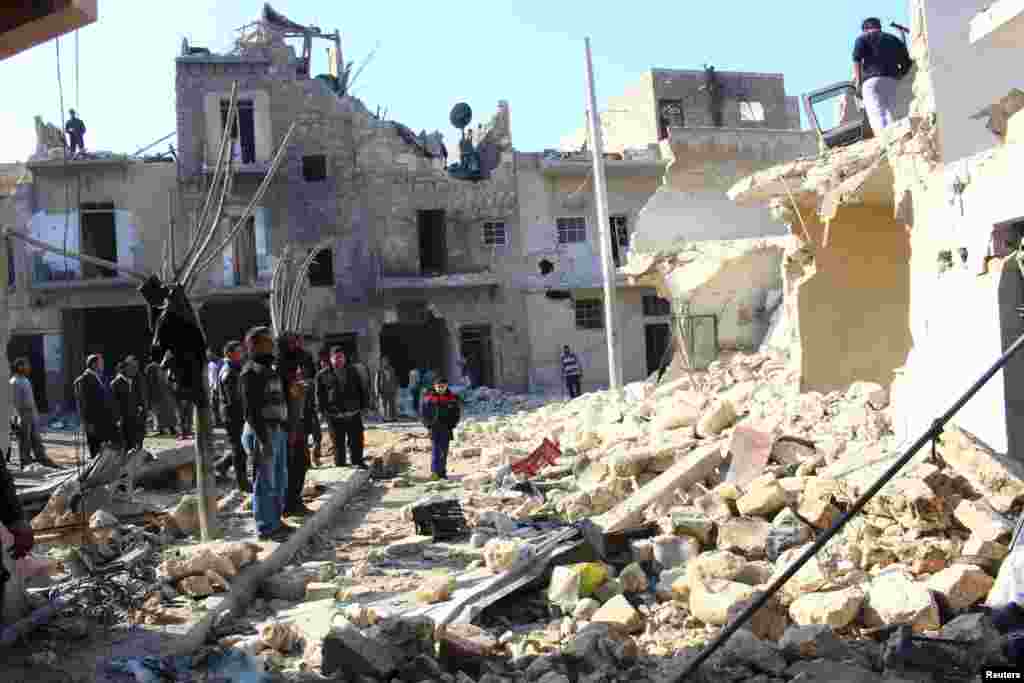
7/10Residents inspect a damaged site after what activists said was an air strike by forces loyal to Syria's President Bashar al-Assad in Karam Al-Beik, Aleppo, Jan. 21, 2014.
Show moreShow less
8/10Smoke rises from what activists said were explosive barrels thrown by forces loyal to Syria's President Bashar al-Assad in Jabal al-Akrad, Latakia, Jan. 20, 2014.
Show moreShow less
9/10Men react as others rush at the site of a car bomb attack at the Bab al-Hawa border crossing between Syria and Turkey, in Idlib, Jan. 20, 2014.
Show moreShow less
10/10Men transport a casualty after car bomb attacks at the Bab al-Hawa border crossing between Syria and Turkey, in Idlib, Jan. 20, 2014.
Show moreShow less
Previous slide
Next slide
Roth also criticized the West. He slammed Europe for its policies against migrants and minorities like the Roma. As for the United States, he said President Obama's announced reforms of the National Security Agency do not protect people's basic privacy rights. He said there is no proof the government's surveillance programs work.
"There is no evidence that the government has been able to produce demonstrating its mass collection of our communications data has been necessary to stop a single terrorist incident. Nonetheless, the cost to our privacy has been enormous," he stated.
This past year has brought some advances. HRW praised the democratic transition in Tunisia, and global efforts to stop crises in South Sudan, the Central African Republic and eastern Democratic Republic of Congo.
"In each case, there was the deployment or reinforcement of peacekeepers, there was active political engagement and, while none of those problems is solved, in each case there was a serious contribution made to diminishing or avoiding mass atrocities," said Roth.
HRW also notes examples of ordinary citizens confronting abusive regimes. It says they offer hope that efforts to curb rights will backfire.