


Accessibility links

Breaking News

Pressure Builds on Germany to Rethink Migrant Policy

update
Refugees rest in the shadow after arriving in Freilassing at the border between Austria and Germany, southern Germany, Sept. 16, 2015.

Migrants and refugees are pouring into Germany at a rate of 1,800 a day through the border with Austria, German police said on Wednesday. The influx is causing some here to rethink a policy that is widely seen as an invitation for tens of thousands.

Like many Germans, Christoph Hillenbrand, the president of the Upper Bavarian government, is proud of the Germany's welcome.

“During 14 days we’ve got about 70,000 refugees coming, arriving here at Munich. To give them shelter within hours, to give them medical care, it’s an extreme task, the official told VOA. “And I think we did it quite well.”

German border controls implemented this week have not stopped the flow, and there are increasing questions about how Berlin will deal with the influx.

The government of Chancellor Angela Merkel has for weeks said Germany is able to absorb migrants and has allocated billions of euros for their resettlement. The Merkel government has urged other nations in Europe to receive them as well.
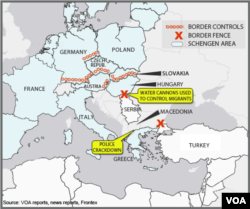
EU border controls and fences to control flow of migrants

Welcome...or Not

Many migrants interviewed along the route from the Middle East through Turkey, the Balkans, Hungary, and Austria, have said they interpreted these actions as a sign that Germany wants them to come.

That perception has been reinforced by images of Germans cheering and applauding as trains loaded with refugees arrived in Munich and of thousands of private citizens mobilizing around the clock to donate time and relief supplies.

At Marienplatz, Munich’s central square, pedicab drivers are donating their proceeds to relief organizations that are helping the refugees. One driver, who did not give his name, said it was difficult to explain the outpouring.

“We decided to do even more. I don’t know why. It’s wonderful,” he said. “It’s like a big wave of humanity. I wish every country in Europe would do this.”

But not everyone in Europe shares his euphoria. Some EU countries, including Slovakia, Poland, and Hungary refuse to accept refugee quotas that Germany has proposed.

And signs of stress and skepticism are showing in Germany itself.

Across the square, a woman who identified herself as a native of Bavaria said she supports helping the migrants, but expressed doubts about Germany’s ability to absorb them.

“We already have a lot of unemployed people here. And how should they all be able to find a job? They hardly speak any German. I really wonder,” she said.

Germany’s official unemployment rate is at just under 5 percent.

At the town of Freilassing on the Austrian border, German police ordered the cancellation of trains coming from nearby Salzburg in Austria on Wednesday. That prompted hundreds of migrants to cross on foot before being detained by police.

The scenes highlighted the difficulty that Germany is facing in controlling the flow of migrants.
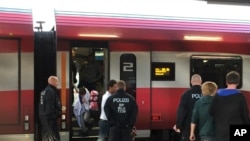
German police pull migrants off a train from Budapest and Vienna as part of new border control measures meant to ease the pressure on Munich, until now the main entry point for migrants reaching Germany, Sept. 14, 2015. (L. Ramirez/VOA)


National Guilt?

But observers say they also risk creating potential support for the arguments of far-right activists like Michael Stuerzenberger, a longtime critic of immigration by Muslims to Germany who is reviled by some in the mainstream German media who have referred to him as a neo-Nazi and a xenophobe.

Stuerzenberger, in an interview Wednesday, rejected the accusations and said it is a feeling of national guilt that is driving Germans to feel obliged to welcome the migrants.

“It’s our past,” he said. “Many people are aware of the Holocaust, the mass murder of Jews, the Second World War, and so they think now we want to be good to the world. We want to show Germany is a friendly country, with friendly people. We welcome everybody and we want to show now Germany is a good country.”

Some analysts say Germany’s welcoming posture is likely attributed to its recent history of allowing guest workers from Turkey and other nations starting in the 1950s when it was rebuilding after the Second World War. But they do not dismiss the role that the wartime experience continues to play in shaping Germans’ current attitudes.

“In Germany, you have to always think about history when it comes to the politics of today,” said Matthias Kortmann, a political scientist and specialist on migration and integration studies at Ludwig Maximilian University of Munich. “It has something to do with the history of the Third Reich that in nowadays Germany, you have to be more sensitive when it comes to refugees.”

Kortmann and other analysts say it is impossible to predict whether the welcome will last. They say that uncertainty presents a dilemma for German leaders.

“On one hand, they know they have to find ways of decreasing these really high number of refugees because at some point the attitudes might also change, when people have the feeling now it’s too much, but on the other hand it’s still the feeling of we are obliged to do something about this refugee crisis,” he said.

For now, officials in Bavaria are dealing with the crisis at hand and taking measures to ensure life proceeds normally in Munich, where hundreds of migrants are transiting daily through the city’s central train station on their way to shelters in other parts of Germany.
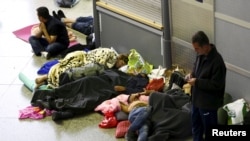
Migrants sleep in the hall of main railway station in Munich, Germany, Sept. 13, 2015.


Different Influx

Officials are preparing for an influx of a different sort: the start of the annual Oktoberfest beer festival Saturday, which is expected to draw up to seven million people to the city over a period of two weeks.

“It’s not possible to have these two flows in the destination of Munich. Therefore, we try to separate the different agglomerations,” said Hillenbrand during a visit to the train station Wednesday.

He said officials are planning measures to keep the revelers from riding into Munich aboard the same trains as the migrants.

“We need to have special trains,” he said.

Europe Migrant Crisis - Sept. 16, 2015
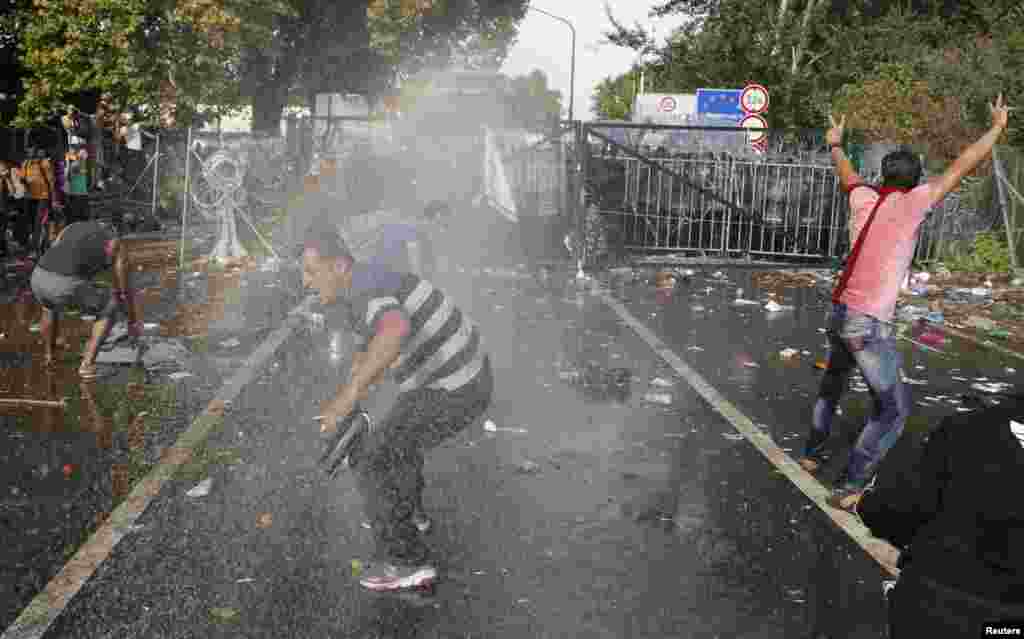
Migrants react on the Serbian side of the border as Hungarian riot police fires tear gas and water cannon near Roszke, Sept.16, 2015. Police fired tear gas and water cannon at protesting migrants demanding they be allowed to enter from Serbia on Wednesday on the second day of a border crackdown.
1/12 Migrants react on the Serbian side of the border as Hungarian riot police fires tear gas and water cannon near Roszke, Sept.16, 2015. Police fired tear gas and water cannon at protesting migrants demanding they be allowed to enter from Serbia on Wednesday on the second day of a border crackdown.
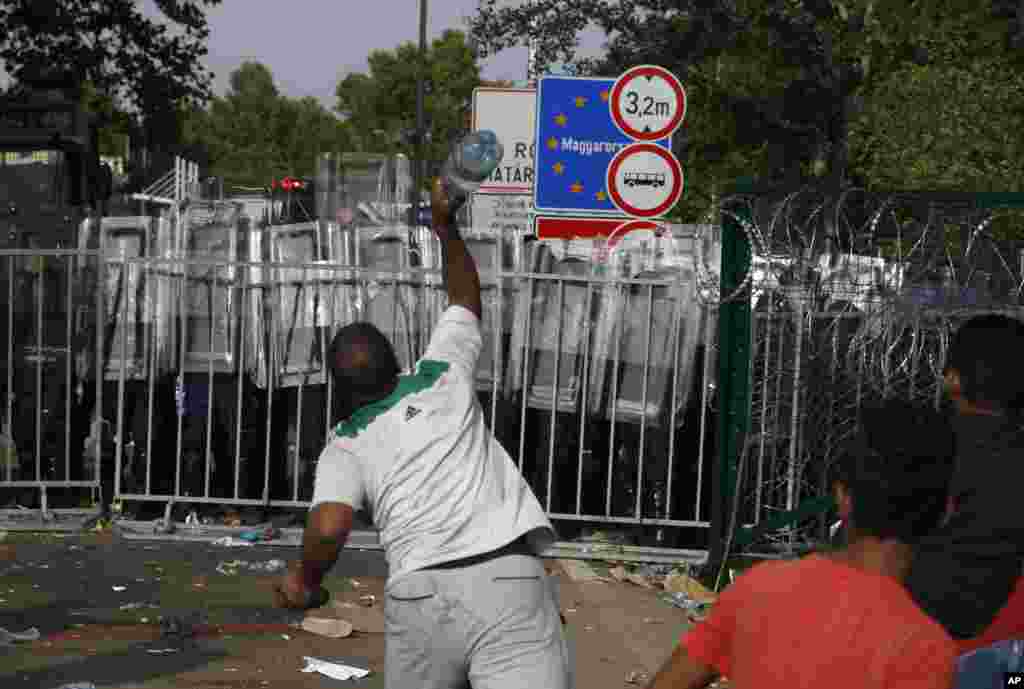
A migrant throws a bottle toward Hungarian police at the "Horgos 2" border crossing into Hungary, near Horgos, Serbia.
2/12 A migrant throws a bottle toward Hungarian police at the "Horgos 2" border crossing into Hungary, near Horgos, Serbia.
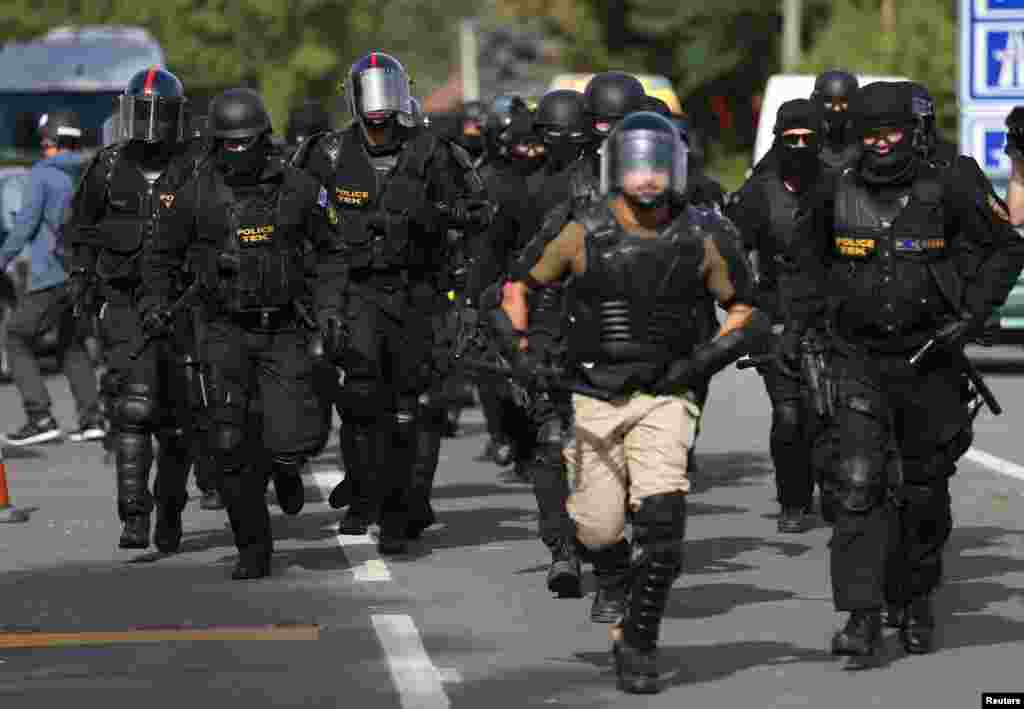
Hungarian riot police, backed by water cannon and armored vehicles, moved into position at the border crossing with Serbia in Roszke where migrants are demanding they be allowed to cross from Serbia, a U.N. official at the scene told Reuters.
3/12 Hungarian riot police, backed by water cannon and armored vehicles, moved into position at the border crossing with Serbia in Roszke where migrants are demanding they be allowed to cross from Serbia, a U.N. official at the scene told Reuters.
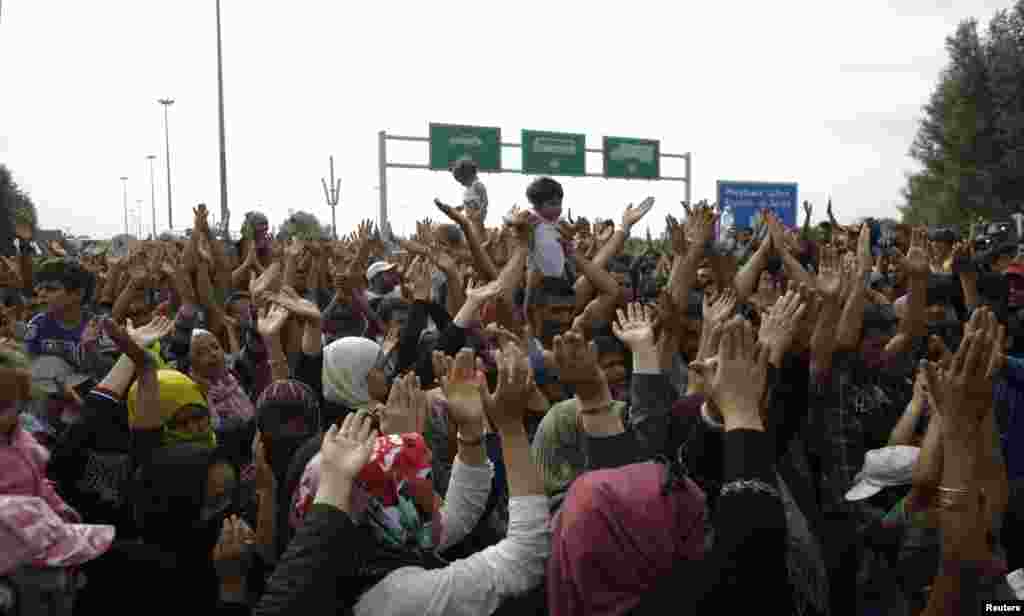
Migrants shout slogans as they stand in front of a barrier at the border with Hungary near the village of Horgos, Serbia, Sept. 16, 2015. Hungary's right-wing government shut the main land route for migrants into the European Union, taking matters into its own hands to halt Europe's influx of refugees.
4/12 Migrants shout slogans as they stand in front of a barrier at the border with Hungary near the village of Horgos, Serbia, Sept. 16, 2015. Hungary's right-wing government shut the main land route for migrants into the European Union, taking matters into its own hands to halt Europe's influx of refugees.
Migrants rest at a makeshift camp at the Horgos border crossing in Serbia, into Hungary. Small groups of migrants continued to sneak into Hungary, a day after the country sealed its border with Serbia and began arresting people trying to breach the razor-wire barrier, while a first group arrived in Croatia seeking another way into the European Union.
5/12 Migrants rest at a makeshift camp at the Horgos border crossing in Serbia, into Hungary. Small groups of migrants continued to sneak into Hungary, a day after the country sealed its border with Serbia and began arresting people trying to breach the razor-wire barrier, while a first group arrived in Croatia seeking another way into the European Union.
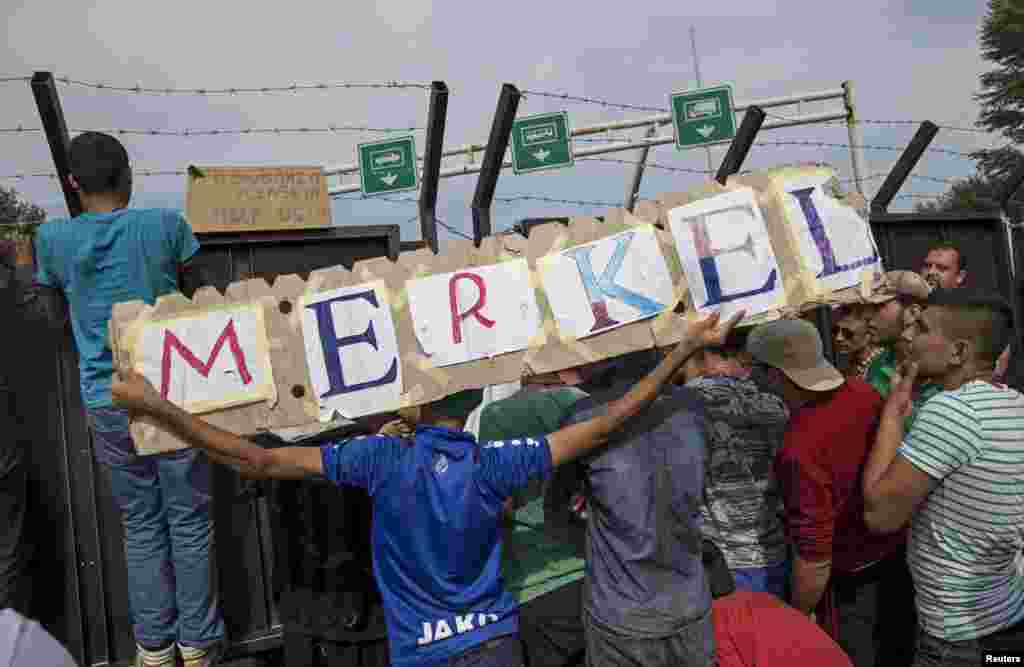
Migrants hold a banner reading "Merkel" in front of a barrier at the border with Hungary near the village of Horgos, Serbia.
6/12 Migrants hold a banner reading "Merkel" in front of a barrier at the border with Hungary near the village of Horgos, Serbia.
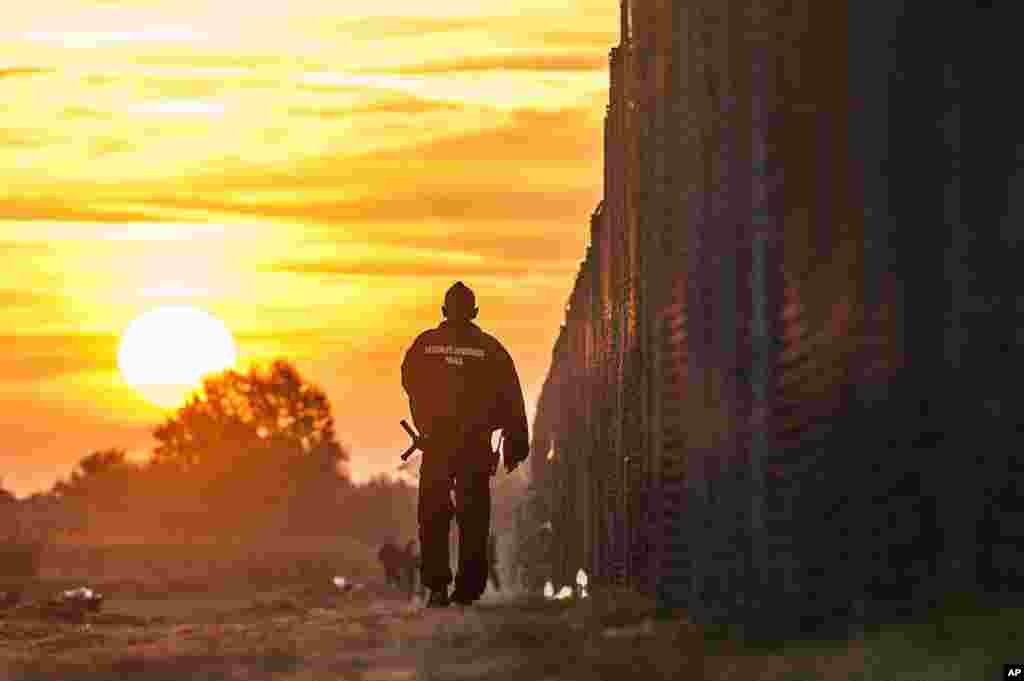
A Hungarian police officer patrols along the temporary border fence on the Hungarian-Serbian border near Roszke, 180 kms southeast of Budapest, Hungary, during sunrise one day after Hungary closed its border to Serbia.
7/12 A Hungarian police officer patrols along the temporary border fence on the Hungarian-Serbian border near Roszke, 180 kms southeast of Budapest, Hungary, during sunrise one day after Hungary closed its border to Serbia.
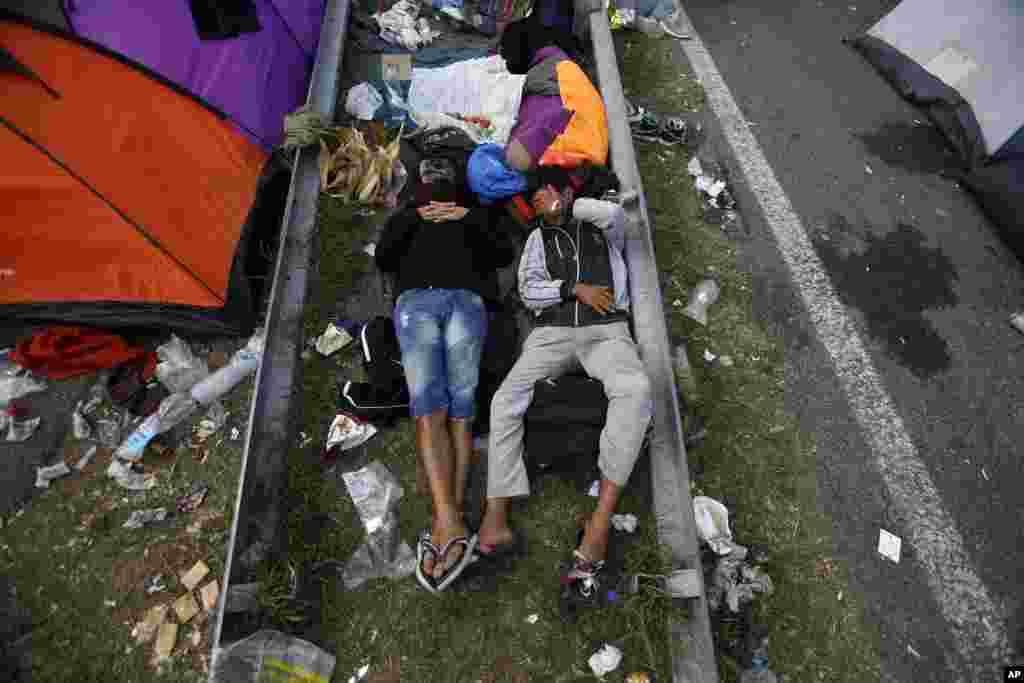
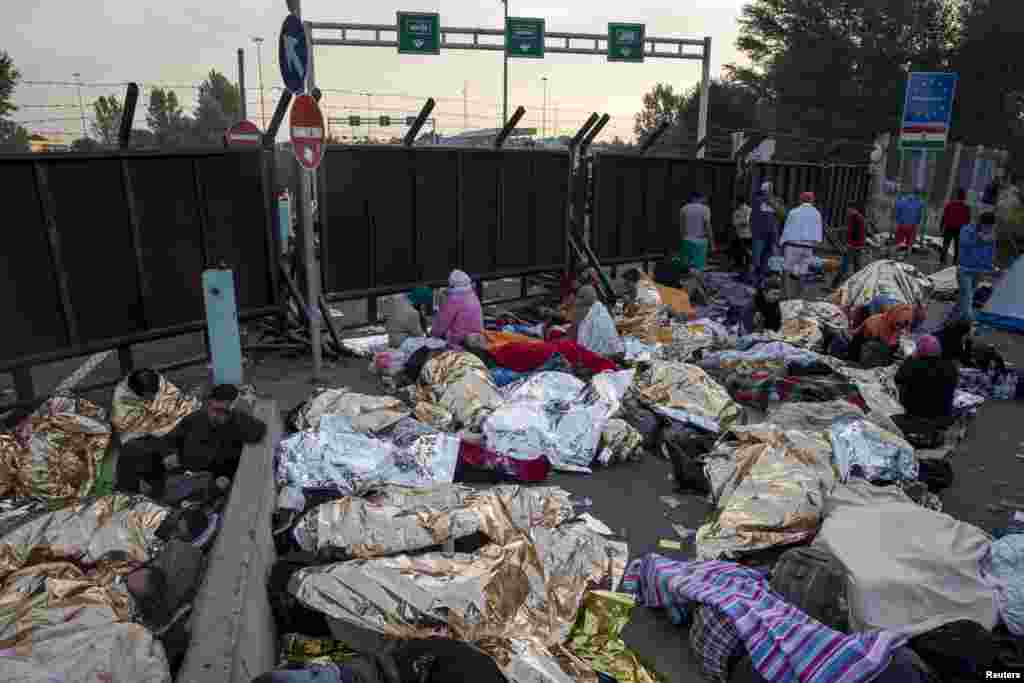
Migrants sleep in front of a barrier at the border with Hungary near the village of Horgos, Serbia.
8/12 Migrants sleep in front of a barrier at the border with Hungary near the village of Horgos, Serbia.
Migrants make their way through fields at the border between Serbia and Croatia near Tovarnik, Croatia. The first groups of migrants have started arriving in Croatia - a new entry point into the European Union after Hungary sealed off its border with Serbia with massive coils of barbed wire.
9/12 Migrants make their way through fields at the border between Serbia and Croatia near Tovarnik, Croatia. The first groups of migrants have started arriving in Croatia - a new entry point into the European Union after Hungary sealed off its border with Serbia with massive coils of barbed wire.
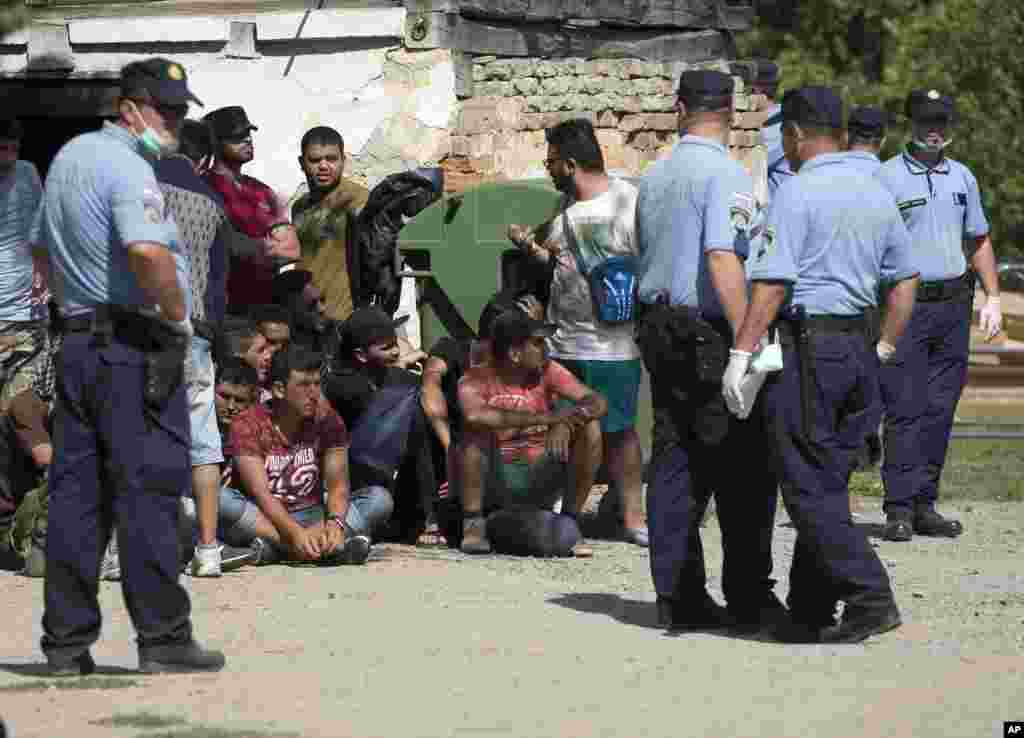
Croatian police detain a group of migrants in Tovarnik after they crossed from neighboring Serbia.
10/12 Croatian police detain a group of migrants in Tovarnik after they crossed from neighboring Serbia.
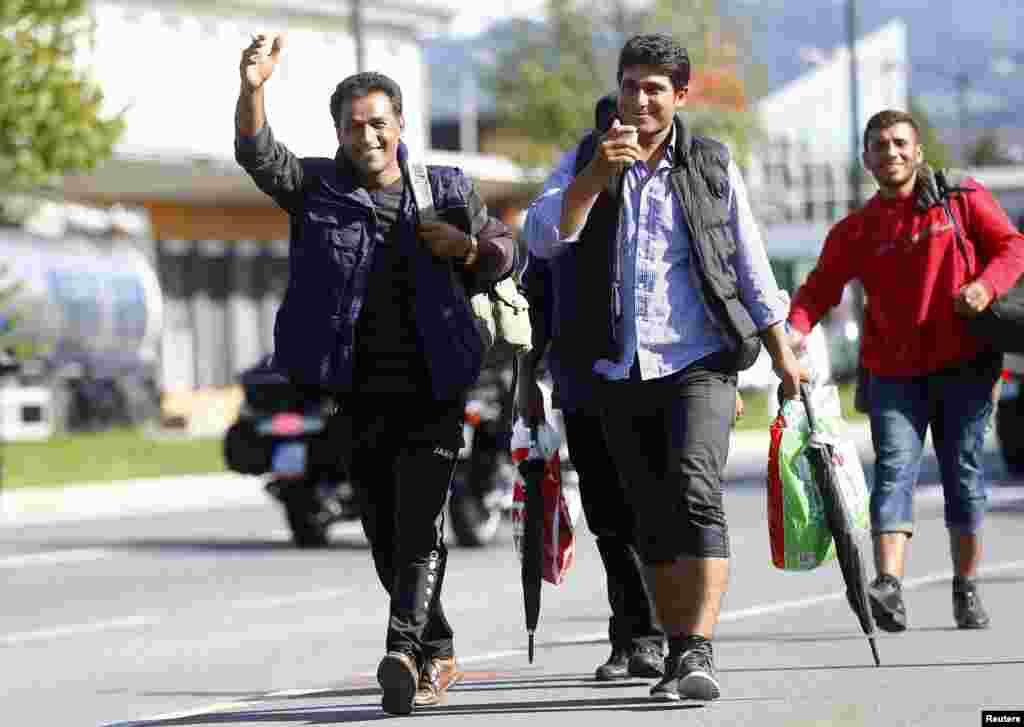
Migrants walk towards Germany at the border crossing with Austria in Freilassing, Germany. Germany cut its train link with the Austrian city of Salzburg, shutting down the main route into its territory for tens of thousands of people caught in Europe's worst migration crisis in decades.
11/12 Migrants walk towards Germany at the border crossing with Austria in Freilassing, Germany. Germany cut its train link with the Austrian city of Salzburg, shutting down the main route into its territory for tens of thousands of people caught in Europe's worst migration crisis in decades.
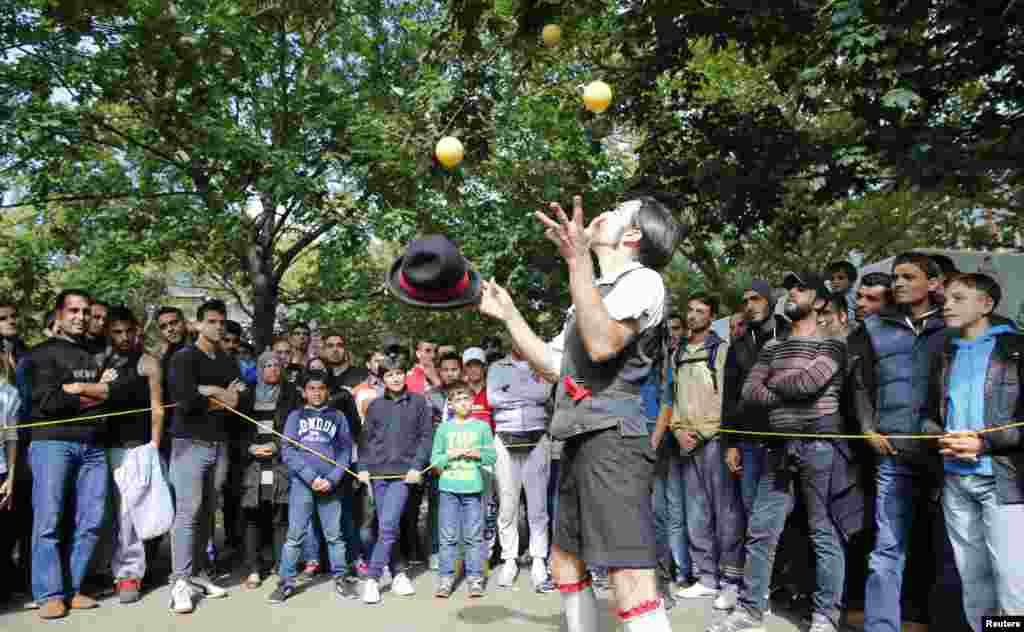
A street artist entertains in the compound outside the Berlin Office of Health and Social Affairs (LaGeSo) as they wait for their registration in Berlin, Germany.
12/12 A street artist entertains in the compound outside the Berlin Office of Health and Social Affairs (LaGeSo) as they wait for their registration in Berlin, Germany.
Previous slide
Next slide

XS
SM
MD
LG