



Accessibility links

Breaking News

Philippines Begins Cleanup After Typhoon

update
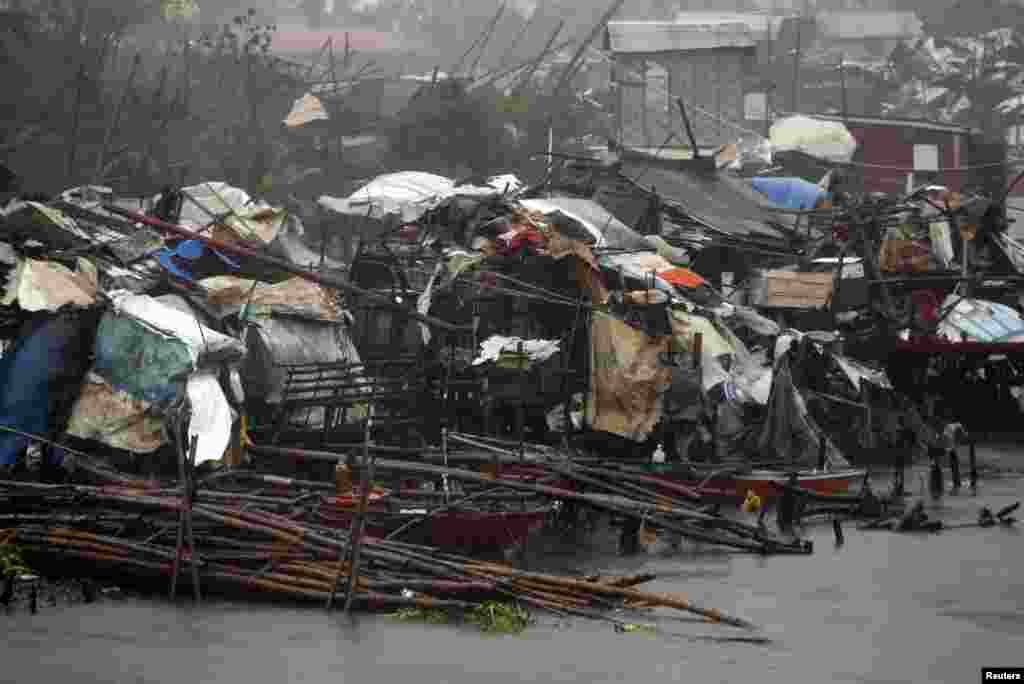
Residents of the slum community of Baseco evacuate to safer grounds at the onslaught of Typhoon Rammasun in Manila, Philippines, July 16, 2014.

The Philippine government turned its focus to cleaning up after a strong typhoon cut across the northern island of Luzon Wednesday, causing flooding in the capital, killing at least 10 people and forcing the evacuation of hundreds of thousands.

The storm is now headed toward contested parts of the South China Sea, where Chinese and Vietnamese ships have sparred around a controversial oil drilling project.

Typhoon Rammasun blew from the southeast corner of Luzon to the Manila capital region on Wednesday, with winds between 150 and 185 kph.

Its gusts knocked out power, tore roofs off houses and uprooted trees, leaving piles of broken branches and downed power lines on the roads.

Typhoon Rammasun Ravages the Philippines

Residents charge their mobile phones with electricity from generators provided for free by the government, during a blackout inside a town hall, after Typhoon Rammasun battered the town of Rosario, Cavite city, south of Manila, July 18, 2014.
1/12 Residents charge their mobile phones with electricity from generators provided for free by the government, during a blackout inside a town hall, after Typhoon Rammasun battered the town of Rosario, Cavite city, south of Manila, July 18, 2014.
People gather at the waterfront of Hong Kong's Victoria Harbor, July 17, 2014.
2/12 People gather at the waterfront of Hong Kong's Victoria Harbor, July 17, 2014.
Chinese coast guards patrol on a boat as ships are docked in the port before the landfall of Typhoon Rammasun, at a port in Haikou, Hainan, province July 17, 2014.
3/12 Chinese coast guards patrol on a boat as ships are docked in the port before the landfall of Typhoon Rammasun, at a port in Haikou, Hainan, province July 17, 2014.
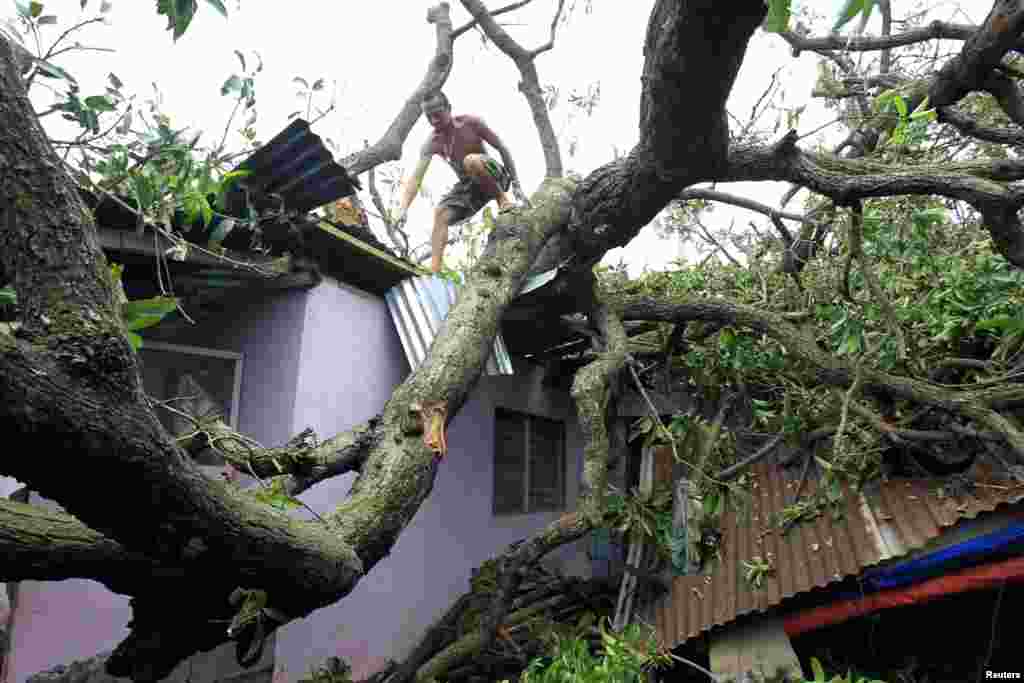
A man climbs on a fallen tree which damaged four houses in Rosario, July 18, 2014.
4/12 A man climbs on a fallen tree which damaged four houses in Rosario, July 18, 2014.
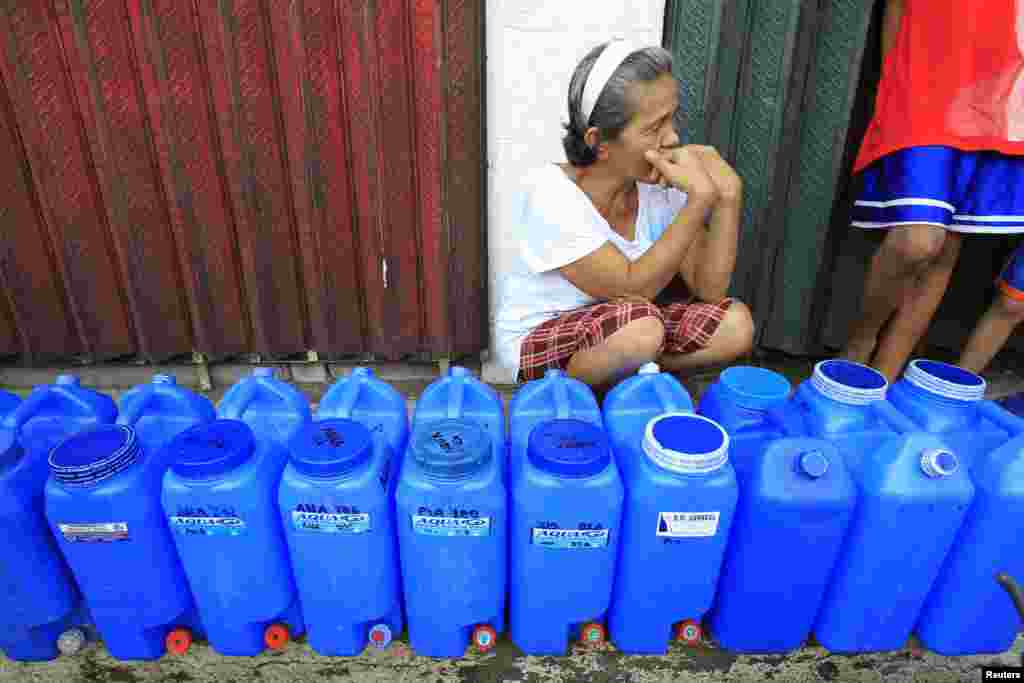
A resident queues with plastic containers to collect drinking water in Rosario, July 18, 2014.
5/12 A resident queues with plastic containers to collect drinking water in Rosario, July 18, 2014.
Residents lift a house damaged by Typhoon Rammasun in Batangas city, south of Manila, July 17, 2014.
6/12 Residents lift a house damaged by Typhoon Rammasun in Batangas city, south of Manila, July 17, 2014.
A young boy turns to look at the camera as residents repair a roofless stilt house damaged by Typhoon Rammasun in Batangas city, south of Manila, July 17, 2014.
7/12 A young boy turns to look at the camera as residents repair a roofless stilt house damaged by Typhoon Rammasun in Batangas city, south of Manila, July 17, 2014.
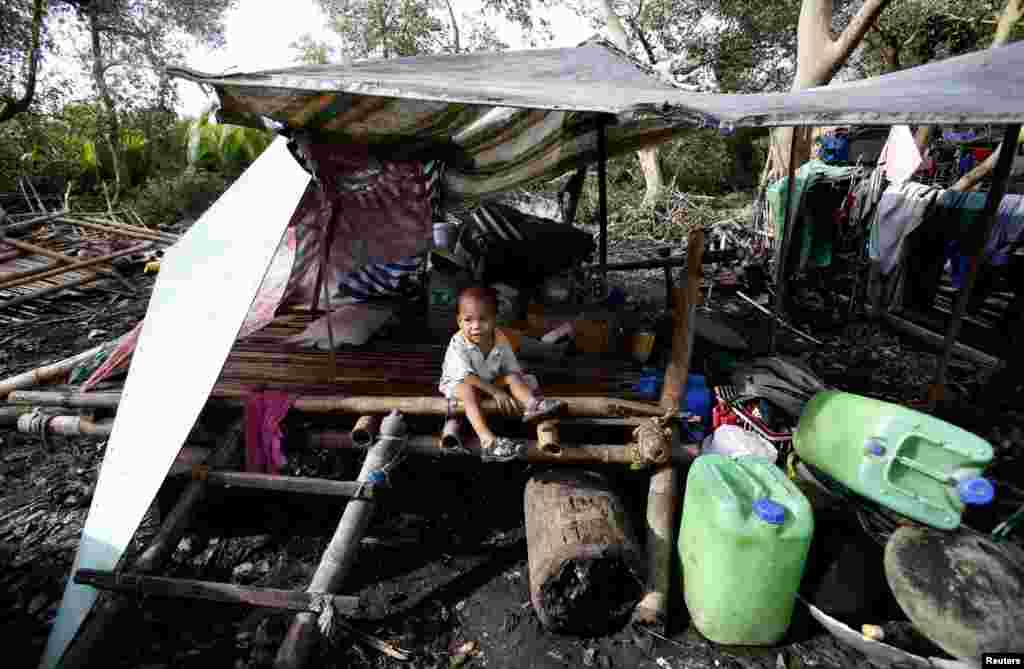
A child sits amid the remains of a house destroyed by Typhoon Rammasun in Batangas city, south of Manila, July 17, 2014.
8/12 A child sits amid the remains of a house destroyed by Typhoon Rammasun in Batangas city, south of Manila, July 17, 2014.
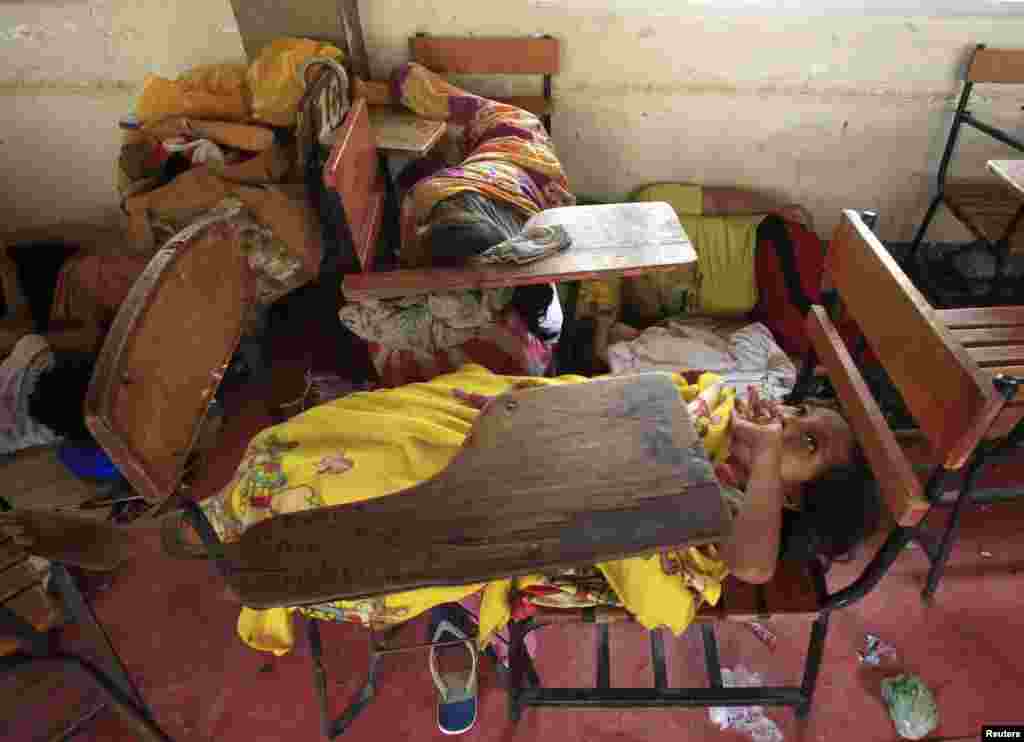
A small girl rests on a school desk inside an evacuation center after Typhoon Rammasun battered the coastal bay of Baseco compound, metro Manila, July 16, 2014.
9/12 A small girl rests on a school desk inside an evacuation center after Typhoon Rammasun battered the coastal bay of Baseco compound, metro Manila, July 16, 2014.
A man uses a chain saw to remove a huge tree that fell on top of a car during the onslaught of Typhoon Rammasun that hit Makati City in Manila, July 16, 2014.
10/12 A man uses a chain saw to remove a huge tree that fell on top of a car during the onslaught of Typhoon Rammasun that hit Makati City in Manila, July 16, 2014.
Squatter homes partially destroyed by Typhoon Rammasun in the coastal town of Bacoor, Cavite, southwest of Manila, July 16, 2014.
11/12 Squatter homes partially destroyed by Typhoon Rammasun in the coastal town of Bacoor, Cavite, southwest of Manila, July 16, 2014.
Fishing boats amid heavy winds and rain brought by Typhoon Rammasun (locally named Glenda) as it hit the town of Imus, Cavite southwest of Manila, July 16, 2014.
12/12 Fishing boats amid heavy winds and rain brought by Typhoon Rammasun (locally named Glenda) as it hit the town of Imus, Cavite southwest of Manila, July 16, 2014.
Previous slide
Next slide


Department of Science and Technology Assistant Secretary Raymund Liboro said, based on initial observations around the capital region, precipitation played a lesser role in the storm's destruction.

“The wind-impact could be more felt than the rain, in the sense that here in Metro Manila, there wasn’t widespread flooding that accompanied such a magnitude of a storm,” Liboro said.
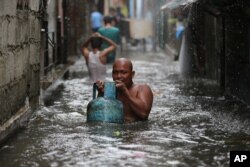
A resident carries a tank of liquified petroleum gas as he negotiates a flooded area while Typhoon Rammasun nears suburban Quezon city, Philippines, July 16, 2014.

Passed over capital

The eye of Typhoon Rammasun, the strongest storm to hit the country this year, passed south of Manila on Wednesday.

Philippine Civil Defense Officials said close to 400,000 people living in vulnerable areas or along waterways were affected. Schools, government and private businesses were shuttered.

The Philippine Coast Guard said about 5,000 ferry passengers remain stranded in various ports after travel was suspended.

Liboro said the storm will pick up strength as it passes over the South China Sea.

The Joint Typhoon Warning Center in Hawaii expected Typhoon Rammasun's wind speeds to top 230 kph in the next 24 hours, growing in strength even later.

Forecasters charting the storm’s path said it appears headed in the direction of the Paracel islands, where China announced on Tuesday that it was moving a controversial oil-drilling rig.

Since Beijing announced the deployment of the rig to the region two months ago, it has been a flashpoint between Vietnam and China.

Hanoi said the rig's site is located inside its exclusive economic zone. China rejected that claim, saying the location is within the territorial waters of islands that China claims ownership over.

Beijing said the billion-dollar rig is being moved closer to China’s Hainan Island because it had completed its exploration work.

Move 'defuses the tension'

But Carl Thayer, a security analyst with the Australian Defense Force Academy, said it may not be a coincidence that the state-run China National Offshore Oil Corporation announced this week it had completed its exploration project more than a month ahead of its projected finish.

“Partly because of this new typhoon [Rammasun], which is not heading directly to where the rig is but will bring bad weather, and China has over 100 ships surrounding it and it could prove very risky especially for smaller boats. So this typhoon provides an opportunity to stand down earlier,” Thayer said.

Thayer said for now, removing the rig “completely defuses the tension” between Vietnam and China, because the Chinese vessels will likely leave, eliminating the chance of confrontation with Vietnamese ships.

In addition to the oil rig, China has also been reportedly building up islands in disputed areas of the South China Sea to solidify its claims over the region. Most of the building has been documented south of the Paracels, in the Spratly Islands, which are out of the main path of Typhoon Rammasun.

XS
SM
MD
LG