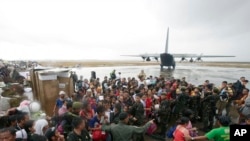
Typhoon survivors rush to get a chance to board a C-130 military transport plane in Tacloban city, Leyte province, central Philippines, Nov. 12, 2013.
BEIJING —
China may have wasted the chance to build goodwill in Southeast Asia with its relatively paltry donation to the Philippines in the wake of a devastating typhoon, especially with the United States sending an aircraft carrier and Japan ramping up aid.
The world's second-largest economy is a growing investor in Southeast Asia, where it is vying with the United States and Japan for influence. But China's assertiveness in pressing its claim to the disputed South China Sea has strained ties with several regional countries, most notably the Philippines.
China's government has promised $100,000 in aid to Manila, along with another $100,000 through the Chinese Red Cross - far less than pledged by other economic heavyweights.
Japan has offered $10 million in aid and is sending in an emergency relief team, for instance, while Australia has donated $9.6 million.
“The Chinese leadership has missed an opportunity to show its magnanimity,” said Joseph Cheng, a political science professor at the City University of Hong Kong who focuses on China's ties with Southeast Asia. “While still offering aid to the typhoon victims, it certainly reflects the unsatisfactory state of relations (with Manila).”
China's ties with the Philippines are already fragile as a decades-old territorial squabble over the South China Sea enters a more contentious chapter, with claimant nations spreading deeper into disputed waters in search of energy supplies, while building up their navies.
Vietnam, Malaysia, Brunei and Taiwan also claim parts of the South China Sea, making it one of the region's biggest flashpoints.
The Association of South East Asian Nations (ASEAN), a 10-nation grouping that includes the Philippines, has been talking to China about a binding code of conduct in South China Sea to ease the friction, but Beijing's frugal aid hints at a deeply entrenched rivalry that could make forging consensus difficult.
Even China's state-run Global Times newspaper, known for its nationalistic and often hawkish editorial views, expressed concern about the impact on Beijing's international standing.
“China, as a responsible power, should participate in relief operations to assist a disaster-stricken neighboring country, no matter whether it's friendly or not,” the paper said in a commentary.
“China's international image is of vital importance to its interests. If it snubs Manila this time, China will suffer great losses.”
Typhoon Haiyan
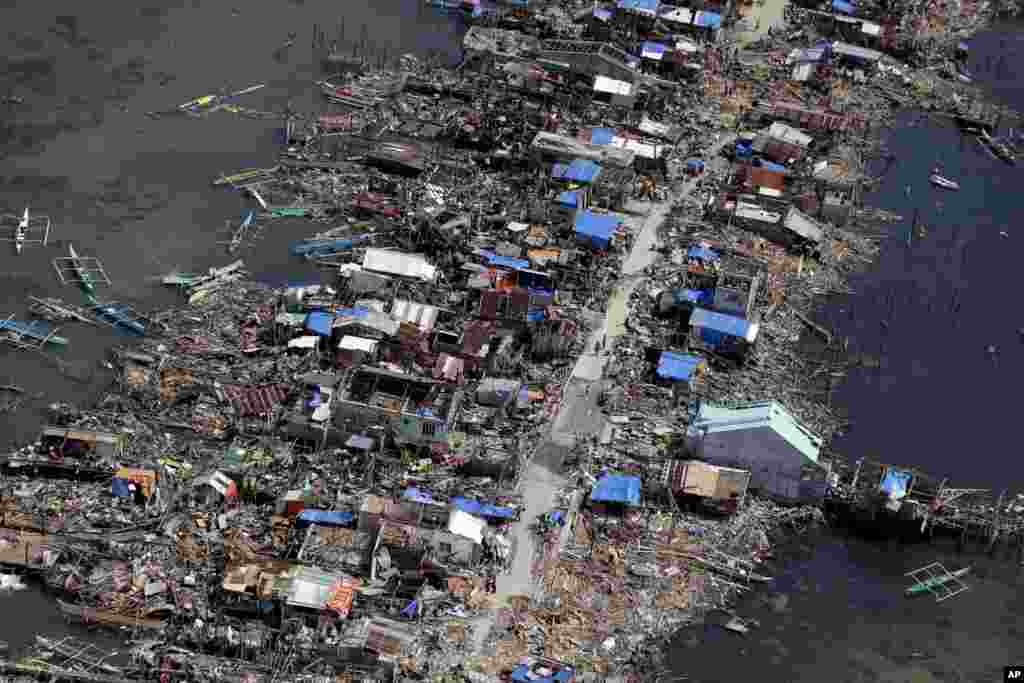
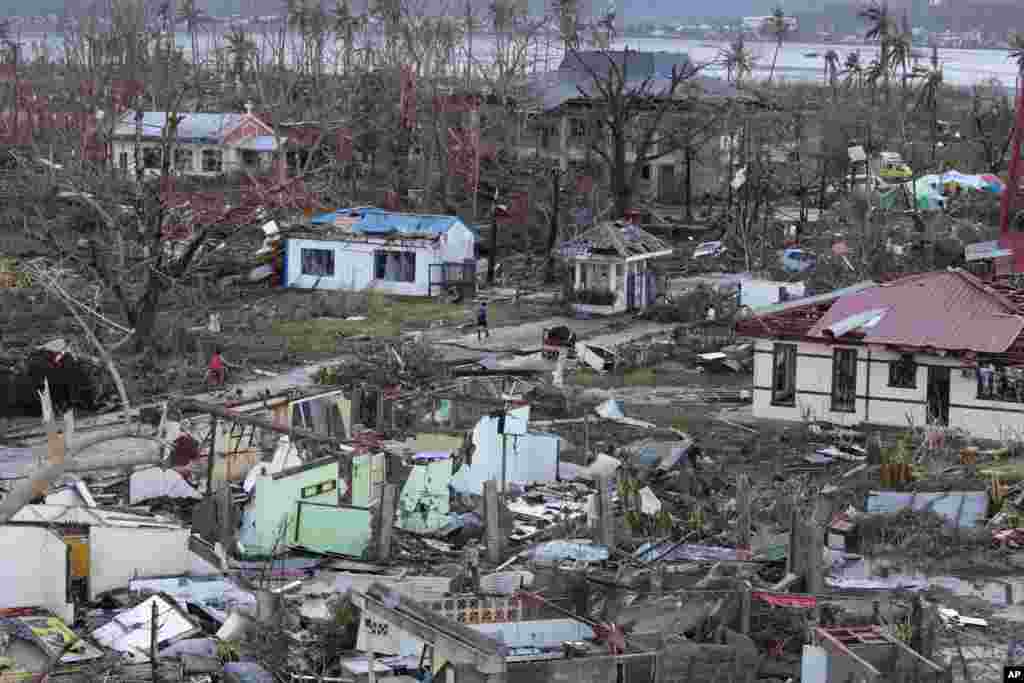
1/11An aerial image taken from a Philippine Air Force helicopter shows the devastation of the first landfall by typhoon Haiyan in Guiuan, Eastern Samar province, central Philippines, Nov. 11, 2013.
Show moreShow less
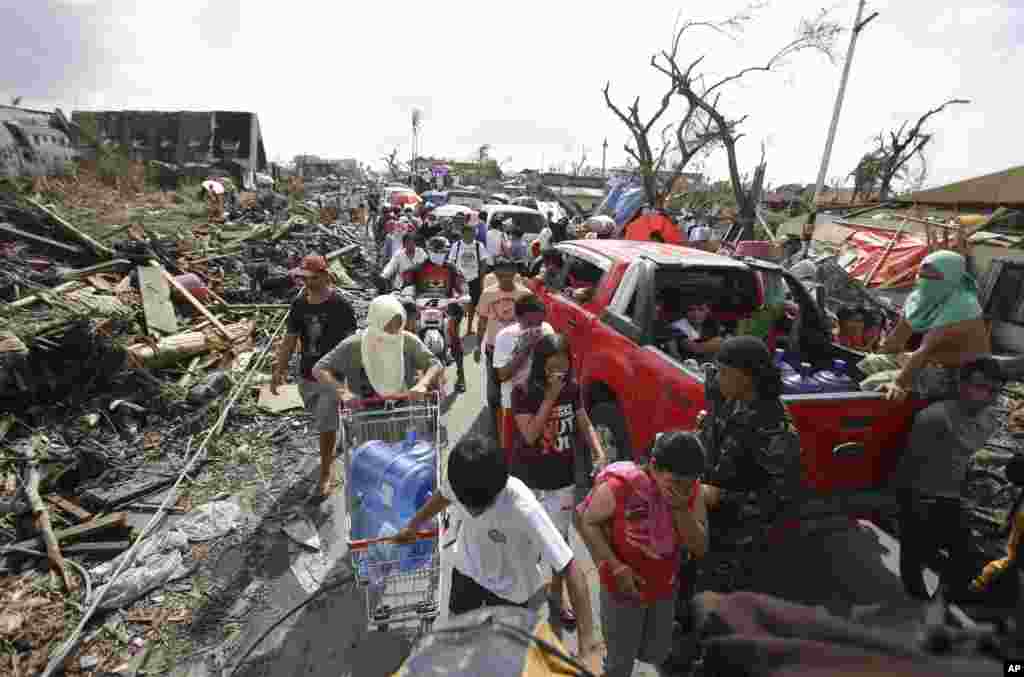
2/11Survivors fill the streets as they line up to get supplies in Tacloban city, Leyte province, central Philippines, Nov. 11, 2013.
Show moreShow less
3/11A survivor writes a call for help, Tacloban city, Leyte province, central Philippines, Nov. 11, 2013.
Show moreShow less
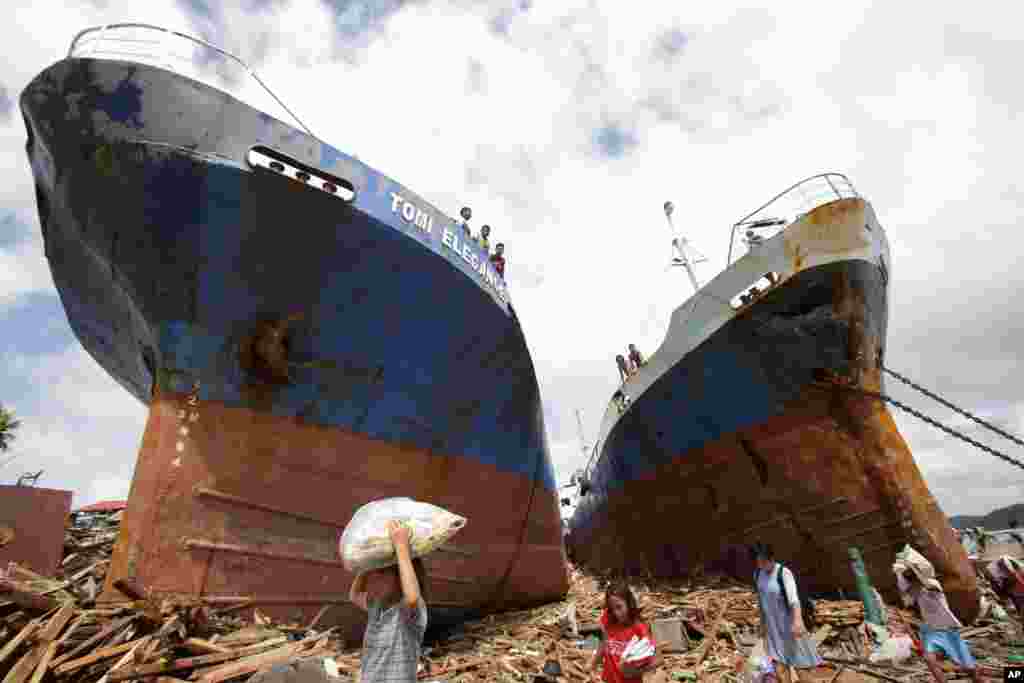
4/11Survivors pass by two large boats that were washed ashore by strong waves caused by Typhoon Haiyan in Tacloban city, Leyte province, central Philippines, Nov. 10, 2013.
Show moreShow less
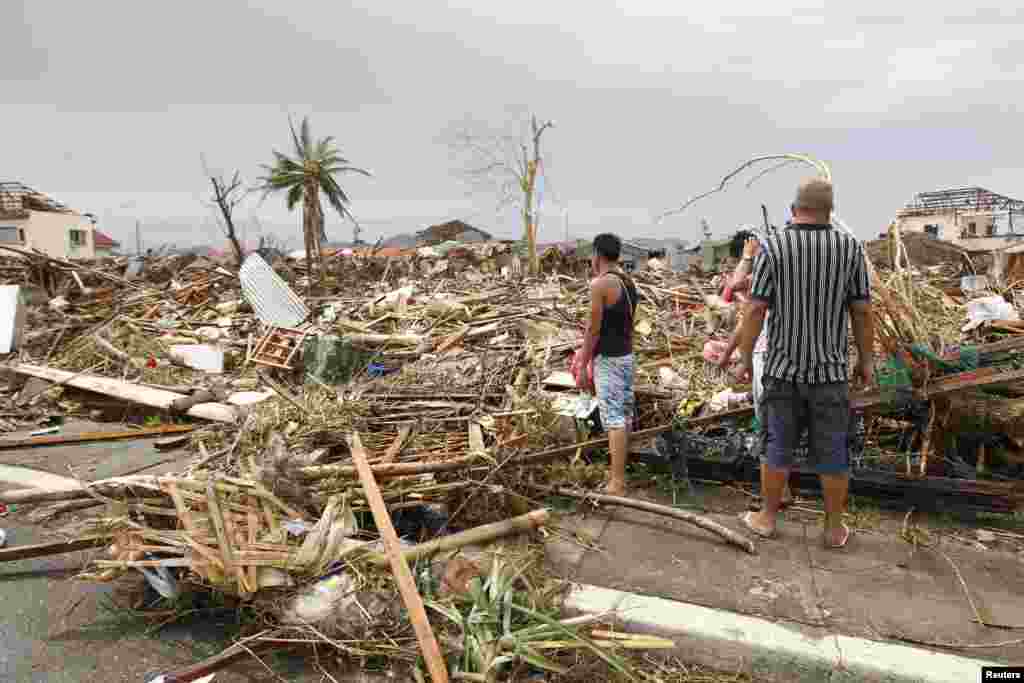
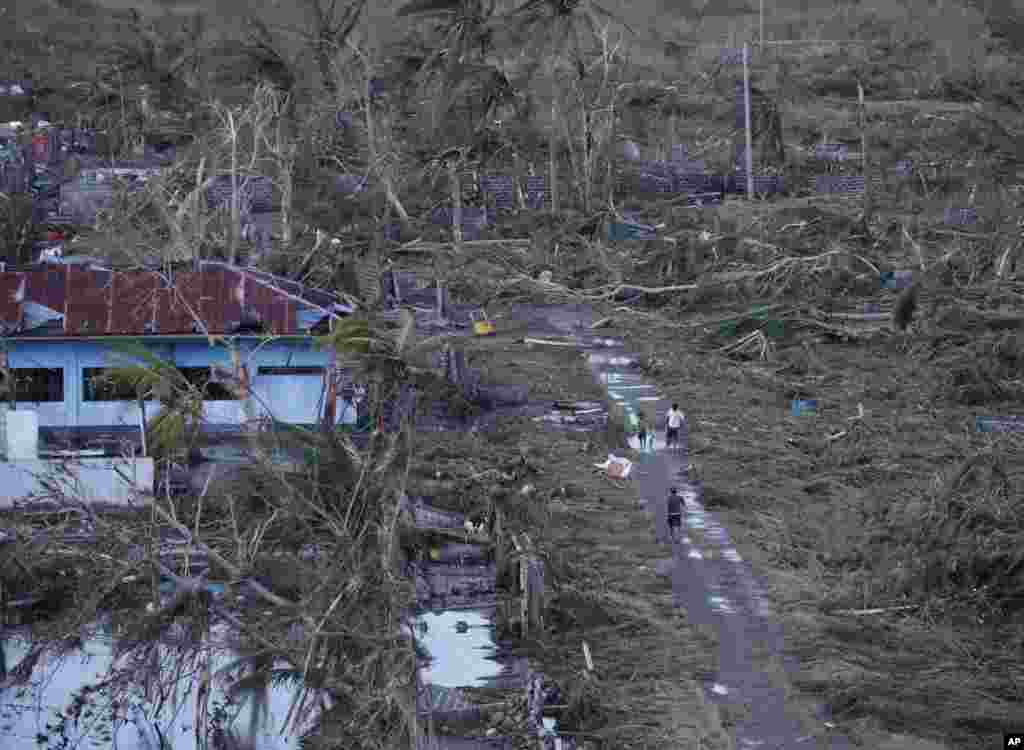
5/11A resident walks by remains of houses after powerful Typhoon Haiyan slammed into Tacloban city, Leyte province central Philippines on Nov. 9, 2013
Show moreShow less
6/11Survivors assess the damage after super Typhoon Haiyan battered Tacloban city, central Philippines, Nov. 9, 2013.
Show moreShow less
7/11Tacloban Airport is covered by debris after powerful Typhoon Haiyan hit Tacloban city, in Leyte province in central Philippines, Nov. 9, 2013.
Show moreShow less
8/11Residents go on their daily business Nov. 9, 2013, following a powerful typhoon that hit Tacloban city, in Leyte province, central Philippines.
Show moreShow less
9/11A fisherman carries his net after making it safely back to shore in the fishing village after a strong winds from Typhoon Haiyan battered Bayog town in Los Banos, Laguna city, south of Manila, Nov. 8, 2013.
Show moreShow less
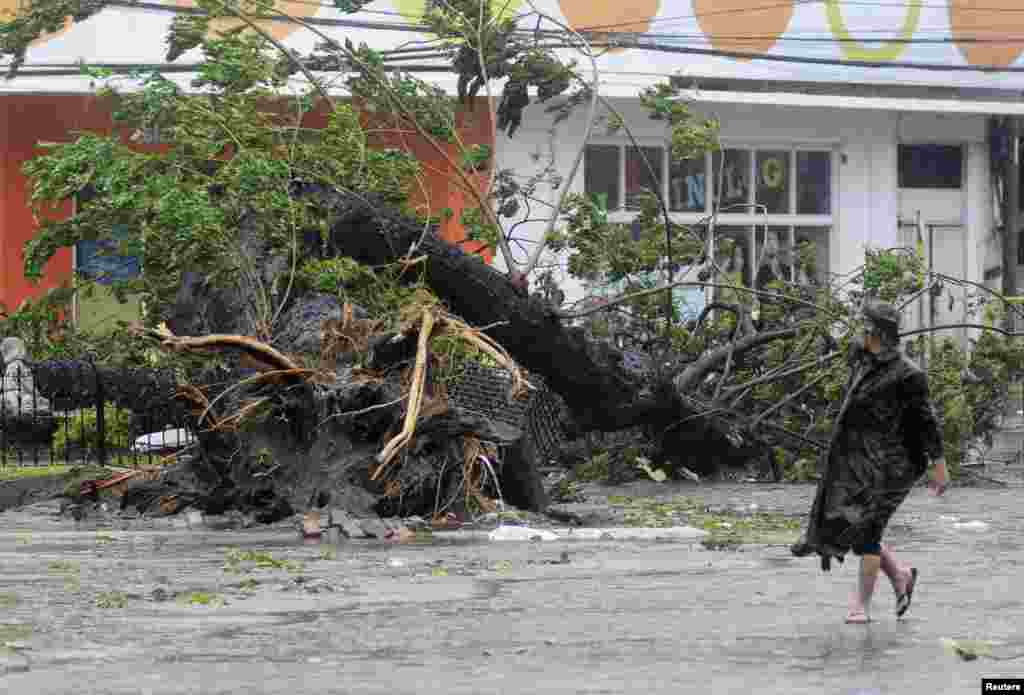
10/11A man walks past a tree uprooted by strong winds brought by super Typhoon Haiyan that hit Cebu city, central Philippines, Nov. 8, 2013.
Show moreShow less
11/11A mother takes refuge with her children as Typhoon Haiyan hits Cebu city, central Philippines, Nov. 8, 2013.
Show moreShow less
Previous slide
Next slide
Super Typhoon Haiyan tore through the central Philippines on Friday and flattened the city of Tacloban, where officials fear 10,000 people died. Officials fear the toll could rise sharply as rescuers reach more isolated towns.
Overwhelmed by the scale of the disaster, the Philippines has sought international assistance.
The U.S. nuclear-powered aircraft carrier the USS George Washington, carrying about 5,000 sailors and more than 80 aircraft, will arrive this week after setting sail from Hong Kong on Tuesday. It has been joined by four other U.S. Navy ships.
The United States is also providing $20 million in immediate aid. Japan said it will give $10 million and send a small number of soldiers and medical personnel.
Chinese Foreign Ministry spokesman Qin Gang said China would consider more aid as the situation developed, but did not say why Beijing had offered less than other countries.
“China has also suffered from the disaster, so we very much understand and sympathize with the current hardships that the Philippine people are facing,” Qin told a regular briefing, referring to the deaths of at least seven people and $734 million in economic losses when the much-weakened storm swiped China's southern provinces. “We are willing to consider providing more support and aid within our capacity as it goes.”
Lye Liang Fook of the East Asian Institute in Singapore said it was impossible to separate China's anger over territorial claims from the question of disaster relief.
“Politically there is a lack of trust, and under the circumstances, the fact that China is willing to extend aid is quite significant,” he said. “The two issues are linked to each other.”
Comments on Sina Weibo, China's version of Twitter, overwhelmingly opposed China giving aid to the Philippines.
“For God's sake, give them nothing,” wrote one user. “We've given them enough in the past.”
Cheng said public sentiment would factor into China's decision.
“I certainly think that relief and aid for natural disasters should not be affected by political relations. But the Chinese authorities are handicapped by domestic nationalist feelings as well,” he said. “China should have used the opportunity to improve its image.”
Reuters is a news agency founded in 1851 and owned by the Thomson Reuters Corporation based in Toronto, Canada. One of the world's largest wire services, it provides financial news as well as international coverage in over 16 languages to more than 1000 newspapers and 750 broadcasters around the globe.