


Accessibility links

Breaking News

Lebanese City's Shi'ites Mark Holy Day With Ritual Bloodletting

update
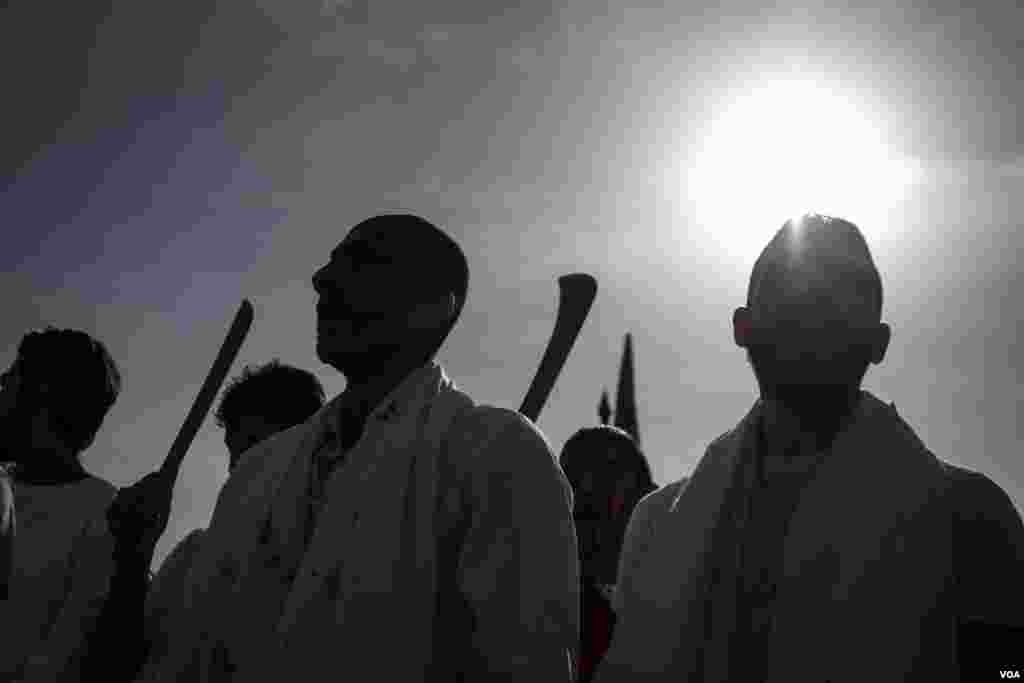
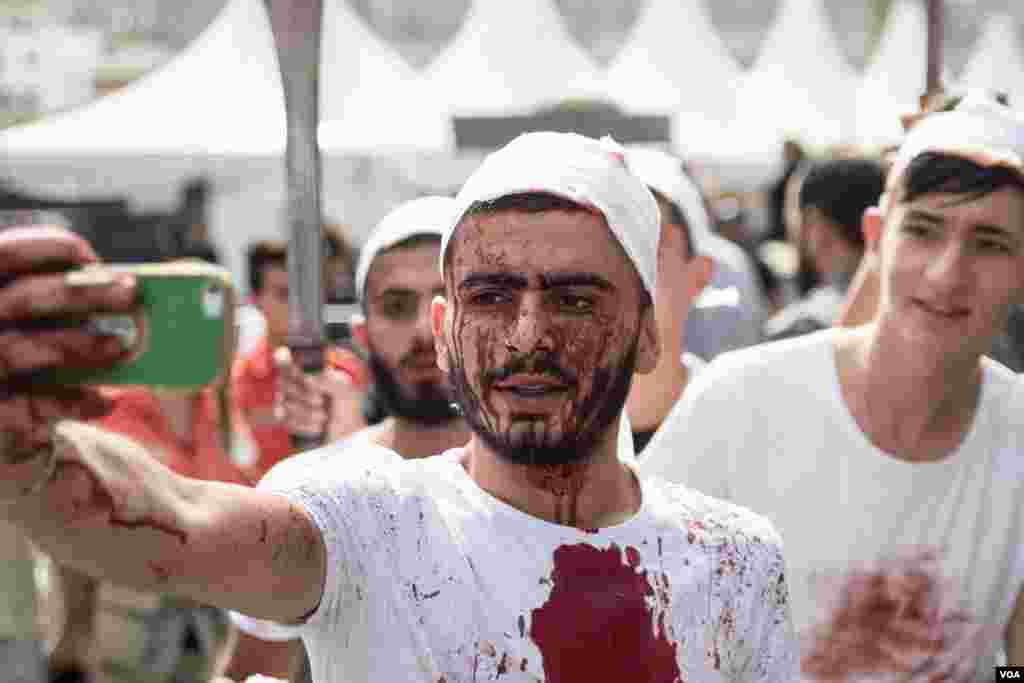
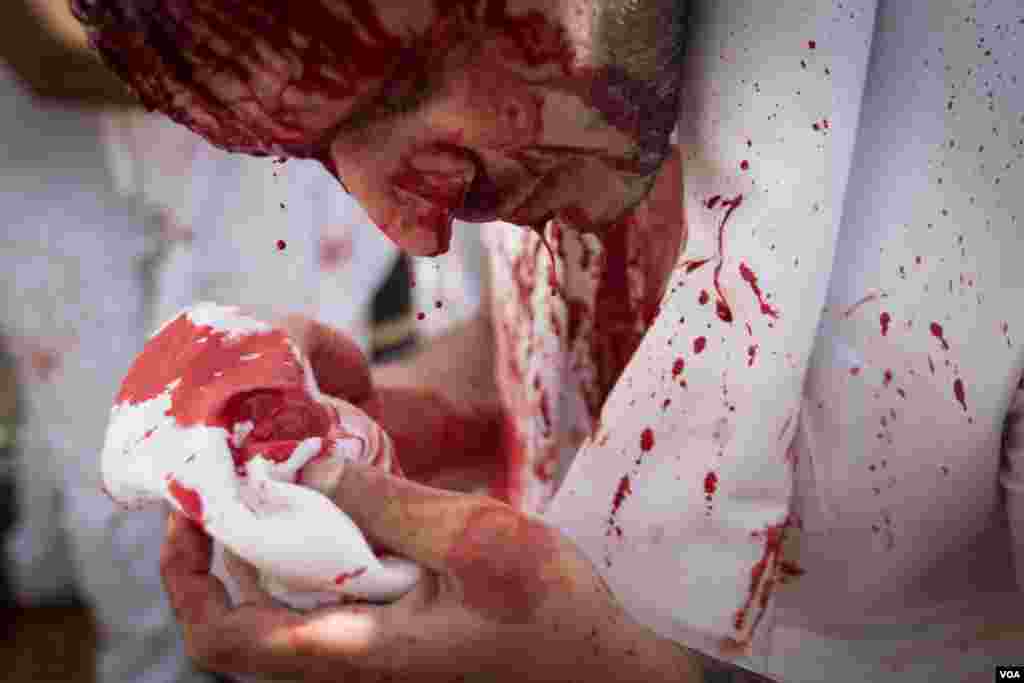
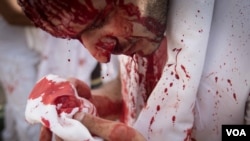
Often done with a knife stroke to the head, the act of bloodletting is called tatbir. (J. Owens/VOA)

As streams of blood trickled down the streets of the southern Lebanese town of Nabatieh, Shi'ite muslims commemorating the holy day of Ashura gathered to reflect on the roots of their faith.

Across the world, millions of Shi'ites on Wednesday honored the Prophet Muhammad's grandson Hussein, whose death in battle in 680 marked a schism in Islam that has persisted to this day.

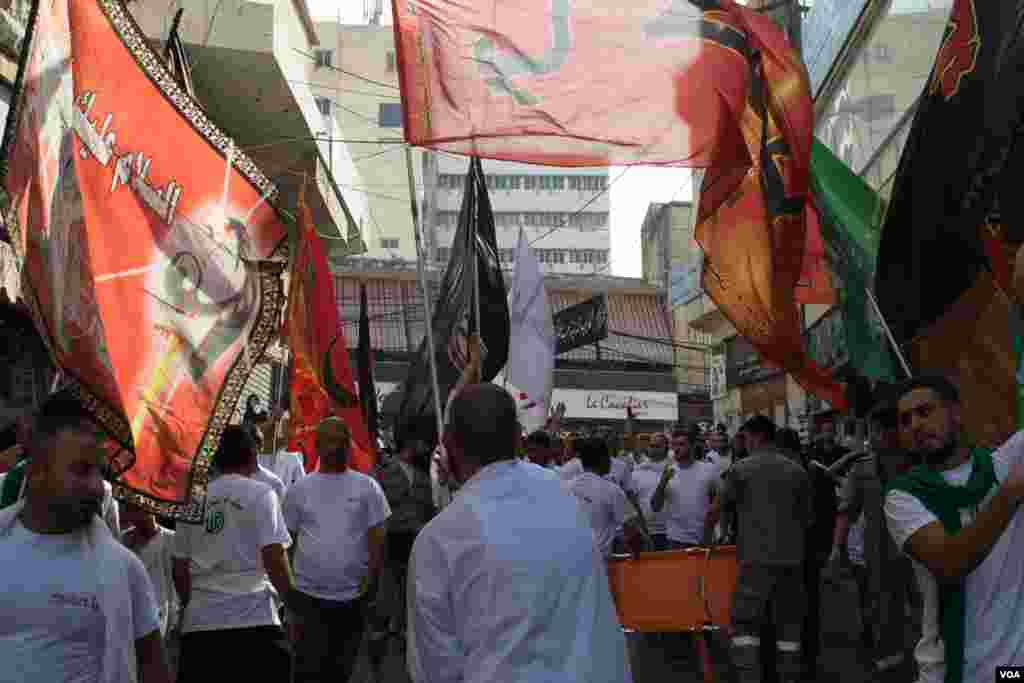
Likewise, believers across Lebanon took to the streets, dressed in black as a sign of mourning.

Numbers were highest in the southern suburbs of Beirut, where entire neighborhoods became a backdrop to the occasion and roads across the southern part of the city were closed down.

In Nabatieh, however, thanks to a ritual of bloodletting largely shunned elsewhere, the scene was very different.
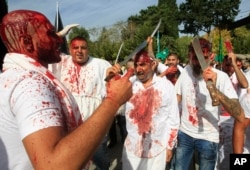
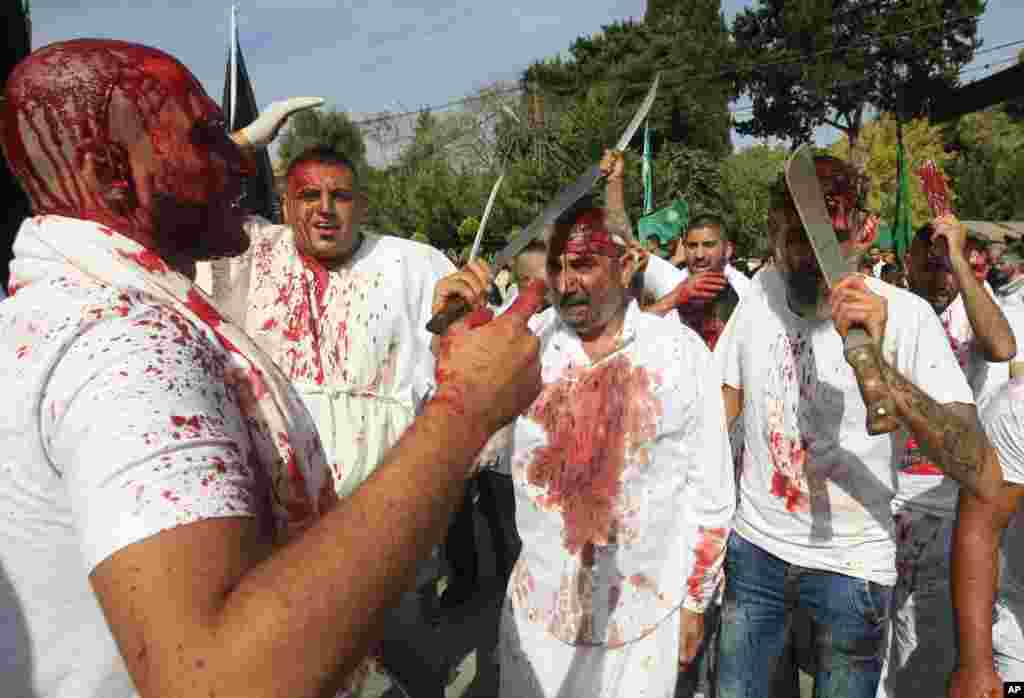
Lebanese Shi'ite men bleed from self-inflicted head wounds as they strike themselves with swords to show their grief during Ashura rituals, in the southern market town of Nabatieh, Oct. 12, 2016.

A precious thing

Showing telltale scars, Ali Saeed, 35, explained the practice of tatbir, in which participants strike themselves over the forehead with a knife.

"Blood is a precious thing to a human being, but it must leave our bodies in protest against those who hate the justice of God," he said.

He spoke from the courtyard of a mosque in the center of Nabatieh, where groups of men mingled with young boys participating in a ritual that is unusual in Lebanon and remains a practice undertaken only by a small minority of Shi'ite elsewhere in the world.

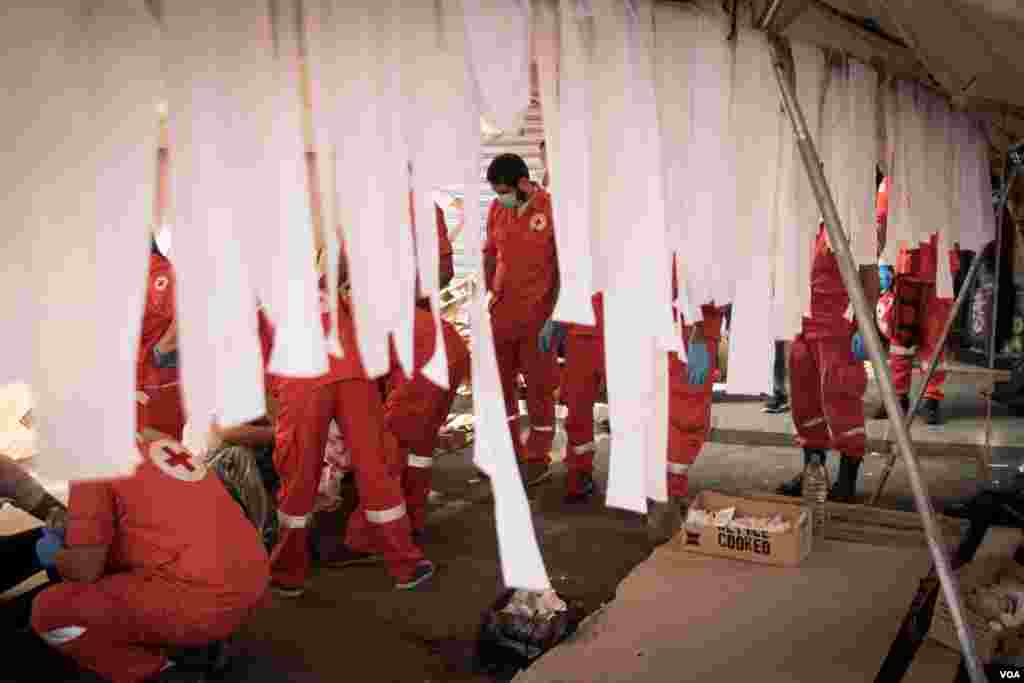
Beyond them, others marched in processions performing the same ritual, while medical teams waited to stanch wounds and assist the few who had fainted.

Tatbir is disputed among Shi'ite clerics and disapproved of by Hezbollah, the Iran-backed group with strong political and military clout within Lebanon.

The ritual, however, persists in Nabatieh, often among followers of the Amal Movement, another Shi'ite political group within the country.

Saeed was careful to state that, despite the act of self-harm, for him Ashura was about opposing violence and injustice in the world.

"Why does brother kill brother?" he asked.

Even in Nabatieh, not everybody approves.

"These are just a small minority of people, and we are not with them," Ali Diab, 24, said of those who engage in tatbir, adding it "gives a bad image" of Shi'ite Islam to the rest of the world.

Despite disagreements about how best to mark Ashura, many spoke in unity about the contemporary resonance of the day in a country where religious division is all too present.
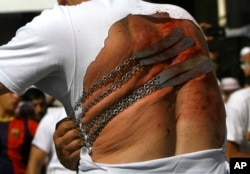
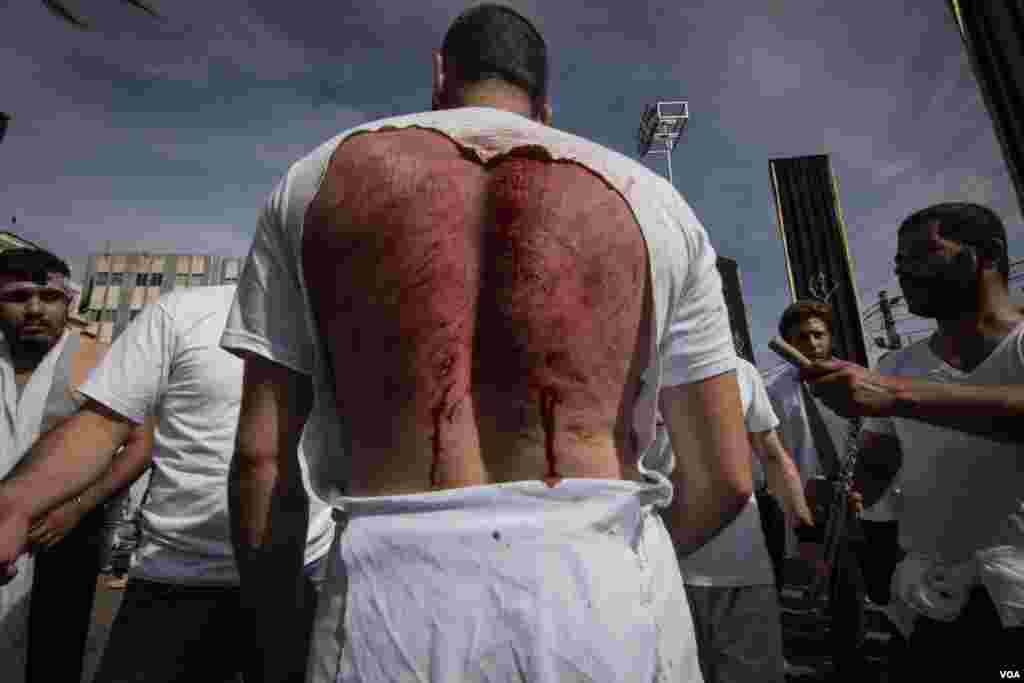
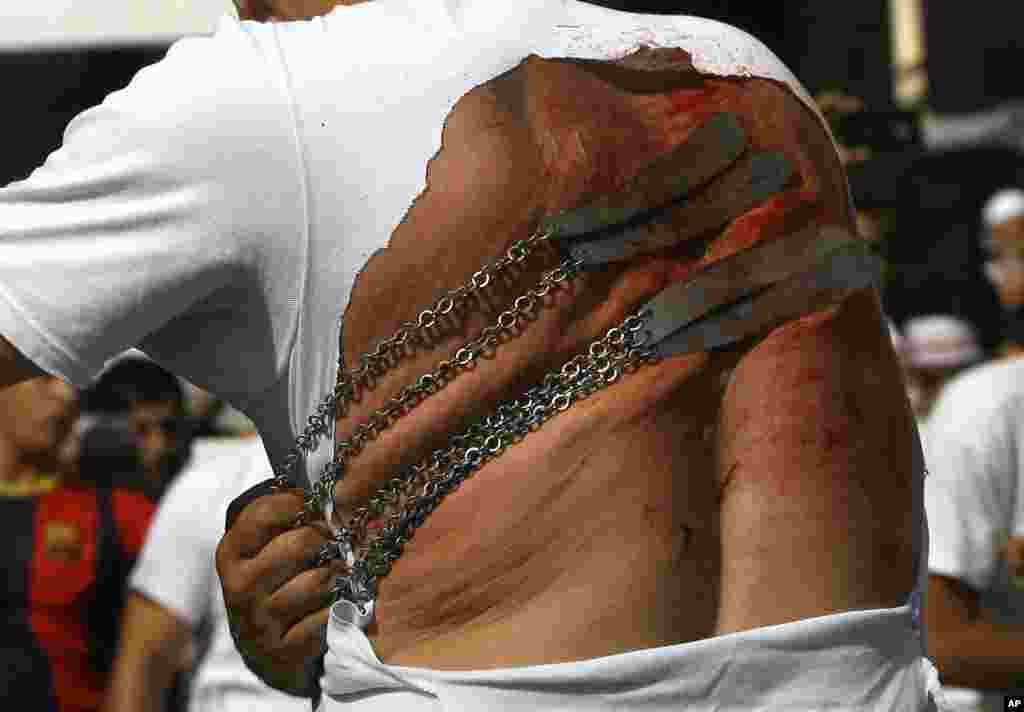
A Lebanese Shi'ite man strikes his back with knives to show his grief during Ashura rituals in the southern market town of Nabatieh, Oct. 12, 2016.

A target for attacks

Security is tight around commemorations within Nabatieh, as it is in Beirut and elsewhere in Lebanon.

Ashura marks the death of Hussein in the battle of Karbala after his refusal to pledge allegiance to Caliph Yezid — a dispute that helped cleave a divide between Sunnis, who are thought to make up about 85 percent of the world's Muslims, and Shi'ites.

At least 14 people were killed Tuesday after an attack on those gathering at a Shi'ite shrine in Kabul, Afghanistan, the latest in a long line of attacks on those marking the day.

Meanwhile, the Islamic State group — which labels Shi'ites apostates and targets them — remains a threatening force in neighboring Syria.

In a second rare public appearance in Beirut over consecutive days, as part of a wide-ranging speech, Hezbollah leader Hassan Nasrallah said his group would continue to intervene militarily in Syria in support of the country's president, Bashar al-Assad, something it has done since 2013.

It is a move that has polarized the nation but enjoys strong support among many in Lebanon's Shi'ites community.

"Even now, history is coming back," said Diab, drawing parallels between the killing of Hussein and the violence inflicted on Shi'ites Muslims and others by Islamic State. "In Syria, they are killing people in a bad way, and we are against terrorists."
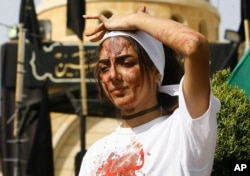
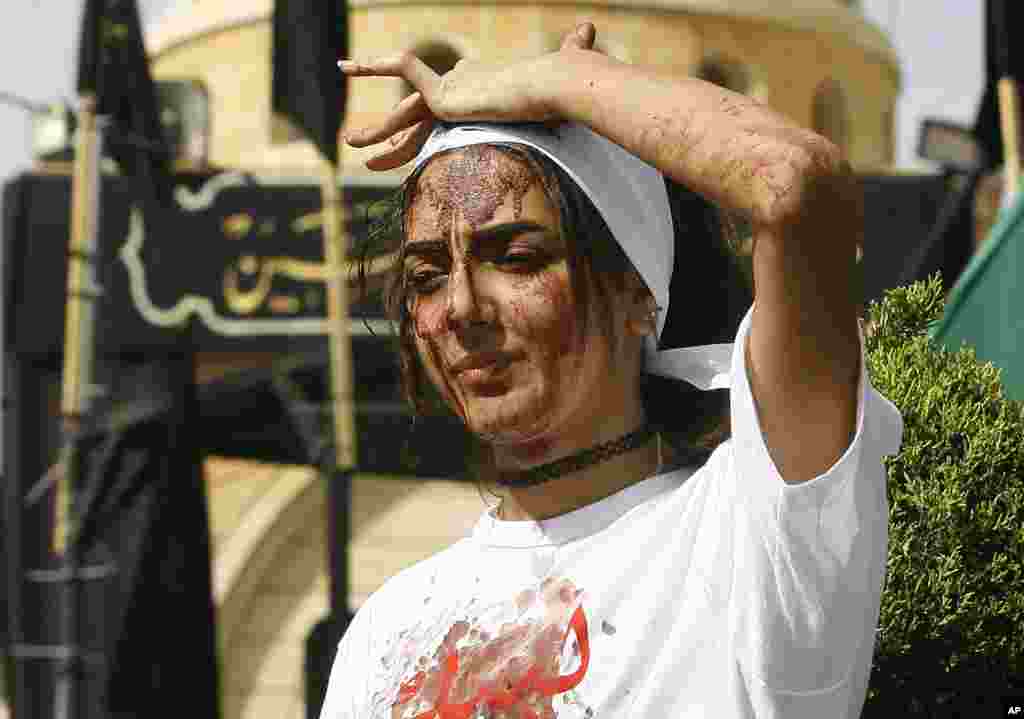
A Lebanese Shi'ite woman bleeds from self-inflicted head wounds to show her grief during Ashura rituals in Nabatieh, Oct. 12, 2016.

Internal power

Although blood, often accompanied by the chant of "Haidar, Haidar" — a term referring to the nickname of Hussein's father, Ali — is impossible to miss in Nabatieh, the town's commemoration shares rituals more commonly seen elsewhere during Ashura.

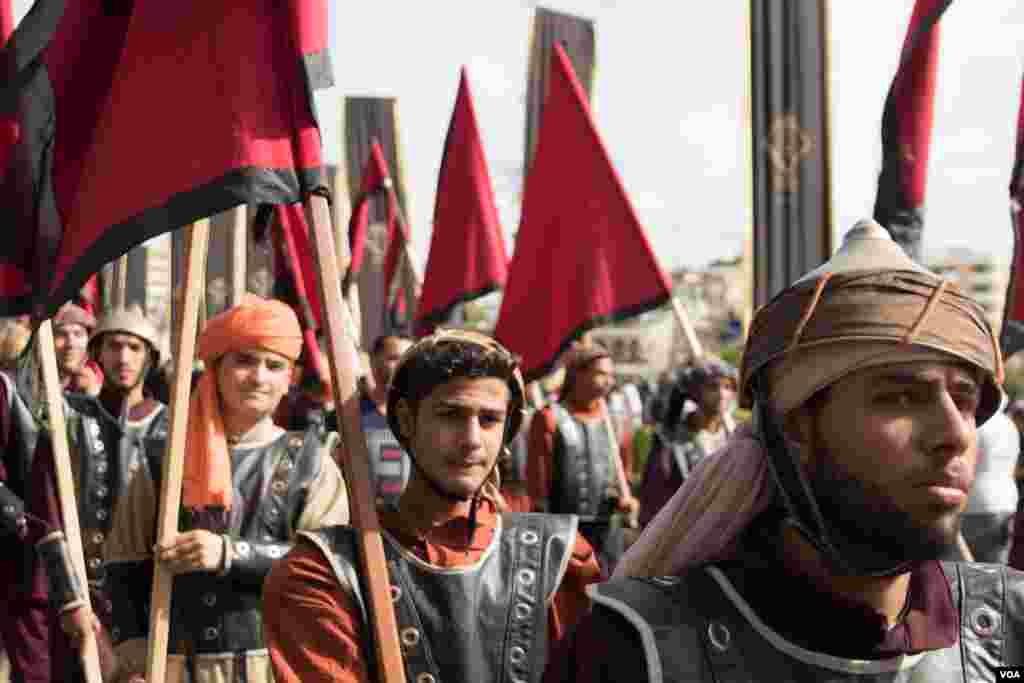
Families gather as eulogies are recited and the battle of Karbala is re-enacted with elaborate costumes and riders on horseback.

Meanwhile, free food and drinks are handed out to those present.

For Ahmad Jammoum, 23, the day was one not just of sadness, but of pride and unity for Shi'ites Muslims across the world.

"If it was not for Imam Hussein, Shi'ites would not exist," Jammoum told VOA.

"We continue to face oppression around the world, but he gave us an internal power," he said, adding, "It means everything to us to be here today."

IN PHOTOS: Shi'ite Muslims Commemorate Ashura in Nabatieh

Shi'ite Muslims Commemorate Ashura in Nabatieh
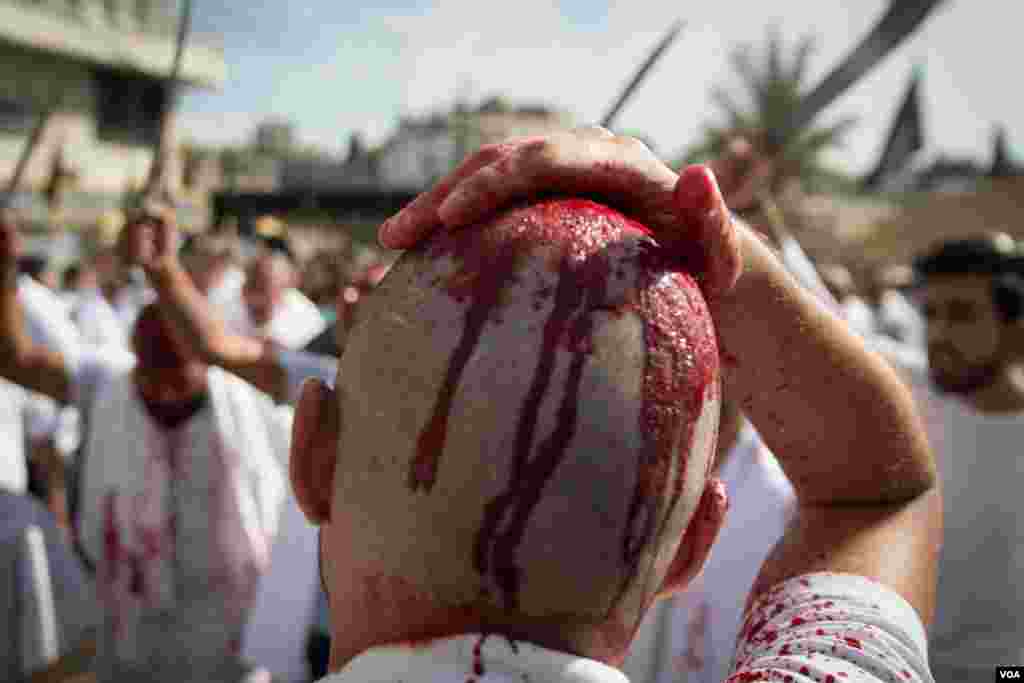
Unlike many Shi'ites in Lebanon, some in Nabatieh take part in bloodletting rituals to commemorate Ashura. (J. Owens/VOA)
1/18 Unlike many Shi'ites in Lebanon, some in Nabatieh take part in bloodletting rituals to commemorate Ashura. (J. Owens/VOA)
Shi'ite Muslims around the world commemorate Ashura and mourn the death of Hussein, the Prophet Muhammad’s grandson. (J. Owens/VOA)
2/18 Shi'ite Muslims around the world commemorate Ashura and mourn the death of Hussein, the Prophet Muhammad’s grandson. (J. Owens/VOA)
As well as bloodletting from the head, others flay themselves to mark Ashura. However, both are practiced by only a small minority of Shi'ites in Lebanon. (J. Owens/VOA)
3/18 As well as bloodletting from the head, others flay themselves to mark Ashura. However, both are practiced by only a small minority of Shi'ites in Lebanon. (J. Owens/VOA)
Lebanese Shi'ite men bleed from self-inflicted head wounds as they strike themselves with swords to show their grief during Ashura rituals, in the southern market town of Nabatiyeh, Oct. 12, 2016.
4/18 Lebanese Shi'ite men bleed from self-inflicted head wounds as they strike themselves with swords to show their grief during Ashura rituals, in the southern market town of Nabatiyeh, Oct. 12, 2016.
A Lebanese Shi'ite woman bleeds from self-inflicted head wounds to show her grief during Ashura rituals in Nabatieh, Oct. 12, 2016.
5/18 A Lebanese Shi'ite woman bleeds from self-inflicted head wounds to show her grief during Ashura rituals in Nabatieh, Oct. 12, 2016.
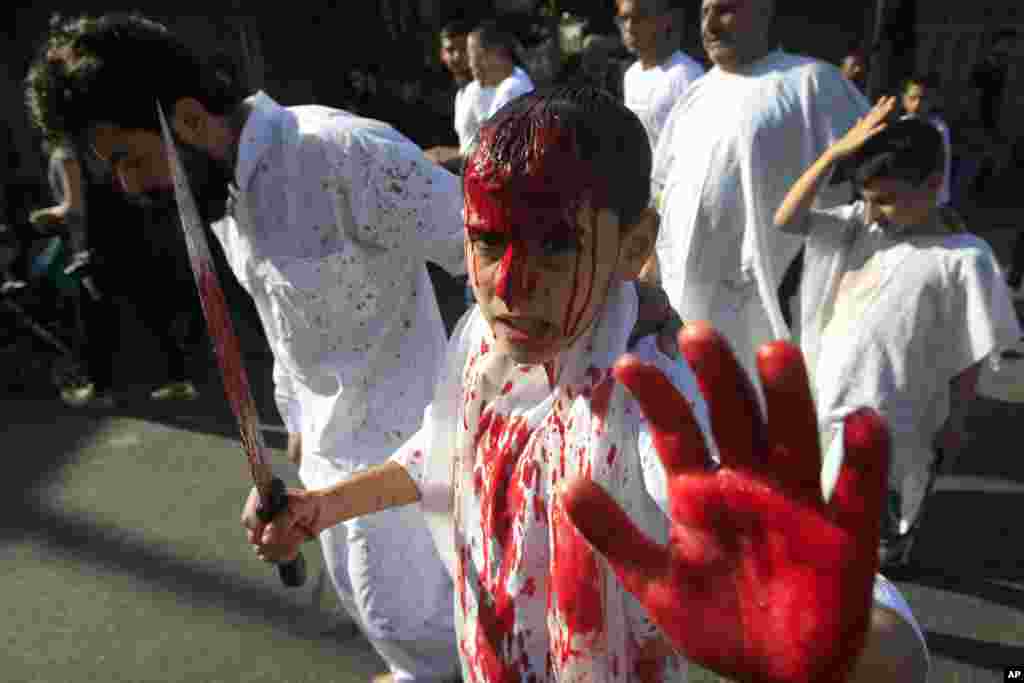
A Shi'ite Muslim child reacts as he bleeds after he was cut on the forehead with a razor during a religious procession to mark Ashura in Nabatiyeh town, southern Lebanon, October 12, 2016.
6/18 A Shi'ite Muslim child reacts as he bleeds after he was cut on the forehead with a razor during a religious procession to mark Ashura in Nabatiyeh town, southern Lebanon, October 12, 2016.
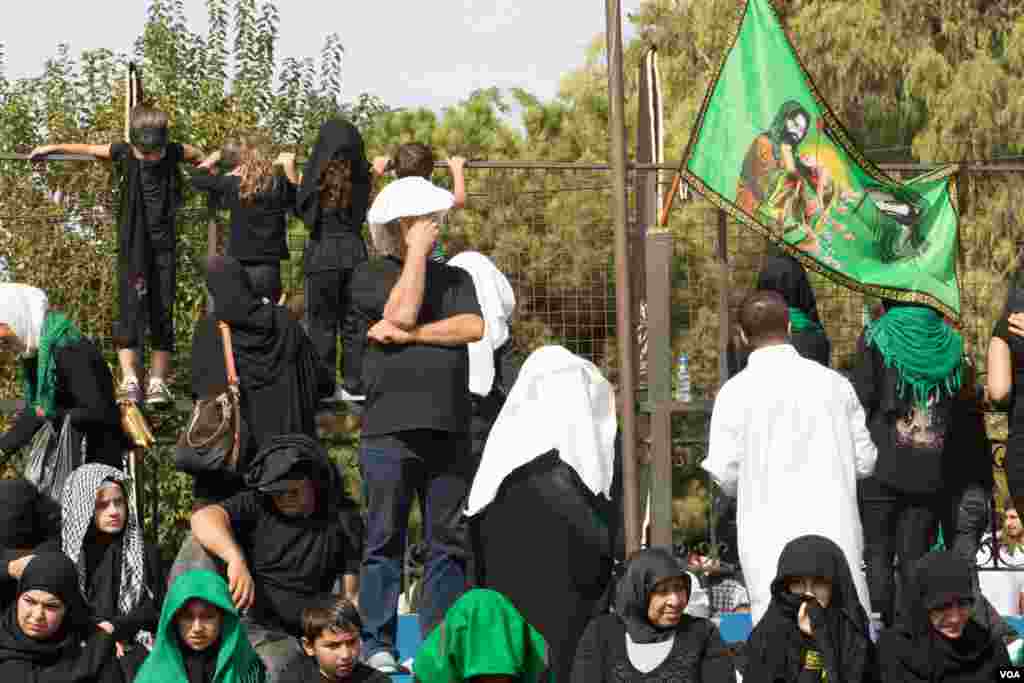
Flags and banners make up an important part of Ashura processions. (J. Owens/VOA)
7/18 Flags and banners make up an important part of Ashura processions. (J. Owens/VOA)
A Lebanese Shi'ite man strikes his back with knifes to show his grief during Ashura rituals in the southern market town of Nabatieh, Oct. 12, 2016.
8/18 A Lebanese Shi'ite man strikes his back with knifes to show his grief during Ashura rituals in the southern market town of Nabatieh, Oct. 12, 2016.
A Lebanese Shi'ite boy bleeds from self-inflicted head wounds to show his grief during Ashura rituals in Nabatieh, Oct. 12, 2016. Hundreds of men, boys, and several women commemorated the 7th-century martyrdom of Prophet's Muhammad's grandson Hussein by l
9/18 A Lebanese Shi'ite boy bleeds from self-inflicted head wounds to show his grief during Ashura rituals in Nabatieh, Oct. 12, 2016. Hundreds of men, boys, and several women commemorated the 7th-century martyrdom of Prophet's Muhammad's grandson Hussein by l
Medical teams were at the ready to help bandage up those who took part in bloodletting during Ashura. (J. Owens/VOA)
10/18 Medical teams were at the ready to help bandage up those who took part in bloodletting during Ashura. (J. Owens/VOA)
این راننده مکزیکی در مسابقه ماشین در ایندیاناپولیس در آمریکا چندان خوش شانس نبود. او بعد از برخورد به دیوار معلق زد.
11/18 این راننده مکزیکی در مسابقه ماشین در ایندیاناپولیس در آمریکا چندان خوش شانس نبود. او بعد از برخورد به دیوار معلق زد.
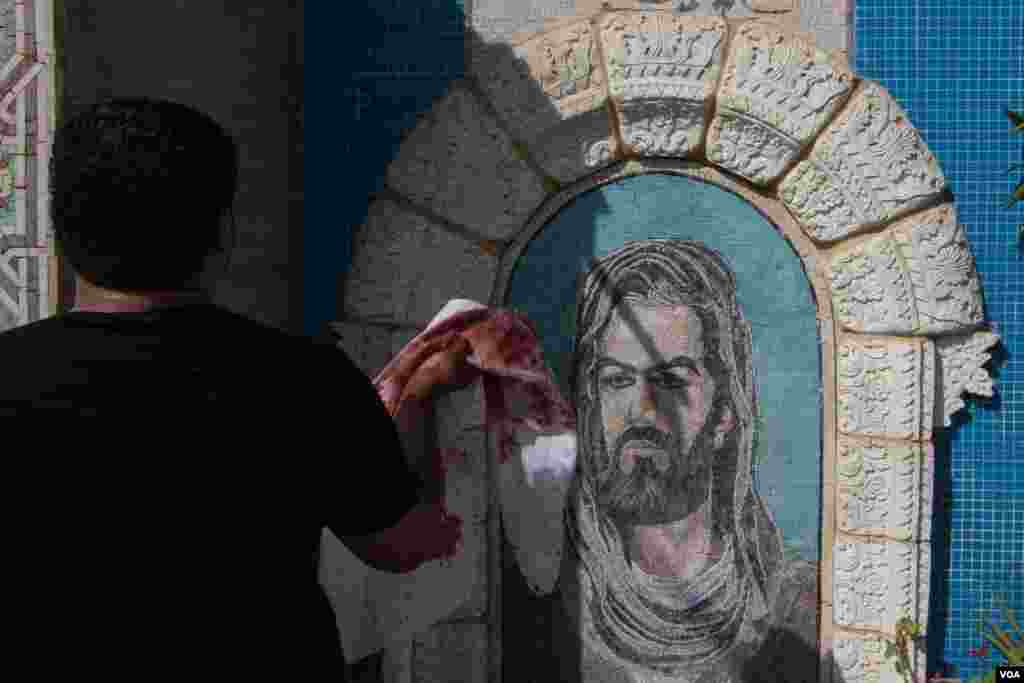
A mural depicting Ali, father of Hussein and a man regarded by ShI'ites as the first imam. (J. Owens/VOA)
12/18 A mural depicting Ali, father of Hussein and a man regarded by ShI'ites as the first imam. (J. Owens/VOA)
Families gather together to watch a re-enactment of the battle of Karbala. (J. Owens/VOA)
13/18 Families gather together to watch a re-enactment of the battle of Karbala. (J. Owens/VOA)
A re-enactment of the battle of Karbala, in which Hussein was killed. (J. Owens/VOA)
14/18 A re-enactment of the battle of Karbala, in which Hussein was killed. (J. Owens/VOA)
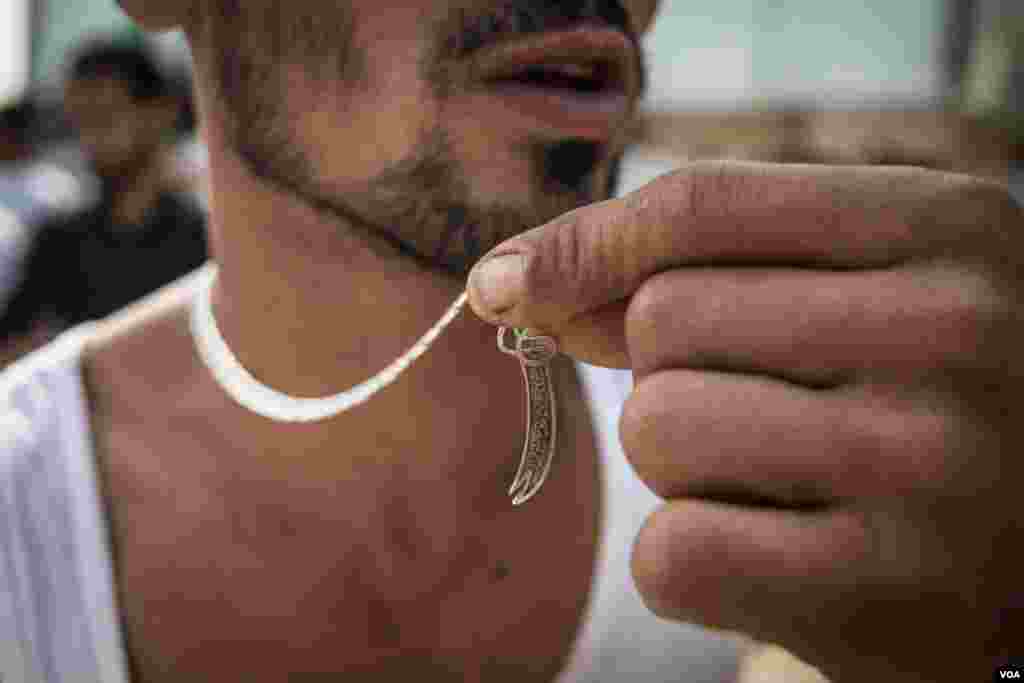
Ali Saeed, from Nabatieh, wears a pendent of the sword of Ali, father of Hussein. Named Zulfiqar, it was said to have been given to him by the Prophet Muhammad. (J. Owens/VOA)
15/18 Ali Saeed, from Nabatieh, wears a pendent of the sword of Ali, father of Hussein. Named Zulfiqar, it was said to have been given to him by the Prophet Muhammad. (J. Owens/VOA)
Often done with a knife stroke to the head, the act of bloodletting is called tatbir. (J. Owens/VOA)
16/18 Often done with a knife stroke to the head, the act of bloodletting is called tatbir. (J. Owens/VOA)
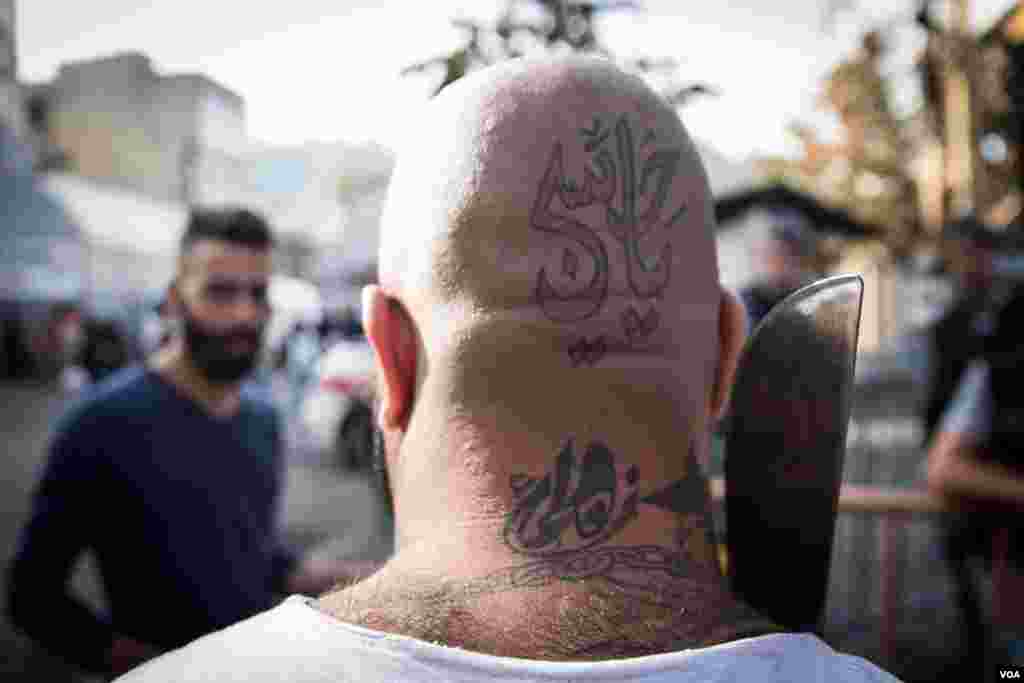
Some Shia mark their faith through tattoos. Tthis one pays tribute to Hussein, grandson of the Prophet Muhammad. (J. Owens/VOA)
17/18 Some Shia mark their faith through tattoos. Tthis one pays tribute to Hussein, grandson of the Prophet Muhammad. (J. Owens/VOA)
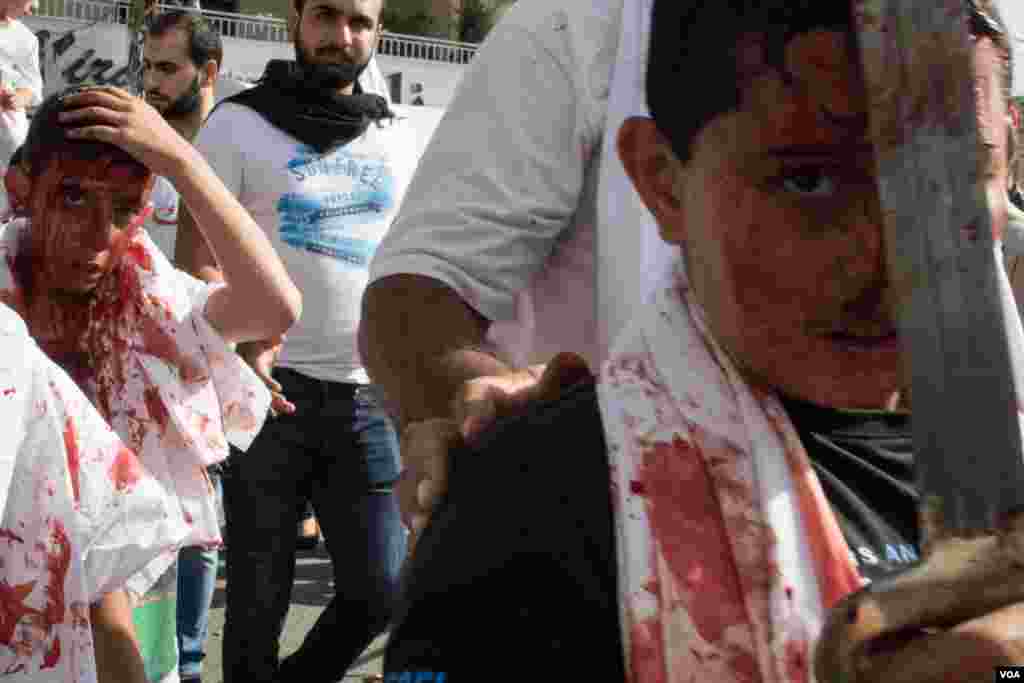
Both young and old perform the act of tatbir within Nabatieh. (J. Owens/VOA)
18/18 Both young and old perform the act of tatbir within Nabatieh. (J. Owens/VOA)
Previous slide
Next slide

XS
SM
MD
LG