




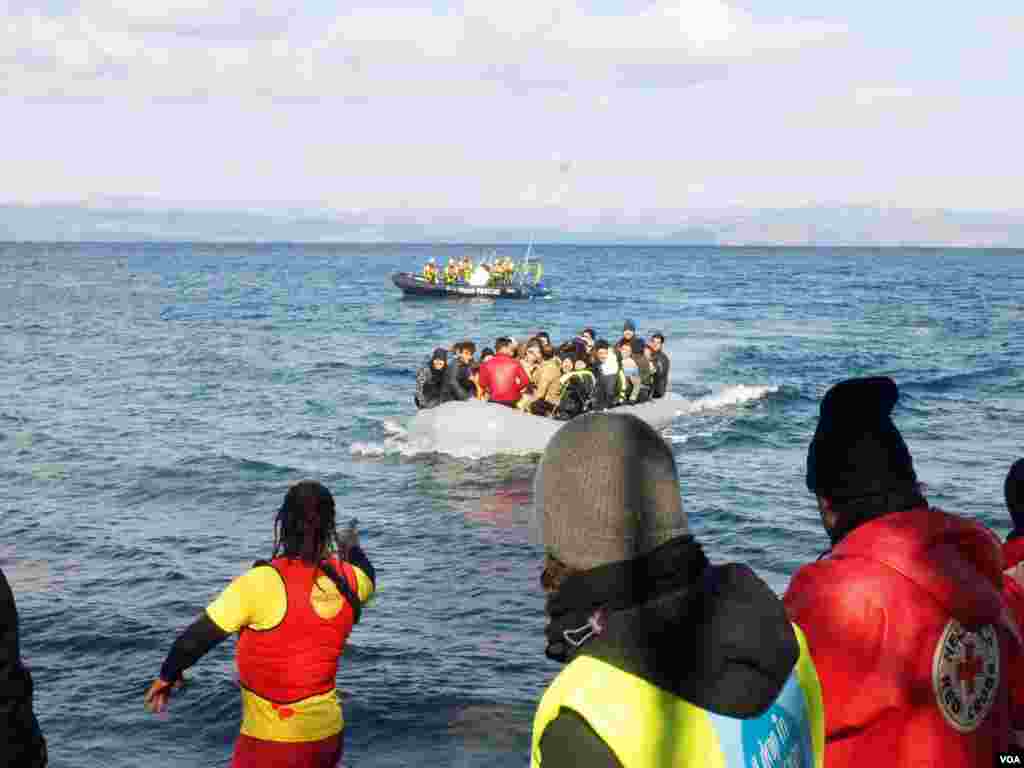
As a crowded rubber boat approached the Greek island of Lesbos on Tuesday, aid workers waved and gave the roughly 30 passengers a thumbs up. Close to shore, they climbed out of the boat, appearing stunned and passing babies to aid workers to carry them to the beach.
The day before, it had snowed in Lesbos for the first time in four years.
The group was among the roughly 1,600 people who have been arriving in rubber boats on the shores of Greece every day since the beginning of this year.
That is more than 20 times the amount of people arriving in all of January of 2015, a year in which more than a million people made the dangerous journey from the Middle East or Africa to Europe to seek asylum, according to the International Organization for Migration.
“The number suggests that the number of maritime arrivals in Greece in 2016 may significantly exceed the record 853,650 migrants who arrived in Greece by sea in 2015,” reads a statement on the IOM website.
On the shores of Lesbos, refugees say the people will keep coming.
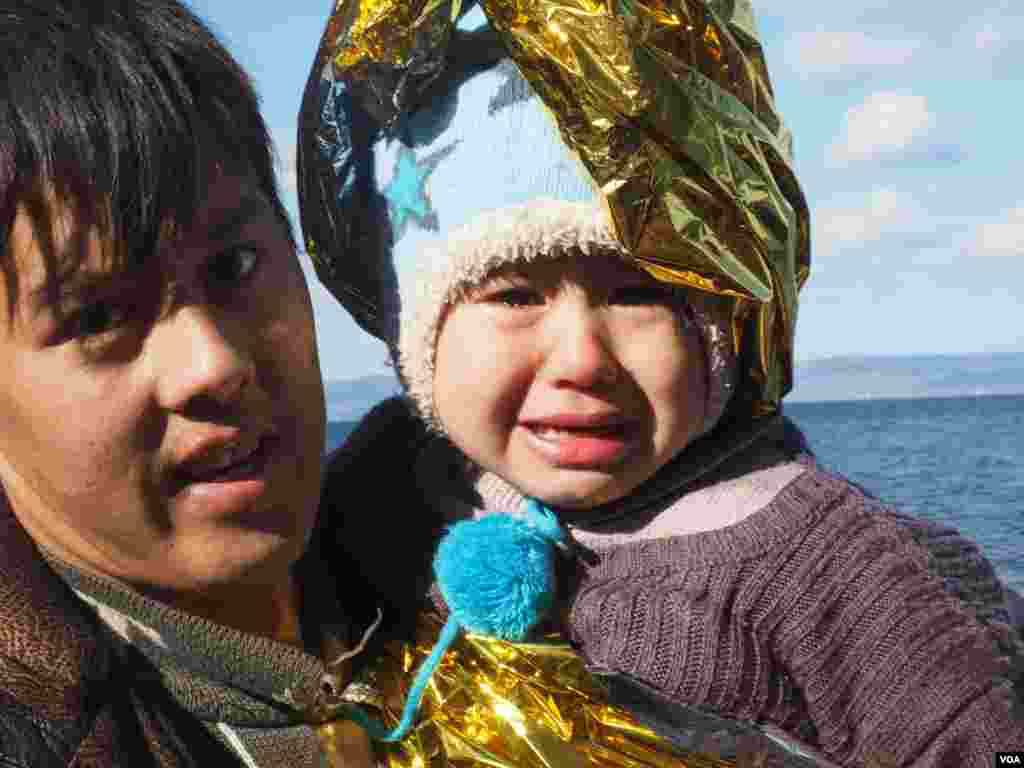
“I had to expose myself and my family to this danger on this boat,” said Ahmed Alhomsy, a Syrian man holding his infant son. “The boat is like a rubber balloon and we are traveling in the winter when it is most dangerous.”
Despite Cold, Record-Breaking Numbers of Refugees Arrive in Greece
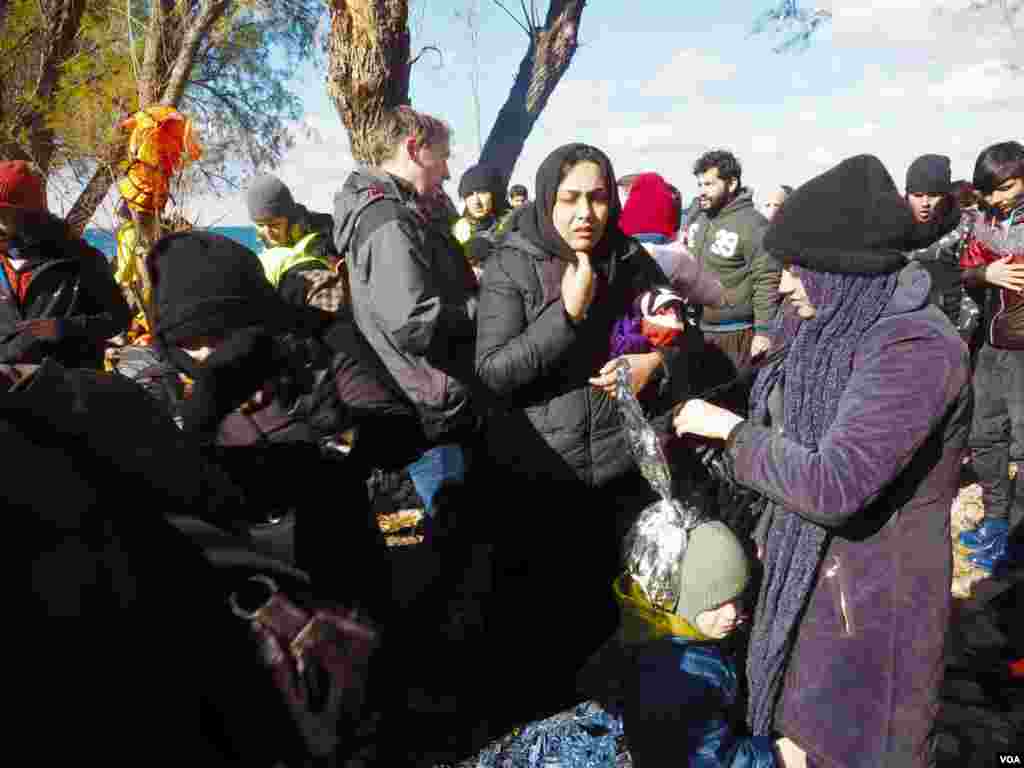


After surviving the sea, there are also dangers on shore, said Amy Pappajohn, an aid worker. For example, when they land, the refugees' clothes are usually wet,
“In the summer of course it was no problem when the clothes were wet,” she said. “But it’s now a health risk, health and safety problems, with them becoming frozen solid the second they come off the boats.”
Death Toll
The cold weather has also made traveling by sea more deadly, according to the IOM. In the past week 19 people are believed to have drowned at sea enroute to Greece, including three children and an infant.
On land, travelers echo the refrain of earlier refugees fleeing to Europe. They didn’t come because they wanted to, they came because they had to, said Alhomsy.
“Syria is being bombed from the air,” he added. “We are terrified for our women and our children. We were forced to leave. If you ask me or any Syrian here in Greece, nobody wanted to leave by his own choice.”
Cold weather is expected to continue here in the coming weeks and, as a result, fewer people are arriving than last month, according to aid workers.
“It’s very dependent on the weather and the storms and the wind,” said Pappajohn. “In the month of December the numbers were quite high because we didn’t have, I think, a single day of rain.”