Russia and China on Thursday vetoed a U.S.-backed U.N. Security Council resolution that would have imposed non-military sanctions on the Syrian government, putting the future of diplomacy in limbo as fighting continues in Syria.
After delaying the vote for a day to try to find common ground, the Security Council's decision comes a day after anti-government rebels bombed a meeting of top Syrian security officials, killing three senior military figures with close ties to President Bashar al-Assad, and as government shelling of neighborhoods in Damascus continued.
Thursday's vote was 11-2, with abstentions from Pakistan and South Africa. It was the third time during the Syria crisis that Russia and China have voted against the resolution.
30,000 air force personnel
5,000 navy personnel
300 fighter-ground attack planes
48 intelligence/surveillance planes.
22 heavy transport planes
36 attack helicopters
100 reconnaissance/transport helicopters
The vote threatens the peace mission of U.N. special envoy Kofi Annan and leaves undecided the future of some 300 peacekeepers in Syria, whose mandate is scheduled to end Friday.
Britain’s U.N. ambassador Mark Lyall Grant said his country was appalled by Russia and China's decisions to veto the resolution. “The effect of their actions is to protect a brutal regime," he said, describing the resolution as being aimed at bringing an end to the bloodshed in Syria. "They have chosen to put their national interests ahead of the lives of millions of Syrians."
Speaking through a translator, Russia's U.N. Ambassador Vitaly Churkin said his country could not agree to a resolution that would have opened the path to external military involvement in Syrian domestic affairs, an opinion challenged by U.S. Ambassador Susan Rice.
"Despite paranoid if not disingenuous claims by some to the contrary, it would in no way authorize nor even pave the way for foreign military intervention," said Rice, adding that escalation of what she called the Syrian government’s attacks against its own people is all the more troubling when considering its stockpile of chemical weapons.
Kofi Annan, U.N. special envoy for Syria, expressed disappointed over the vote.
The Security Council is now considering a resolution that would extend that mandate for a brief period, allowing the observers to make an orderly withdrawal from Syria.
The Obama administration said Thursday it will work outside the U.N. process to help resolve the Syria crisis.
Assassinations Spark New Violence in Syria
1/13Smoke rises over the skyline in the Qaboun neighborhood of Damascus, Syria, during shelling by Syrian government forces, July 19, 2012.
Members of Assad inner circle were killed in Damascus on Wednesday, prompting new round of violence in the capital.
Show moreShow less
2/13A burnt car in the al-Midan neighborhood in Damascus, July 20, 2012.
Members of Assad inner circle were killed in Damascus on Wednesday, prompting new round of violence in the capital.
Show moreShow less
3/13A burnt car in the al-Midan neighborhood in Damascus, July 20, 2012.
Members of Assad inner circle were killed in Damascus on Wednesday, prompting new round of violence in the capital.
Show moreShow less
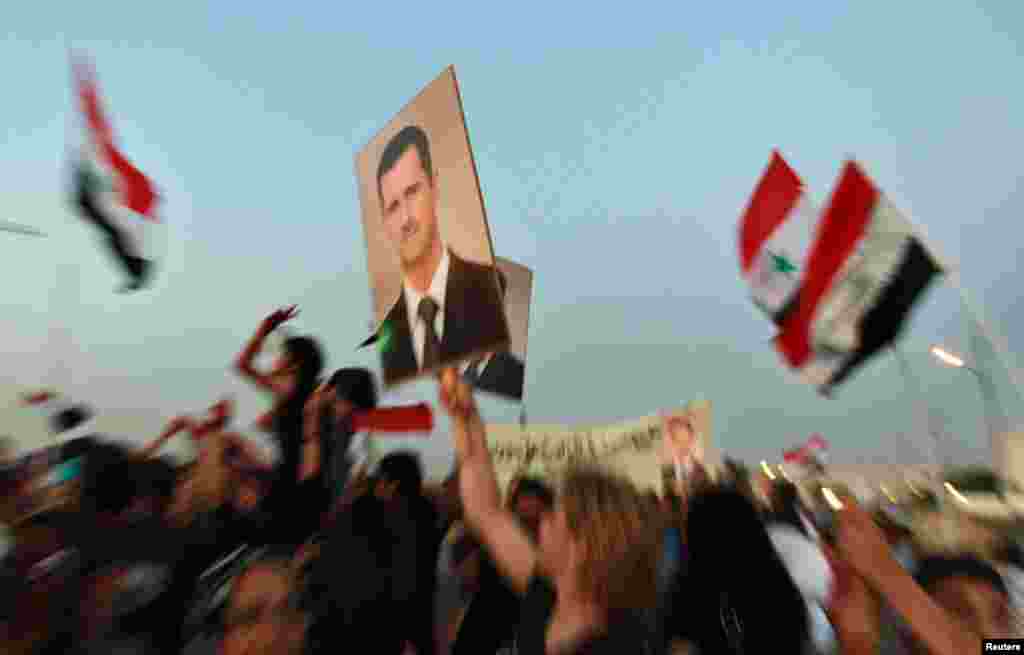
4/13Jordanians and Syrians living in Jordan hold pictures of President Bashar al-Assad and shout slogans against the Syrian Revolution during a demonstration near the Syrian embassy in Amman July 19, 2012.
Members of Assad inner circle were killed in Damascus on Wednesday, prompting new round of violence in the capital.
Show moreShow less
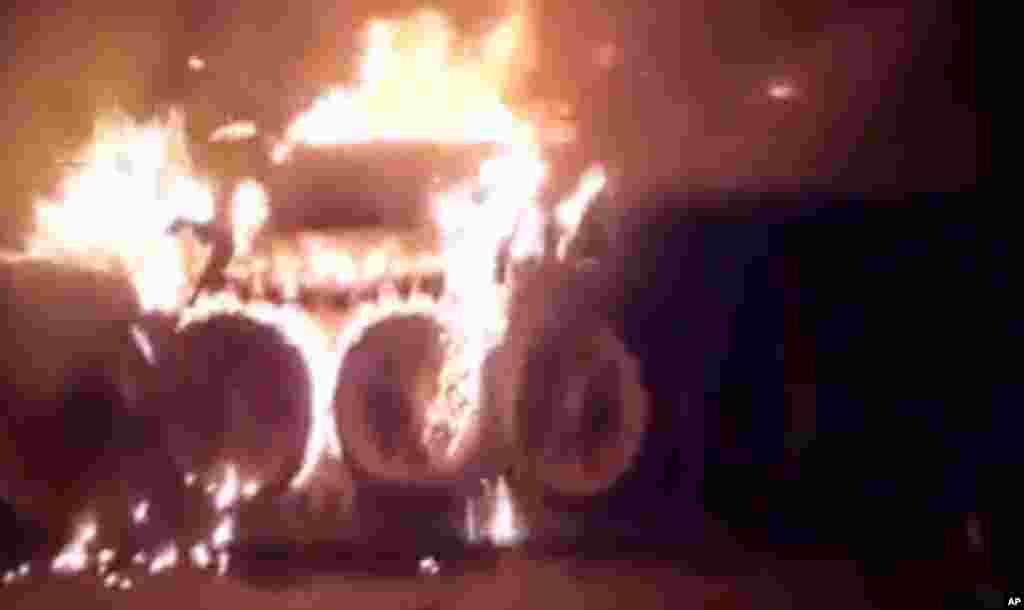
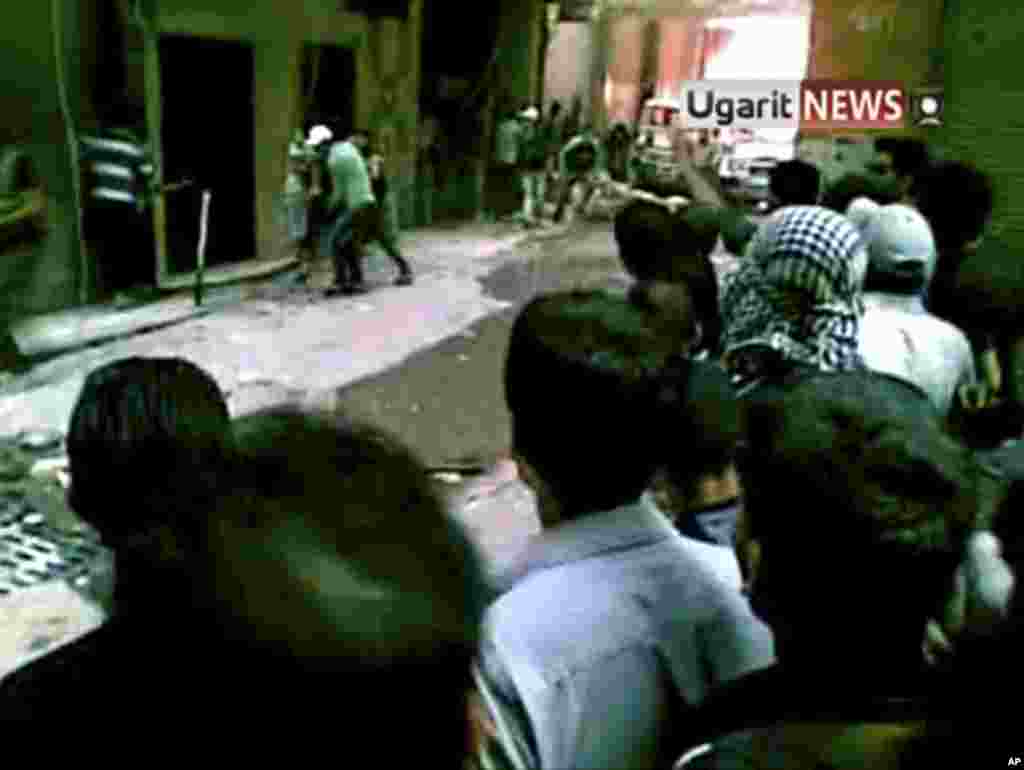
5/13This image made from amateur video released by the Ugarit News and accessed July 18, 2012, purports to show burning tires in Damascus, Syria.
Members of Assad inner circle were killed in Damascus on Wednesday, prompting new round of violence in the capital.
Show moreShow less
6/13This image made from amateur video released by the Shaam News Network and accessed July 18, 2012, purports to show a burning Syrian military tank in Damascus, Syria.
Members of Assad inner circle were killed in Damascus on Wednesday, prompting new round of violence in the capital.
Show moreShow less
7/13An image taken from Syrian television shows Syrian security forces taking position during armed clashes with gunmen in the Al-Midan district of Damascus, July 18, 2012.
Members of Assad inner circle were killed in Damascus on Wednesday, prompting new round of violence in the capital.
Show moreShow less
8/13Kakaki Aminu Waziri Tambuwal ya zanta da Salihu Garba.
Members of Assad inner circle were killed in Damascus on Wednesday, prompting new round of violence in the capital.
Show moreShow less
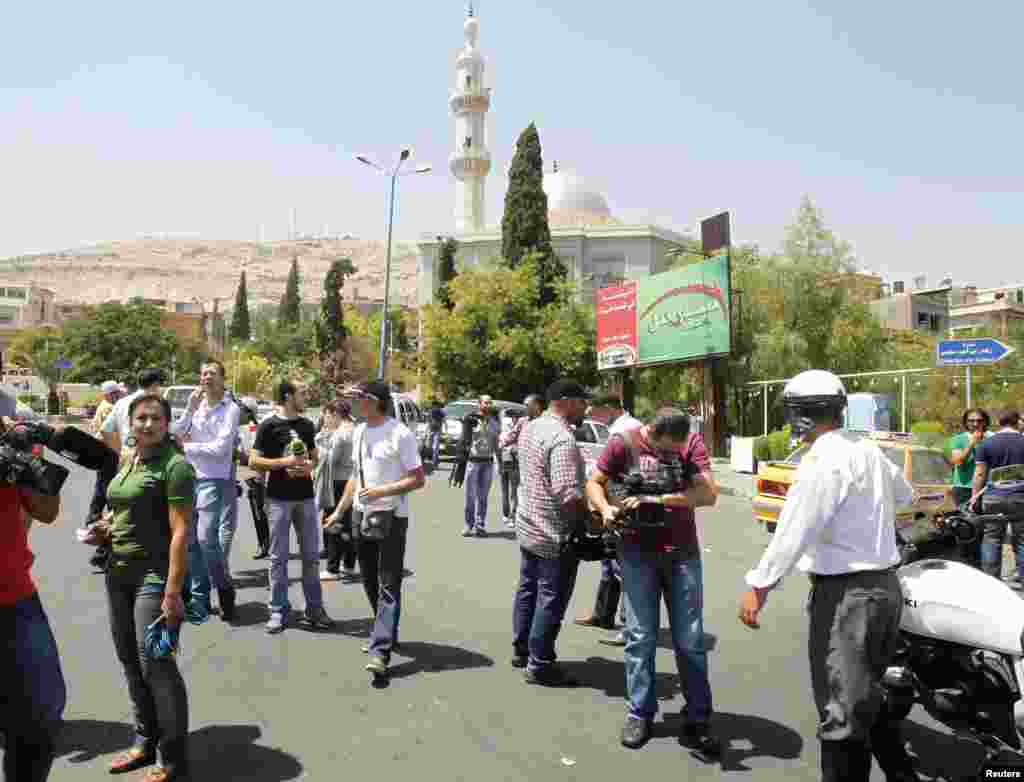
9/13Journalists wait at al-Rawda Square, near a road that leads to the national security building where a bomb killed at least three top aides to President Assad, after access to the area was blocked in Damascus July 18, 2012.
Members of Assad inner circle were killed in Damascus on Wednesday, prompting new round of violence in the capital.
Show moreShow less
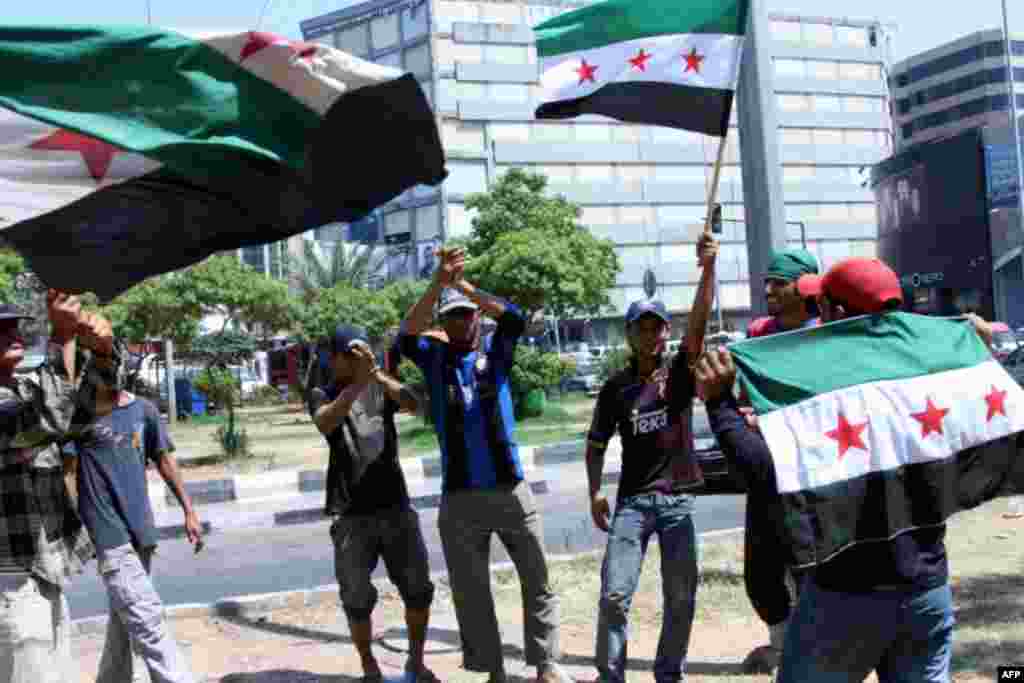
10/13Men celebrate in the Lebanese town of Tripoli on July 18, 2012, after an attack in Damascus killed the Syria's defense minister, General Daoud Rajha.
Members of Assad inner circle were killed in Damascus on Wednesday, prompting new round of violence in the capital.
Show moreShow less
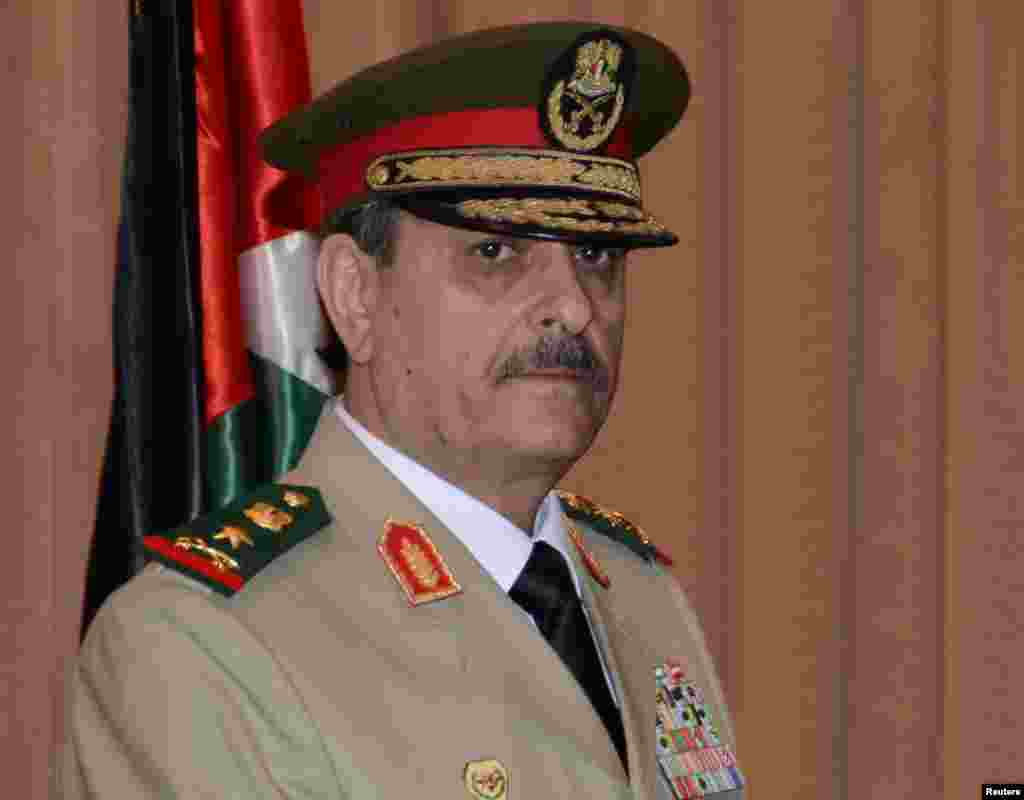
11/13General Fahad Jassim al-Freij is seen in this handout released by Syria's national news agency SANA on July 18, 2012. Syria appointed Freij as defense minister, replacing Daoud Rajha, killed in an attack.
Members of Assad inner circle were killed in Damascus on Wednesday, prompting new round of violence in the capital.
Show moreShow less
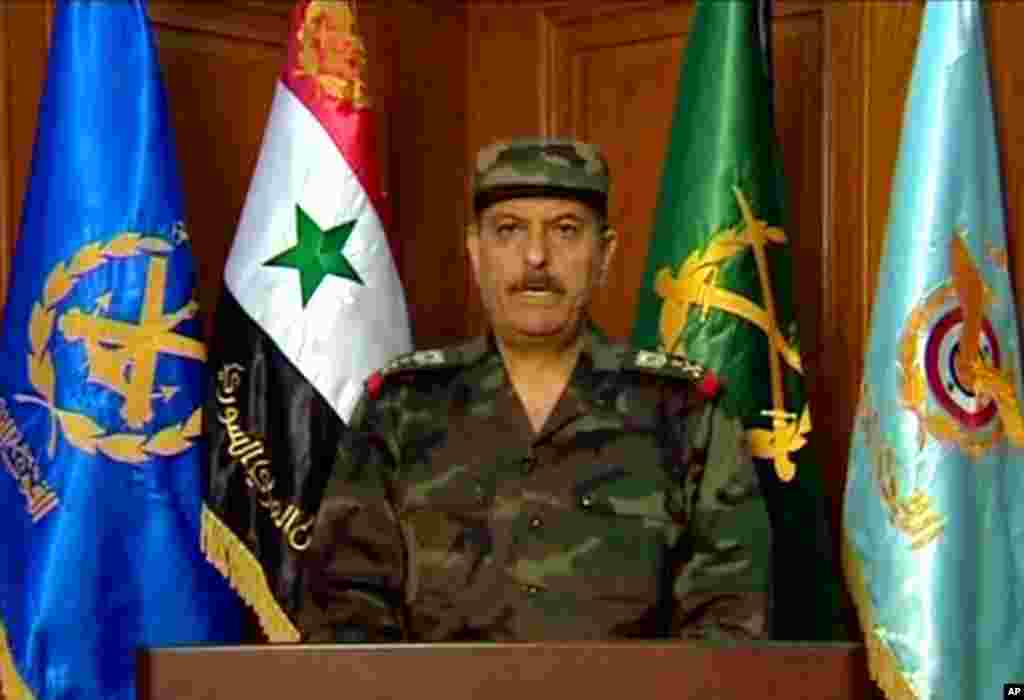
12/13In this image released by the Syrian official news agency SANA, Fahd Jassem al-Freij, Syria's new defense minister, reads a statement after he was appointed by President Bashar Assad on July 18, 2012.
Members of Assad inner circle were killed in Damascus on Wednesday, prompting new round of violence in the capital.
Show moreShow less
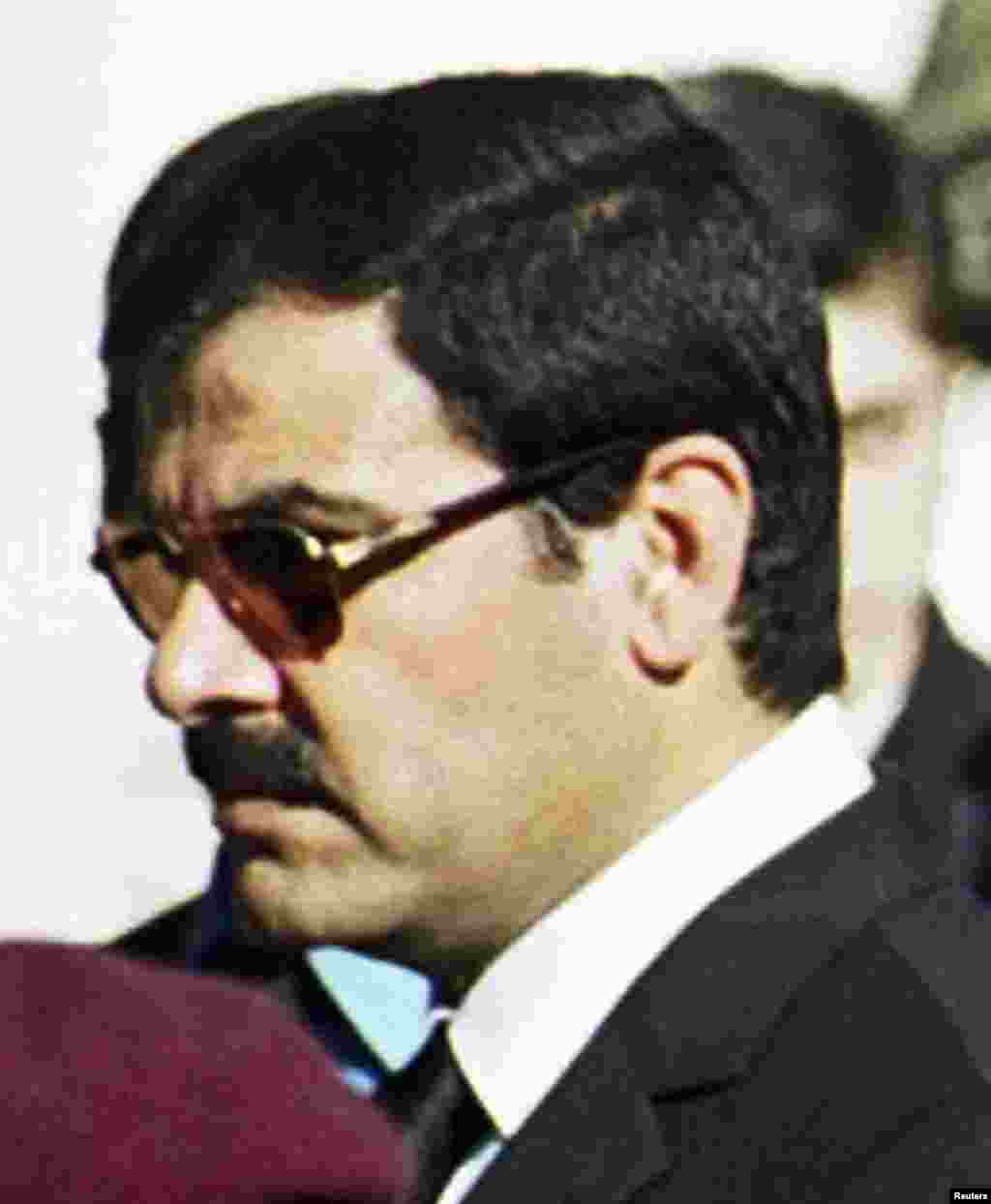
13/13Assef Shawkat, brother-in-law of Syrian President Bashar al-Assad, who was assassinated in Damascus, stands during the funeral of late president Hafez al-Assad in this June 13, 2000 photo.
Members of Assad inner circle were killed in Damascus on Wednesday, prompting new round of violence in the capital.
Show moreShow less
Previous slide
Next slide
Fighting continues
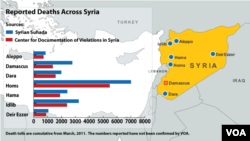
Thursday was one of the deadliest days yet in the Syria conflict. A human rights monitoring group, the London-based Syrian Observatory for Human Rights, said more than 250 people were killed in fighting in several parts of the country.
Rebel forces claimed to have taken over border crossings with Turkey and Iraq, and to have attacked several government buildings in Damascus. Thousands of Syrians fled across the border into Lebanon.
Syria Conflict Deaths (Click to View)
With the faltering international diplomacy and continued fighting, analysts say the coming month of Ramadan could be decisive in the struggle for power between the Syrian regime and its opponents.
American University in Beirut political science professor Hillal Khashan said the events of the past few days have brought the 16-month-old crisis to a tipping point.
“I think Assad's days are numbered," he said. "There are strong indicators that he left Damascus [for] Latakia. And we also know that from the way the Syrian army is deployed in and around Damascus, and the heavy shelling of the city, indicates that Assad's forces regard the city as an enemy city. That is not how to treat your capital.”
Latakia is a coastal city where Assad's fellow Alawites have their stronghold. Khashan says if it is true that Assad has fled there, it would be similar to what Libyan leader Moammar Gadhafi did just before he was overthrown; he retrenched to his tribal area for protection.
Game changer
Lebanese American University political science professor Imad Salamey agreed, calling Wednesday's bomb attack a game changer.
“I think what happened yesterday is an earthquake," Salamey said. "It is a major blow to the regime's security apparatus. This will boost the morale of the opposition forces and will definitely make a turning point in events."
The Muslim holy month of Ramadan, during which the faithful fast from dawn till dusk, likely will begin Friday in much of the Arab world. Salamey said this month could be critical.
“I think the coming days, especially this month of holy Ramadan, will be decisive for Syria. I think we will be witnessing a dramatic situation, most probably the security apparatus in Syria will split and deteriorate fast,” he said.
In addition to Wednesday's attack on President Assad's top security chiefs, there was the defection earlier this month of a senior army general, Manaf Tlass.
Assad loyalty fading
Salamey said this indicates Assad is having difficulty maintaining the loyalty of the Sunni leadership within the military. He said he expects more defections, especially in the coming month.
“I think Syria after Assad will look more like Iraq after Saddam Hussein," he said. "In Iraq, the Kurds created their autonomous region and I think the Alawites will do the same.”
President Assad appeared on state television for the first time since Wednesday's bombing.
Analyst Torbjorn Soltvedt of the Maplecroft risk assessment firm in Britain said the bombing might have weakened domestic support for the Assad government.
“It's becoming evident that this will have a significant impact on the conflict. I think first and foremost, this will alarm core members of the regime and you may well see as a result increasing defections among key military and civilian officials as a result.”
No defections were reported Thursday.
Syria's population is just over 22 million people. The majority is Arab Sunni Muslim, but there are also significant numbers of minorities including Kurds, Armenians, Druze, Christians and the ruling Alawites.
Khashan said he thinks in a post-Assad Syria these groups might set up a federal state.
“I would not be surprised that after the demise of the regime in Syria we will have a federal order in Syria where each of the country's major ethic and religious groups will establish their own enclaves,” he said.
But analyst Salamey sees a different possible scenario. “I think post-Assad Syria will not be an easy transition," he said. "It will be a difficult one. Eventually I do not think it will be a very fragmenting situation as most have been projecting, simply because it is not possible to divide Syria along sectarian lines demographically.”
Larry Freund reported from U.N. headquarters in New York. Margaret Bresheer reported from Cairo. Al Pessin reported from Beirut.