


Accessibility links

Breaking News

EU Ministers Agree to Migrant Quota Plan

update
Migrants line up to board a train at the railway station in Tovarnik, Croatia, Sept. 22, 2015. More than 30,000 migrants, many of them Syrian refugees, have entered European Union member Croatia from Serbia since a week ago.

European Union interior ministers approved a controversial plan Tuesday to relocate 120,000 migrants throughout the 28-nation bloc, overriding vehement opposition from four ex-communist eastern nations.

The interior ministers adopted the plan by majority vote ahead of a Wednesday summit of EU leaders, in which several central European countries will have a chance to again voice their opposition to the country-by-country quota proposal.

"It is necessary for EU countries to retain their sovereignty in this matter," Czech Republic Prime Minister Bohuslav Sobotka said. "It must be the governments who will decide."

The Czech Republic, Hungary, Slovakia and Romania all voted against the quota plan, while Finland abstained.

Ease the strain

Diplomats said interior ministers meeting in Brussels had voted to launch the plan, backed by Germany and other major powers, in order to ease the strain on such nations as Greece and Italy, which are on the forefront of the continent's worst refugee crisis since World War Two.

In Search of a New Home: The Migrant Journey

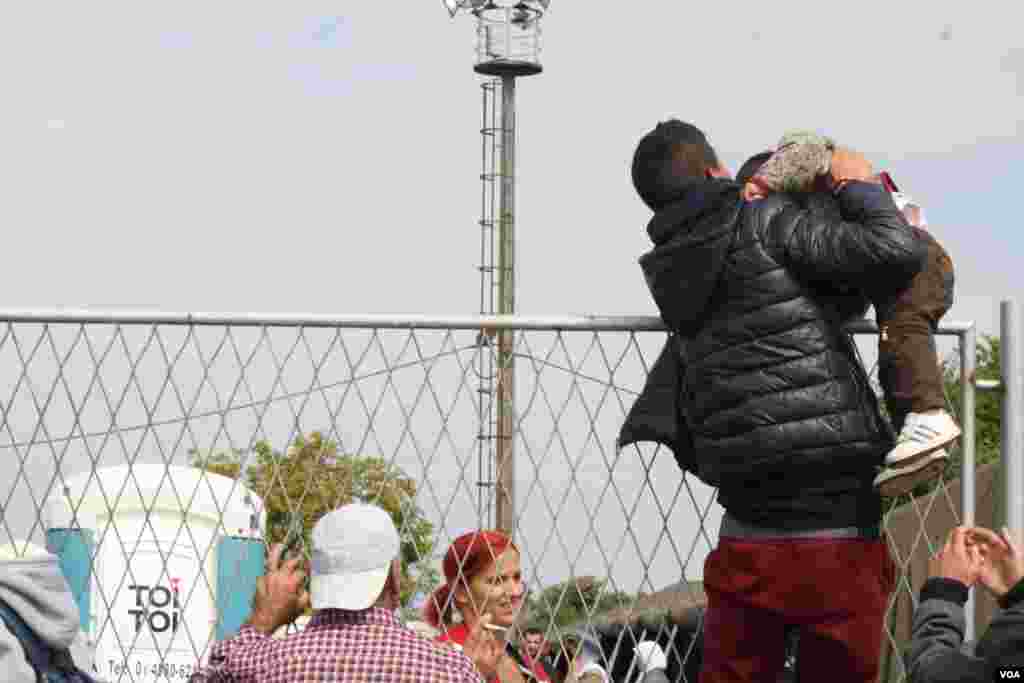
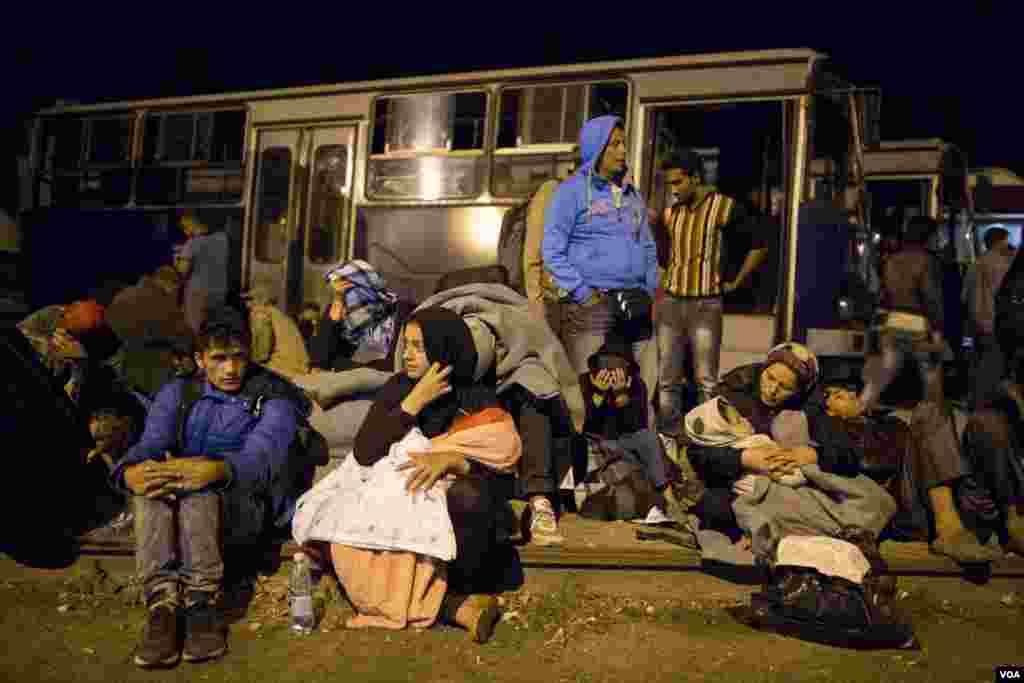
At a temporary refugee camp in Croatia, aid organizations are overwhelmed and unable to take care of all of the people. Families complain they have been separated from relatives as children are passed back and forth over a fence, Opatovac, Croatia, Sept. 22, 2015. (Heather Murdock/VOA)
1/15 At a temporary refugee camp in Croatia, aid organizations are overwhelmed and unable to take care of all of the people. Families complain they have been separated from relatives as children are passed back and forth over a fence, Opatovac, Croatia, Sept. 22, 2015. (Heather Murdock/VOA)
Inside the camp are doctors, food and places to rest. Authorities don’t try to stop small children from sneaking inside, but teenagers who scale the fence are told to climb back out, Opatovac, Croatia, Sept. 22, 2015. (Heather Murdock/VOA)
2/15 Inside the camp are doctors, food and places to rest. Authorities don’t try to stop small children from sneaking inside, but teenagers who scale the fence are told to climb back out, Opatovac, Croatia, Sept. 22, 2015. (Heather Murdock/VOA)
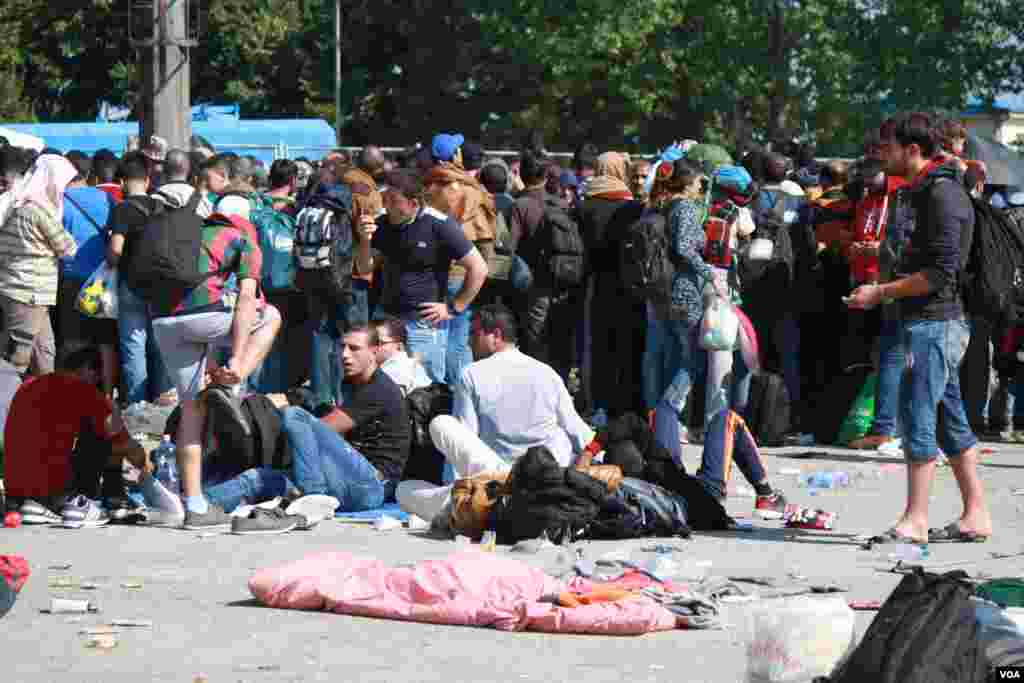
Hundreds of people waited outside the temporary camp all day on Tuesday, saying bad weather along with a lack of food and water are making more and more people sick, Opatovac, Croatia, Sept. 22, 2015. (Heather Murdock/VOA)
<p>&nbsp;</p>
3/15 Hundreds of people waited outside the temporary camp all day on Tuesday, saying bad weather along with a lack of food and water are making more and more people sick, Opatovac, Croatia, Sept. 22, 2015. (Heather Murdock/VOA)


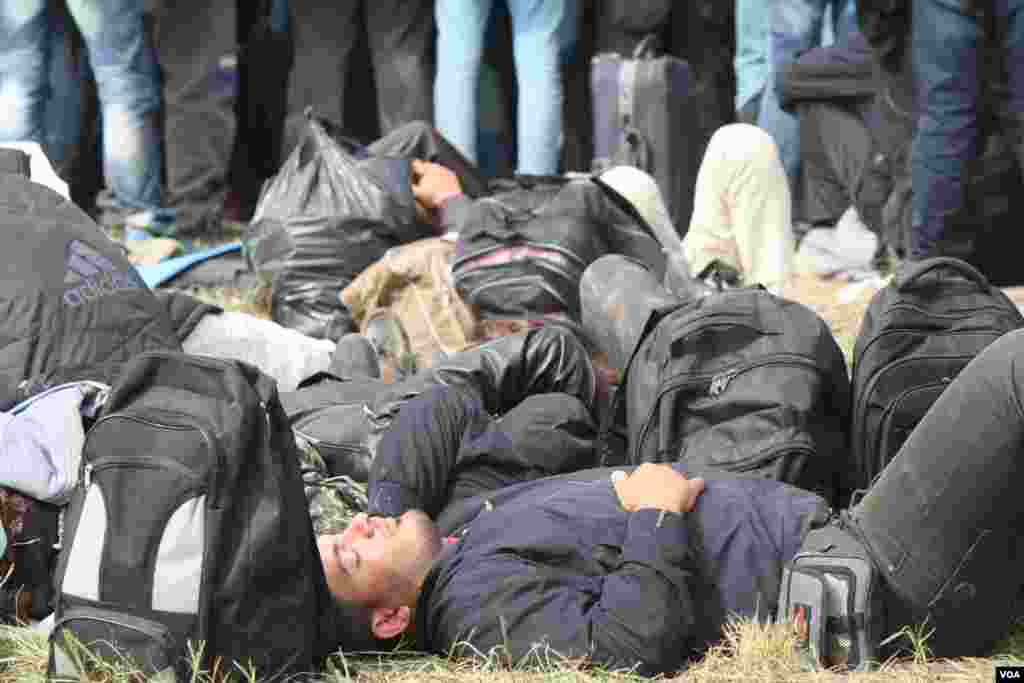
Refugees say they were exhausted when they arrived in Croatia and want to move forward through Hungary into western Europe as soon as possible, Opatovac, Croatia, Sept. 22, 2015. (Heather Murdock/VOA)
<p>&nbsp;</p>
4/15 Refugees say they were exhausted when they arrived in Croatia and want to move forward through Hungary into western Europe as soon as possible, Opatovac, Croatia, Sept. 22, 2015. (Heather Murdock/VOA)


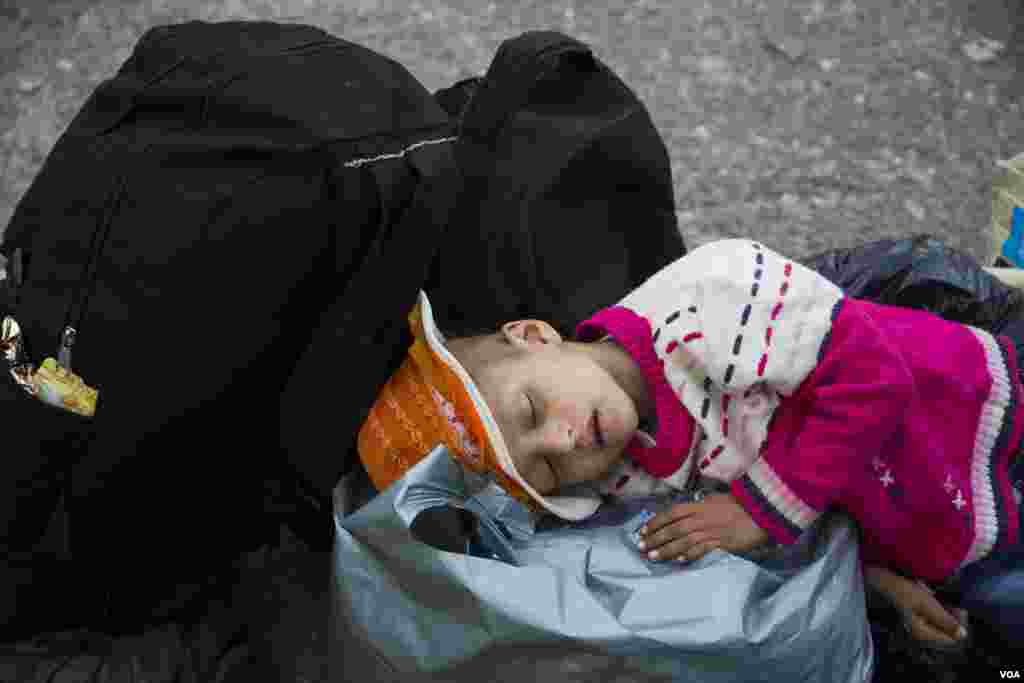
A small child sleeping, Croatia, Sept. 17, 2015. (Ayesha Tanzeem/VOA)
5/15 A small child sleeping, Croatia, Sept. 17, 2015. (Ayesha Tanzeem/VOA)
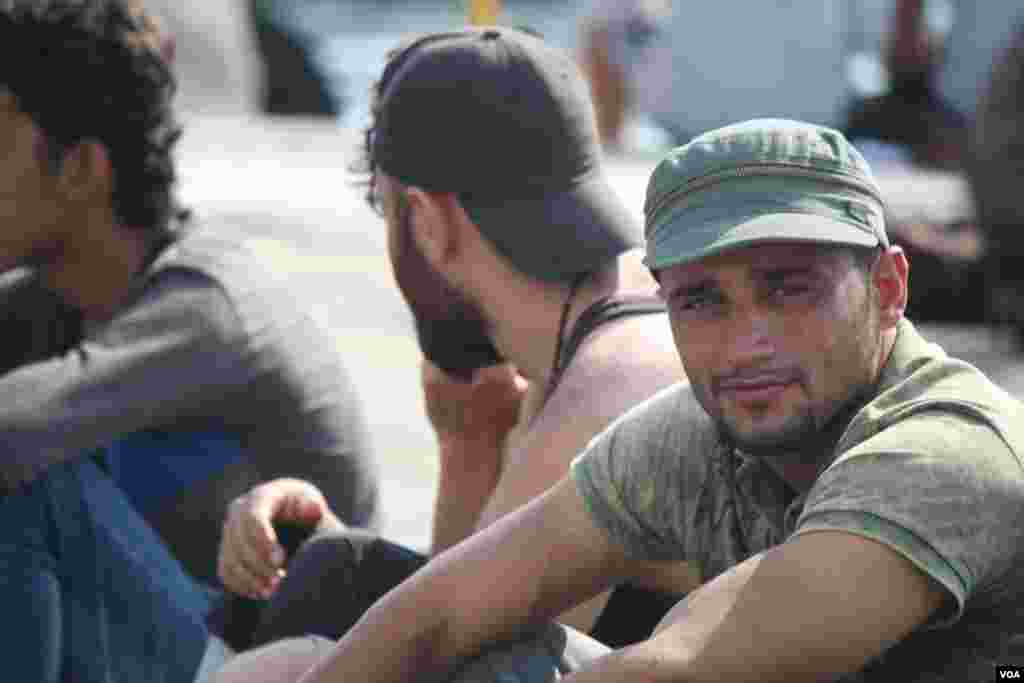
Relief, and a smile, in a small Serbian village, Sept. 17, 2015. (Ayesha Tanzeem/VOA)
6/15 Relief, and a smile, in a small Serbian village, Sept. 17, 2015. (Ayesha Tanzeem/VOA)
Members of the Serbian Red Cross give food and water to migrants, Croatia, Sept. 17, 2105. (Ayesha Tanzeem/VOA)
7/15 Members of the Serbian Red Cross give food and water to migrants, Croatia, Sept. 17, 2105. (Ayesha Tanzeem/VOA)
Refugees and migrants find themselves stuck at the Serbia-Hungary border crossing after it's been shut down, Sept. 15, 2015. (Henry Ridgwell/VOA)
8/15 Refugees and migrants find themselves stuck at the Serbia-Hungary border crossing after it's been shut down, Sept. 15, 2015. (Henry Ridgwell/VOA)
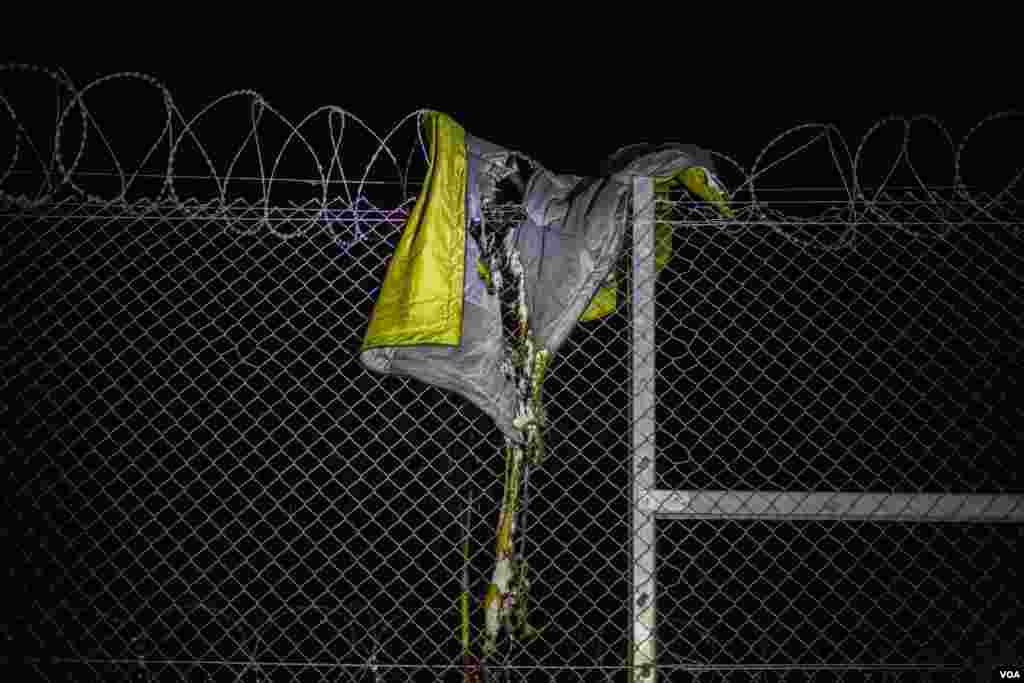
A torn sleeping bag remains atop the border fence in Asotthalom, Hungary, Sept. 15, 2015. (Gabor Ancsin / VOA)
9/15 A torn sleeping bag remains atop the border fence in Asotthalom, Hungary, Sept. 15, 2015. (Gabor Ancsin / VOA)
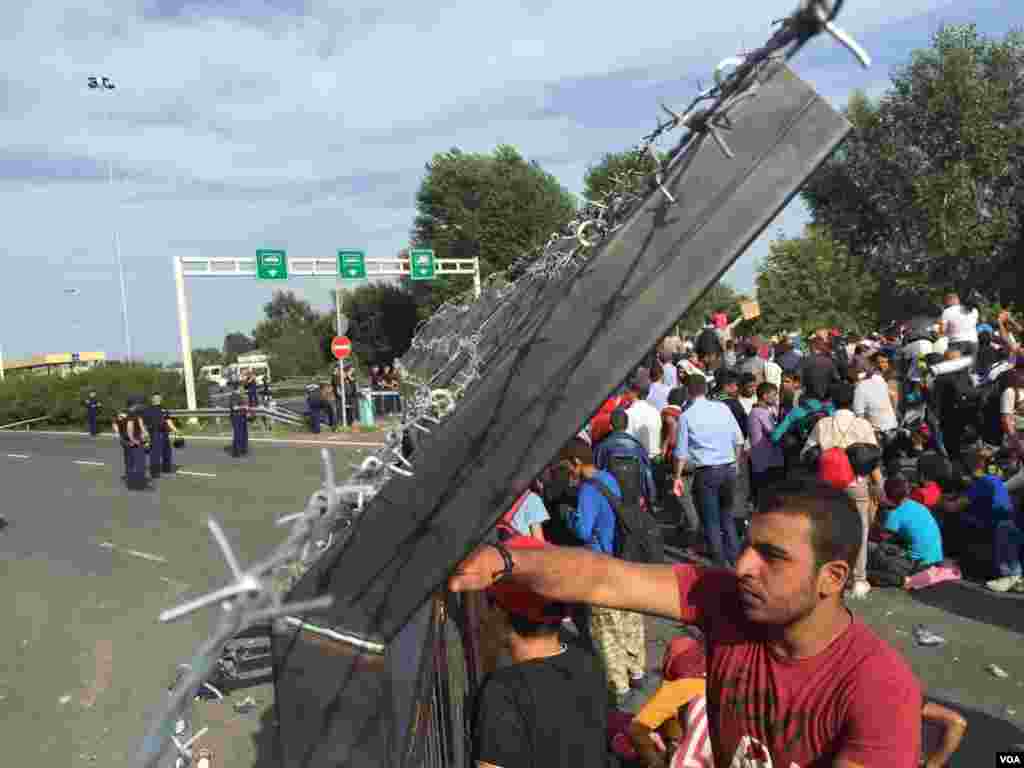
Desperate for answers, migrants on the Serbian side of the fence ask VOA&#39;s local Arabic language translator on the Hungarian side, where to go and what to do, Sept. 15, 2015. (Ayesha Tanzeem/VOA)
10/15 Desperate for answers, migrants on the Serbian side of the fence ask VOA's local Arabic language translator on the Hungarian side, where to go and what to do, Sept. 15, 2015. (Ayesha Tanzeem/VOA)
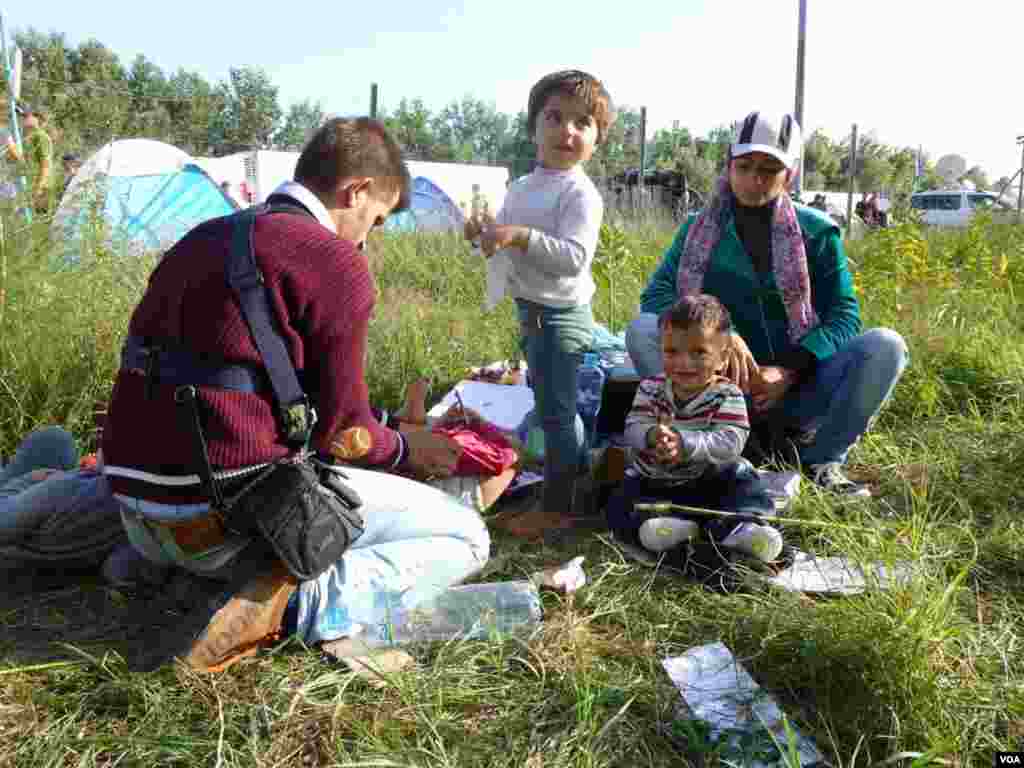
Thousands of migrants poured into Croatia on Thursday, setting up a new path toward western Europe after Hungary used tear gas and water cannon to keep them out of its territory. Here, a Syrian refugee family takes a rest, at Horgos, Serbia, Sept. 15, 2015. (Henry Ridgwell/VOA)
11/15 Thousands of migrants poured into Croatia on Thursday, setting up a new path toward western Europe after Hungary used tear gas and water cannon to keep them out of its territory. Here, a Syrian refugee family takes a rest, at Horgos, Serbia, Sept. 15, 2015. (Henry Ridgwell/VOA)
Confusion is rampant among migrants who reached the Hungarian border from Serbia, only to find a four-meter high fence blocking their way, Sept. 15, 2015. (Ayesha Tanzeem/VOA)
12/15 Confusion is rampant among migrants who reached the Hungarian border from Serbia, only to find a four-meter high fence blocking their way, Sept. 15, 2015. (Ayesha Tanzeem/VOA)
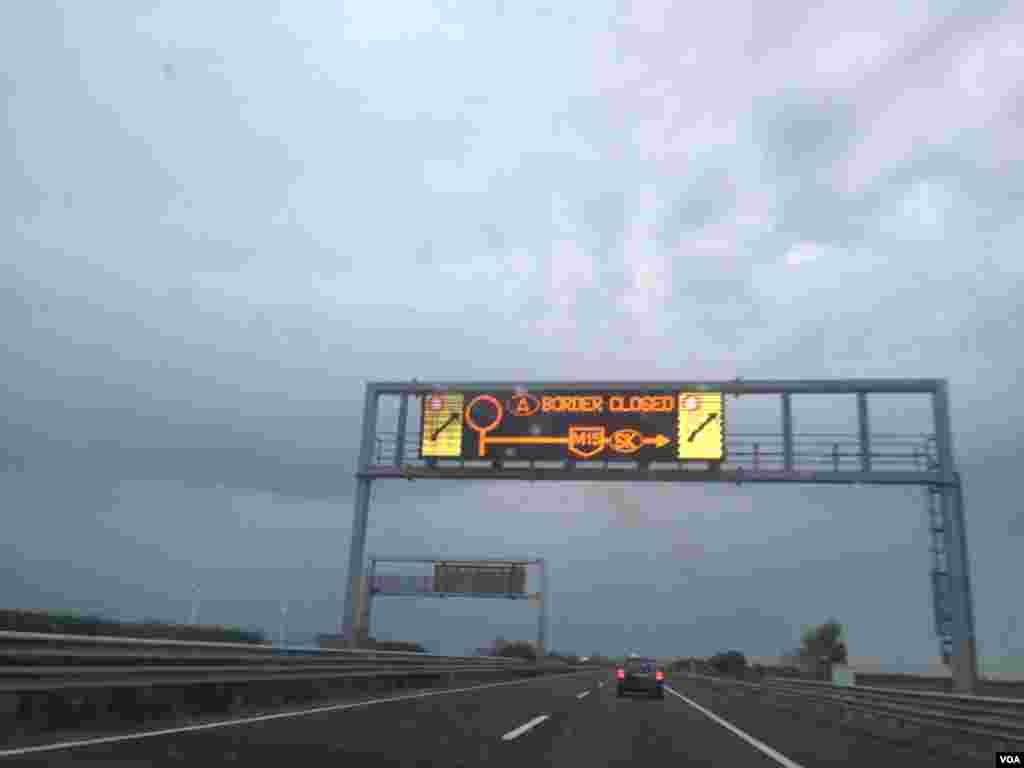
&quot;Border Closed&rdquo; signs in Hungarian and English displayed on the road from the border with Austria, Sept. 15, 2015. (Heather Murdock/VOA)
13/15 "Border Closed” signs in Hungarian and English displayed on the road from the border with Austria, Sept. 15, 2015. (Heather Murdock/VOA)
A crowd waiting for the train at Röszke station, September 14, 2015. (Ayesha Tanzeem/VOA)
14/15 A crowd waiting for the train at Röszke station, September 14, 2015. (Ayesha Tanzeem/VOA)
The boat leaving for Athens from Lesvos on Saturday was sold out for the weekend, as everyone arriving from Turkey who can afford it, leaves as soon as possible for the next country toward Germany, Sept. 12, 2015. (Heather Murdock/VOA)
15/15 The boat leaving for Athens from Lesvos on Saturday was sold out for the weekend, as everyone arriving from Turkey who can afford it, leaves as soon as possible for the next country toward Germany, Sept. 12, 2015. (Heather Murdock/VOA)
Previous slide
Next slide

French Interior Minister Bernard Cazeneuve called the agreement “an important step” that was approved by a “crushing majority” of the 28 ministers present.

Hours before the vote, the United Nations refugee agency said the constant stream of migrants is so large -- 6,000 a day landing on European shores -- that a relocation plan covering 120,000 migrants "will not be enough to stabilize the situation." It called for the opening of refugee reception centers on the EU perimeter.

Nearly a half-million migrants, 40 percent of them Syrians, have crossed the Mediterranean this year, fleeing war and poverty in the Middle East in search of a better life in Europe.

Germany has by far accepted the biggest number of refugees. But Berlin's intelligence chief, Hans-Georg Maassen, warned that radical Islamists already in Germany could try to recruit refugees for terrorist attacks on the pretext of offering them humanitarian assistance.
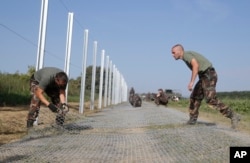
Hungarian soldiers work on a fence that is being built at the border with Croatia, near the village of Beremend, Hungary, Sept. 22, 2015.

The interior ministers' meeting comes after the European Parliament approved the quota plan last week over the opposition of several countries.

On the eve of the talks, U.N. chief Ban Ki-moon urged leaders across the EU to "show leadership and compassion" as the continent grapples with the unrelenting wave of migrants.

'United Europe'

Greek Prime Minister Alexis Tsipras meanwhile called for responsibility to be shared, saying "otherwise there is no point in talking about a united Europe."

On Monday, Hungary's parliament authorized its army to use nonlethal force against migrants who try to enter the country illegally.

Hungary has already sealed its border with Serbia with razor wire and now Hungarian soldiers may use rubber bullets, tear gas and net guns. They can also search homes for illegal migrants.
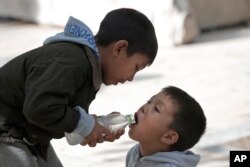
Migrant children share water as they pass time in Victoria square in central Athens, where many migrants stay temporarily before trying to continue their trip to more prosperous northern European countries, Sept. 22, 2015.

Right-wing Prime Minister Viktor Orban told Hungary's parliament that the migrants "are overrunning us. They're not just banging on the door, they're breaking the door down on top of us."

Other European nations are strongly critical of Hungary's reaction to the migration crisis, accusing it of using violence and Nazi-like tactics.

The Hungarians are furious at their southern and eastern European neighbors, accusing them of doing little to control the wave of humanity that has crossed the Mediterranean to escape war and poverty in Syria, Afghanistan and Africa.

U.S. Secretary of State John Kerry said the United States plans to issue up to 100,000 refugee visas a year starting in 2017 -- up from the current 70,000.

Some material for this report came from AFP.
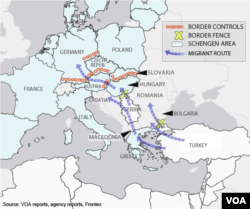
  • 16x9 Image

    VOA News

    The Voice of America provides news and information in more than 40 languages to an estimated weekly audience of over 326 million people. Stories with the VOA News byline are the work of multiple VOA journalists and may contain information from wire service reports.

XS
SM
MD
LG