



Accessibility links

Breaking News

Europe Remains Divided on How to Deal With Migrants

A migrant looks and reacts at the closed railway border crossing between Serbia and Hungary, near Horgos, Serbia, Sept. 15, 2015. Hungary has declared a state of emergency in two of its southern counties bordering Serbia because of the migration crisis, giving special powers to police and other authorities.
1/15 A migrant looks and reacts at the closed railway border crossing between Serbia and Hungary, near Horgos, Serbia, Sept. 15, 2015. Hungary has declared a state of emergency in two of its southern counties bordering Serbia because of the migration crisis, giving special powers to police and other authorities.
A migrant holds his child on the Serbian side of the fence in Asotthalom, Hungary. Hundreds of migrants spent the night in the open on Serbia's northern border with Hungary, their passage to western Europe stalled by a Hungarian crackdown to confront the continent's worst refugee crisis in two decades.
2/15 A migrant holds his child on the Serbian side of the fence in Asotthalom, Hungary. Hundreds of migrants spent the night in the open on Serbia's northern border with Hungary, their passage to western Europe stalled by a Hungarian crackdown to confront the continent's worst refugee crisis in two decades.
Migrants stand in front of a barrier at the border with Hungary near the village of Horgos, Serbia. Hundreds of migrants pressed against a barrier erected by Hungarian police across the main highway linking Serbia and Hungary, demanding they be allowed to cross the border.
3/15 Migrants stand in front of a barrier at the border with Hungary near the village of Horgos, Serbia. Hundreds of migrants pressed against a barrier erected by Hungarian police across the main highway linking Serbia and Hungary, demanding they be allowed to cross the border.
Migrants sit on the ground near the border with Hungary in Horgos. Hungarian Prime Minister Viktor Orban announced that under new security measures that went into effect Tuesday his administration will be tough on those who cross the border illegally.
4/15 Migrants sit on the ground near the border with Hungary in Horgos. Hungarian Prime Minister Viktor Orban announced that under new security measures that went into effect Tuesday his administration will be tough on those who cross the border illegally.
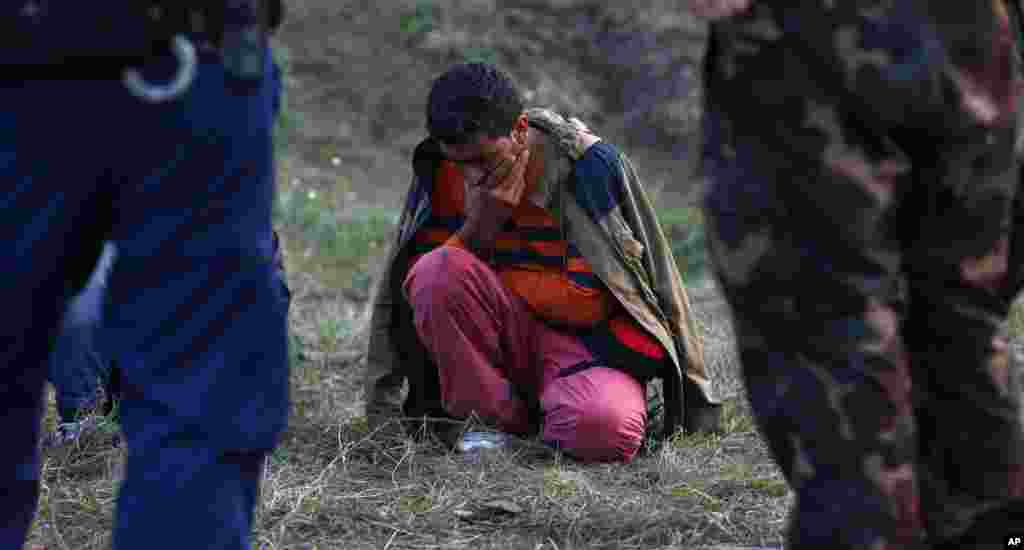
A migrant sits on the ground arrested by Hungarian police officers and soldiers after he tried to cross the border line between Serbia and Hungary in Roszke, southern Hungary. Officials announced police have detained at least 60 people under the new law, which could see illegal border crossings punished by up to three years in jail.
5/15 A migrant sits on the ground arrested by Hungarian police officers and soldiers after he tried to cross the border line between Serbia and Hungary in Roszke, southern Hungary. Officials announced police have detained at least 60 people under the new law, which could see illegal border crossings punished by up to three years in jail.
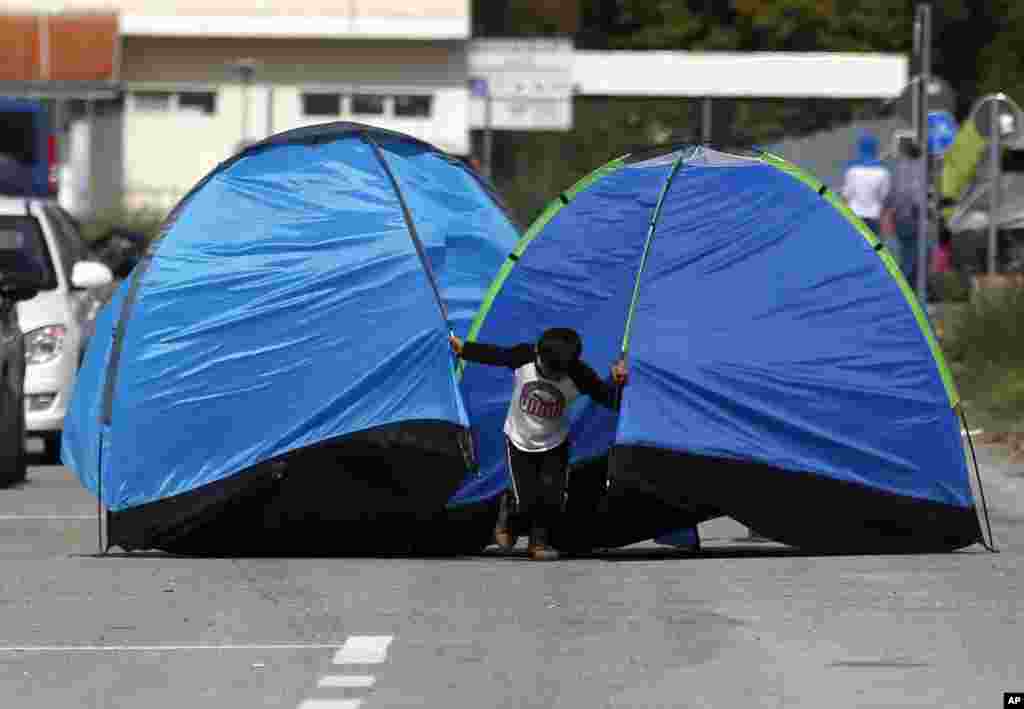
A migrant boy pulls tents on the road near the "Horgos 2" border crossing into the Hungary, near Horgos.
6/15 A migrant boy pulls tents on the road near the "Horgos 2" border crossing into the Hungary, near Horgos.
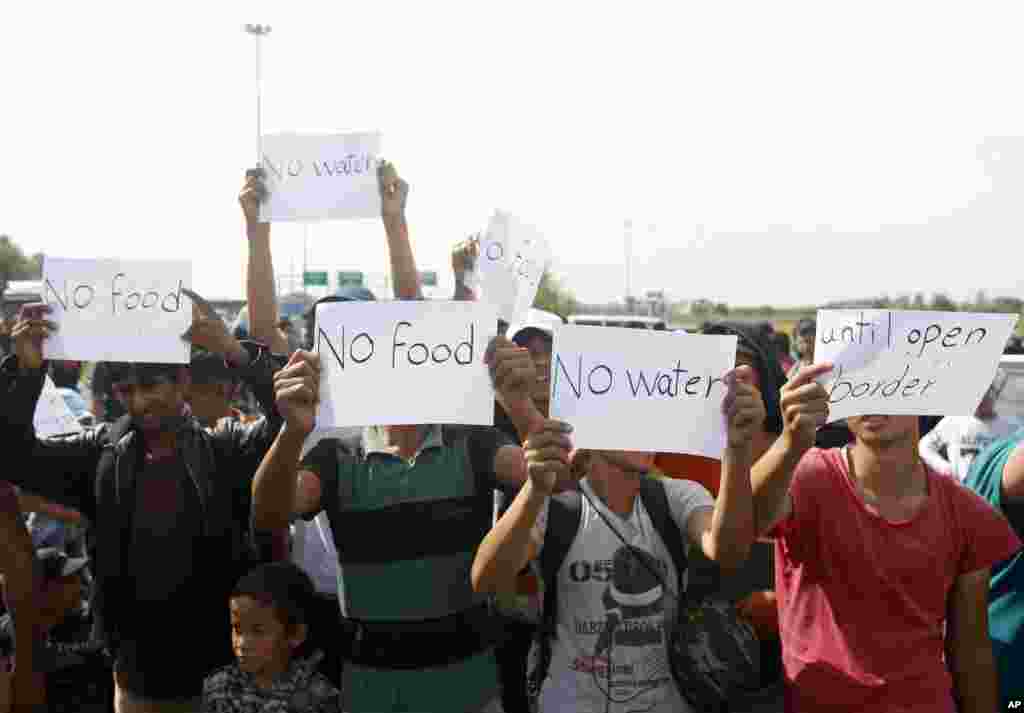
Migrants protest at the Horgos border crossing into the Hungary, near Horgos, Serbia.
7/15 Migrants protest at the Horgos border crossing into the Hungary, near Horgos, Serbia.
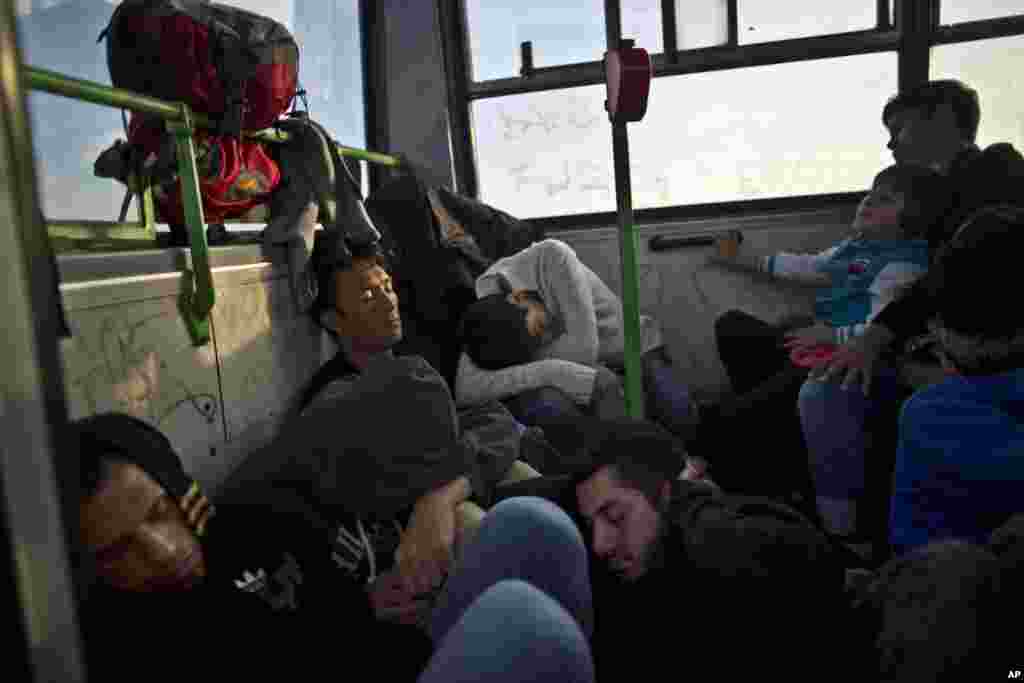
Migrants sleep while waiting in a bus before being taken by Hungarian police to board a train to the Austrian border, in Roszke, southern Hungary. With Hungary cracking down, desperate people fleeing Syria, Afghanistan and elsewhere struggled to make it into the country, hoping to reach Western Europe before it was too late.
8/15 Migrants sleep while waiting in a bus before being taken by Hungarian police to board a train to the Austrian border, in Roszke, southern Hungary. With Hungary cracking down, desperate people fleeing Syria, Afghanistan and elsewhere struggled to make it into the country, hoping to reach Western Europe before it was too late.
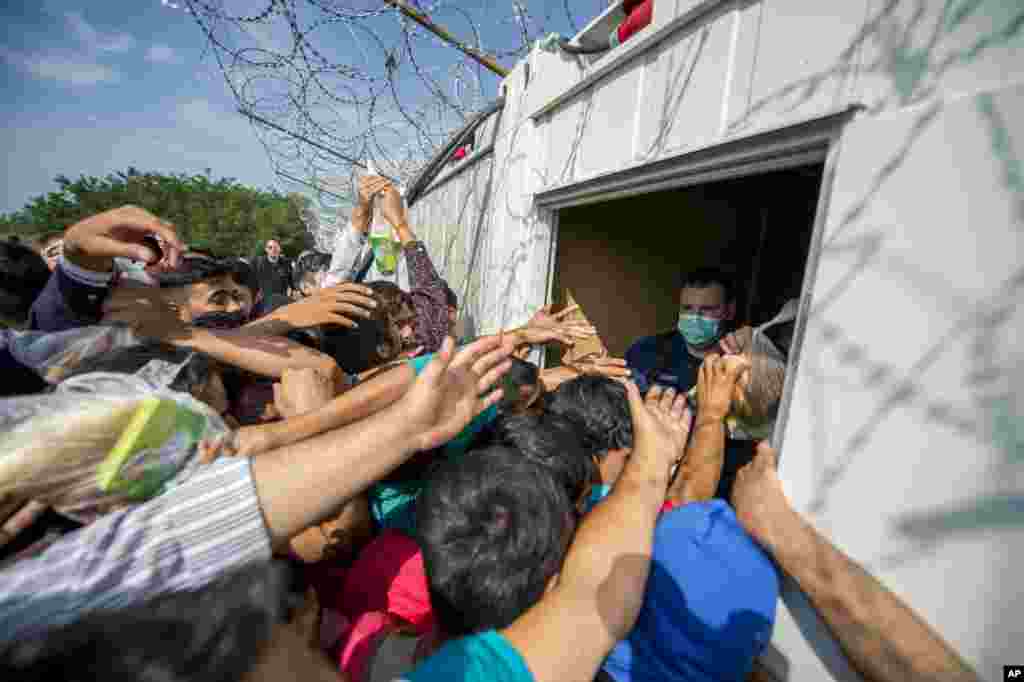
Police officers distribute food to migrants at the border to Hungary in Horgos, Serbia.
9/15 Police officers distribute food to migrants at the border to Hungary in Horgos, Serbia.
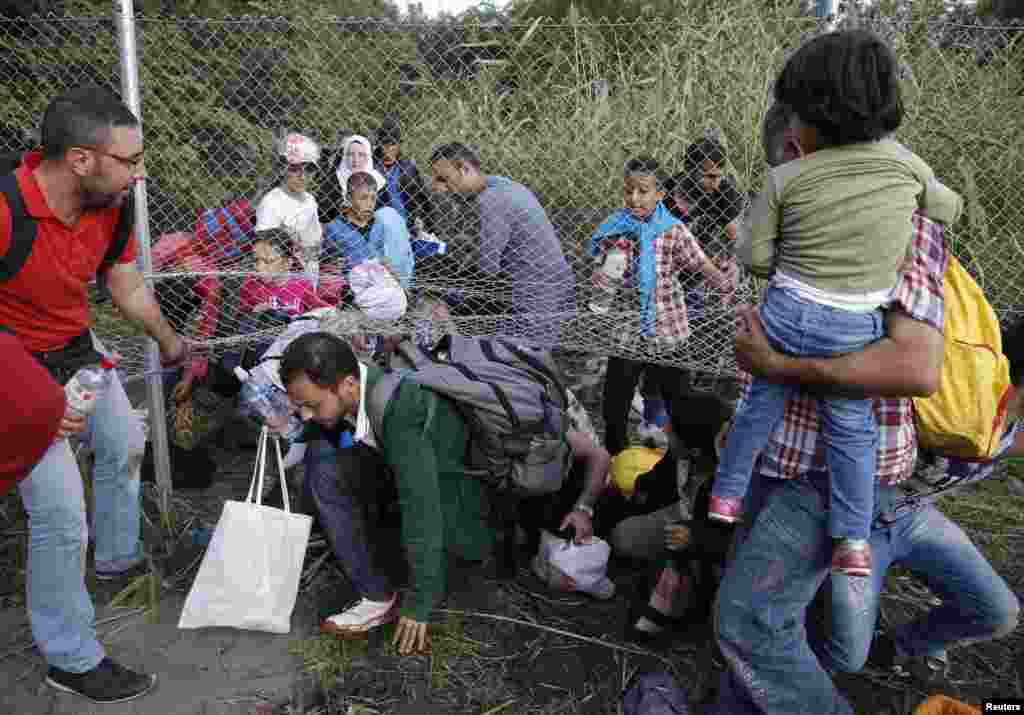
Migrants pass under highway security fence as they try to find a new way to enter Hungary after Hungarian police sealed the border with Serbia near the village of Horgos, Serbia, Sept. 14, 2015, near the Hungarian migrant collection point in Roszke.
10/15 Migrants pass under highway security fence as they try to find a new way to enter Hungary after Hungarian police sealed the border with Serbia near the village of Horgos, Serbia, Sept. 14, 2015, near the Hungarian migrant collection point in Roszke.
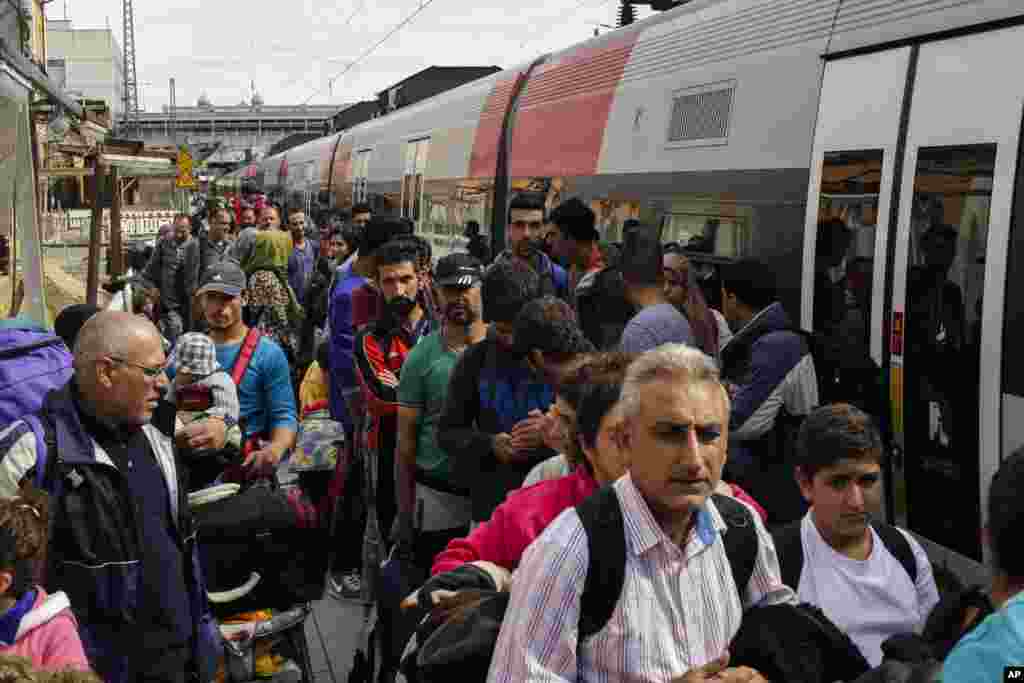
In Germany, more migrants arrive at the train station of the southern border town Passau, after they have been taken off a train by federal police for registration.
11/15 In Germany, more migrants arrive at the train station of the southern border town Passau, after they have been taken off a train by federal police for registration.
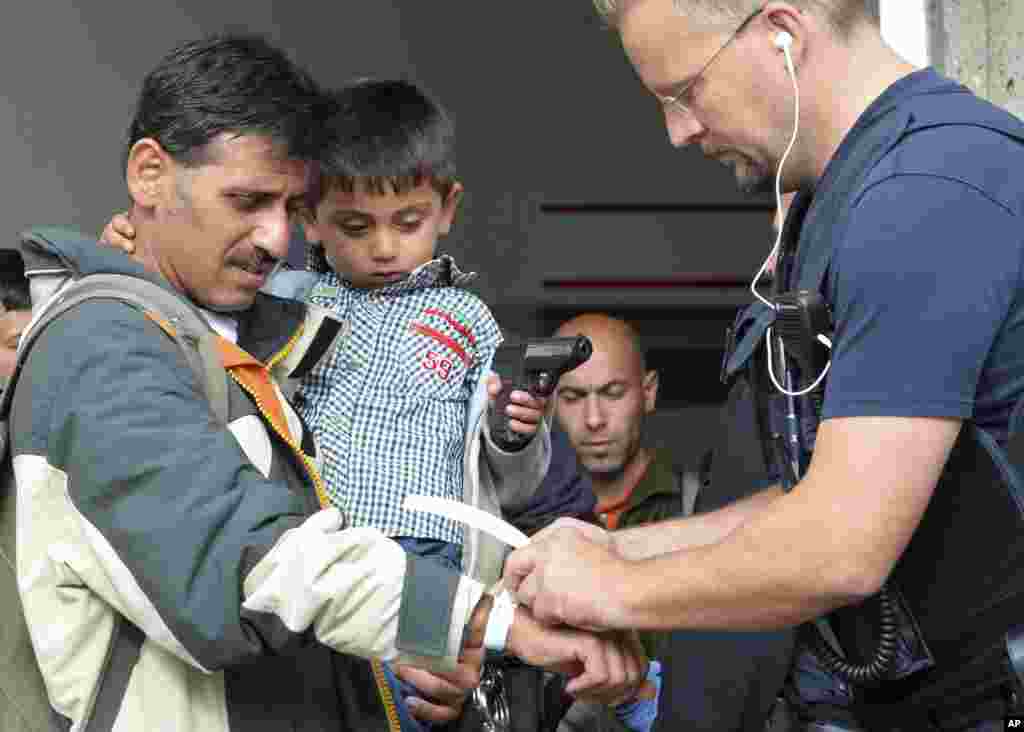
A policeman puts a registration marker to the hand of a man who holds a boy at the rail station in Freilassing, southern Germany, at the border to Austria.
12/15 A policeman puts a registration marker to the hand of a man who holds a boy at the rail station in Freilassing, southern Germany, at the border to Austria.
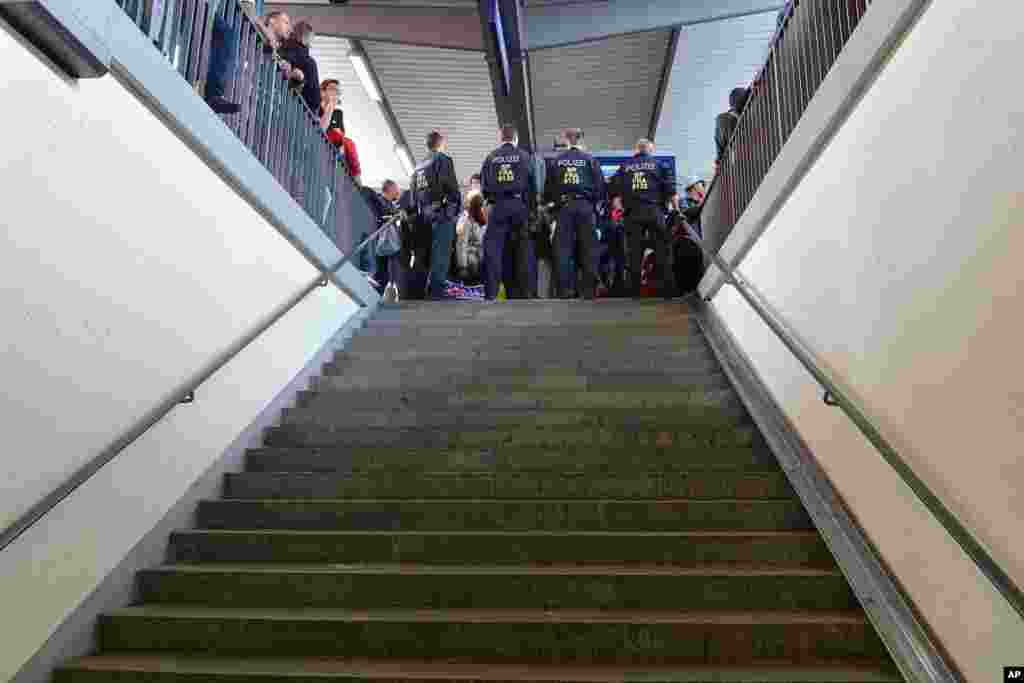
German federal police guard stairs while refugees wait for a new train after police stopped them for registration at the rail station in Freilassing, Germany, Sept. 15, 2015.
13/15 German federal police guard stairs while refugees wait for a new train after police stopped them for registration at the rail station in Freilassing, Germany, Sept. 15, 2015.
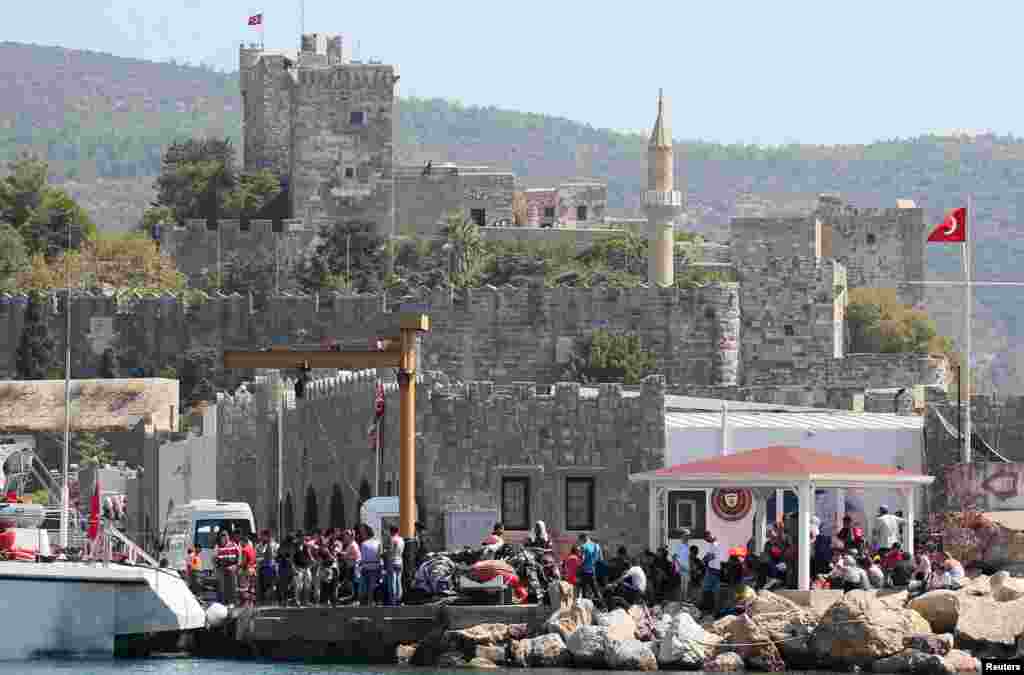
In Turkey, migrants wait at a coast guard station after a failed attempt to sail off for the Greek island of Kos by a dinghy, near the resort town of Bodrum. Twenty-two migrants drowned and 200 more were rescued when a boat capsized in the Aegean Sea off the Turkish coast while trying to reach the Greek island of Kos, the Turkish coastguard said.
14/15 In Turkey, migrants wait at a coast guard station after a failed attempt to sail off for the Greek island of Kos by a dinghy, near the resort town of Bodrum. Twenty-two migrants drowned and 200 more were rescued when a boat capsized in the Aegean Sea off the Turkish coast while trying to reach the Greek island of Kos, the Turkish coastguard said.
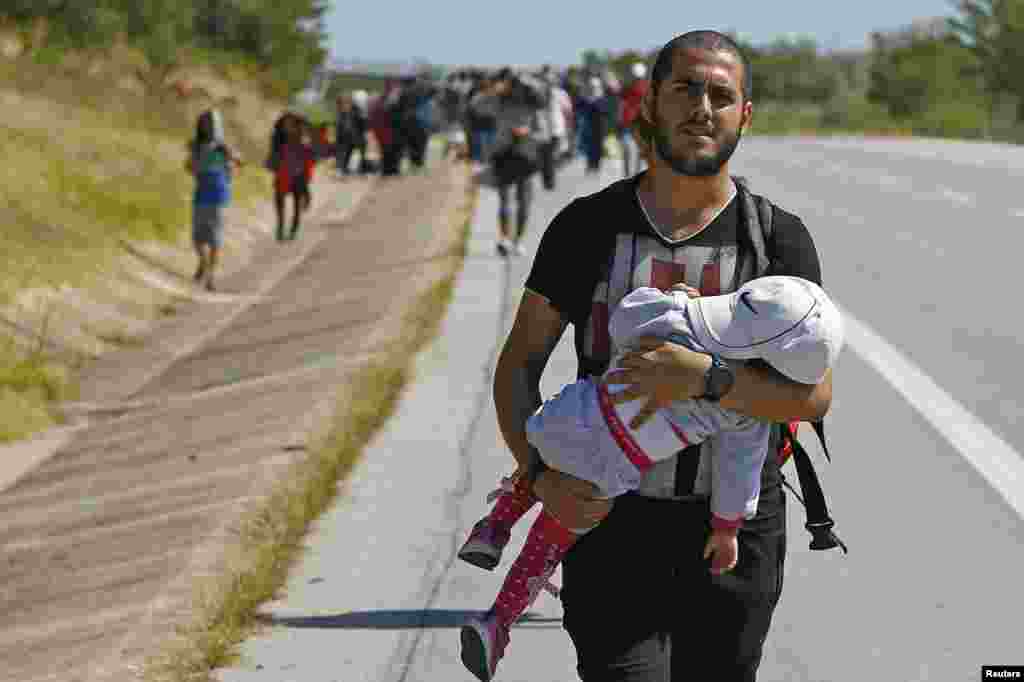
A Syrian migrant carries a baby as he walks towards the Greece border on a road near Edirne, Turkey.
15/15 A Syrian migrant carries a baby as he walks towards the Greece border on a road near Edirne, Turkey.
Previous slide
Next slide

European Union nations remain deeply divided on how to deal with the influx of migrants that is not showing signs of slowing down.

Hundreds of migrants remain trapped Tuesday as Hungary closed its border with Serbia, and Germany continued to implement border restrictions for the first time in decades.

After a summit of EU interior ministers failed to reach consensus in Brussels on Monday, Germany warned it could push for sanctions against EU members that refuse to accept refugee quotas.

Germany, with the EU’s highest gross domestic product and its offers to take in migrants and fund their resettlement, has been the destination of choice for thousands who have been making the long, arduous journey from places that include Syria, Iraq, and Afghanistan.

The massive influx prompted German authorities to implement border restrictions this week, diminishing but not stopping the flow of migrants coming in through the Austrian border.

Serbia says it is not able to handle the vast number of migrants gathered along the border with Hungary, after Hungarian officials closed the crossing point as part of a crackdown on the migrants.

Serbia is not a "collection center," said Serbian Foreign Minister Ivica Dacic Tuesday. He called it unacceptable for migrants to have to return to Serbia, especially as more and more arrive from Greece and Macedonia.

Hungarian Prime Minister Viktor Orban said that under new security measures that took effect Tuesday, his administration will be tough on those who cross the border illegally.

WATCH: VOA's Heather Murdock reports on the situation in Vienna, Austria
On The Scene: Vienna, Austria
please wait

No media source currently available

0:00 0:00:39 0:00


On Tuesday, hundreds passed through Munich’s central train station, which has been the main entry point for thousands for the last few weeks.

German authorities have been busing migrants or putting them on trains to points throughout the country to begin the resettlement process and allow them to apply for asylum. German police say their aim is to ensure the influx is orderly.

But German leaders say Germany should not shoulder the burden alone and this week pressed EU nations to accept obligatory quotas to receive 160,000 migrants. German Interior Minister Thomas de Maiziere on Tuesday said the European Union should put pressure on nations that refuse.

President Obama speaks out on EU migrant crisis:

President Obama Speaks on Migrants
please wait

No media source currently available

0:00 0:00:46 0:00


At a White House meeting Tuesday with Spain's King Felipe VI, President Barack Obama said the entire world has to pitch in to help the migrants.

"We agreed that this is going to require cooperation with all the European countries and the United States and the international community in order to ensure that people are safe, that they are treated with shared humanity and that we also may have to deal with the source of the problem, which is the ongoing crisis in Syria."

Obama said he told the king it is important that the U.S. also take its share of Syrian refugees.

Border Restrictions

Like Germany, Hungary, Slovakia, and the Netherlands have also introduced border controls. Hungary sealed off its border with Serbia and is preparing to extend a razor wire fence to its border with Romania, expecting migrants would find a way to go around and cross illegally.

At the same time, Hungarian authorities began to treat undocumented migrants who cross its borders as criminal offenders and arrested scores of people by late Tuesday.


The influx and measures resulting from it have put pressure on the European Union’s principles of allowing free movement between member states and called into question the future of the Schengen agreement that guarantees that freedom of passage.

Divisions deepened Tuesday, after the warning from Germany.

Slovakia is among the EU members that oppose obligatory refugee quotas.

“We will never accept mandatory quotas for distribution of refugees,” said Slovak Prime Minister Robert Fico. The Slovak leader said a move by Germany to get sanctions imposed would mean the end of the European Union.

The Czech Republic, Poland, and Hungary also oppose mandatory quotas.

Analysts say the split between eastern and western European nations on the migrant issue is not accidental, and is rooted in modern history dating back to the Second World War.

With a need to rebuild after the war and a declining population, Germany in the 1950s allowed an influx of guest workers, many of them Muslims from Turkey. France, the Netherlands, and Britain, facing similar post-war situations, drew immigrants from their former colonies.

This conditioned western European nations to be receptive to Muslim newcomers.

“In Eastern European countries, however, migration hasn’t played such a big role - in some of these countries, less than one percent of the population are migrants,” said Matthias Kortmann, a political scientist and specialist on migration and integration studies at Ludwig Maximilian University of Munich, in a VOA interview.

“Accordingly, in these countries, there is more skepticism toward migrants,” he added.

In Germany, sensibilities on the treatment of people of different cultures are especially acute. Discussions on immigration are a sensitive matter because they raise the touchy issues of nationalism and xenophobia, and quickly draw uncomfortable comparisons to the country’s Nazi past, a history Germans want to put behind them.

In recent days, few Germans have openly criticized their government’s push to take in refugees.

XS
SM
MD
LG