




Accessibility links

Breaking News

'Collateral' Death Toll in Ebola Outbreak Expected to Soar

update
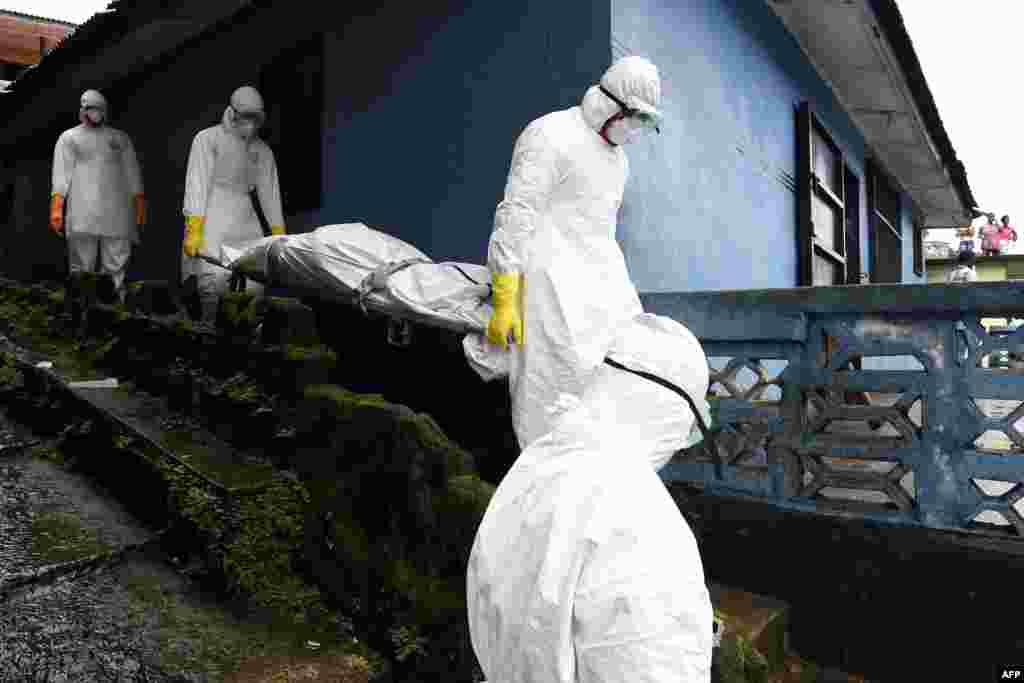
Medical staff members of the Croix Rouge NGO carry on a stretcher the corpse of a victim of Ebola, after collecting it from a house in Monrovia, Sept. 29, 2014.
1/11 Medical staff members of the Croix Rouge NGO carry on a stretcher the corpse of a victim of Ebola, after collecting it from a house in Monrovia, Sept. 29, 2014.
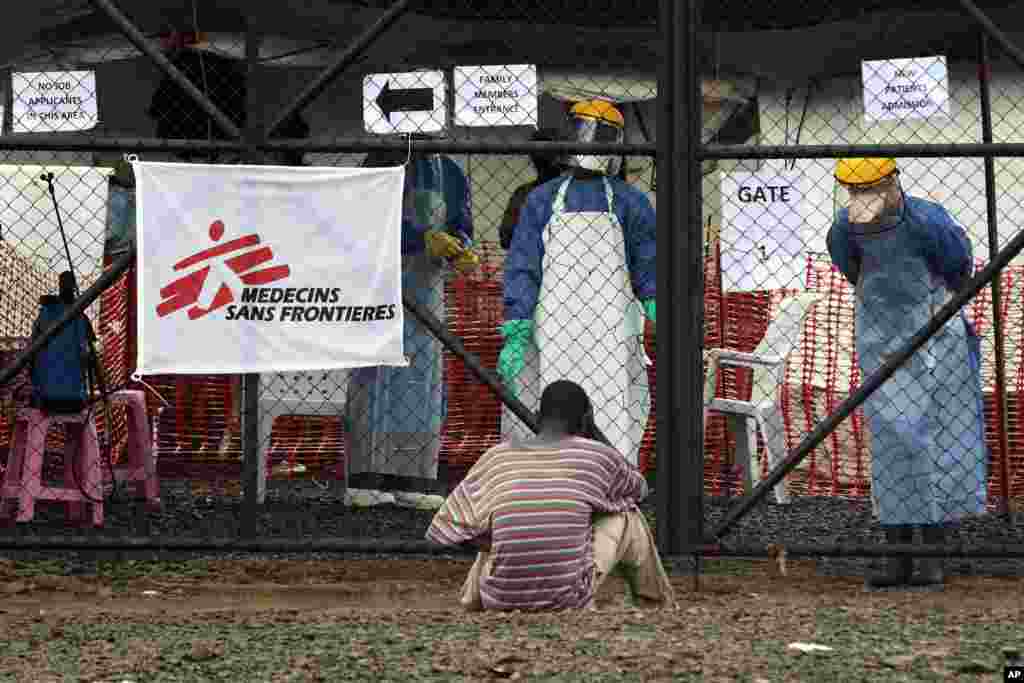
A man showing symptoms of Ebola waits to be admitted to at a treatment center in Monrovia, Liberia, Sept. 29, 2014.
2/11 A man showing symptoms of Ebola waits to be admitted to at a treatment center in Monrovia, Liberia, Sept. 29, 2014.
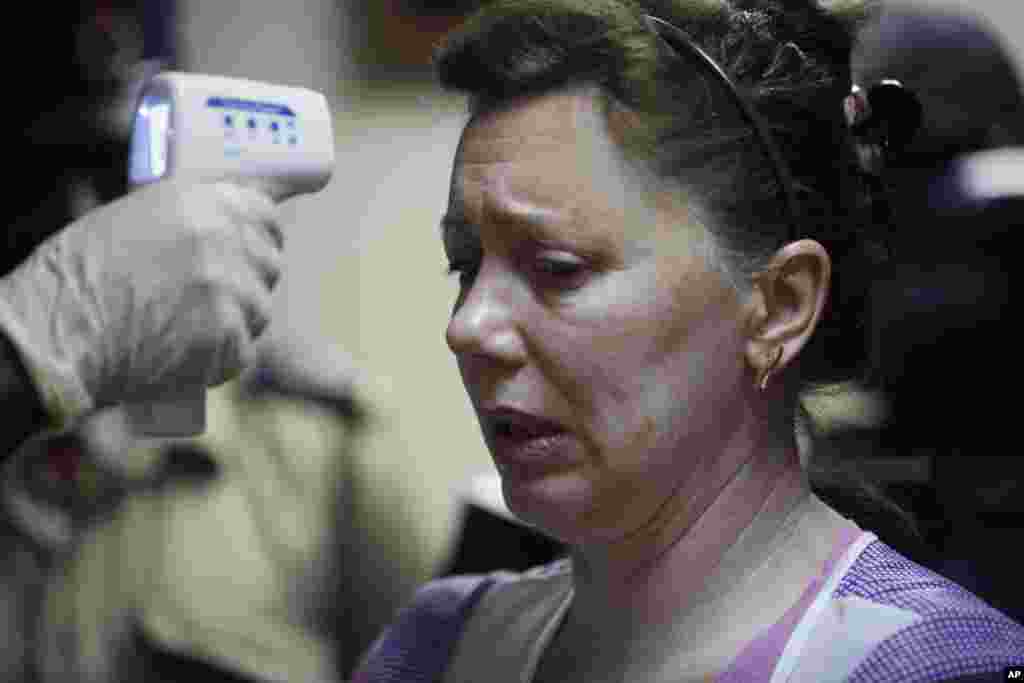
A Nigerian port health official uses a thermometer to screen an unidentified Ukrainian crew member for Ebola, on the deck of a cargo ship at the Apapa port, in Lagos, Nigeria, Sept. 29, 2014.
3/11 A Nigerian port health official uses a thermometer to screen an unidentified Ukrainian crew member for Ebola, on the deck of a cargo ship at the Apapa port, in Lagos, Nigeria, Sept. 29, 2014.
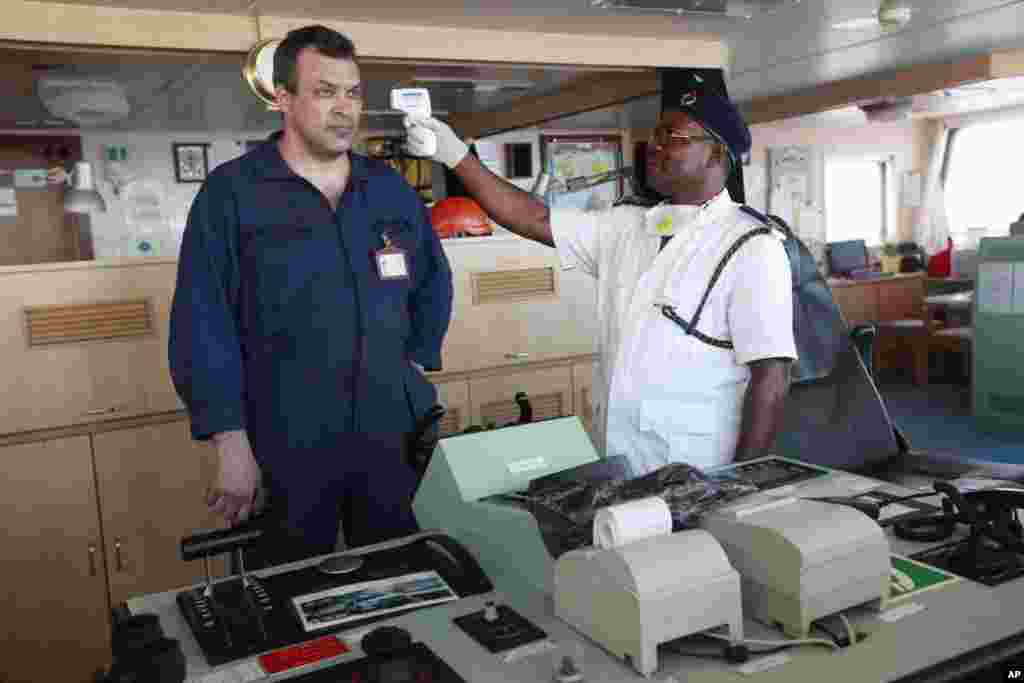
A Nigerian port health official uses a thermometer to screen a Ukrainian captain, Bosenko Rusian,  for Ebola, on the deck of a cargo ship at the Apapa port, in Lagos, Nigeria, Sept. 29, 2014.
4/11 A Nigerian port health official uses a thermometer to screen a Ukrainian captain, Bosenko Rusian,  for Ebola, on the deck of a cargo ship at the Apapa port, in Lagos, Nigeria, Sept. 29, 2014.
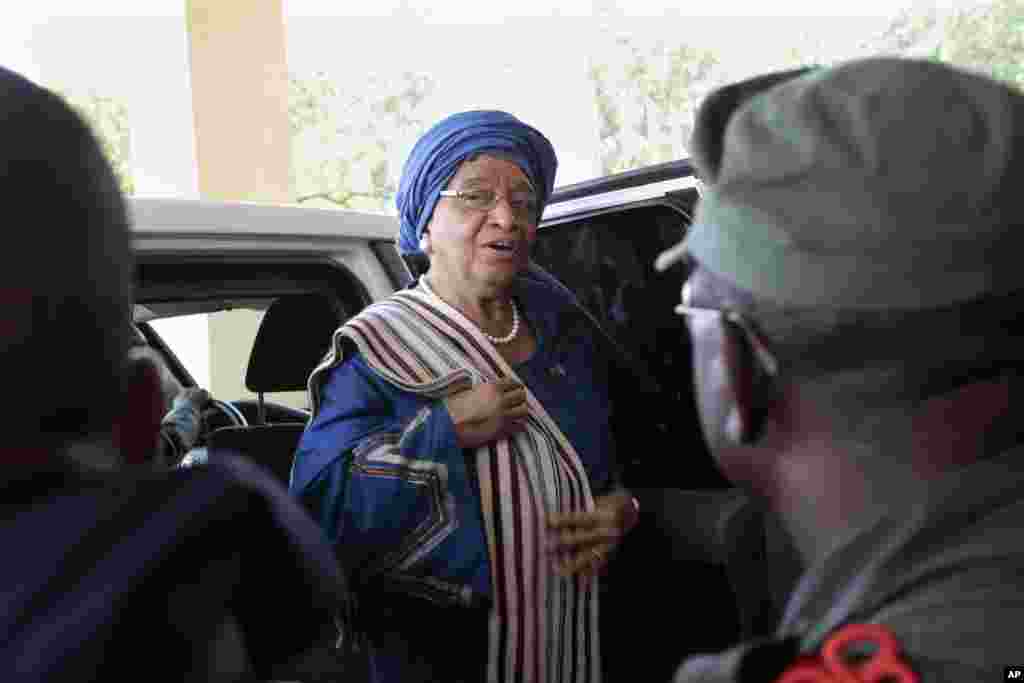
Liberian President Ellen Johnson Sirleaf arrives at the capitol to address lawmakers in Monrovia, Liberia, Sept. 29, 2014.
5/11 Liberian President Ellen Johnson Sirleaf arrives at the capitol to address lawmakers in Monrovia, Liberia, Sept. 29, 2014.
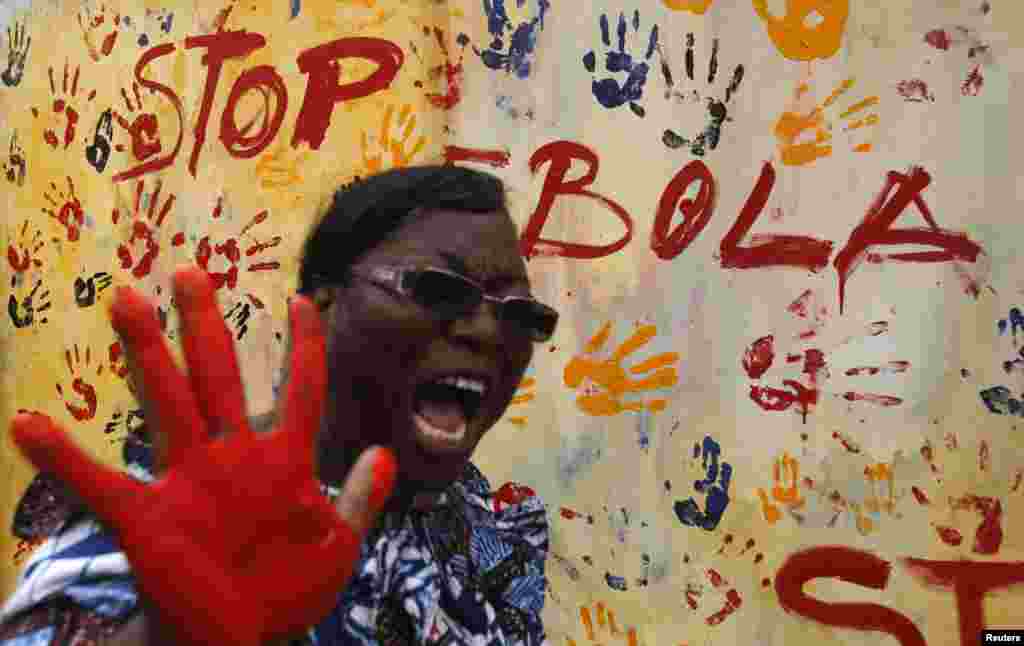
A teacher reacts after adding paint to a canvas following a performance by actors during an awareness campaign against Ebola at Anono school, in Abidjan, Ivory Coast, Sept. 25, 2014.
6/11 A teacher reacts after adding paint to a canvas following a performance by actors during an awareness campaign against Ebola at Anono school, in Abidjan, Ivory Coast, Sept. 25, 2014.
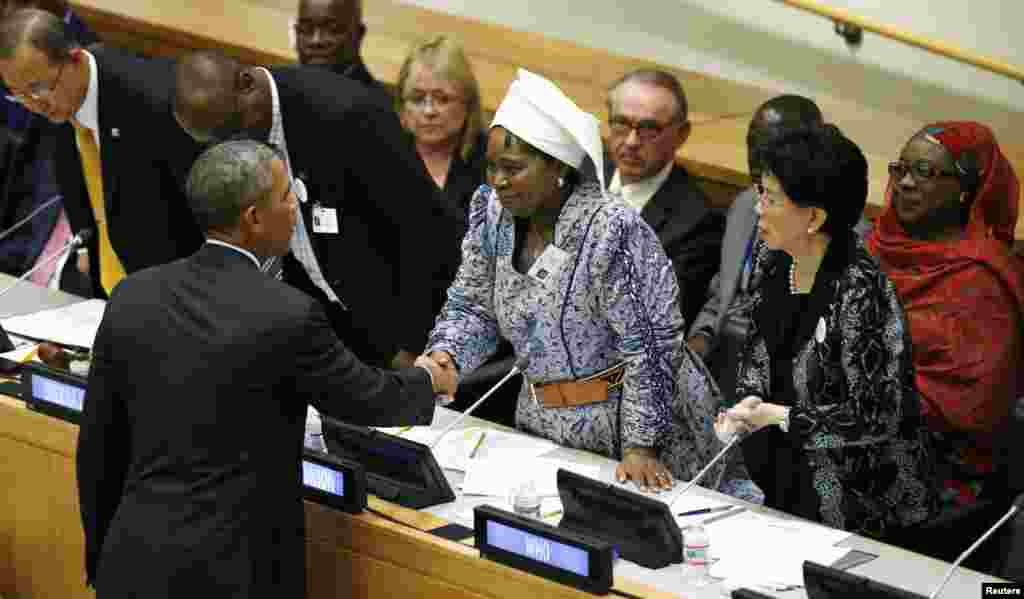
U.S. President Barack Obama shakes hands with Chairperson of the African Union Commission Dr. Nkosazana Dlamini Zuma after speaking at the United Nations meeting on the Ebola outbreak, in New York, Sept. 25, 2014.
7/11 U.S. President Barack Obama shakes hands with Chairperson of the African Union Commission Dr. Nkosazana Dlamini Zuma after speaking at the United Nations meeting on the Ebola outbreak, in New York, Sept. 25, 2014.
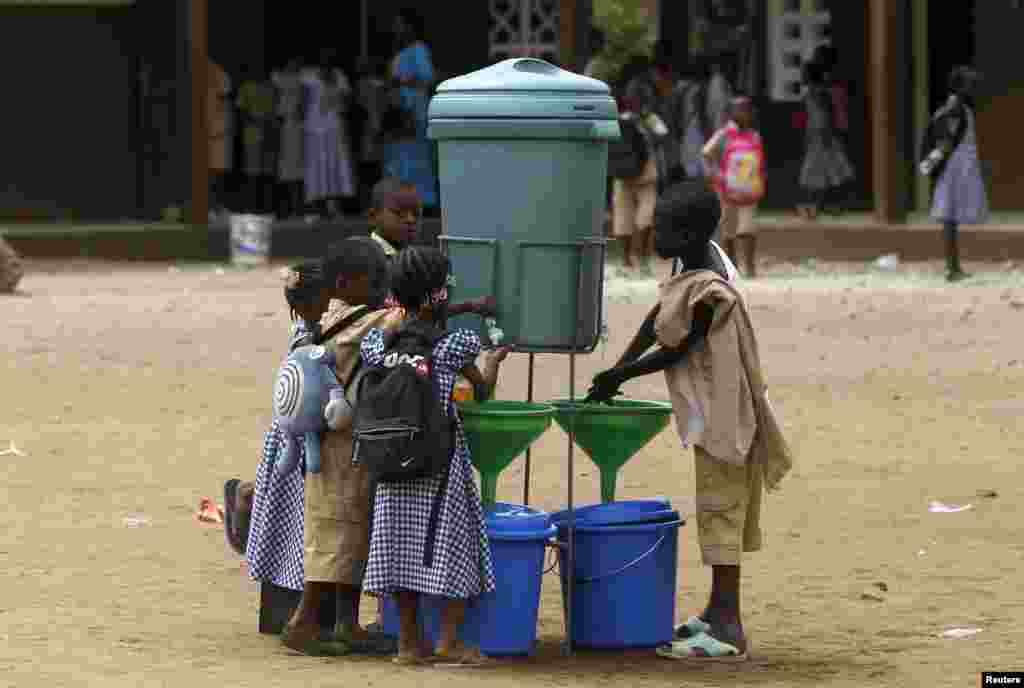
Students wash their hands as a preventive measure against Ebola at Anono school in Abidjan, Ivory Coast, Sept. 25, 2014.
8/11 Students wash their hands as a preventive measure against Ebola at Anono school in Abidjan, Ivory Coast, Sept. 25, 2014.
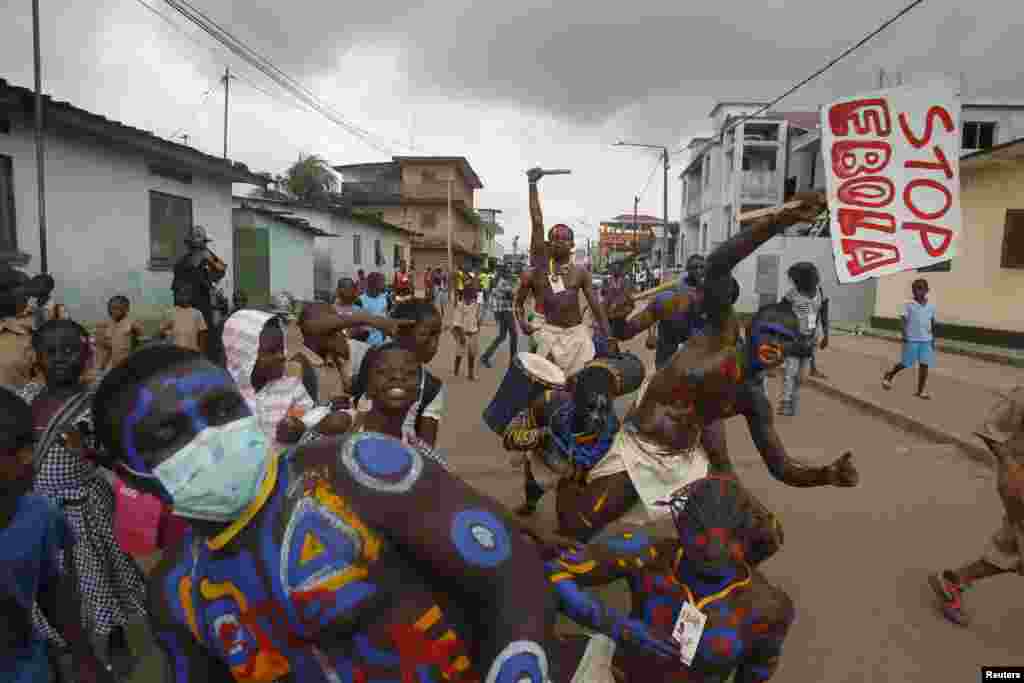
Actors parade on a street after performing at Anono school, during an awareness campaign against Ebola, in Abidjan, Ivory Coast, Sept. 25, 2014.
9/11 Actors parade on a street after performing at Anono school, during an awareness campaign against Ebola, in Abidjan, Ivory Coast, Sept. 25, 2014.
Actors, playing the role of Ebola (on left) and doctors (right), perform during an awareness campaign against the virus at Anono school in Abidjan, Ivory Coast,  Sept. 25, 2014.
10/11 Actors, playing the role of Ebola (on left) and doctors (right), perform during an awareness campaign against the virus at Anono school in Abidjan, Ivory Coast, Sept. 25, 2014.
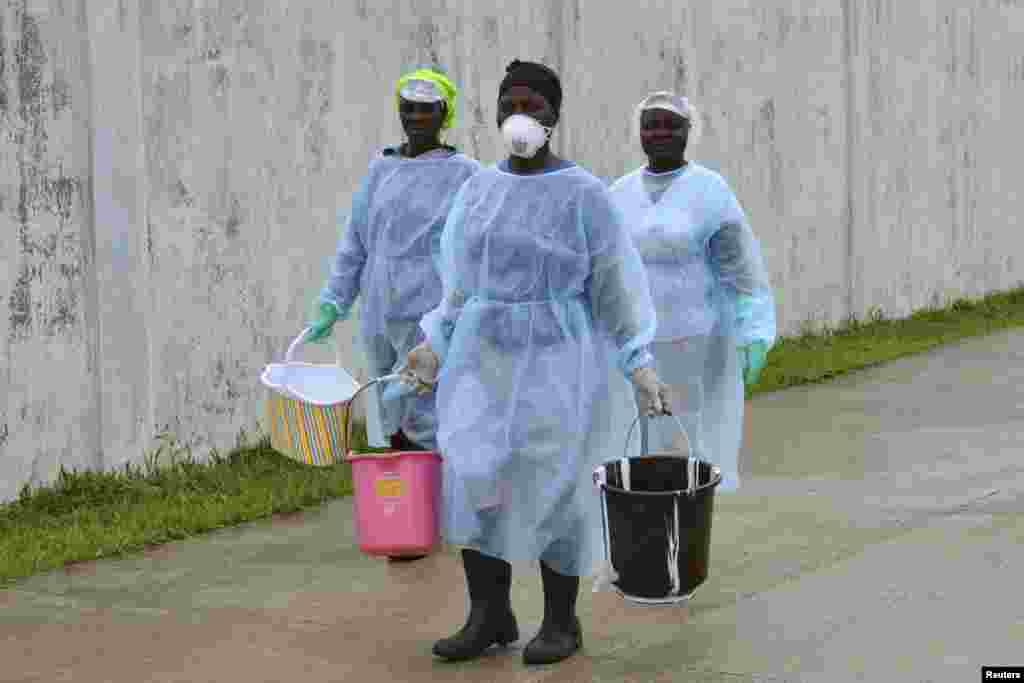
Health workers carry buckets of disinfectant at the newly-constructed Island Clinic and Ebola treatment center in Monrovia, Liberia, Sept. 25, 2014.
11/11 Health workers carry buckets of disinfectant at the newly-constructed Island Clinic and Ebola treatment center in Monrovia, Liberia, Sept. 25, 2014.
Previous slide
Next slide

Deaths from infectious diseases like malaria, diarrhea and pneumonia are likely to soar in West African countries where a vast outbreak of Ebola has crushed health systems and killed nurses and doctors.

Specialists on deadly diseases say deaths from malaria alone, which even before the Ebola crisis killed around 100,000 a year in the West Africa region as a whole, could increase four-fold in Ebola-hit countries as people miss out on life-saving treatments.

Click to enlarge
Click to enlarge

Even at this point, said Professor Chris Whitty of the London School of Hygiene and Tropical Medicine in London, in countries facing the worst of the Ebola outbreak, “many more people are dying of other things that are not Ebola.”

As the epidemic continues, these so-called “collateral” deaths -- including from complications in childbirth and chronic conditions such as heart disease -- will rise as the clinics and health workers who would normally treat them are overwhelmed.

Children at great risk

Carolyn Miles, head of the international charity Save the Children, said children under the age of 5 -- of which there are an estimated 2.5 million living in the affected areas -- are at great risk, both from Ebola and knock-on effects including the psychological stress caused by parents and relatives dying.

“The health services of West Africa have to a very large degree broken down,” said Jeremy Farrar, director of the Wellcome Trust international health charity. “That means care of women in childbirth, of people with malaria, of people with conditions like diabetes and mental illness are all suffering.

“That will have huge secondary consequences way beyond Ebola, no matter how bad this epidemic becomes," Farrar said.

The World Health Organization's (WHO) latest update said the Ebola virus has killed almost 3,000 people in the West Africa outbreak, which began early this year in Guinea and has spread to Liberia, Sierra Leone, Nigeria and Senegal.

The United Nations health agency said at least 208 health workers in the region have been killed by Ebola, from a total of 373 so far infected with the virus.

Jimmy Whitworth, the Wellcome Trust's head of population health, said the crisis might cause malaria deaths to quadruple to around 400,000 in the coming year, with patients too afraid to come to clinics for fear of contracting Ebola, and therefore not getting anti-malarial drugs and care.

'Ripples' from crisis are 'worrying'

Deaths from diarrhea and pneumonia, some of the biggest killers of children in sub-Saharan Africa, will also rise, he predicted, as will deaths of women in childbirth. Routine immunization programs will grind to a halt, putting children at higher risk of diphtheria, polio and tuberculosis.

“The ripples from this crisis are very worrying,” he told Reuters. “The hospitals are full of Ebola patients and there is not space for any other type of patient, and in health clinics, there are essentially no staff any more.”

Sierra Leone -- one of the countries worst hit by the Ebola epidemic -- “even at the best of times had just about the worst maternal mortality ratios in the world,” Whitworth said. “We're at a very low base, and now even that is being eroded away.”

The WHO's director-general Margaret Chan said last week her agency was acutely aware that in the three hardest-hit countries there are high numbers of deaths from causes other than Ebola.

“The size of this 'emergency within the emergency' is not precisely known, as systems for monitoring health statistics, not good to begin with, have now broken down completely,” she said.

She argued, however, that these deaths should not be classed as “collateral damage.”

“They are all part of the central problem: No fundamental public health infrastructures were in place, and this is what allowed the virus to spiral out of control.”

  • 16x9 Image

    Reuters

    Reuters is a news agency founded in 1851 and owned by the Thomson Reuters Corporation based in Toronto, Canada. One of the world's largest wire services, it provides financial news as well as international coverage in over 16 languages to more than 1000 newspapers and 750 broadcasters around the globe.

This item is part of
XS
SM
MD
LG