British astrophysicist Stephen Hawking has done a lot of thinking about the nature of the universe.
The renowned scientist, who has lived most of his 71 years with a paralyzing disease, pioneered efforts to unlock secrets of the cosmos, revolutionizing astrophysics and capturing the imagination of millions in the process.
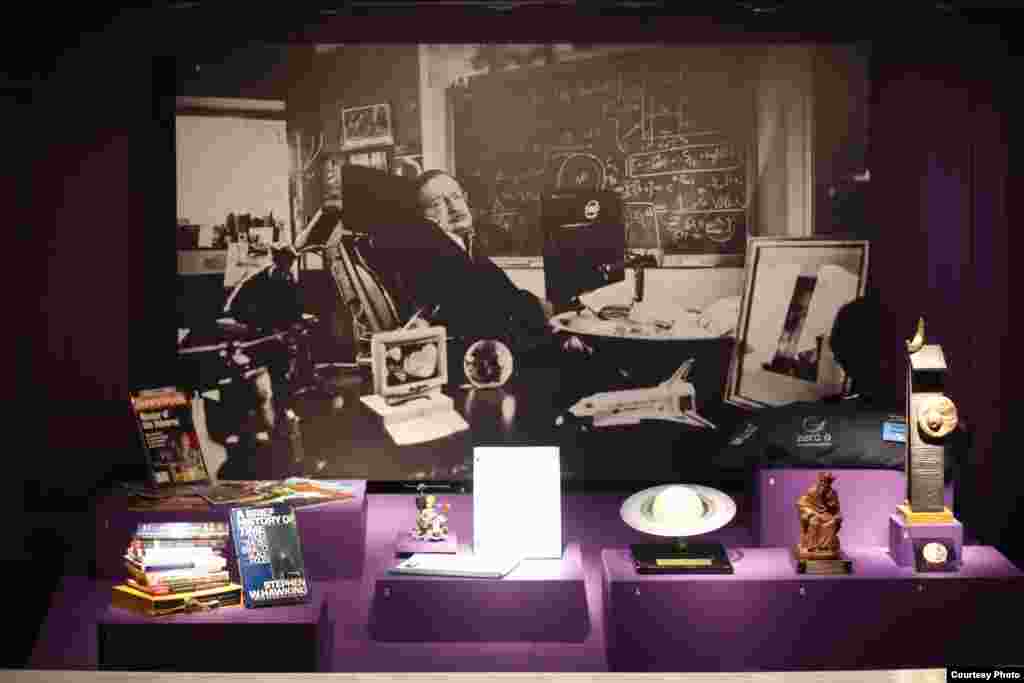
When he turned 70 in 2012, Hawking was honored with a special exhibit at London’s Science Museum. The tribute gave visitors an inside look at the life and work of one of the world's greatest minds.
“We have some of the first drafts of Hawking’s key scientific papers," astronomy curator Alison Boyle says. "And we wanted to do a survey of the key highlights of his career from the early 1960s and 1970s, right through now, and we also have examples of all the popular work he’s done over the years.”
Universe equation
Born in Oxford, England, in 1942, Hawking studied at both Oxford and Cambridge Universities. He became a math professor at Cambridge and held that post for more than 30 years. In 2009, he left to head the Cambridge University Center for Theoretical Physics.
Hawking has spent his life working on big, bold ideas, according to David Devorkin, historian and curator at the Smithsonian’s National Air and Space Museum in Washington.
“His primary passion is to understand physical reality," Devorkin says. "What is time? What is space? What is mass, and what do they have to do with one another other? The big push at Cambridge is to reduce the universe to one equation that encompasses everything.”
Bridging the gap
Hawking’s work has focused on bridging the gap between Albert Einstein’s theory of relativity -which explains how the pull of gravity controls the motion of large objects like planets- and the theory of quantum physics, which deals with the behavior of particles on the subatomic scale.
Astrophysicist Stephen Hawking
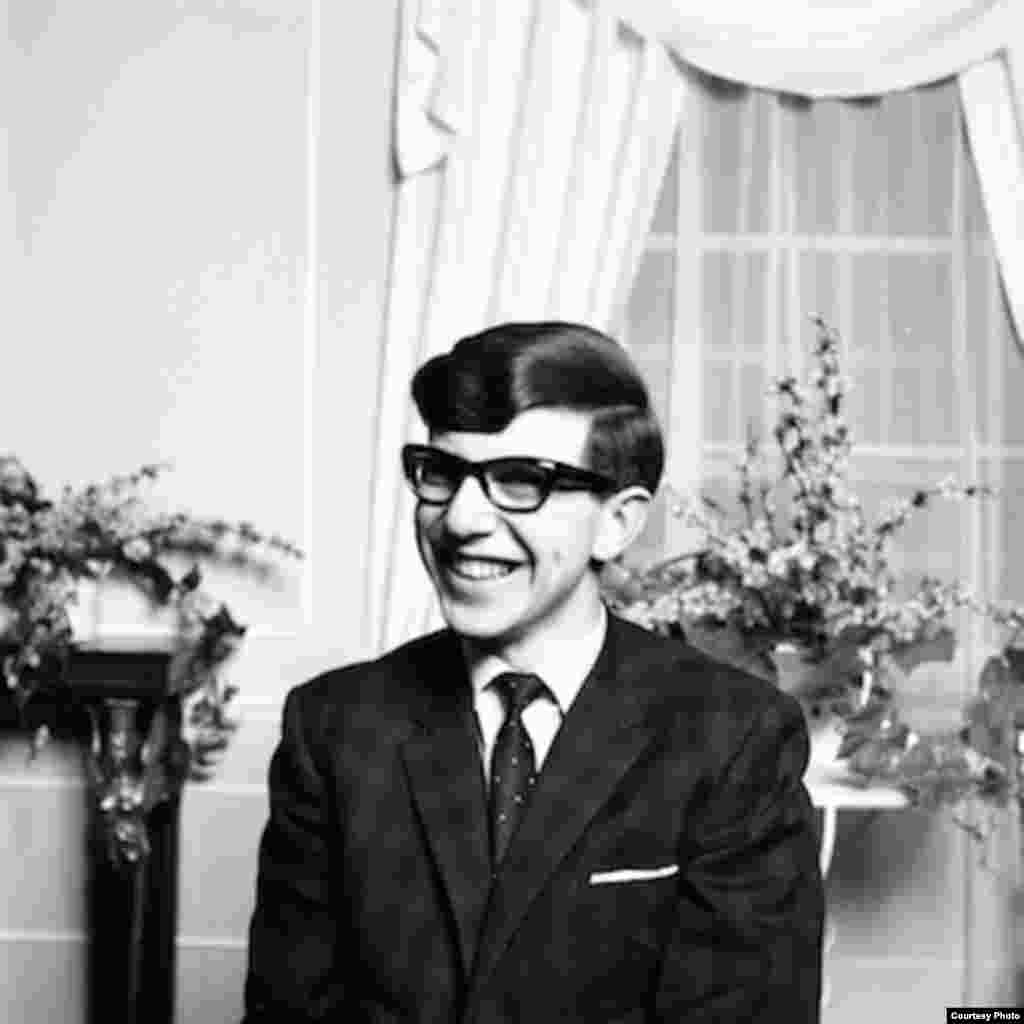
1/13Portrait of a young Stephen Hawking, May 17, 1963. (Howard Grey)
British astrophysicist Stephen Hawking has done a lot of thinking about the nature of the universe. While the renowned scientist has lived most of his 71 years with a paralyzing disease, his pioneering efforts to unlock the secrets of the cosmos have revolutionized astrophysics and captured the imagination of millions.
Show moreShow less
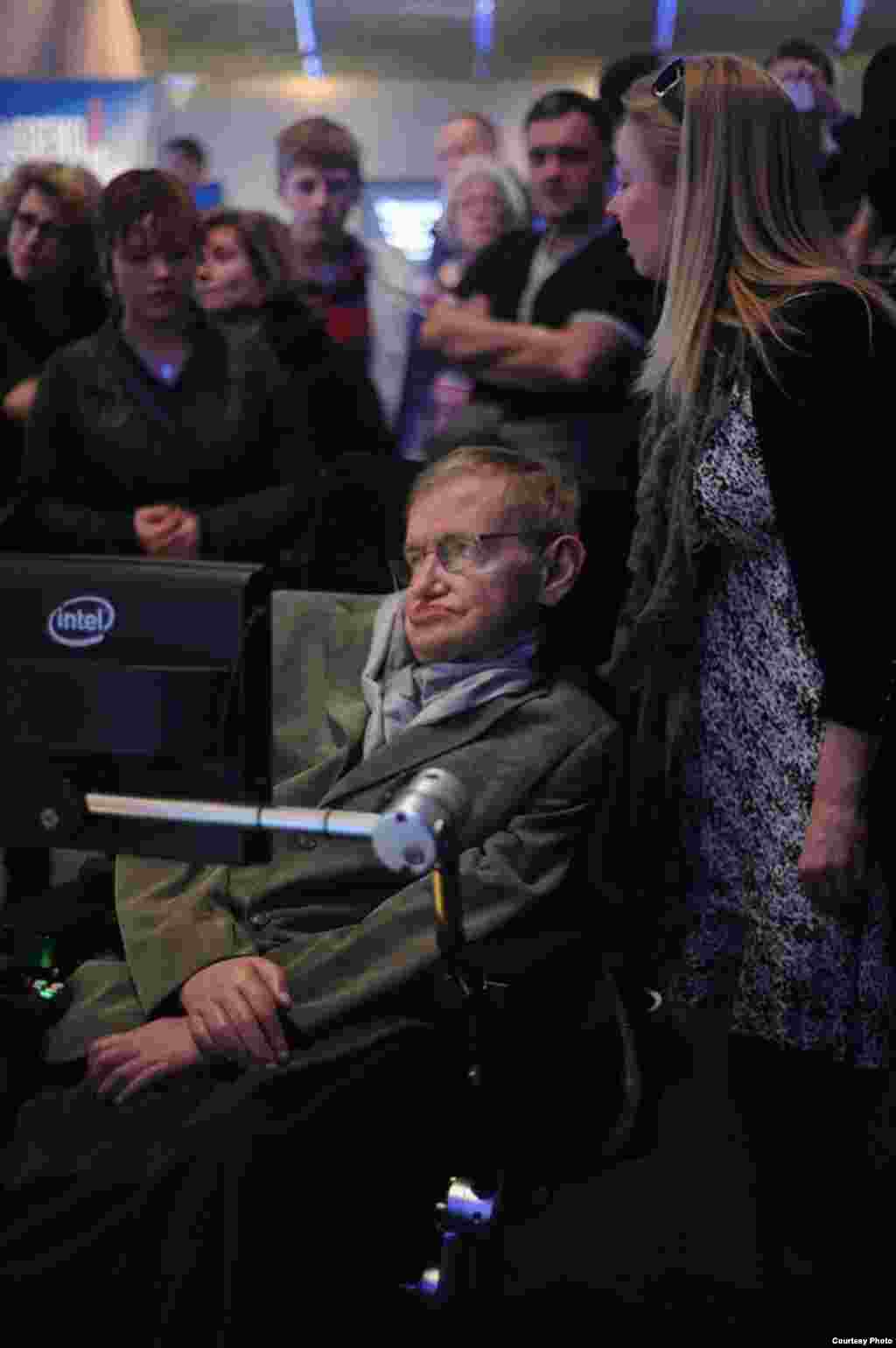
2/13Stephen Hawking visits the London Science Museum’s exhibit on his life and work. (Sarah Lee)
British astrophysicist Stephen Hawking has done a lot of thinking about the nature of the universe. While the renowned scientist has lived most of his 71 years with a paralyzing disease, his pioneering efforts to unlock the secrets of the cosmos have revolutionized astrophysics and captured the imagination of millions.
Show moreShow less
3/13Some of the Hawking memorabilia on display at London’s Science Museum exhibition marking the scientist’s 70th birthday. (Science Museum PA)
British astrophysicist Stephen Hawking has done a lot of thinking about the nature of the universe. While the renowned scientist has lived most of his 71 years with a paralyzing disease, his pioneering efforts to unlock the secrets of the cosmos have revolutionized astrophysics and captured the imagination of millions.
Show moreShow less
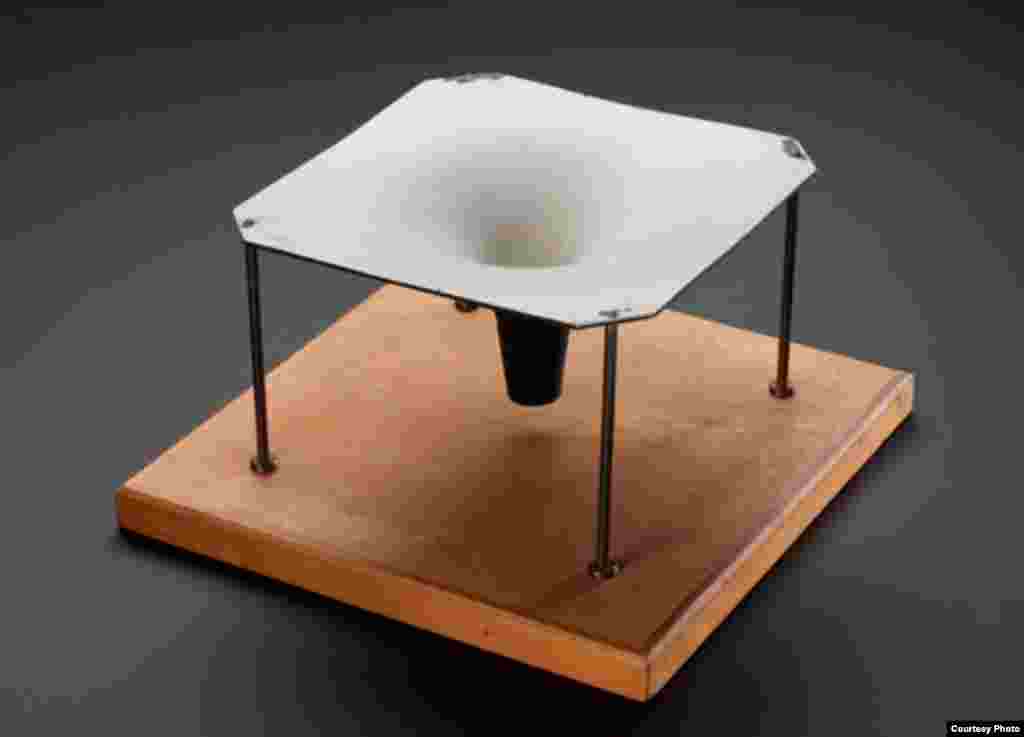
4/13The model built for Hawking in the early 1970s to show the deep gravitational “well” that black holes create in the fabric of space-time, from which not even light can escape. (Whipple Museum of the History of Science)
British astrophysicist Stephen Hawking has done a lot of thinking about the nature of the universe. While the renowned scientist has lived most of his 71 years with a paralyzing disease, his pioneering efforts to unlock the secrets of the cosmos have revolutionized astrophysics and captured the imagination of millions.
Show moreShow less
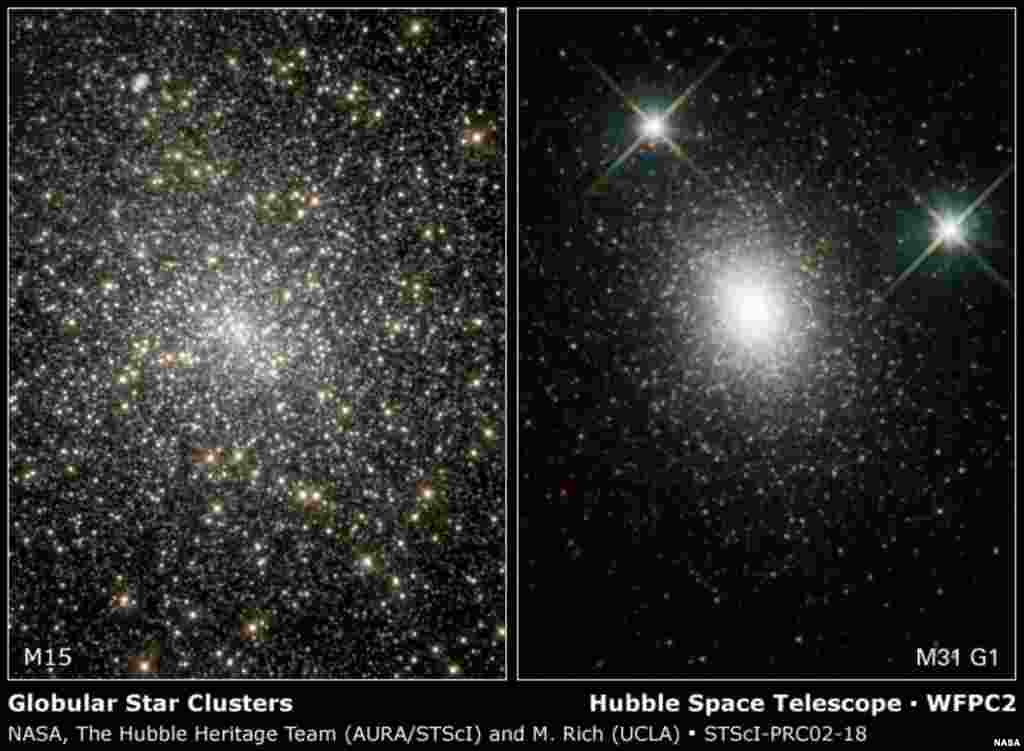
5/13These two globular star clusters, located beyond our Milky Way galaxy, harbor hundreds of thousands of stars. Deep within the clusters’ dense cores, stars whirl rapidly around intermediate-sized black holes. (NASA/Hubble)
British astrophysicist Stephen Hawking has done a lot of thinking about the nature of the universe. While the renowned scientist has lived most of his 71 years with a paralyzing disease, his pioneering efforts to unlock the secrets of the cosmos have revolutionized astrophysics and captured the imagination of millions.
Show moreShow less
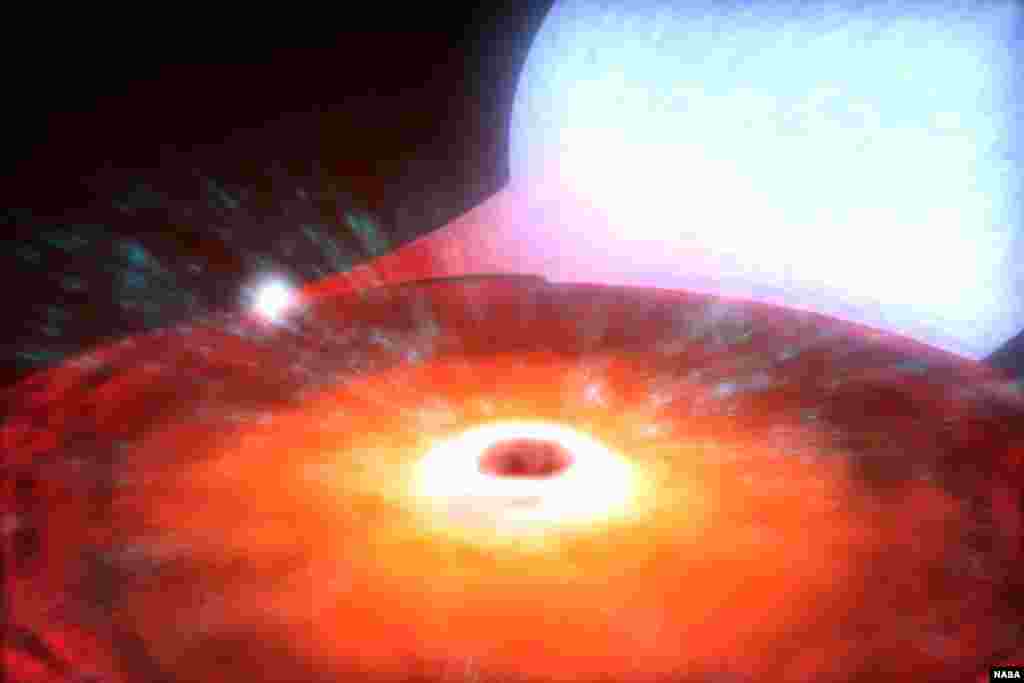
6/13In this illustration of a black hole and its surrounding disk, gas spiraling down into the black hole piles up just outside it, creating a luminous halo. (NASA)
British astrophysicist Stephen Hawking has done a lot of thinking about the nature of the universe. While the renowned scientist has lived most of his 71 years with a paralyzing disease, his pioneering efforts to unlock the secrets of the cosmos have revolutionized astrophysics and captured the imagination of millions.
Show moreShow less
7/13The smallest known black hole – part of a binary star system named XTE J1650-500 – is about 3.8 times more massive than our Sun. (NASA/CXC/A. Hobar)
British astrophysicist Stephen Hawking has done a lot of thinking about the nature of the universe. While the renowned scientist has lived most of his 71 years with a paralyzing disease, his pioneering efforts to unlock the secrets of the cosmos have revolutionized astrophysics and captured the imagination of millions.
Show moreShow less
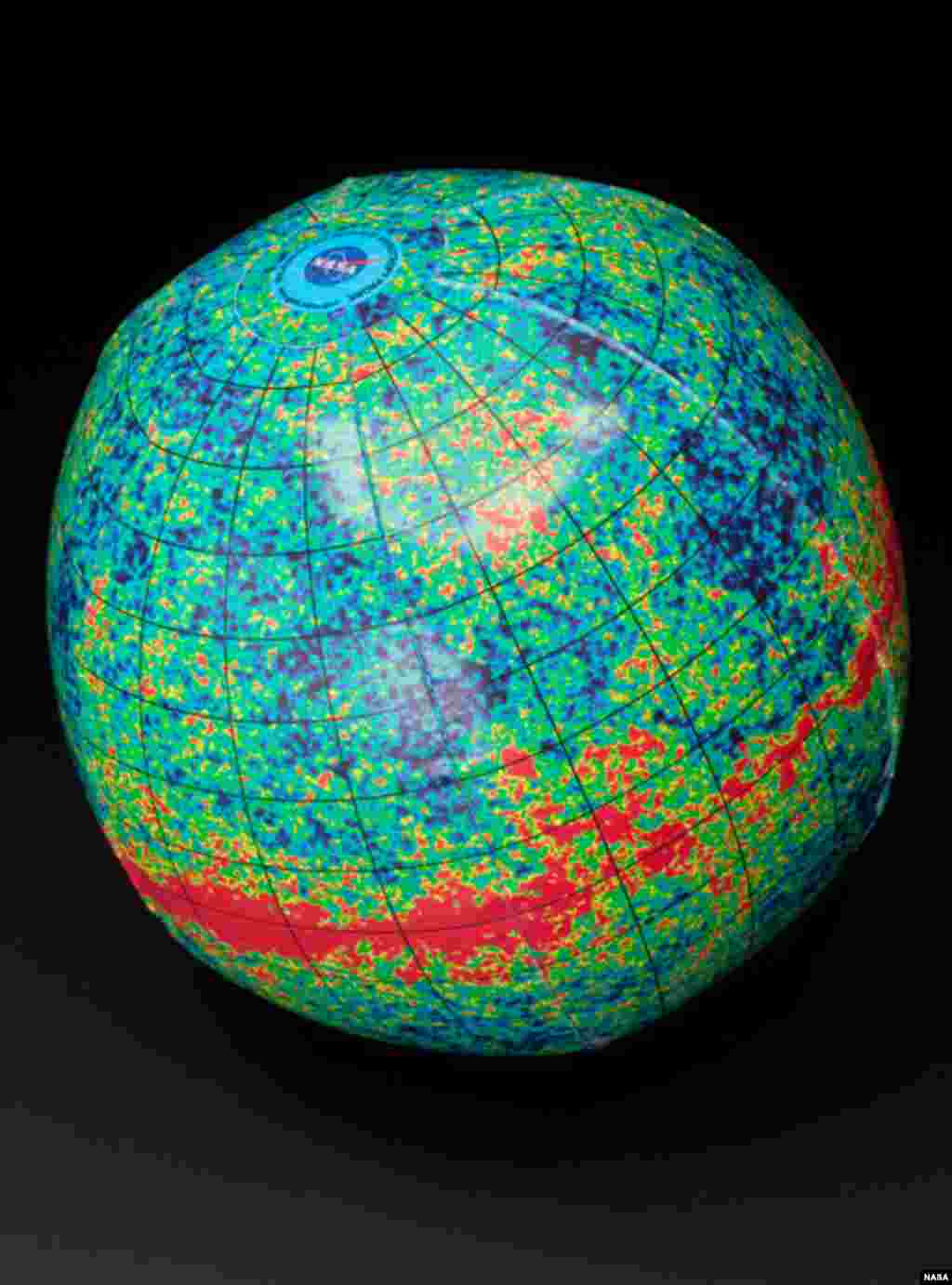
8/13This cosmic beach ball displays a full-sky map of the microwave radiation left over from the Big Bang event that created the universe 13.7 billion years ago. (NASA)
British astrophysicist Stephen Hawking has done a lot of thinking about the nature of the universe. While the renowned scientist has lived most of his 71 years with a paralyzing disease, his pioneering efforts to unlock the secrets of the cosmos have revolutionized astrophysics and captured the imagination of millions.
Show moreShow less
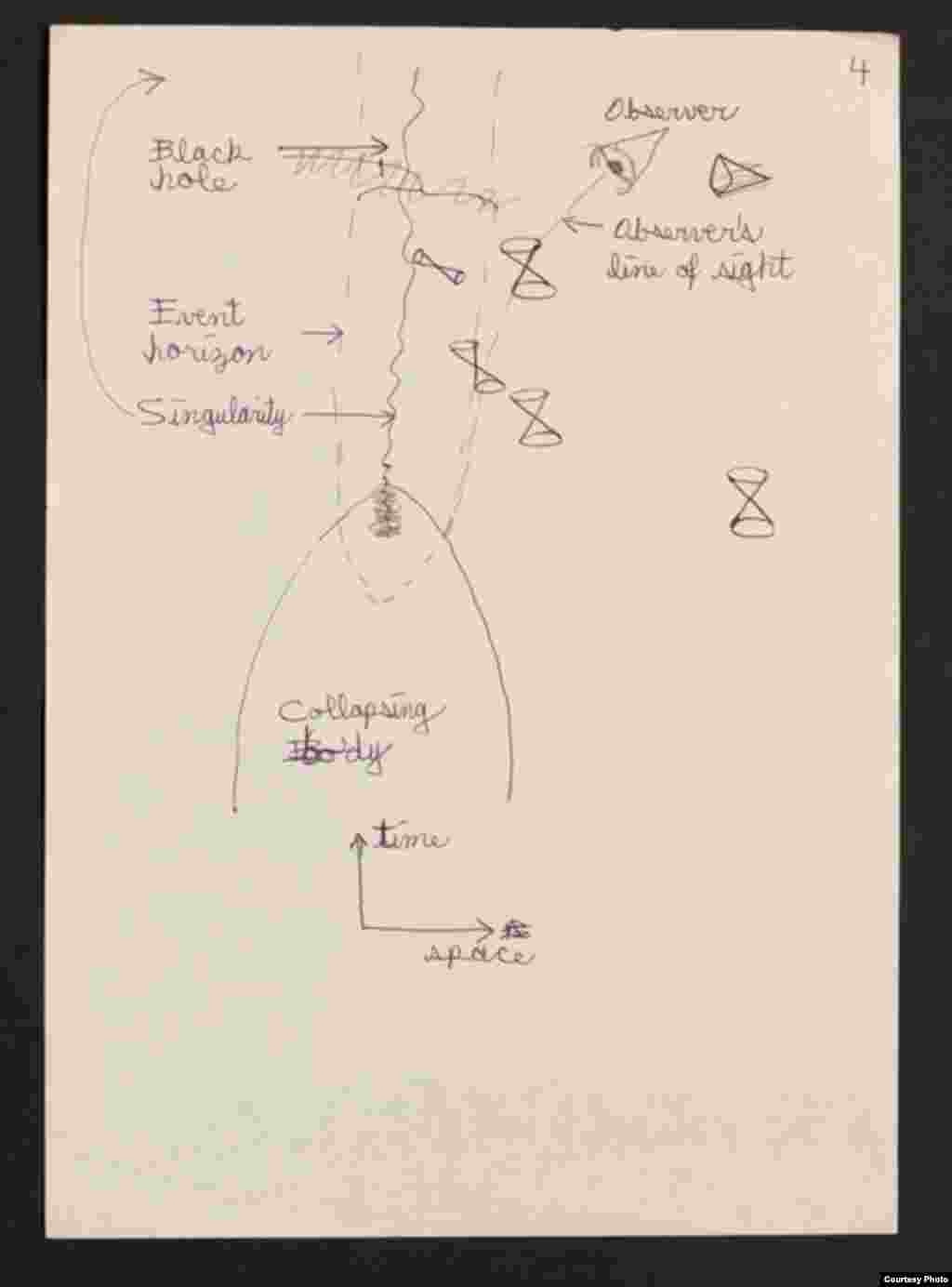
9/13A sketch from Hawking’s notes illustrates the phenomenon of black hole radiation by showing that quantum effects cause electromagnetic particles to fleetingly form just outside the hole. (Hawking Family Archive)
British astrophysicist Stephen Hawking has done a lot of thinking about the nature of the universe. While the renowned scientist has lived most of his 71 years with a paralyzing disease, his pioneering efforts to unlock the secrets of the cosmos have revolutionized astrophysics and captured the imagination of millions.
Show moreShow less
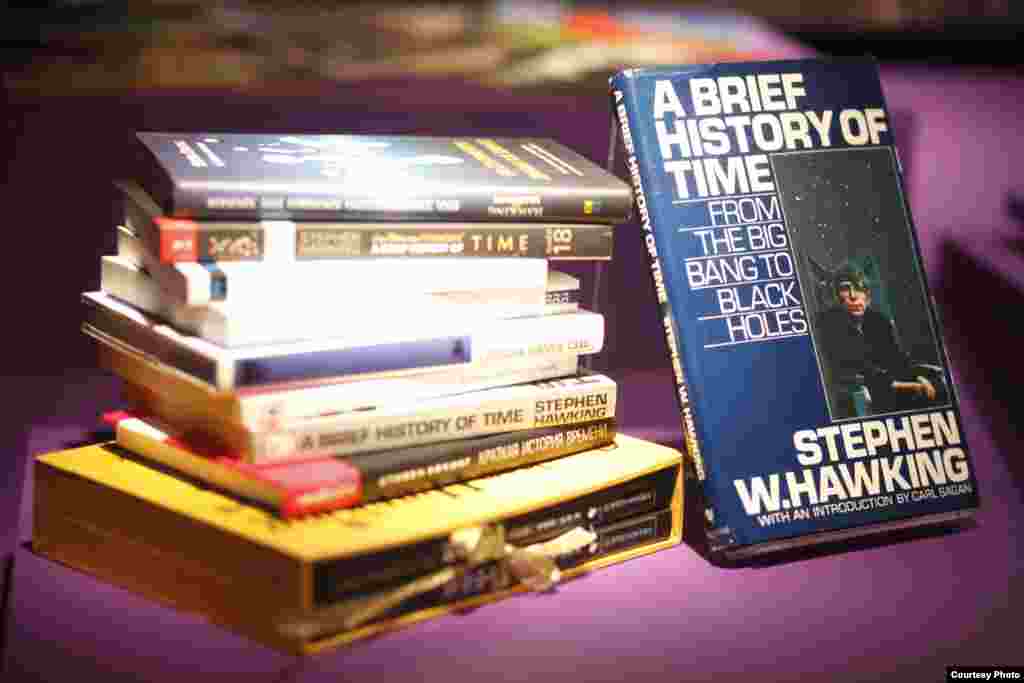
10/13Stephen Hawking’s A Brief History of Time, published in 1988, has been an international best seller, with over 10 million copies in print. (Science Museum PA)
British astrophysicist Stephen Hawking has done a lot of thinking about the nature of the universe. While the renowned scientist has lived most of his 71 years with a paralyzing disease, his pioneering efforts to unlock the secrets of the cosmos have revolutionized astrophysics and captured the imagination of millions.
Show moreShow less
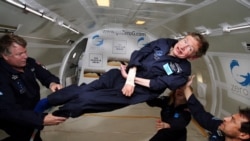
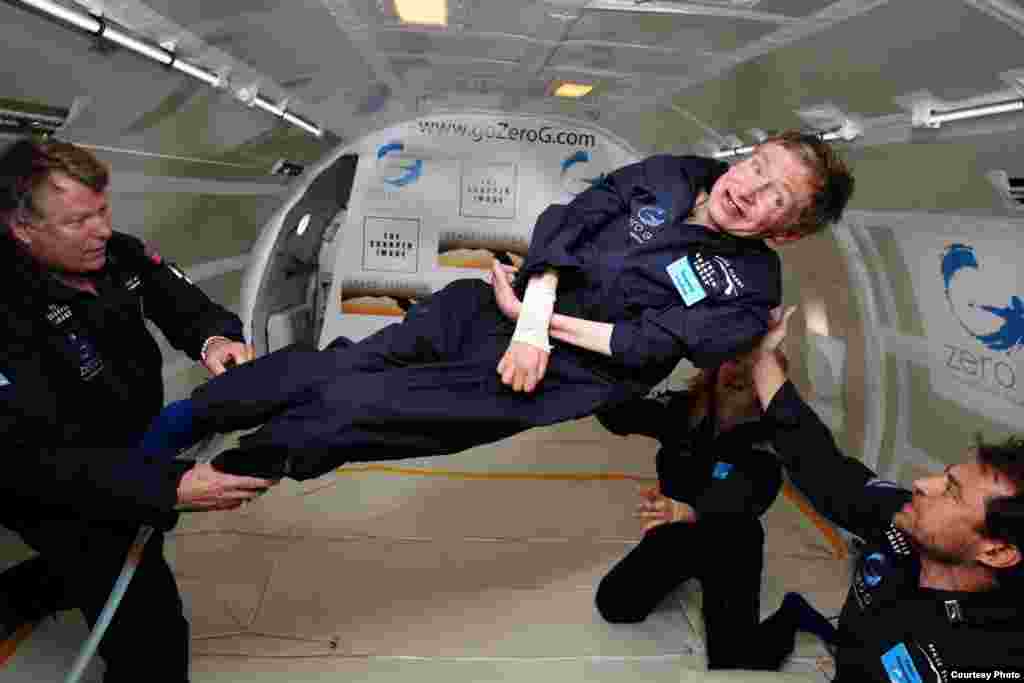
11/13Stephen Hawking, almost totally paralyzed since 1970 by ALS, enjoys a few moments of weightlessness during a flight aboard Zero Gravity Corp.’s modified Boeing 727. (Jim Campbell, Aero-News Network)
British astrophysicist Stephen Hawking has done a lot of thinking about the nature of the universe. While the renowned scientist has lived most of his 71 years with a paralyzing disease, his pioneering efforts to unlock the secrets of the cosmos have revolutionized astrophysics and captured the imagination of millions.
Show moreShow less
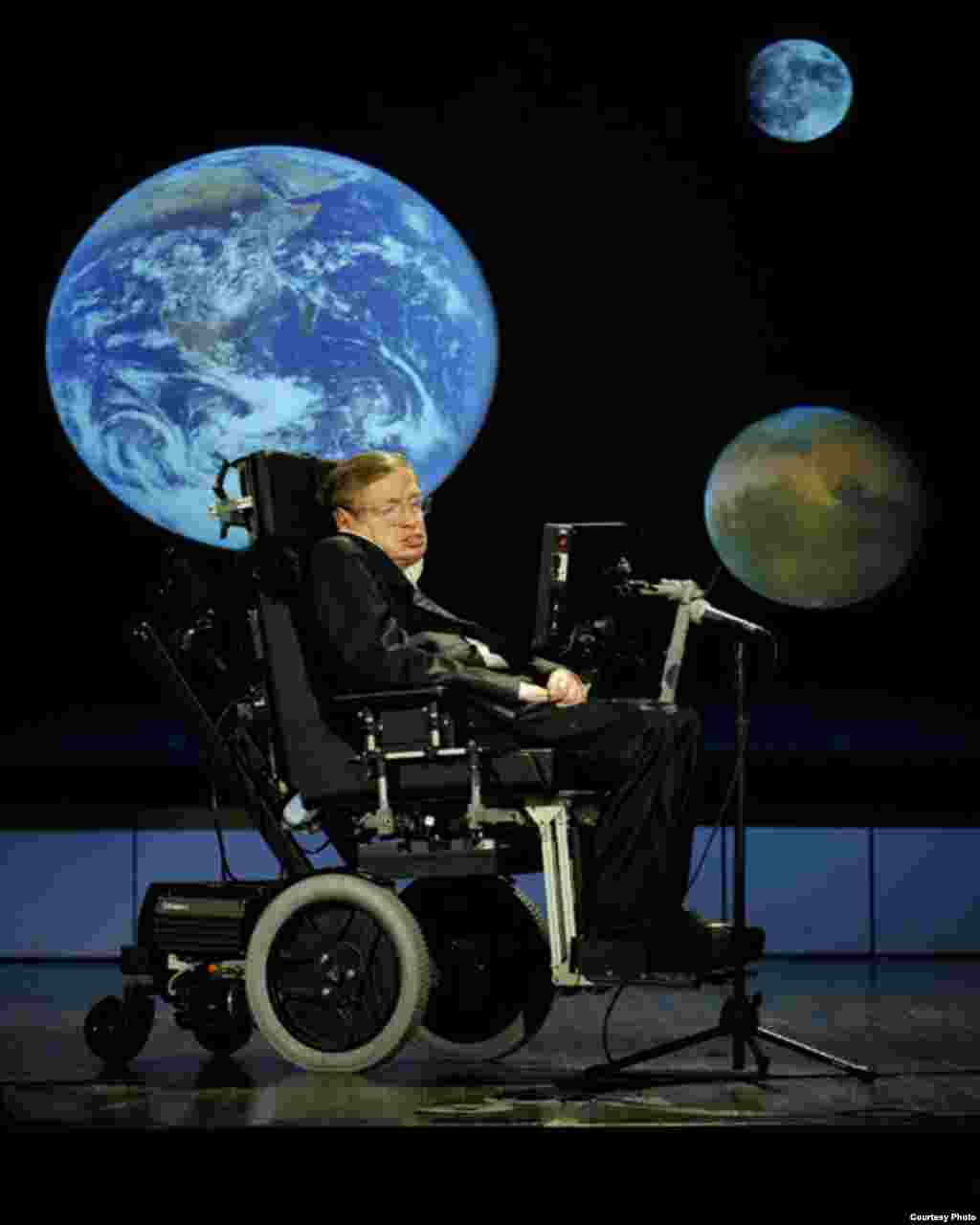
12/13Stephen Hawking lecturing on the future of space exploration at a 2008 George Washington University event marking NASA’s 50th anniversary. (NASA/Paul E. Alers)
British astrophysicist Stephen Hawking has done a lot of thinking about the nature of the universe. While the renowned scientist has lived most of his 71 years with a paralyzing disease, his pioneering efforts to unlock the secrets of the cosmos have revolutionized astrophysics and captured the imagination of millions.
Show moreShow less
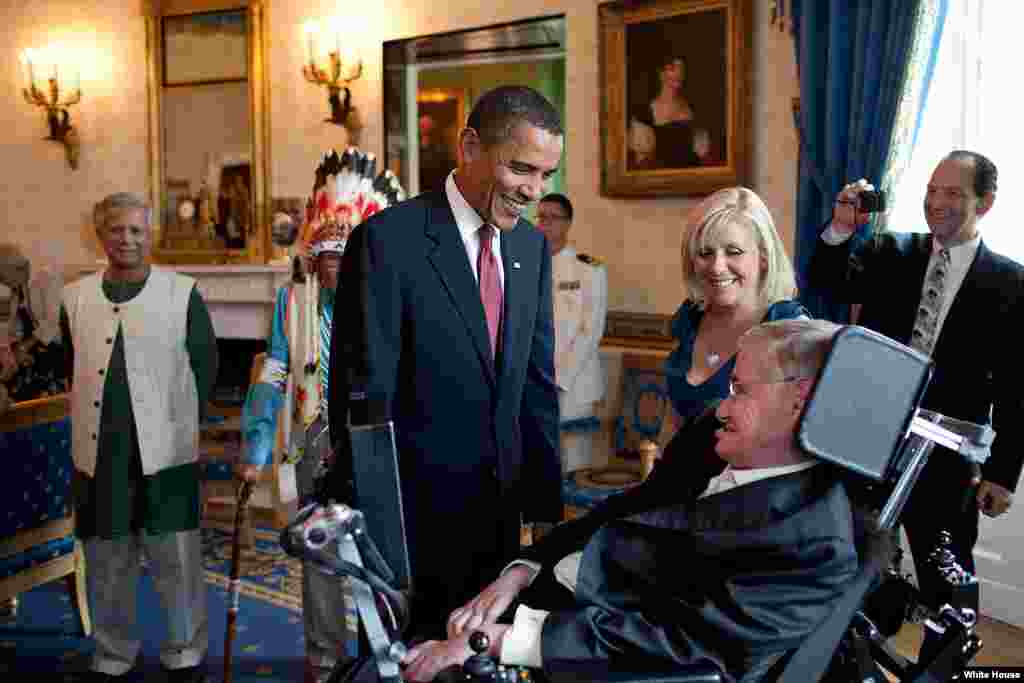
13/13President Barack Obama talks with Stephen Hawking in the Blue Room of the White House before a ceremony presenting him and 15 others the Presidential Medal of Freedom, August 12, 2009. The Medal of Freedom is the nation's highest civilian honor. (Officia
British astrophysicist Stephen Hawking has done a lot of thinking about the nature of the universe. While the renowned scientist has lived most of his 71 years with a paralyzing disease, his pioneering efforts to unlock the secrets of the cosmos have revolutionized astrophysics and captured the imagination of millions.
Show moreShow less
Previous slide
Next slide
Hawking found a wider audience for those ideas with the 1988 publication of his best-selling book, “A Brief History of Time.”
“The idea [is] that the universe is a logical one and one that follows certain rules," Devorkin says. "It’s out of that that he felt the necessity of a fundamental theory, because if the universe is knowable or logical, we should be able to figure out that logic, and that’s what the fundamental theory is.”
Seminal work
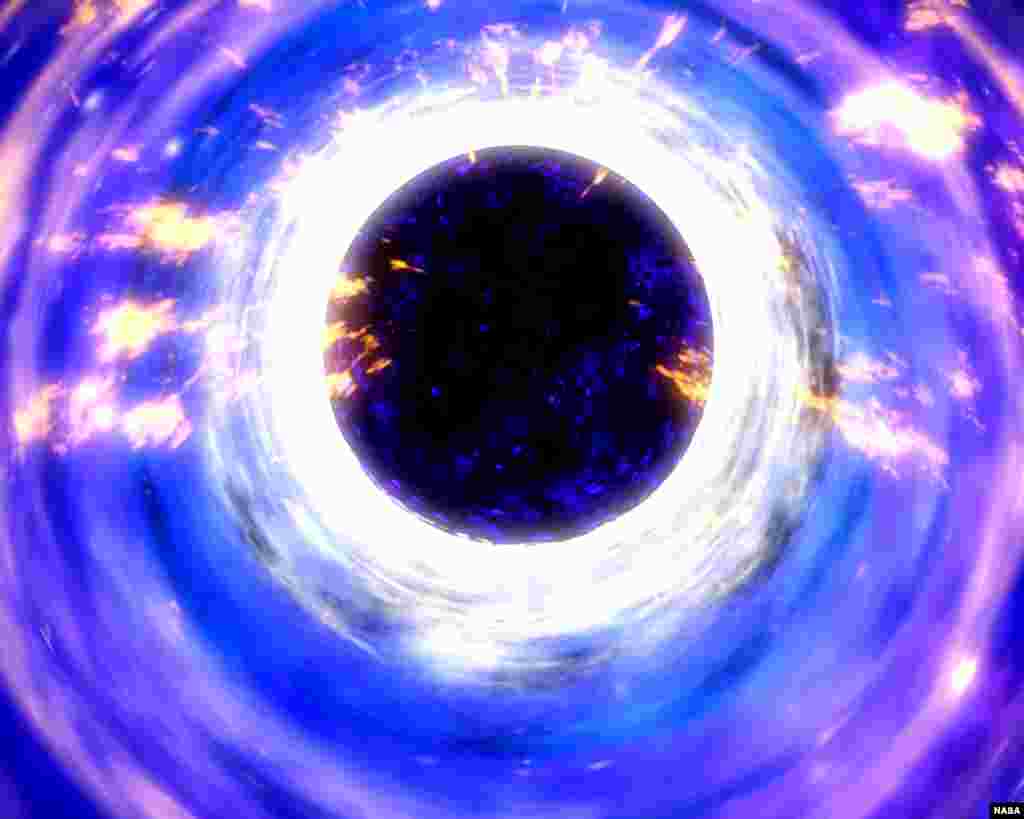
Hawking is also celebrated for his seminal work on the strange cosmic phenomena known as black holes.
The London exhibit displayed the model Hawking once used to explain his ideas about the unimaginably dense, heavy objects whose powerful gravity swallows up everything that comes close, even light.
“It shows the gravitational pull of a black hole," says Science Museum curator Alison Boyle. "So when a massive star collapses in on itself, it will keep and keep collapsing until it gets to a point of infinite density. And that’s called a singularity, and that’s what’s right inside a black hole.”
Stephen Hawking in his office at University of Cambridge, where he founded the Centre for Theoretical Cosmology. (Science Museum)
Hawking applied the idea of singularity to the origin of the universe, which most scientists believe happened about 13 billion years ago in a cataclysmic explosion called the Big Bang.
“Much of our understanding of processes in the Big Bang come from Hawking’s work linking black hole physics to Big Bang physics," Devorkin says, "and he did a better job at it than anyone else.”
Another of the physicist's noted contributions is a theory dubbed Hawking Radiation. It proposes that black holes emit radiation and eventually evaporate and vanish. It’s an alternative explanation of the structure of the universe that also points to how it might end.
Overcoming the odds
Since 1970, Hawking has been almost completely paralyzed by ALS, an incurable, neurodegenerative condition. Confined to a wheelchair, he uses an advanced computer synthesizer to speak.
Despite his disabilities, he continues to work, write and travel. At age 65, he was invited aboard a special zero-gravity jet to fulfill his dream of experiencing the weightlessness of a space-faring astronaut.
“It was amazing," Hawking said. "The Zero-G part was wonderful, and the High-G part was no problem. I could have gone on and on. Space, here I come!”
New era
Speaking at a 2008 ceremony marking the 50th anniversary of the U.S. space agency, NASA, Hawking called for a new era in human space exploration, comparable, he said, to the European voyages to the New World more than 500 years ago.
“Spreading out into space will have an even greater effect," Hawking said. "It will completely change the future of the human race and maybe determine whether we have any future at all.”
Hawking also posed some fundamental questions.
“What will we find when we go into space?" he asked. "Is there alien life out there, or are we alone in the universe?”
Questions inspired by an indomitable mind, and Stephen Hawking's neverending quest to solve the mysteries of the universe.