Curiosity Rover Sends Back Voice, Photos From Mars
The U.S. space agency NASA has achieved another first with its Mars Curiosity rover: the first recorded human voice that traveled from Earth to another planet and back.
The recorded voice of NASA Administrator Charlie Bolden greeted members of the Curiosity team late Monday.
"This is Charlie Bolden, NASA administrator, speaking to you via the broadcast capabilities of the Curiosity rover, which is now on the surface of Mars.''
Photo Gallery of Latest High-Resolution Images From Curiosity
Curiosity Returns Telephoto Views from Mars
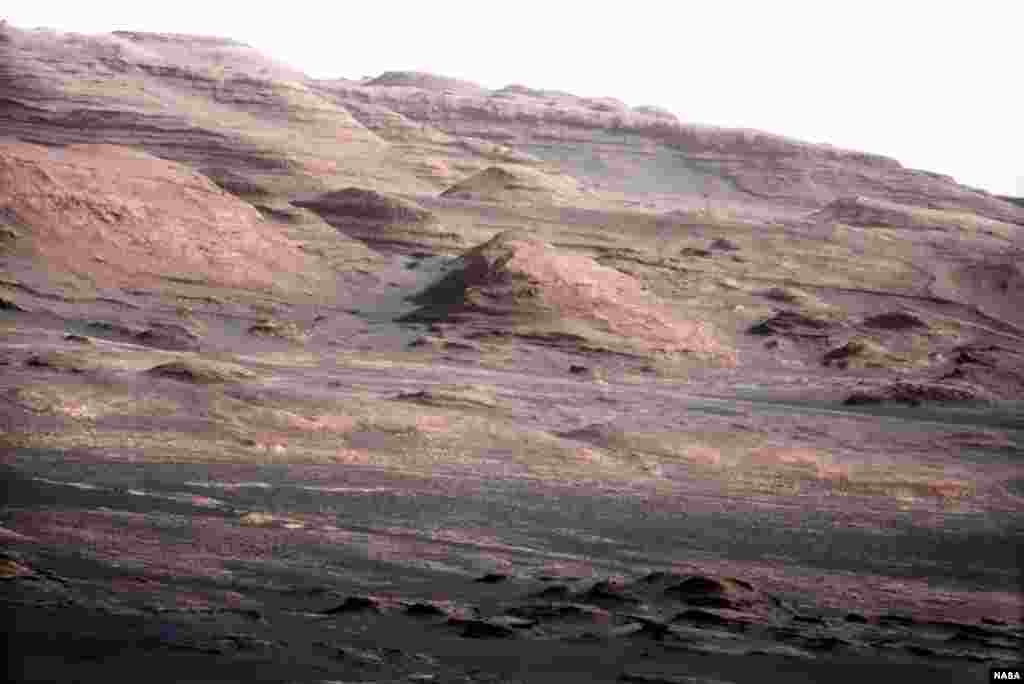
1/5This image shows the base of Mount Sharp, the rover's eventual science destination. Scientists enhanced the color to show the Martian scene under the lighting conditions we have on Earth, which helps in analyzing the terrain.
NASA showed off the first high-resolution, color portrait images taken by the Mars rover Curiosity, detailing a mound of layered rock where scientists plan to focus their search for the chemical ingredients of life on the Red Planet.
Show moreShow less
2/5This image shows track marks from the rover's first Martian drives. The rover's Bradbury Landing site and its first tire marks are seen at center, in the distance, while tracks from the second drive are in the foreground. Mount Sharp is on the horizon.
NASA showed off the first high-resolution, color portrait images taken by the Mars rover Curiosity, detailing a mound of layered rock where scientists plan to focus their search for the chemical ingredients of life on the Red Planet.
Show moreShow less
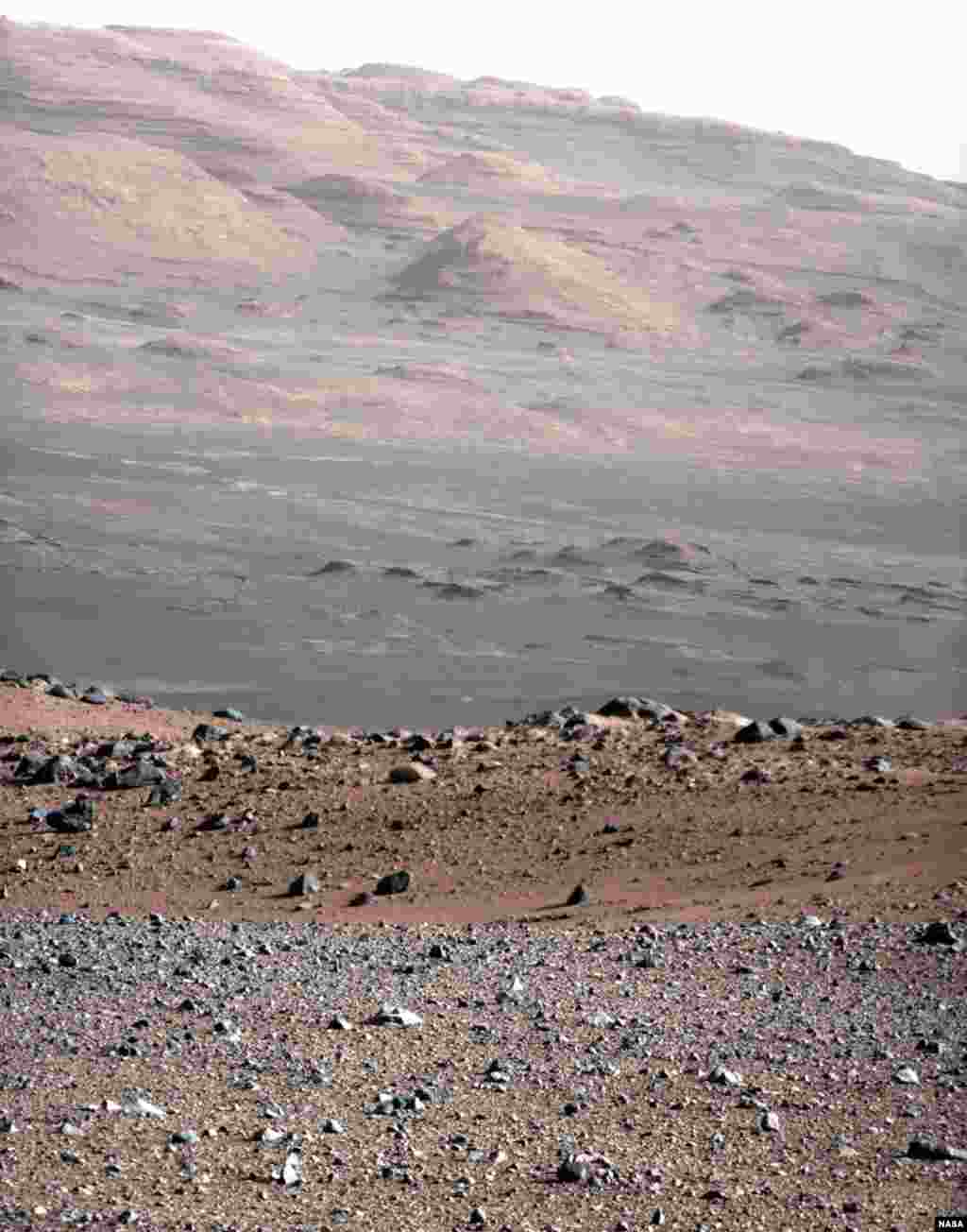
3/5The gravelly area around Curiosity's landing site is in the foreground. Beyond the swale is the red-brown rim of an impact crater. Further in the distance, there are dark dunes and the layered rock at the base of Mount Sharp.
NASA showed off the first high-resolution, color portrait images taken by the Mars rover Curiosity, detailing a mound of layered rock where scientists plan to focus their search for the chemical ingredients of life on the Red Planet.
Show moreShow less
4/5The 100-millimeter Mastcam has 3x better resolution than Curiosity's 34-millimeter Mastcam, though it has a narrower field of view. Some haze obscures the view, but the top ridge, depicted in this image, is 10 miles (16.2 kilometers) away.
NASA showed off the first high-resolution, color portrait images taken by the Mars rover Curiosity, detailing a mound of layered rock where scientists plan to focus their search for the chemical ingredients of life on the Red Planet.
Show moreShow less
5/5This color panorama shows a 360-degree view of the landing site of NASA's Curiosity rover, including the highest part of Mount Sharp visible to the rover. That part of Mount Sharp is approximately 12 miles (20 km) away from the rover.
NASA showed off the first high-resolution, color portrait images taken by the Mars rover Curiosity, detailing a mound of layered rock where scientists plan to focus their search for the chemical ingredients of life on the Red Planet.
Show moreShow less
Previous slide
Next slide
Bolden went on to note the difficulty of sending a probe to the surface of Mars, and congratulated NASA employees and the agency's partners on the successful landing of the rover earlier this month. He said Curiosity is what drives humans to explore.
The voice playback was released along with new photographs of the varied Martian landscape. The telephoto images beamed back to Earth show a scene of eroded knobs and gulches on a mountainside, with geological layering clearly exposed.
Dave Lavery, a NASA program executive, said it is hoped the Curiosity rover’s mission will inspire someone alive today to become the first person to stand on Mars.
Curiosity landed on Mars in early August to begin a two-year mission studying the planet’s surface. It will use 10 science instruments to assess whether a selected study area ever has offered environmental conditions favorable for microbial life.
The Voice of America provides news and information in more than 40 languages to an estimated weekly audience of over 326 million people. Stories with the VOA News byline are the work of multiple VOA journalists and may contain information from wire service reports.