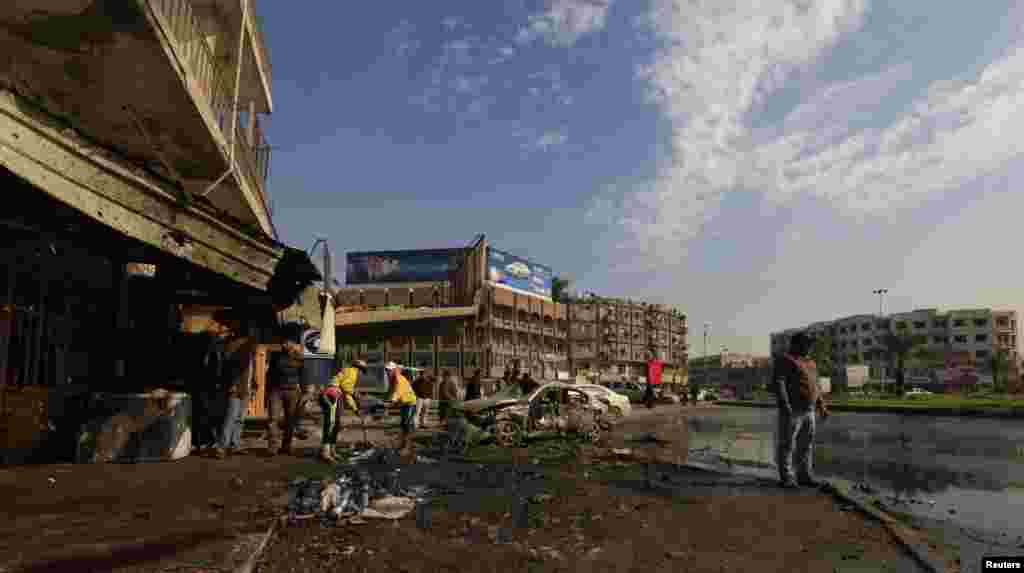
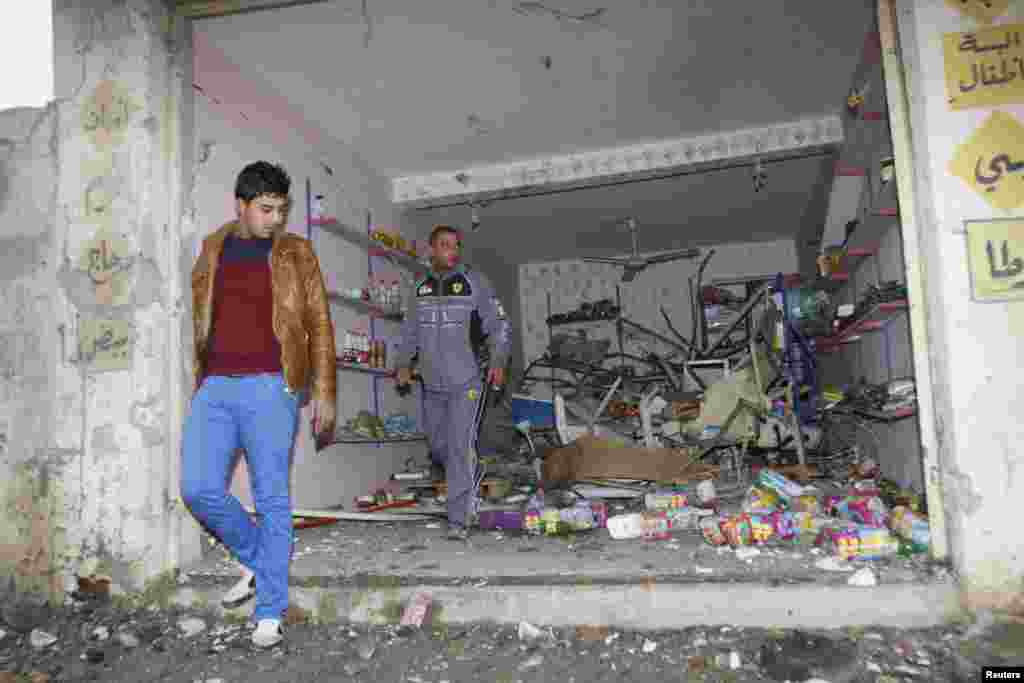
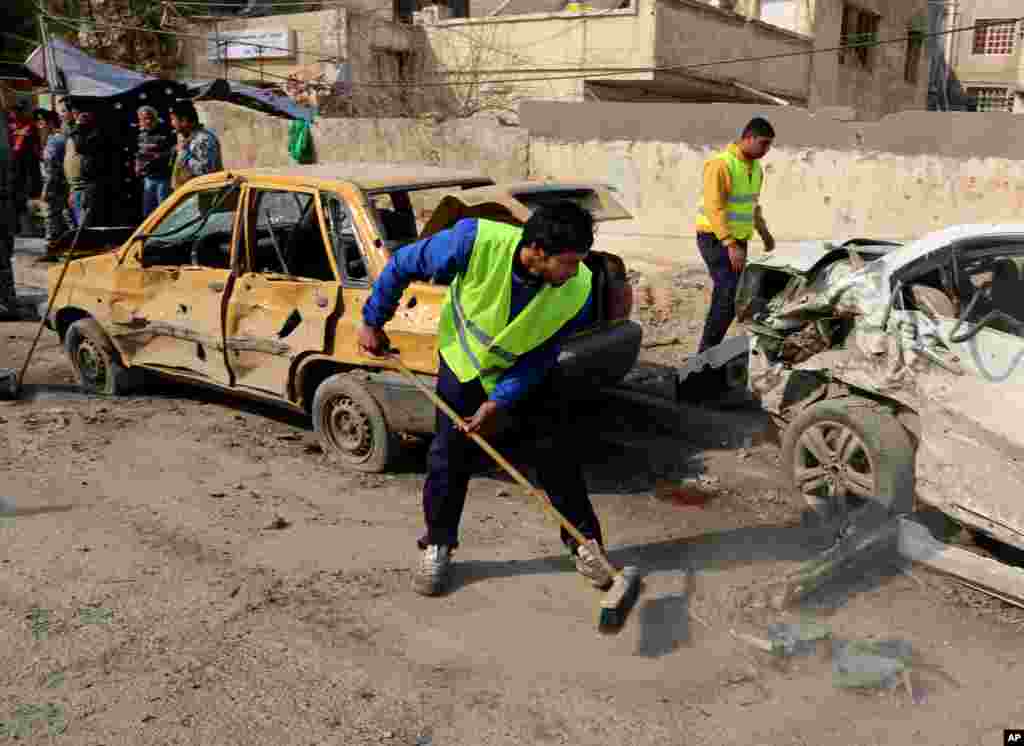
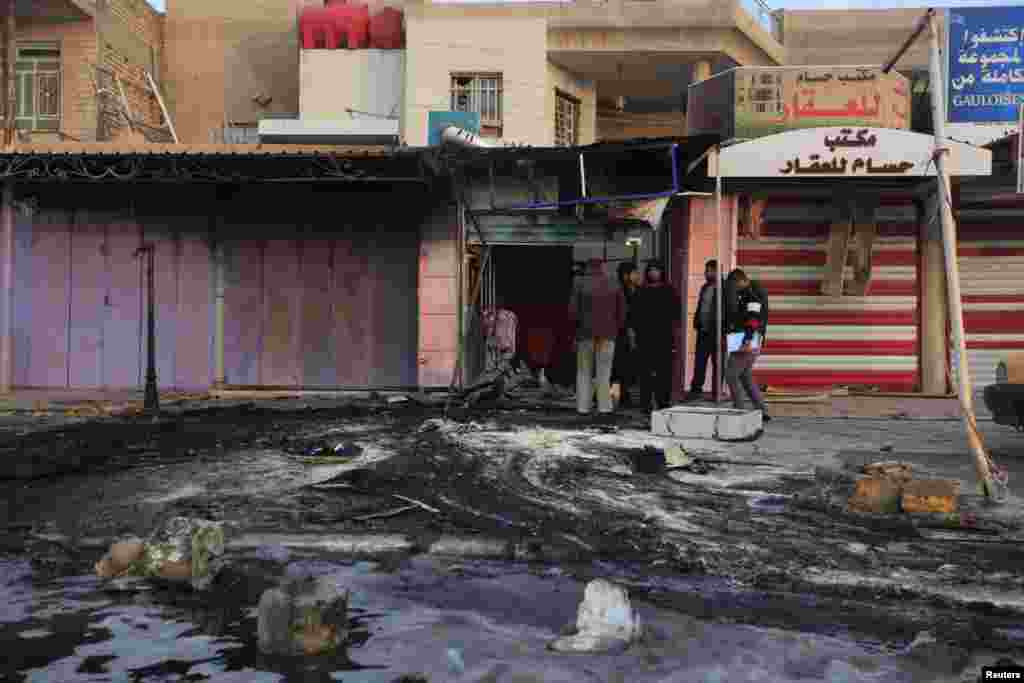
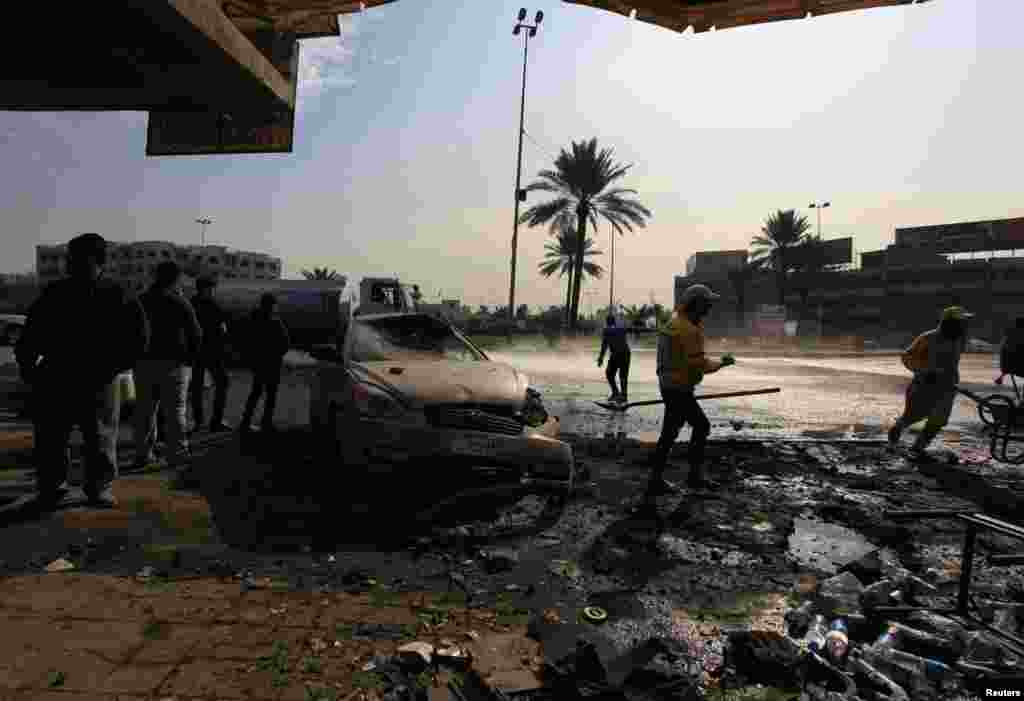
1/5Municipality workers clean the site of a bomb attack in Baghdad, Jan. 15, 2014.
Show moreShow less
2/5People gather at the site of a car bomb attack in Kirkuk, north of Baghdad, Jan. 15, 2014.
Show moreShow less
3/5Municipality workers clean up after a car bomb attack near the Technology University on Sinaa Street in downtown Baghdad, Jan. 15, 2014.
Show moreShow less
4/5People gather at the site of a car bomb attack in Baghdad's Ghazaliya district, Jan. 15, 2014.
Show moreShow less
5/5People gather at the site of car bomb attack in Baghdad, January 15, 2014.
Show moreShow less
Previous slide
Next slide
A series of bomb attacks in Iraq has killed at least 73 people, while government forces have lost more ground in western Anbar Province to Sunni militants linked to al-Qaida.
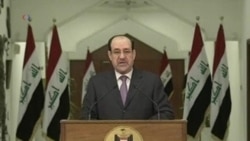
Iraqi Prime Minister Nouri al-Maliki appeared on state television Wednesday to say the war on terror and al-Qaida will continue, to keep the violence from spreading. He urged the international community to keep aiding Iraq in its fight for security and oppose those powers who support terrorism.
The deadliest blast Wednesday killed at least 18 people at a funeral in Buhriz, north of Baghdad. The funeral was for a member of a Sunni tribal militia that sided with U.S. forces in the region in 2006. The militia has since been targeted by al-Qaida loyalists who see them as traitors.
In the capital, at least eight bombs exploded in mainly Shi'ite areas of the city.
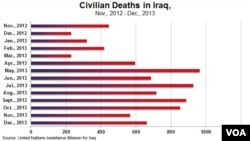
Monthly Iraq civilian deaths, Nov., 2012 to Dec., 2013, UNAMI
Iraqi Deputy Prime Minister Saleh Muhamed al-Mutlaq told VOA's Persian service in an interview late Tuesday that a more inclusive government would be helpful to establish more stability in Iraq. "What is needed from al-Maliki is to have an inclusive government that all the constituency will participate in, and there will be a real participation for those whom they think they are being isolated and marginalized for such a long time," he said.
Iraq is experiencing its worst unrest since 2008 when the country was emerging from a period of sectarian warfare between the country's Sunnis and Shi'ites.
U.N. Secretary General Ban Ki-moon said Monday during a visit to Iraq that he was especially worried about the deteriorating security situation, and called on Iraqi leaders to address the root causes of the surge in violence.
Some information for this report was provided by AFP and Reuters.
The Voice of America provides news and information in more than 40 languages to an estimated weekly audience of over 326 million people. Stories with the VOA News byline are the work of multiple VOA journalists and may contain information from wire service reports.