



WASHINGTON —
The pace of political change in Burma over the past two years is startling: from the end of Aung San Suu Kyi's house arrest, to her election to parliament, to the lifting of most sanctions, to this week's release of political prisoners.
But the pro-democracy leader says Burma's transformation is not irreversible until the army commits itself totally to change.
“Under the present constitution, the army can always take over all parts of government if they think this is necessary. So until the army comes out clearly and consistently in support of the democratic process, we cannot say that it's irreversible. But I don't think we need fear a reversal too much either,” she said.
The military ruled Burma for decades, and worked to suppress all opposition. Because of that, the United States and many other countries imposed economic sanctions on the government.
Elections in 2010 brought in new political leaders, who, although they are civilians, have close ties to the army. Still, the new government has gradually made political and economic reforms, prompting Washington to ease the sanctions.
In an interview at VOA's Washington headquarters Tuesday, Aung San Suu Kyi said she supports the lifting of U.S. trade sanctions on Burma because it is time, she said, for the Burmese people to stand on their own.
"There have been many claims that sanctions have hurt Burma economically, but I did not agree with that point of view. If you look at reports by the IMF [International Monetary Fund], for example, they make quite clear that the economic impact on Burma has not been that great. But I think the political impact has been very great, and that has helped us in our struggle for democracy," she said.
Related report from Carolyn Presutti:
As leader of the opposition National League for Democracy, Aung San Suu Kyi spent nearly two decades in detention. During those years, she said, she believed she was on the path she chose and was perfectly prepared to keep to that path.
And what would she say to people in other countries under similar situations who look to her for inspiration?
"First of all, I would say don't give up hope. At the same time I would say there is no hope without endeavor. You've got to work. You've got to make an effort. It is not enough to sit and hope. You have to work in order to realize your hopes," she said.
On her first visit to the United States in more than 20 years, Aung San Suu Kyi is to receive the Congressional Gold Medal. She was the guest of honor at a dinner hosted by Secretary of State Hillary Clinton.
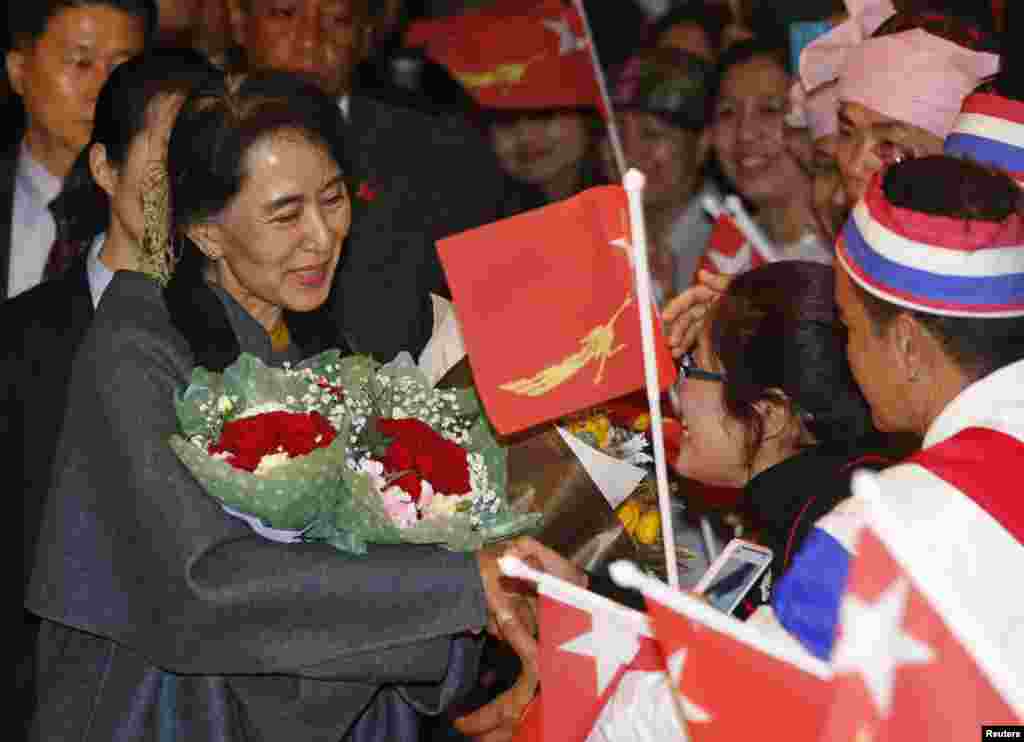
![Burmese citizens residing in South Korea greet Aung San Suu Kyi upon her arrival at a hotel in central Seoul, January 28, 2013.]()
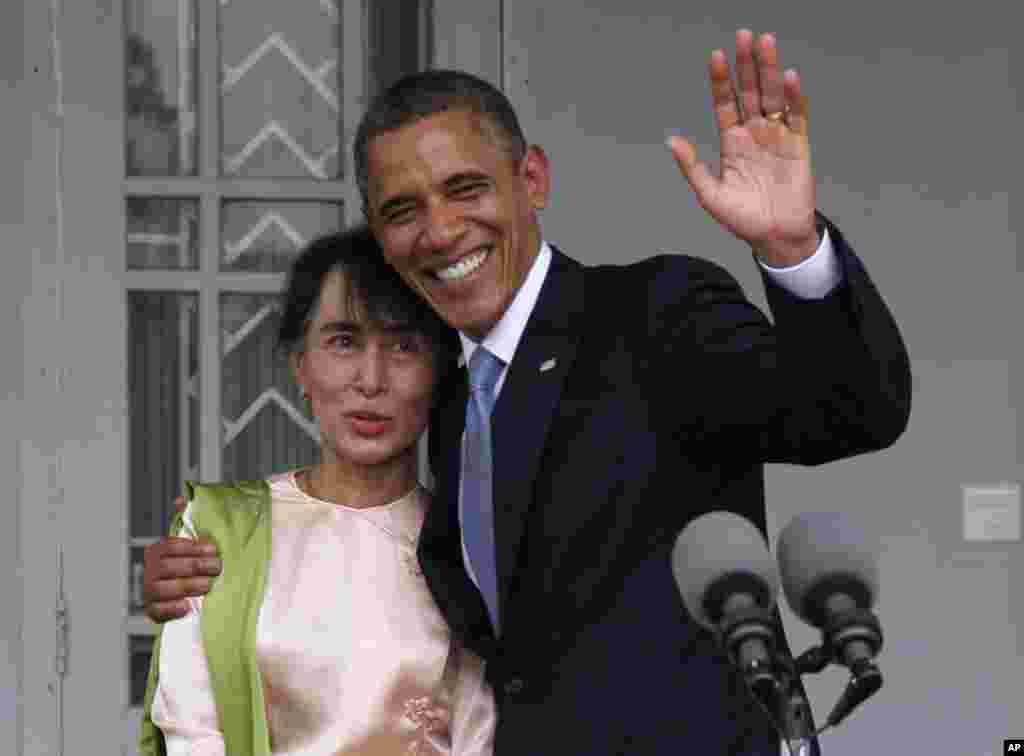
![U.S. President Barack Obama waves to the media as he embraces Burmese opposition leader Aung San Suu Kyi after they spoke to the media at her residence in Rangoon, November 19, 2012.]()
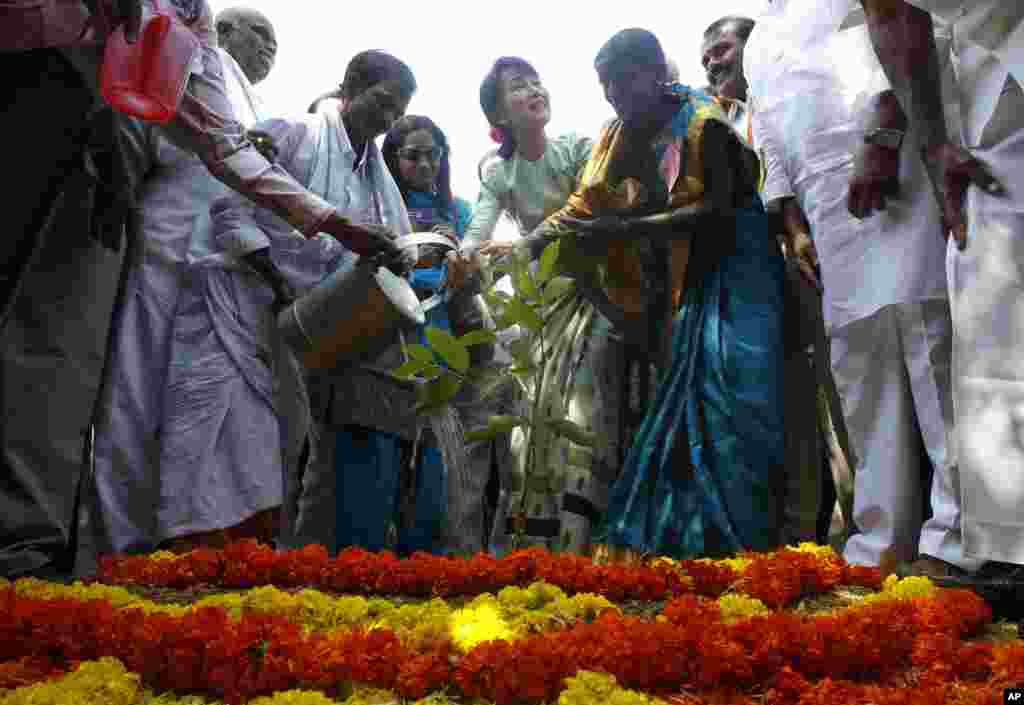
![Burmese opposition leader Aung San Suu Kyi, center, waters a sapling after planting it in Govindapuram village, north of Bangalore, India, November 17, 2012.]()
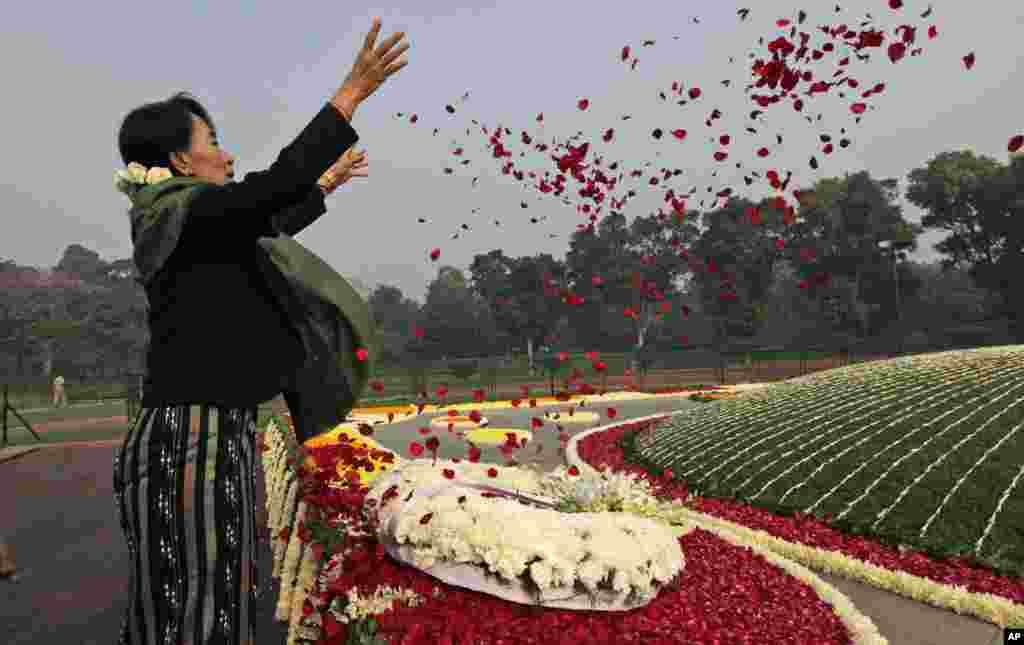
![Burmese opposition leader and Nobel laureate Aung San Suu Kyi pays floral tribute on the birth anniversary of India's first prime minister, Jawaharlal Nehru, at his memorial in New Delhi, India, November 14, 2012.]()
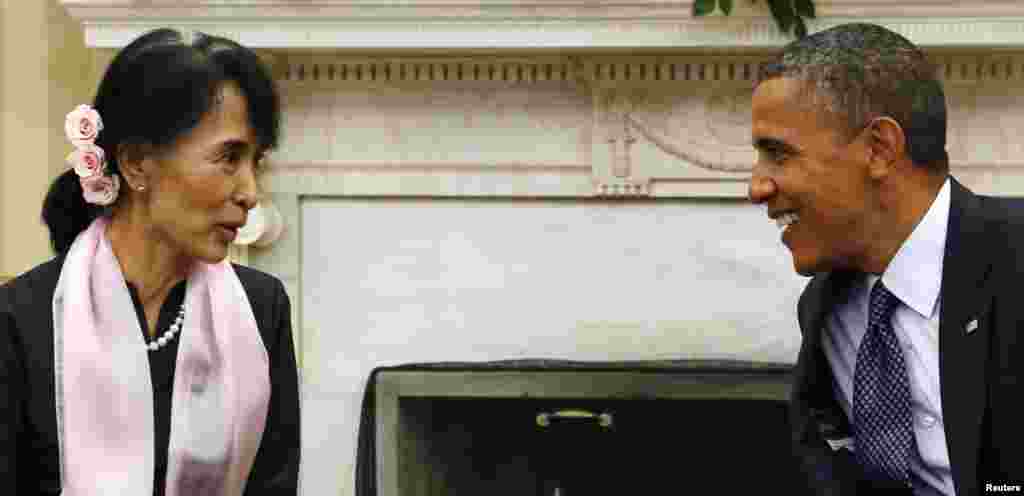
![U.S. President Barack Obama meets with Burma's opposition leader Aung San Suu Kyi in the Oval Office of the White House in Washington, September 19, 2012.]()

![Burma's democracy leader Aung San Suu Kyi holds her Congressional Gold Medal after it was presented to her by House Speaker John Boehner (R-OH) (2nd L), at the U.S. Capitol in Washington, September 19, 2012.]()
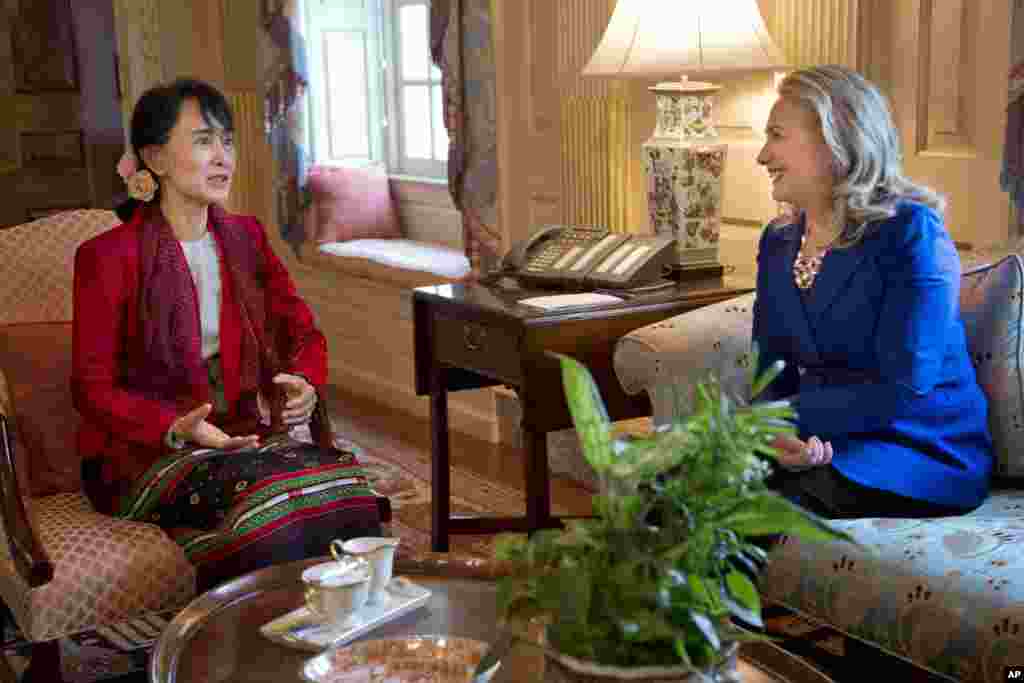
![Secretary of State Hillary Rodham Clinton, right, meets with Burmese democracy leader Aung San Suu Kyi at the State Department, Washington, September 18, 2012.]()
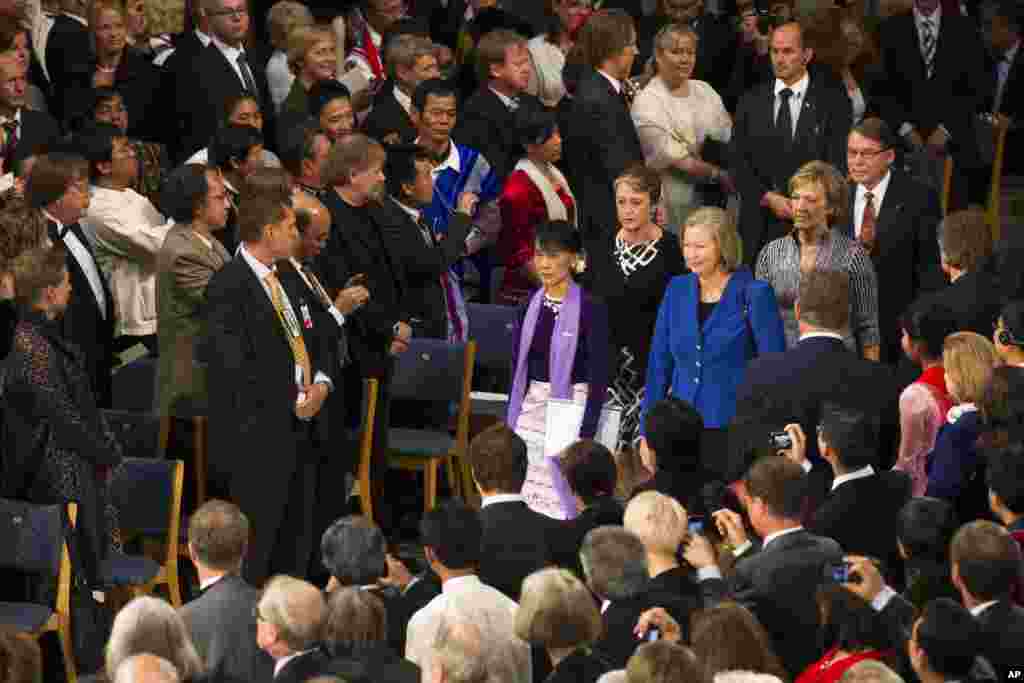
![Aung San Suu Kyi, center, arrives for the Peace Nobel Prize lecture at the city hall in Oslo, June 16, 2012 to thank the Nobel committee for the prize she won in 1991.]()
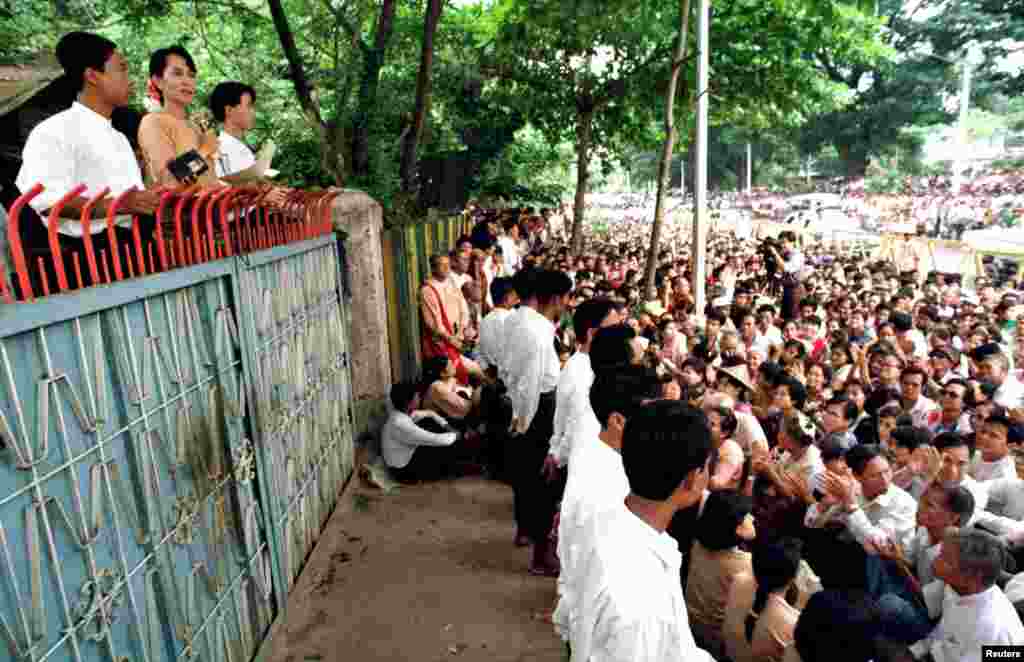
![Aung San Suu Kyi addresses about 4,000 people gathered outside her house in Rangoon, Burma, June 1, 1996.]()
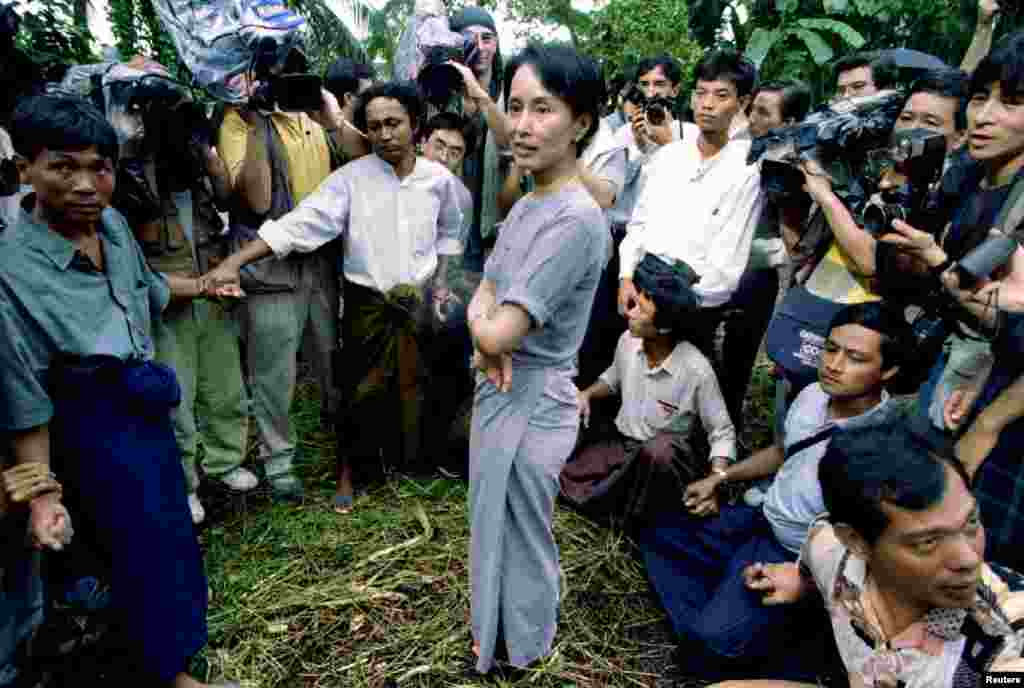
![Aung San Suu Kyi is surrounded by security guards and newsmen as she walks out of her lakeside house in Rangoon, Burma, Juy 14, 1995.]()
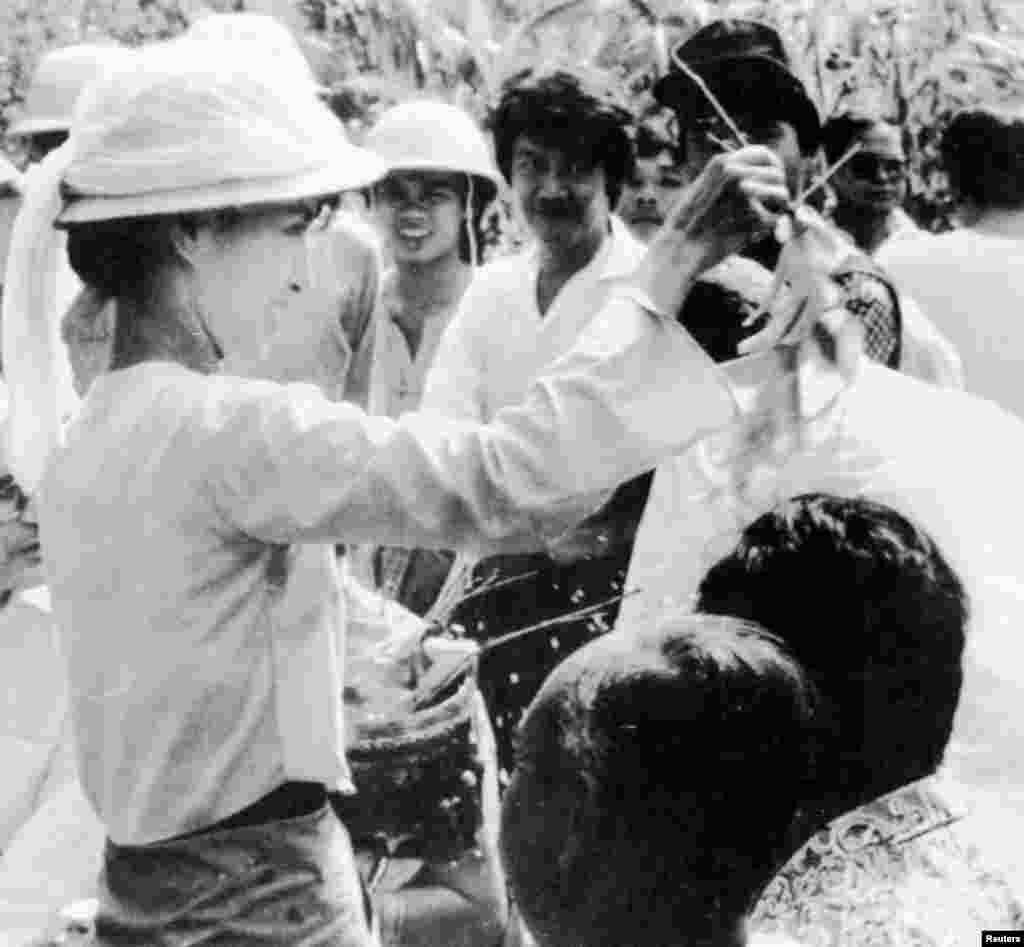
![Aung San Suu Kyi addresses crowd of supporters in Rangoon, Burma, July 7, 1989.]()
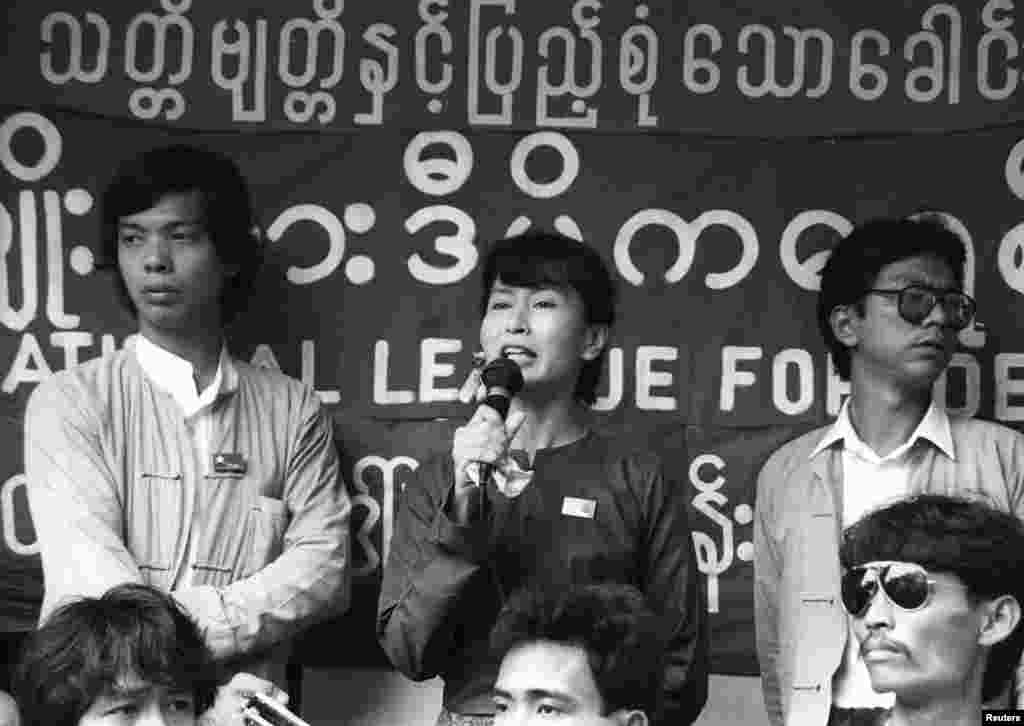
![Aung San Suu Kyi addresses crowd of supporters in Rangoon, Burma, July 7, 1989.]()
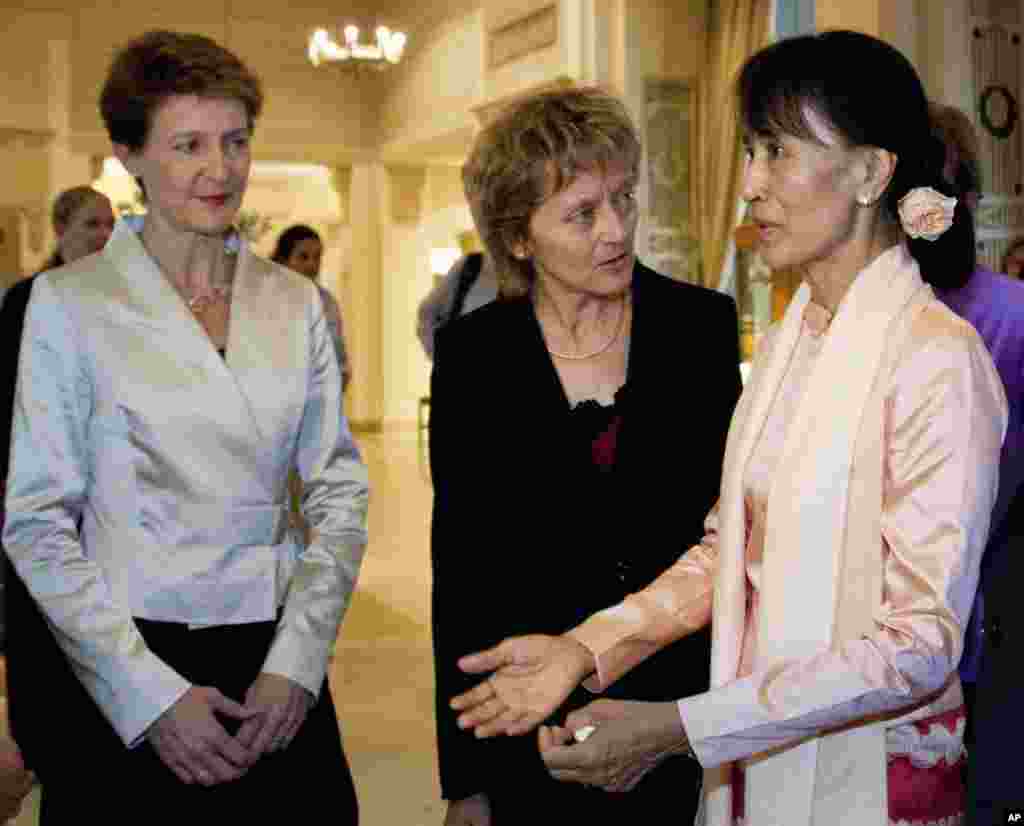
![Swiss Federal Councillor Simonetta Sommaruga, left Swiss President Eveline Widmer-Schlumpf, center, and Burmese opposition leader Aung San Suu Kyi, in Bern, Switzerland, June 14, 2012.]()
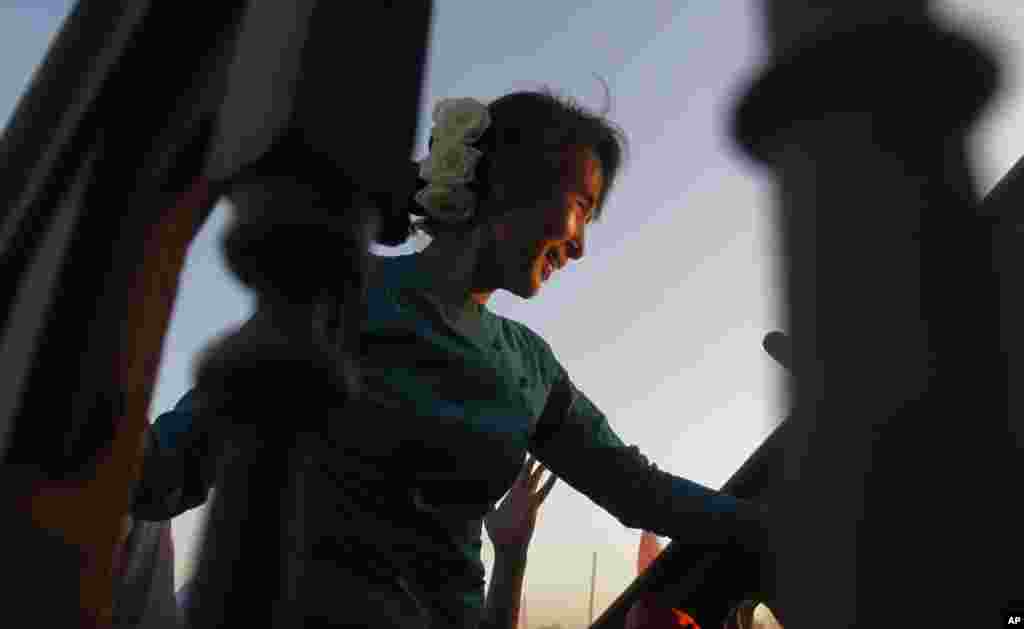
![Aung San Suu Kyi during an election campaign rally in Thongwa village some 50 kms from Rangoon, Burma, February 26, 2012]()
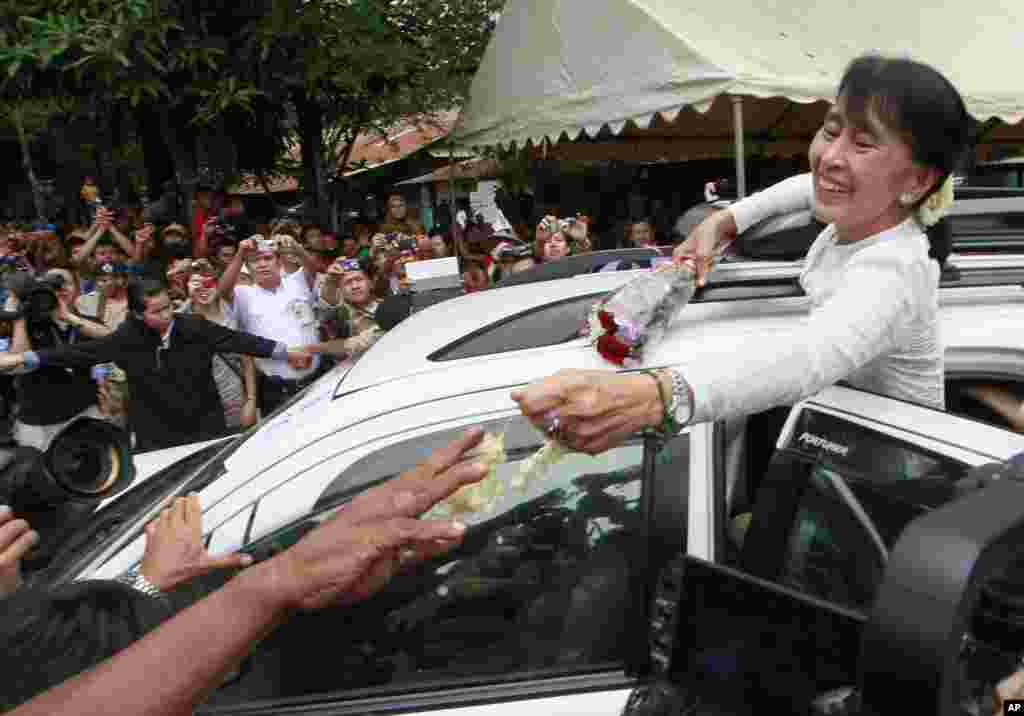
![Aung San Suu Kyi is presented with flowers by cheering Karen refugees at Mae La refugee camp in Tha Song Yang district, Tak province, northern Thailand, June 2, 2012.]()
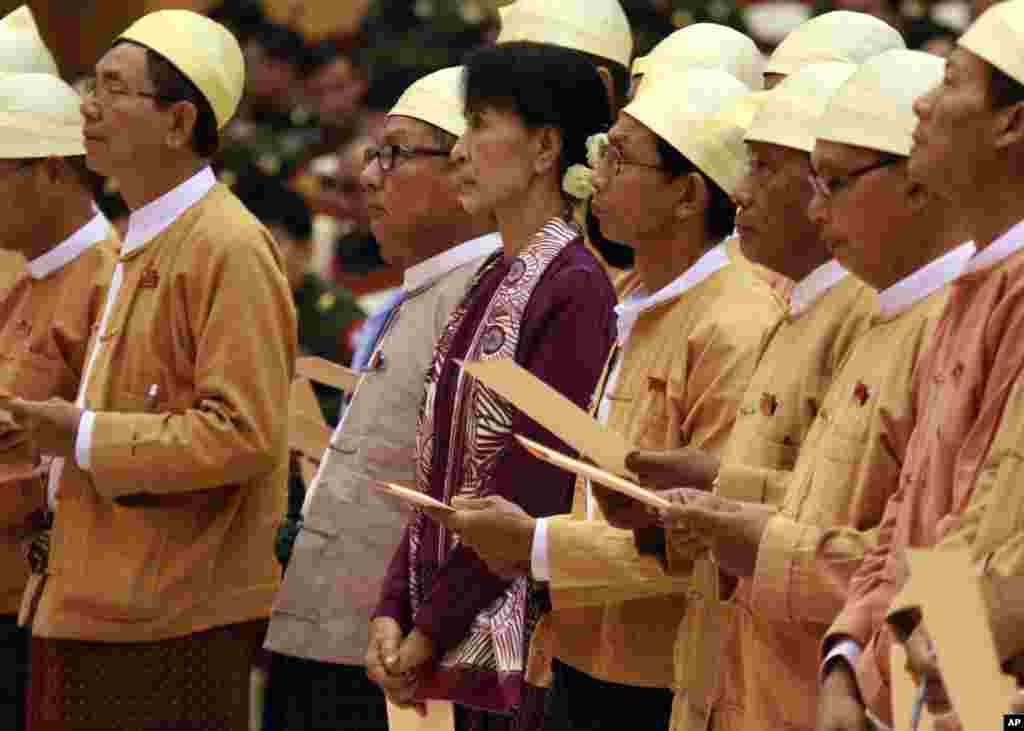
![Aung San Suu Kyi, center, and elected lawmakers of her National League for Democracy party take an oath during a regular session of the Lower House at parliament in Naypyitaw, Burma, May 2, 2012.]()
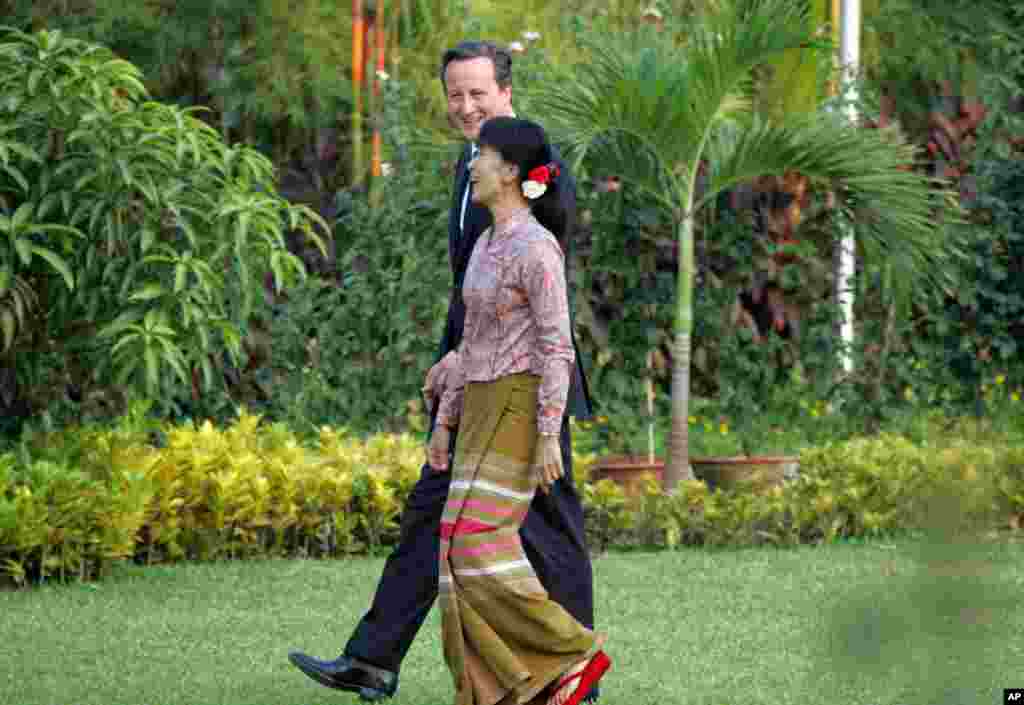
![British Prime Minister David Cameron and Aung San Suu Kyi share a light moment during their meeting in the compound of her lakeside home, April 13, 2012, Rangoon, Burma.]()
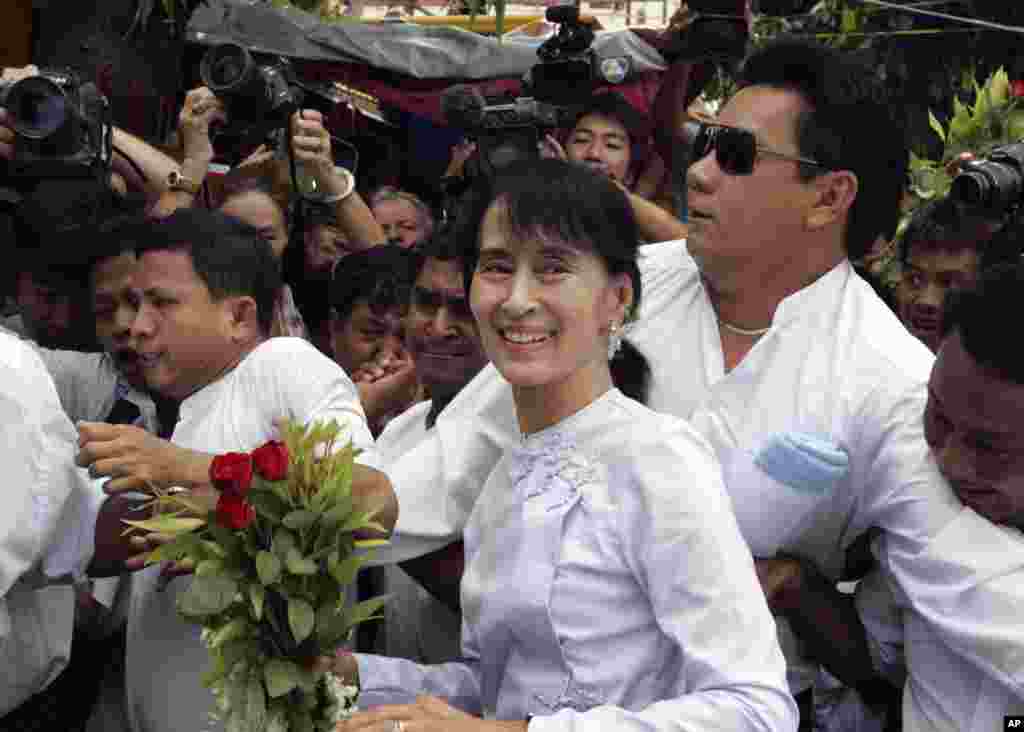
![Aung San Suu Kyi arrives at the headquarters of her National League for Democracy party, April 2, 2012, Rangoon, Burma.]()
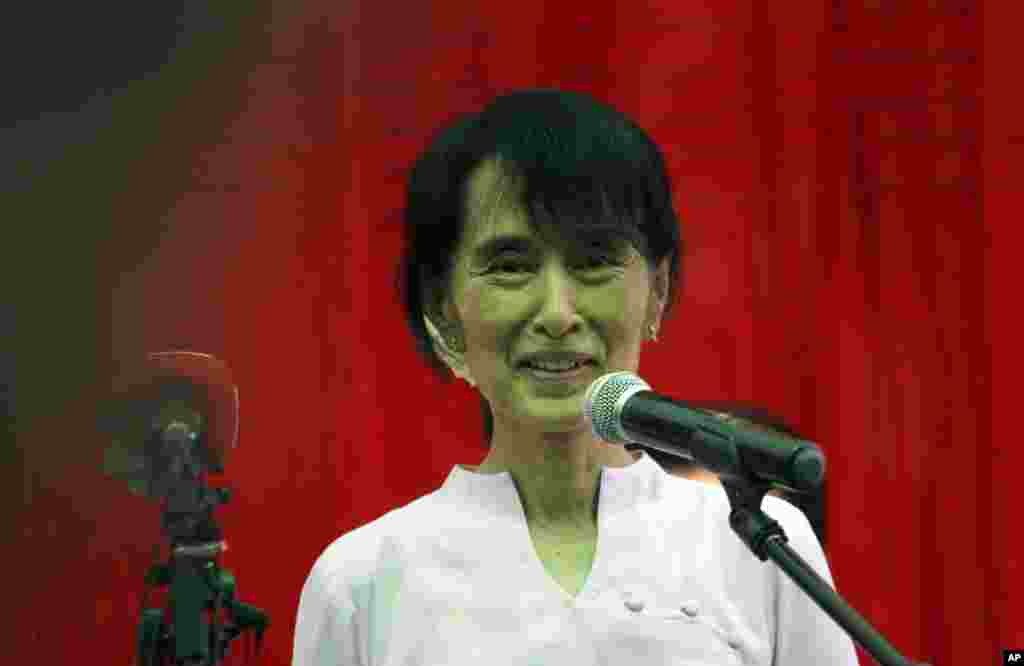
![Aung San Suu Kyi speaks to journalists during the press conference in her residence in Rangoon, Burma, March 30, 2012.]()
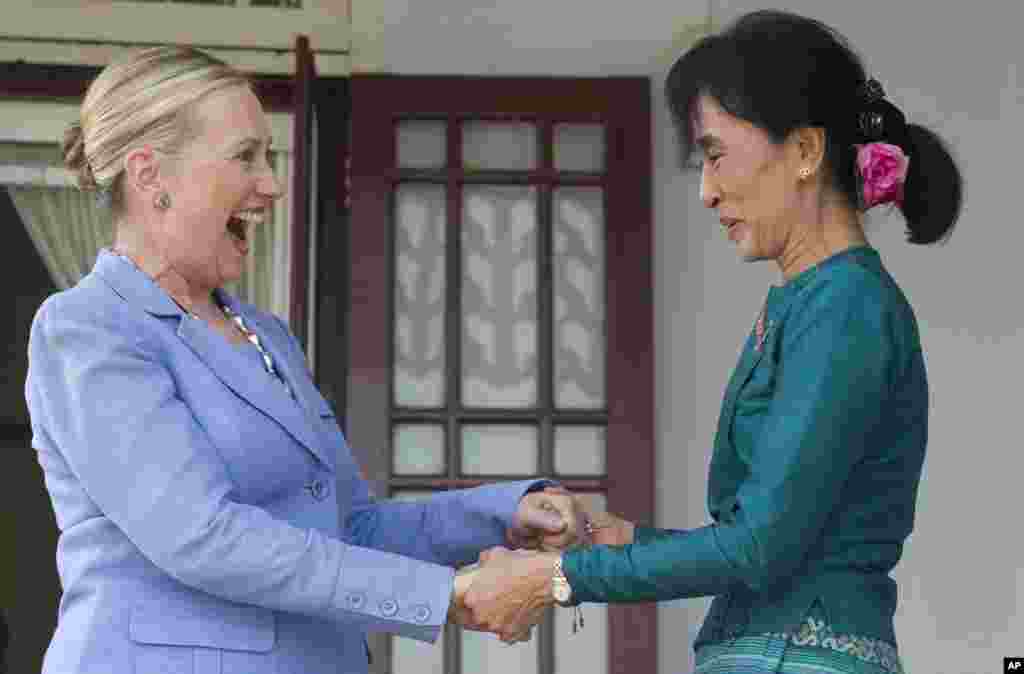
![Aung San Suu Kyi, right, and U.S. Secretary of State Hillary Clinton react after speaking to the press at Suu Kyi's residence in Rangoon, Burma, December 2, 2011.]()
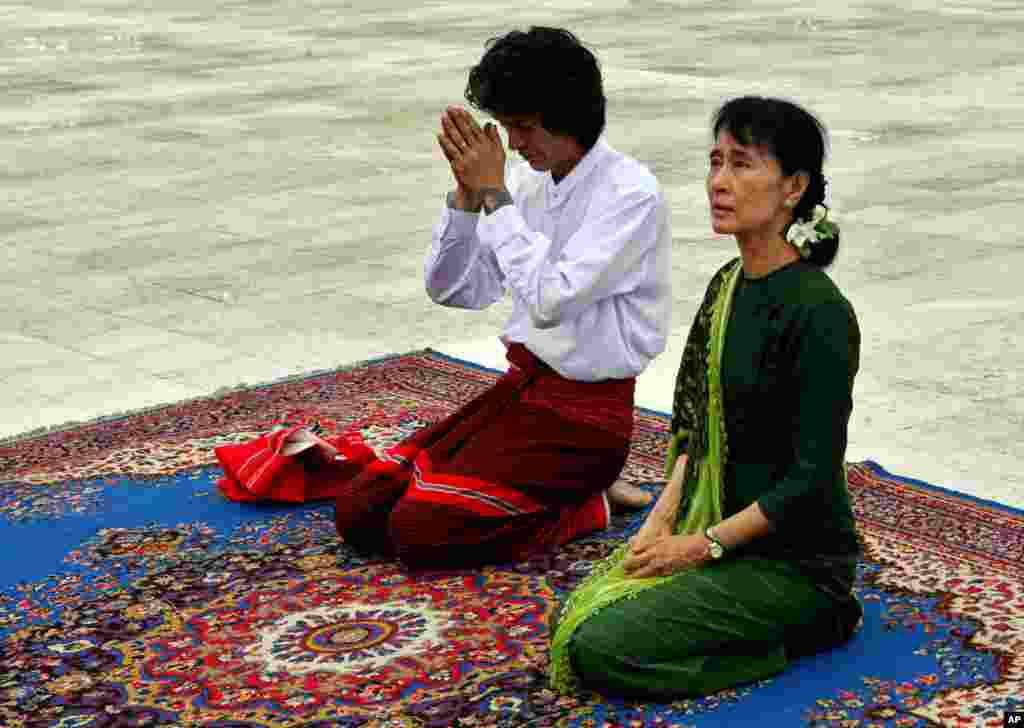
![Aung San Suu Kyi and her youngest son Kim Aris pay respect to her father, the late Geneneral Aung San, at the Martyr's Mausoleum in Rangoon, Burma, July 12, 2011.]()
But the pro-democracy leader says Burma's transformation is not irreversible until the army commits itself totally to change.
“Under the present constitution, the army can always take over all parts of government if they think this is necessary. So until the army comes out clearly and consistently in support of the democratic process, we cannot say that it's irreversible. But I don't think we need fear a reversal too much either,” she said.
The military ruled Burma for decades, and worked to suppress all opposition. Because of that, the United States and many other countries imposed economic sanctions on the government.
Elections in 2010 brought in new political leaders, who, although they are civilians, have close ties to the army. Still, the new government has gradually made political and economic reforms, prompting Washington to ease the sanctions.
In an interview at VOA's Washington headquarters Tuesday, Aung San Suu Kyi said she supports the lifting of U.S. trade sanctions on Burma because it is time, she said, for the Burmese people to stand on their own.
"There have been many claims that sanctions have hurt Burma economically, but I did not agree with that point of view. If you look at reports by the IMF [International Monetary Fund], for example, they make quite clear that the economic impact on Burma has not been that great. But I think the political impact has been very great, and that has helped us in our struggle for democracy," she said.
Related report from Carolyn Presutti:
As leader of the opposition National League for Democracy, Aung San Suu Kyi spent nearly two decades in detention. During those years, she said, she believed she was on the path she chose and was perfectly prepared to keep to that path.
Preview: Aung San Suu Kyi's U.S. Visit
Preview: Aung San Suu Kyi's U.S. Tour
- Meets with Secretary of State Hillary Clinton
- Meets with NY, Ind., Calif. Burmese community
- Accepts Congressional Gold Medal
- Accepts Asia Society Global Vision Award
- Addresses National Endowment for Democracy
-
Accepts Atlantic Council's Global Citizen Award
"First of all, I would say don't give up hope. At the same time I would say there is no hope without endeavor. You've got to work. You've got to make an effort. It is not enough to sit and hope. You have to work in order to realize your hopes," she said.
On her first visit to the United States in more than 20 years, Aung San Suu Kyi is to receive the Congressional Gold Medal. She was the guest of honor at a dinner hosted by Secretary of State Hillary Clinton.
Burmese Democracy Leader Aung San Suu Kyi
Show more
Show less
Show more
Show less
Show more
Show less
Show more
Show less
Show more
Show less
Show more
Show less
Show more
Show less
Show more
Show less
Show more
Show less
Show more
Show less
Show more
Show less
Show more
Show less
Show more
Show less
Show more
Show less
Show more
Show less
Show more
Show less
Show more
Show less
Show more
Show less
Show more
Show less
Show more
Show less
Show more
Show less