SALEKHARD, RUSSIA —
For centuries, polar bears have enjoyed Arctic waters in isolation. But now, they are getting company in the summer.
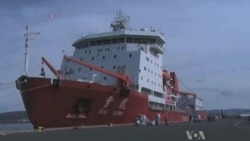
Last summer, China sent its first icebreaker, the Snow Dragon, over the top of Russia, from Shanghai to Iceland.
This summer, the Yong Sheng, a freighter operated by China's COSCO shipping company, became the first Chinese merchant vessel to take the shortcut. It sailed from Shanghai to Rotterdam, cutting two weeks off the usual route, through Egypt’s Suez Canal.
Satellite photos by the U.S. space agency, NASA, show that the white Arctic ice around the North Pole shrinks every summer. It is replaced by more and more open water, which appears black in the photos.
Even Russian President Vladimir Putin agrees with the American scientists.
"It is absolutely clear now that the climate is changing. Everyone is talking about this,” he told an Arctic Forum held here recently. “It is clear now that the northern latitudes can be open for shipping for 100 days or perhaps 150 days, and that new regions are opening up for economic activity."
Salekhard in the Russian Arctic
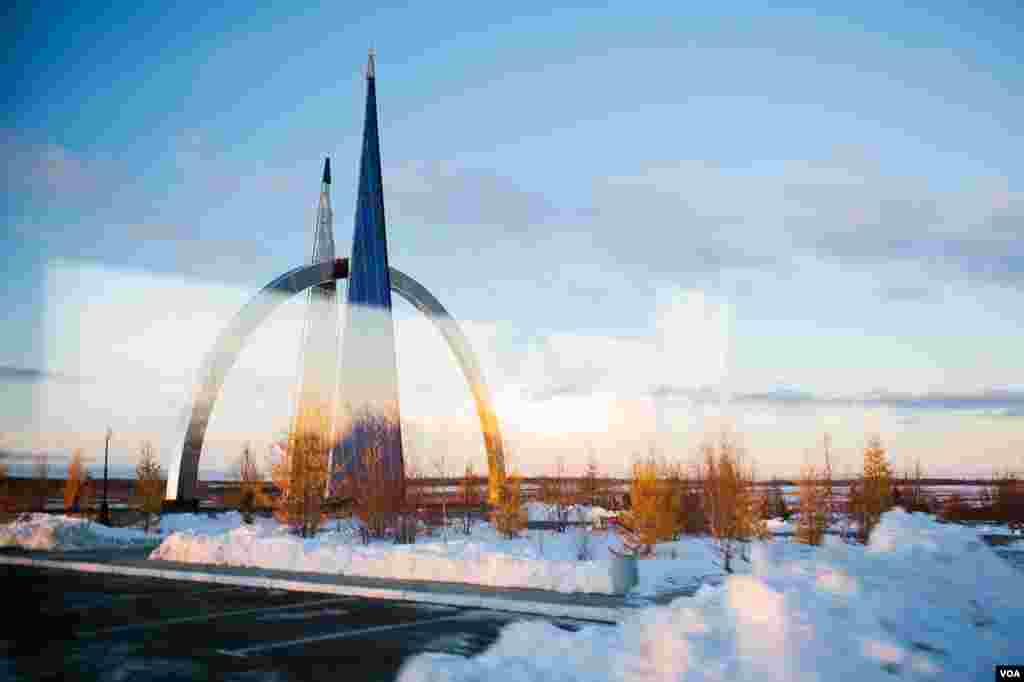
1/10Salekhard, population 45,000, is the world's only city that straddles the Arctic Circle. This roadside monument marks this line that crossses the tundra. (V. Undritz for VOA)
Show moreShow less
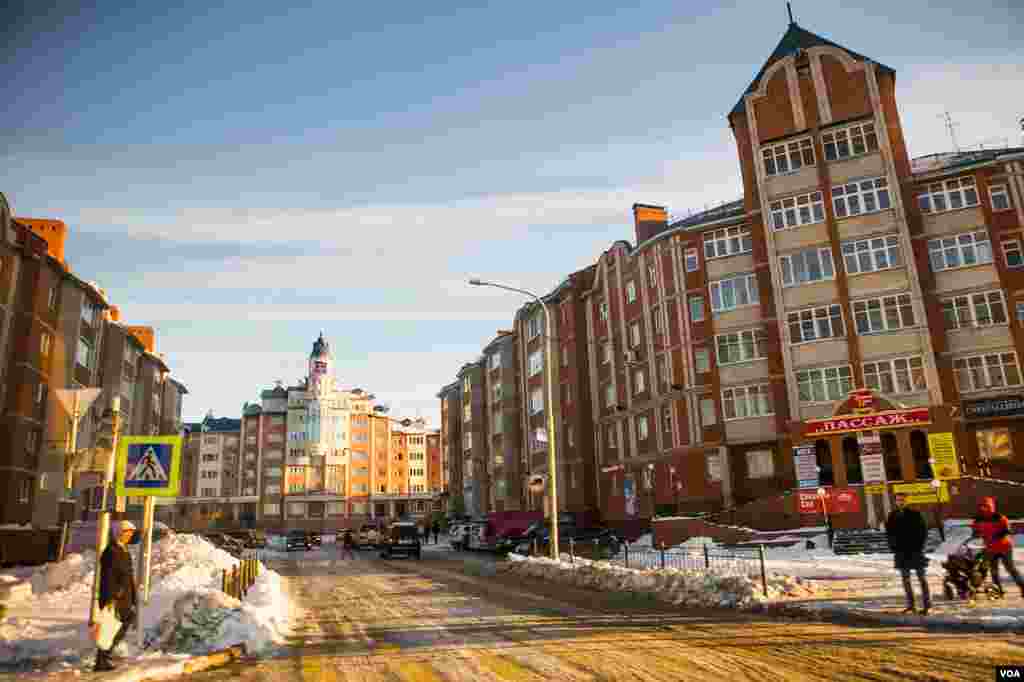
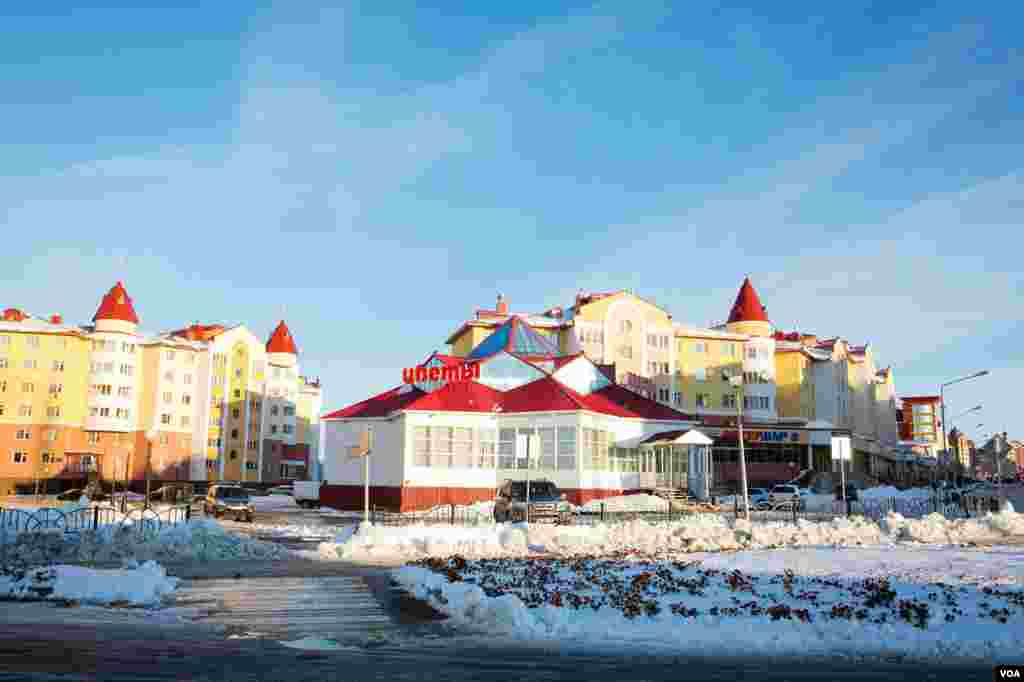
2/10Modern Salekhard has been built by Russia’ state gas giant Gazprom as a center for one of the richest oil and gas regions in the world. (V. Undritz for VOA)
Show moreShow less
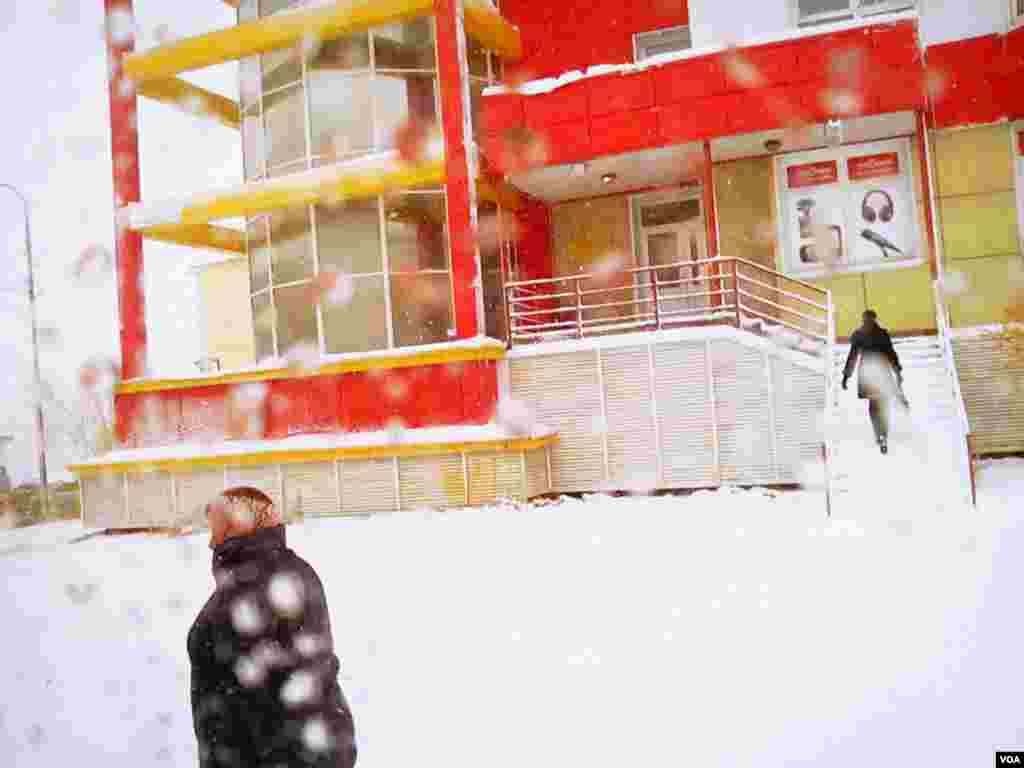
3/10Bright colors seek to cheer up residents in a city where snow falls in September and there are only two hours of daylight each day during December. (V. Undritz for VOA)
Show moreShow less
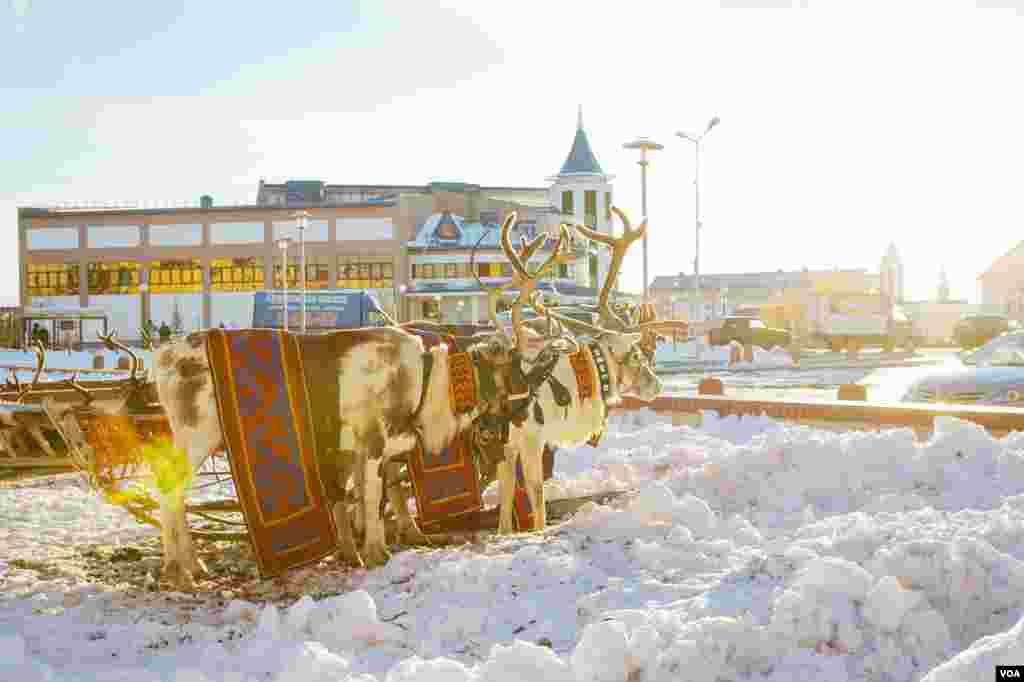
4/10There as many as half a million reindeer in the Yamalo-Nenets Autonomous Region, the world center for raising reindeer. (V. Undritz for VOA)
Show moreShow less
5/10Nenets people cherish their traditions, which have survived 70 years of Soviet communism and two decades of Russian consumerism. (V. Undritz for VOA)
Show moreShow less
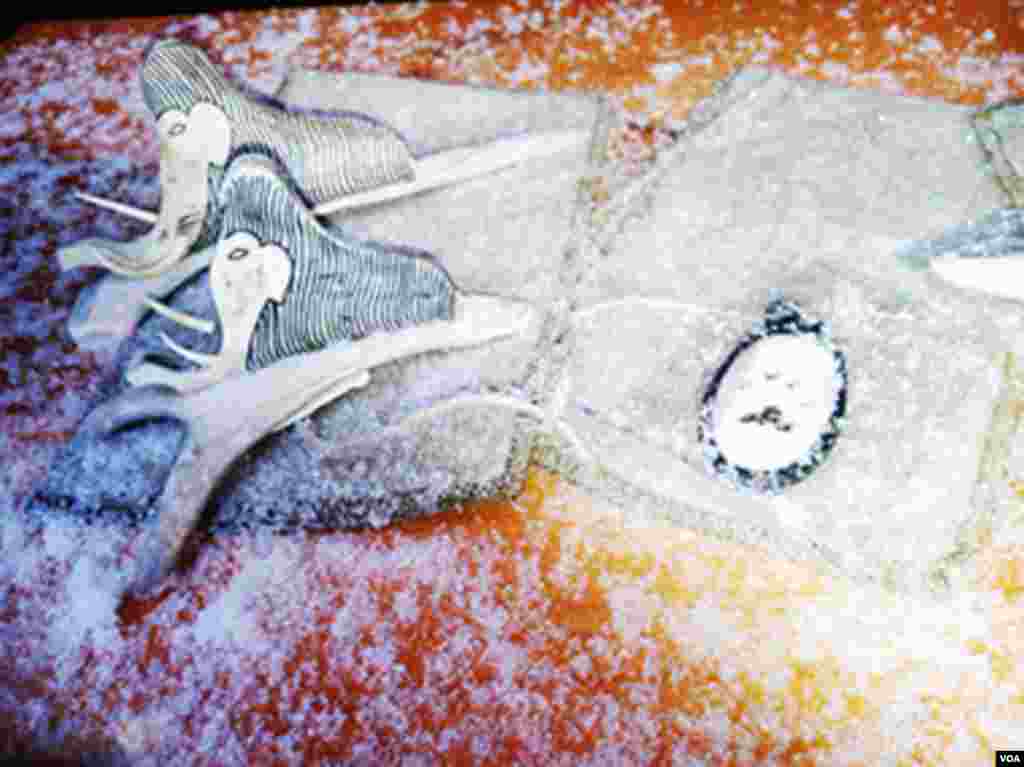
6/10Nenets carve souvenirs from walrus tusks. Tourism is limited because Russian authorities now demand additional permits to visit the city, a three hour flight from Moscow. (V. Undritz for VOA)
Show moreShow less
7/10Cossacks founded the city in 1598 on the eastern bank of it the River Ob, which flows north to the Arctic. (V. Undritz for VOA)
Show moreShow less
8/10Brightly colored tower beckons are seen in Salekhard. (V. Undritz for VOA)
Show moreShow less
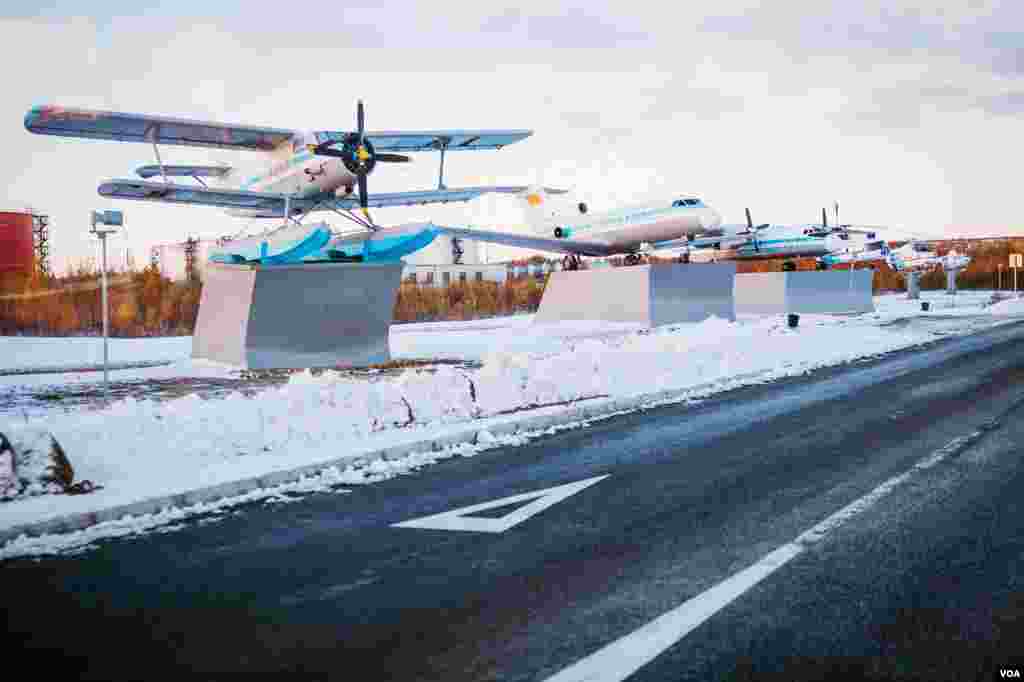
9/10The road to the airport is decorated with static displays of airplanes and helicopters that pioneered polar aviation in the 20th century. (V. Undritz for VOA)
Show moreShow less
10/10An old locomotive is a reminder of the period, from the 1930s to 1950s, when Salekhard was a gulag town. Thousands of prisoners died constructing what later became known as “The Railroad of Death”. (V. Undritz for VOA)
Show moreShow less
Previous slide
Next slide
Trans-Arctic trade
While Russia invests in more icebreakers, Arctic experts gathered at the forum say they see growing opportunities for trade.
Felix Tschudi, chairman of a Norwegian shipping company, has shipped iron ore from northern Norway to China.
“We believe that the potential of the Northern Sea Route is large,” said Tschudi, a promoter of the route. “It will not be like an explosion. In 2010, there were four ships using the transit route. In 2011, there were 34. And in 2012 there were 46. This year we expect around 50 ships.”
Lawson Brigham was the captain of a United States Coast Guard icebreaker based in Alaska.
"Really, we're looking at a seasonal supplement to the Suez Canal, carrying natural resources,” he said. “We're not going to retool the global container ship traffic.”
Environmental concerns
Indigenous leaders and environmentalists worry about the potential for an oil spill in the fragile environment of the high north.
Aqqaluk Lynge, from Greenland, is chairman of the Inuit Circumpolar Council.
“You cannot use the Arctic as a laboratory. It's not a laboratory. The Arctic Ocean is not the last frontier. It's our home. People have to remember that people live there,” he said at the conference. “We are very concerned about the tourist liners' travel routes up to east Greenland and other parts of Greenland because there's simply no rescue possibility in those areas.”
But his neighbor Olafur Grimsson, the president of Iceland, welcomes Chinese ships.
He told forum attendees: "Next month the CEO of COSCO, the largest shipping company in China, will explain at the new Arctic Circle Assembly in Reykjavik how China is preparing for a new era in global shipping when the melting of the Arctic sea-ice will connect Asia in a new way to America and Europe.”
What may be bad for polar bears, may be good for shipping between China and Europe.